TR
TR EN
EN

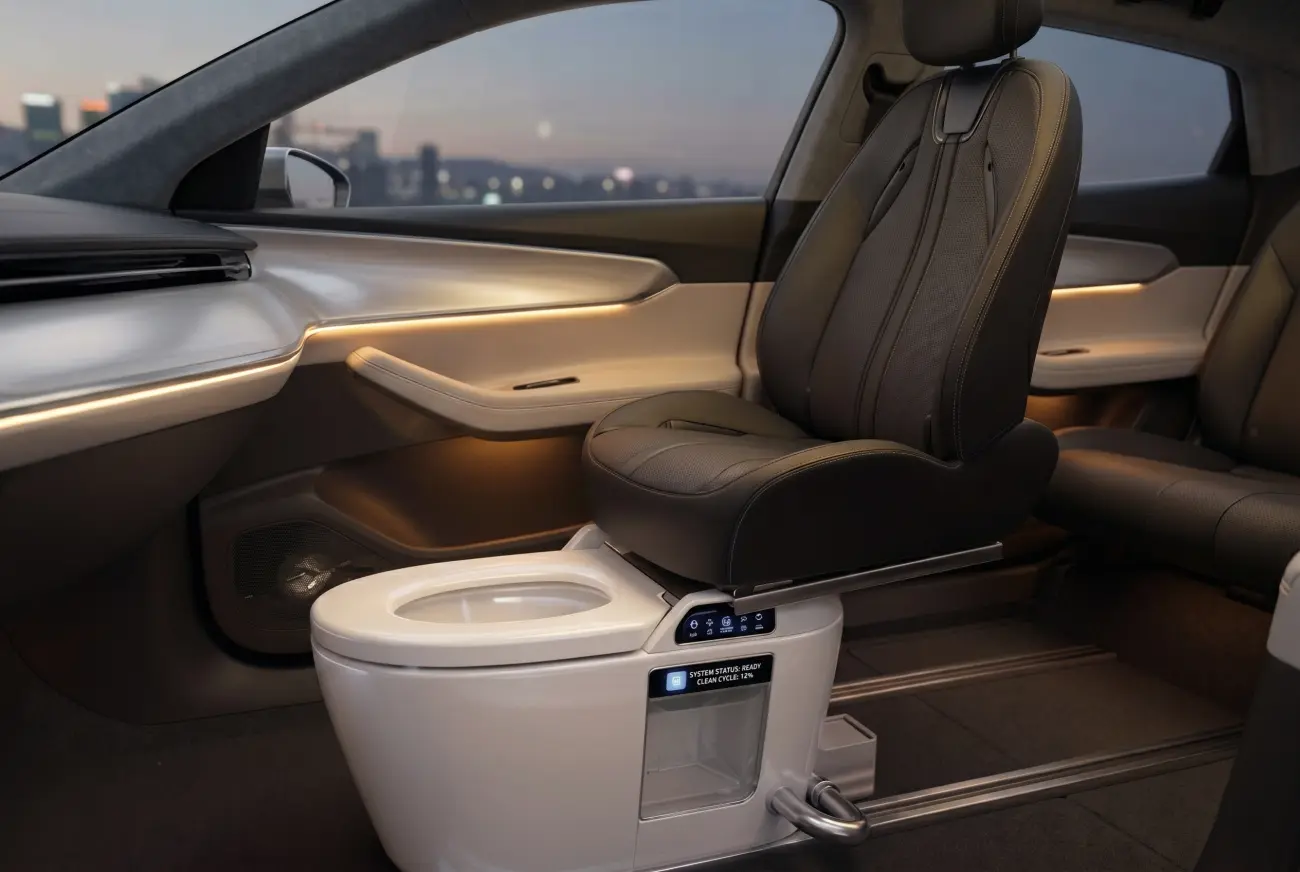
In-Car Toilets Could Become Reality: Chinese Automaker Unveils Unusual Innovation
The automotive industry continues to push the boundaries of vehicle design and passenger comfort. This time, Chinese automaker Seres has attracted attention with an unexpected innovation—a built-in toilet system designed for passenger vehicles.
The company, known for its electric SUVs, has reportedly secured a patent for the concept, suggesting that it is actively exploring the technology rather than simply showcasing a futuristic design.
How Does the System Work?
The patented concept aims to solve one of the biggest challenges faced during long road trips: finding a restroom when none is available.
According to the patent description, the system would feature:
-
A compact toilet hidden beneath the front passenger seat.
-
A mechanism that extends the unit when needed, either electronically or through voice commands.
-
A design that allows the toilet to retract and remain concealed after use.
When not in use, the system would be integrated into the vehicle's interior without significantly affecting cabin space.
How Would Odors Be Controlled?
One of the obvious concerns about an in-car toilet is odor management.
According to the patent, the proposed system would include technologies intended to minimize unpleasant smells, including:
-
A dedicated ventilation system to remove odors from the cabin.
-
A liquid waste evaporation process.
-
A drying system for solid waste before storage.
These features are designed to improve hygiene and make the concept more practical for enclosed vehicle interiors.
It is important to note that these details are based on the published patent and may differ from any future production version.
Who Could Benefit?
Although the idea may initially seem unusual, there are several situations where an integrated toilet could prove useful.
Potential users include:
-
Families on long road trips
-
Campers and outdoor enthusiasts
-
Drivers traveling through remote areas
-
Parents traveling with young children
-
People with certain medical conditions
-
Professional drivers who spend extended periods on the road
In emergency situations or locations with limited access to public restrooms, such a system could offer additional convenience.
The Growing Competition Among Chinese Automakers
China's automotive market has become one of the world's most competitive.
Manufacturers are no longer competing solely on:
-
Driving range
-
Battery technology
-
Performance
-
Charging speed
Instead, they are increasingly introducing lifestyle-focused features designed to improve the overall ownership experience.
Recent innovations include:
-
Built-in refrigerators
-
Massage seats
-
Advanced entertainment systems
-
Karaoke functions
-
Smart cabin assistants
An integrated toilet system represents another example of manufacturers exploring unconventional ways to differentiate their vehicles.
Will It Reach Production?
At this stage, Seres has not announced whether or when the technology will enter mass production.
A patent simply protects an invention and does not guarantee that the feature will appear in future vehicles.
If commercialized, the technology would likely debut first in large SUVs, premium electric vehicles, or luxury models where interior space is less restricted.
Could This Become a Future Trend?
Many automotive technologies that once seemed unnecessary eventually became common features.
Examples include:
-
Rear-view cameras
-
Parking assistance systems
-
Adaptive cruise control
-
Wireless smartphone integration
Whether an in-car toilet follows the same path remains uncertain, but it reflects how manufacturers are increasingly viewing vehicles as multifunctional living spaces rather than simple means of transportation.
Final Thoughts
The modern automobile is evolving rapidly. As electric vehicles become more sophisticated, manufacturers are placing greater emphasis on passenger comfort, convenience, and lifestyle-oriented features.
Seres' patented in-car toilet concept is one of the latest examples of this trend. While it may seem unconventional today, it highlights how automotive innovation is expanding beyond performance and efficiency into entirely new areas of vehicle design.
The bottom line: Whether or not this technology reaches production, it demonstrates that tomorrow's cars may be designed not only for transportation but also to support a wider range of everyday needs during travel.