TR
TR EN
EN

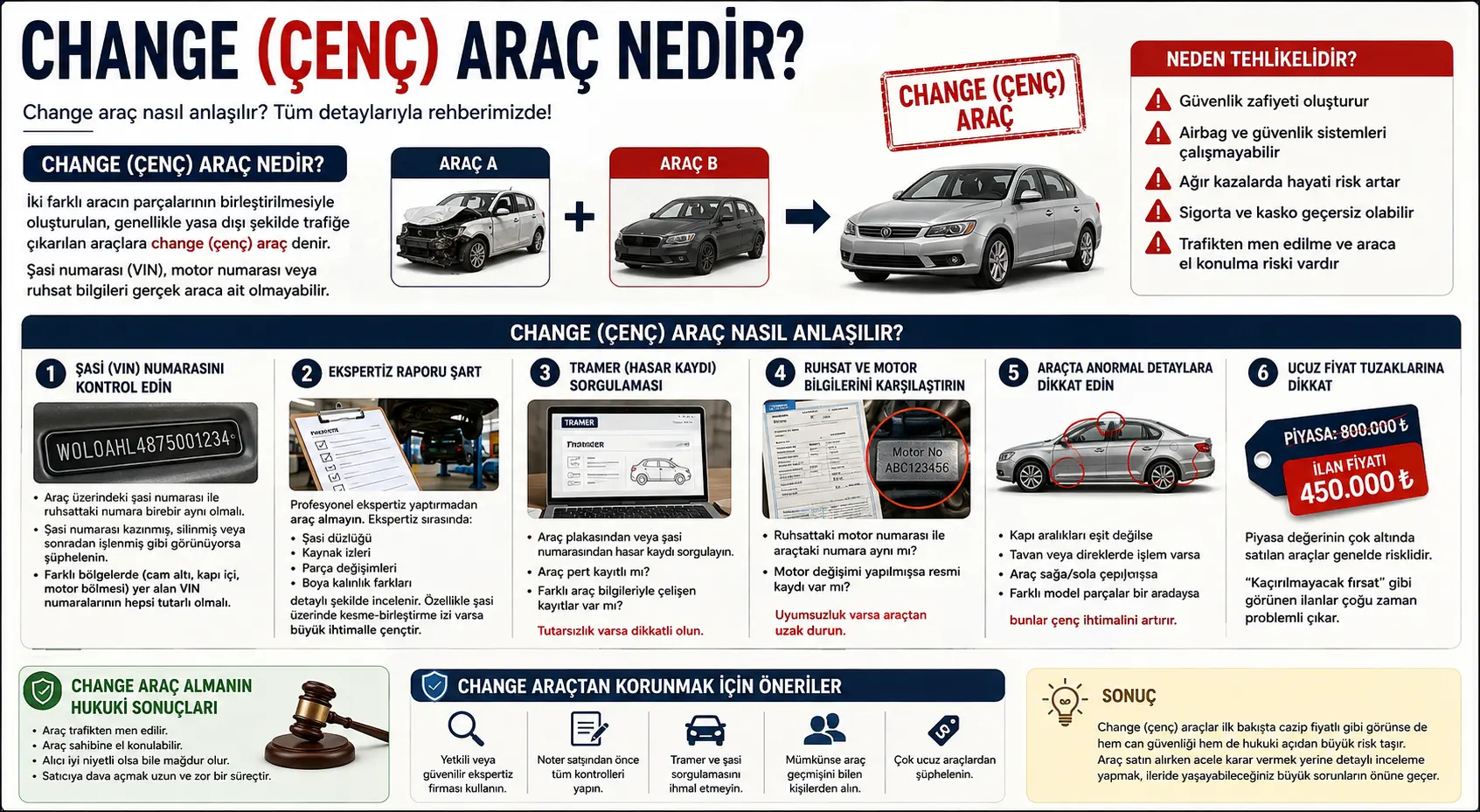
What Is a "Change Vehicle"? How Can You Identify One?
A "change vehicle" refers to a vehicle that has been illegally created by combining parts from two different vehicles.
These vehicles are usually created by combining:
-
The usable chassis or body parts of a heavily damaged (salvage) vehicle
-
A stolen vehicle’s engine, chassis, or identification information
-
Parts or identity records belonging to another vehicle
The most critical issue is that the vehicle’s VIN (Vehicle Identification Number), engine number, or registration details may not belong to the actual vehicle.
Although the vehicle may look normal from the outside, it can create serious legal, safety, and technical risks.
Why Are Change Vehicles Dangerous?
Change vehicles are dangerous not only because of legal problems but also because of safety concerns.
Possible risks include:
-
Structural safety problems: Since two different vehicles may have been combined, chassis strength and balance can be compromised.
-
Non-functional safety systems: Airbags and electronic safety systems may not work correctly.
-
Higher accident risks: In a serious crash, the vehicle may not provide the expected protection.
-
Insurance problems: Insurance and comprehensive coverage may be rejected or become invalid.
-
Vehicle seizure risk: Authorities may remove the vehicle from traffic and seize it.
How Can You Identify a Change Vehicle?
Detecting a change vehicle is not always easy, but several important points should be checked.
Check the VIN (Chassis Number)
The VIN number is one of the most important checks.
Pay attention to:
-
The VIN on the vehicle must exactly match the registration documents.
-
Scratched, removed, altered, or suspicious VIN markings are major warning signs.
-
VIN numbers in different locations (such as the windshield area, door frame, and engine compartment) should all match.
Any inconsistency should be considered a serious warning.
Professional Inspection Is Essential
Never buy a used vehicle without a detailed professional inspection.
During an inspection, specialists should check:
-
Chassis alignment
-
Welding marks
-
Structural repairs
-
Replacement parts
-
Paint thickness differences
Especially, signs of cutting and joining on the chassis can indicate a possible change vehicle.
Check Vehicle History Records
Vehicle history and damage records should always be examined.
Check for:
-
Previous salvage records
-
Inconsistent accident information
-
Conflicting vehicle details
Any unusual mismatch between records and the actual vehicle requires further investigation.
Compare Registration and Engine Information
The information on the registration documents must match the vehicle.
Check:
-
Does the engine number match the registration?
-
Was an engine replacement officially recorded?
-
Are there any inconsistencies?
If the information does not match, it is safer to avoid the vehicle.
Look for Unusual Vehicle Details
Some physical signs may increase suspicion:
-
Uneven door gaps
-
Repairs on the roof or pillars
-
Vehicle pulling to one side while driving
-
Different model parts combined together
-
Unusual welding or repair marks
These signs do not always prove a change vehicle, but they require detailed inspection.
Be Careful with Extremely Cheap Vehicles
Vehicles advertised far below market value are often risky.
Offers that appear as:
-
"Urgent sale"
-
"Unmissable opportunity"
-
"Much cheaper than market price"
should be approached carefully.
A low price can sometimes hide serious legal or structural problems.
Legal Consequences of Buying a Change Vehicle
Purchasing a change vehicle can lead to serious consequences.
Possible outcomes include:
-
The vehicle being removed from traffic
-
The vehicle being seized by authorities
-
Financial loss even if the buyer purchased it unknowingly
-
Long and difficult legal disputes with the seller
Being an innocent buyer does not always prevent problems.
How to Protect Yourself from Change Vehicles
Before buying a used vehicle:
-
Use a reliable professional inspection service.
-
Complete all checks before signing the notary sale.
-
Verify VIN and vehicle history records.
-
Compare all registration information carefully.
-
Be cautious with unusually cheap vehicles.
Conclusion
Change vehicles may appear attractive because of their low prices, but they carry serious legal and safety risks.
A vehicle purchase should never be based only on appearance or price. A detailed inspection, VIN verification, and history check can prevent major problems in the future.
Taking a careful approach before buying can protect both your money and your safety.