TR
TR EN
EN

Should You Buy a Salvage or Severely Damaged Vehicle?
One of the most debated topics in the used car market is vehicles with salvage records and major damage records. While some people believe these vehicles should always be avoided, others argue that they can provide significant price advantages when the right vehicle is found.
So, is buying a salvage vehicle a good idea? Are vehicles with major damage records risky to drive? What should you check before purchasing one?
The answer depends on how the vehicle was damaged, how it was repaired, and its current condition. Not every severely damaged vehicle is unsafe, but some can create serious safety risks.
What Is a Salvage Vehicle?
First, it is important to understand the difference between a salvage record and a major damage record.
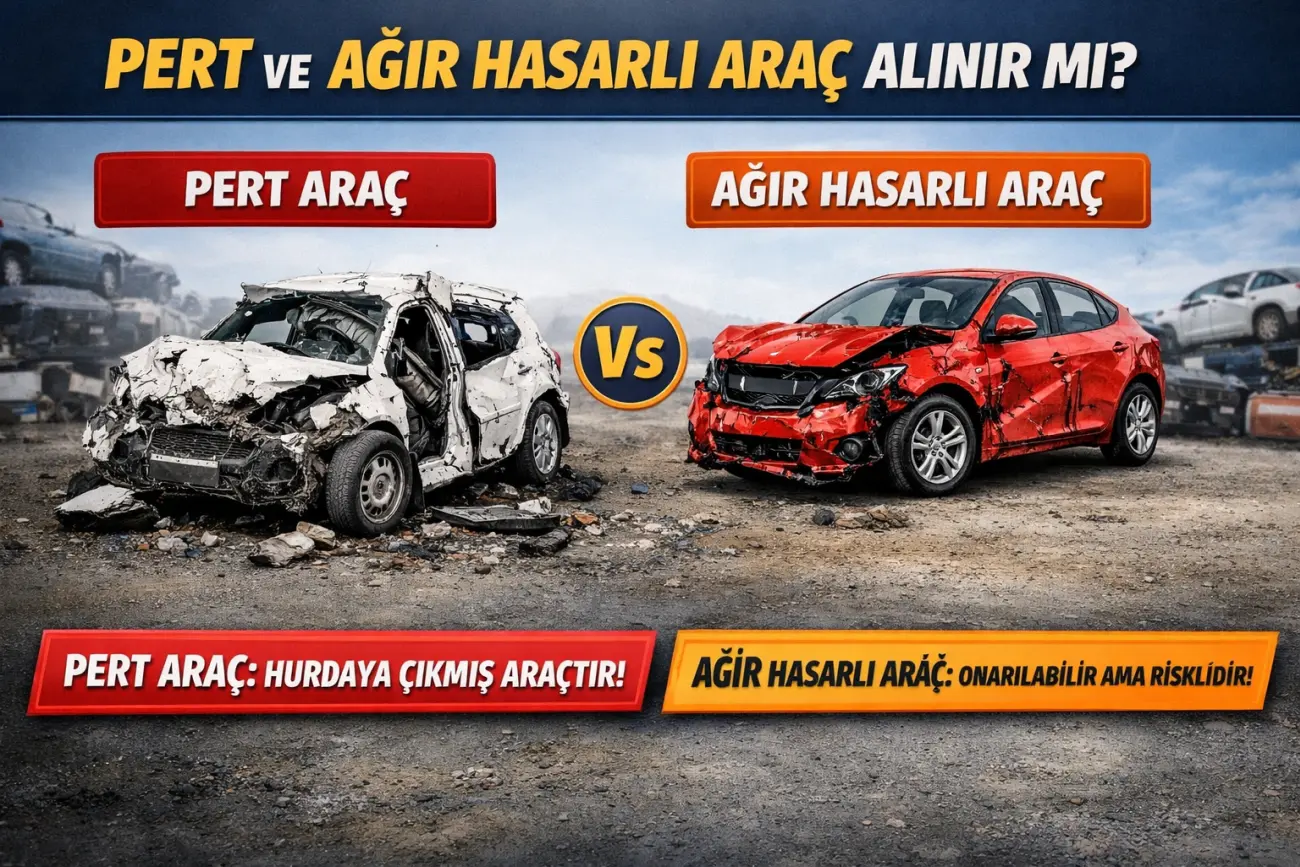
A salvage vehicle is a vehicle that an insurance company has classified as a total loss because repair costs are close to or exceed the vehicle’s market value, making repairs economically unfavorable.
However, not every salvage vehicle is permanently scrapped. Some vehicles are repaired and returned to the road after undergoing restoration.
What Is a Major Damage Record?
A vehicle with a major damage record is one that has been involved in a high-cost accident and has a significant damage history recorded in insurance databases.
Some of these vehicles may have:
-
Chassis damage
-
Structural repairs
-
Airbag deployment
-
Expensive component replacements
However, a major damage record does not always mean the vehicle has severe structural damage.
For example, in newer vehicles, the replacement cost of airbags, electronic modules, headlights, or expensive body components can be high enough to create a major damage record.
Difference Between Salvage and Major Damage Records
The main difference is the severity and economic evaluation of the damage.
A salvage vehicle is generally considered a total loss because repair costs are close to or exceed the vehicle’s value.
A major damage vehicle has significant repair costs but may still be considered economically repairable.
Therefore:
-
Not every major damage vehicle is salvage.
-
Salvage vehicles generally carry higher risks.
-
Major damage vehicles may be acceptable depending on the repair quality and damage type.
Both records are usually registered in vehicle history systems.
Advantages of Buying Damaged Vehicles
The biggest advantage of salvage or major damage vehicles is the lower purchase price.
Compared with a clean-history vehicle of the same model, they can often be significantly cheaper.
For buyers with a limited budget, this price difference can seem attractive.
However, the important question is whether the lower price will eventually turn into higher repair costs.
Risks of Salvage and Major Damage Vehicles
If a vehicle has been repaired properly, it may provide years of reliable service.
However, poorly repaired vehicles can create serious problems.
The biggest concern is safety.
Potential risks include:
-
Incorrect chassis repairs
-
Airbag systems not functioning properly
-
Structural weakness
-
Poor crash protection
-
Electrical problems
-
Long-term mechanical issues
If chassis repairs were performed incorrectly, the vehicle may not absorb impact forces properly in another accident.
High-Risk Damage Types
Extra caution is required with vehicles that have:
-
Chassis repairs
-
Cut or modified roof sections
-
Deployed airbags replaced with fake systems or resistors
-
Multiple severe accidents
-
Flood damage
-
No professional inspection history
These types of repairs can create serious safety concerns.
On the other hand, vehicles where only replaceable parts such as:
-
Hood
-
Bumper
-
Headlights
-
Fenders
were damaged and professionally repaired may be considered lower risk.
The key factor is whether the damage affected structural and mechanical components.
What Should Be Checked Before Buying?
A detailed inspection is essential before purchasing a salvage or major damage vehicle.
A basic paint inspection is not enough.
The vehicle should be checked for:
-
Chassis alignment
-
Airbag system condition
-
Mechanical condition
-
Electronic fault scanning
-
Structural repairs
It is also highly recommended to request previous accident photos.
Many damaged vehicles are sold through auctions, and original accident images can provide valuable information about the severity of the crash.
Questions You Should Ask Before Buying
Before purchasing, ask:
-
Where did the damage occur?
-
Did the airbags deploy?
-
Was the chassis repaired?
-
Were original parts used?
-
Who performed the repair?
-
Is there a professional inspection report?
-
Does the vehicle have suspension or alignment problems?
Resale and Insurance Problems
Another important disadvantage is resale difficulty.
Vehicles with major damage or salvage history are usually harder to sell compared with clean-history vehicles.
Even if you buy one at a lower price, finding a buyer later may take longer.
Some insurance companies may also:
-
Refuse comprehensive insurance coverage
-
Offer limited coverage
-
Charge higher premiums
especially for vehicles with salvage histories.
Beware of "Change" Vehicles
There is another serious risk in the used car market: vehicles known as "change vehicles".
These vehicles may be created by combining parts from two different cars.
Vehicles with altered chassis numbers or identity-related modifications should be avoided completely.
Such vehicles can lead to:
-
Legal problems
-
Registration issues
-
Vehicle seizure risks
Conclusion
A salvage or major damage vehicle can be purchased, but the decision depends entirely on the vehicle’s history and repair quality.
A properly repaired vehicle with:
-
Correctly functioning safety systems
-
Professional workmanship
-
A clean inspection report
may be an economical choice.
However, buying a heavily damaged vehicle without proper research can lead to serious financial and safety problems.
The most important rule when considering such vehicles is this:
Do not focus only on the price. Focus on the type of damage and the quality of the repair.
A cheap vehicle can sometimes be a smart purchase, but in some cases it can become the beginning of long-term and expensive problems.