TR
TR EN
EN

What Is Renault CLIP? Fault Diagnosis in Renault Vehicles
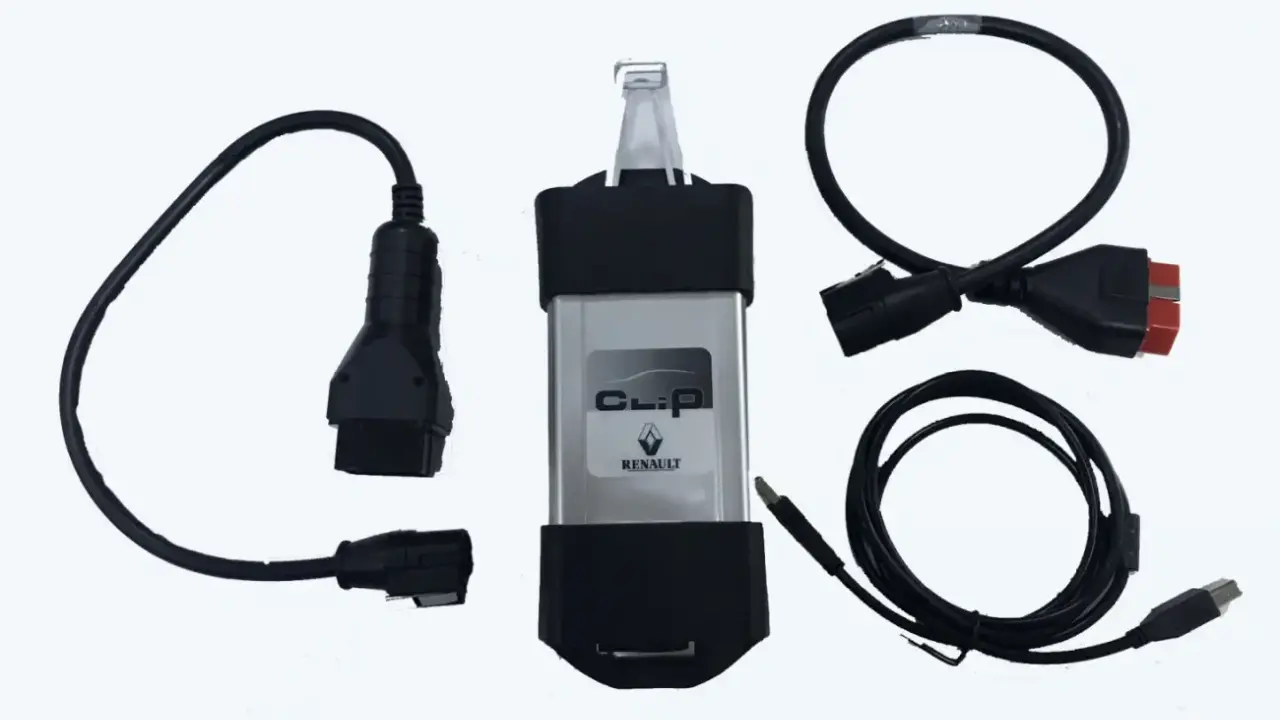
Renault CLIP is a manufacturer-specific diagnostic system developed for Renault vehicles and used for advanced fault diagnosis, electronic control unit (ECU) communication, configuration, programming, and various service procedures. Unlike a basic OBD-II scanner, Renault CLIP can communicate with many different electronic control modules throughout the vehicle.
For Renault and Dacia vehicles, CLIP can provide much more detailed information than a generic diagnostic device. It can help technicians identify faults, monitor live data, perform actuator tests, check ECU configurations, and carry out certain programming and adaptation procedures depending on the vehicle and control module.
Renault CLIP Is More Than a Basic OBD Scanner
A standard OBD-II scanner is generally designed to access emissions-related systems, especially the engine and transmission on compatible vehicles. It can read and clear diagnostic trouble codes and may display some live data.
Renault CLIP, on the other hand, is designed specifically around Renault's electronic architecture. Depending on the vehicle, it can communicate with systems such as:
Engine ECU
Engine-related fault codes, sensor values, actuator information, fuel and ignition parameters, and other engine management data can be accessed.
ABS/ESP
The system can communicate with the ABS and electronic stability control system to diagnose wheel-speed sensors, hydraulic control components, communication problems, and related faults.
Airbag System
CLIP can access the airbag control unit and retrieve fault information related to airbags, seat-belt pretensioners, impact sensors, and associated wiring.
Body Control Modules
Vehicle body electronics such as central locking, lighting, windows, wipers, immobilizer-related functions, and other comfort systems may also be accessible.
Automatic Transmission
On Renault models equipped with electronically controlled automatic or automated transmissions, CLIP can communicate with the transmission control system and provide access to relevant fault codes and live parameters.
Climate Control
Depending on the vehicle, the diagnostic system can communicate with the climate control module and help identify sensor, actuator, communication, and control problems.
The exact functions available depend on the vehicle model, model year, ECU type, software version, and vehicle equipment.
What Can Renault CLIP Do?
One of the main advantages of CLIP is that it allows a technician to go beyond simply reading a fault code.
For example, when an ECU stores a fault, CLIP can provide additional information about the fault and allow the technician to examine the conditions under which it occurred.
Live data can also be monitored while the vehicle is operating. This is particularly useful when a problem does not occur continuously.
A technician may be able to monitor sensor values, switch states, actuator commands, temperatures, pressures, throttle position, accelerator-pedal signals, and other parameters in real time.
This can make it easier to determine whether a fault is actually caused by a component or whether the component is simply reporting a problem caused elsewhere in the system.
Actuator Tests Are Especially Important
Another useful feature of Renault CLIP is actuator testing.
An actuator can sometimes appear to be functioning normally during a visual inspection but fail when it is commanded by the control unit.
Depending on the vehicle and module, CLIP may allow a technician to activate certain components electronically and observe their response.
This can be useful when diagnosing components such as throttle actuators, cooling fans, fuel-system components, solenoids, valves, relays, and other electronically controlled devices.
However, the result of an actuator test should not be interpreted in isolation. Electrical measurements, wiring checks, voltage and ground tests, and physical inspection may still be necessary.
Does Renault CLIP Program the ECU?
Yes, Renault CLIP can be used for certain ECU programming and reprogramming operations.
However, ECU programming is a much more sensitive procedure than simply reading or clearing fault codes.
Depending on the vehicle and control module, programming may involve updating the ECU software, configuring a replacement control unit, performing certain adaptations, or carrying out manufacturer-specific procedures.
The available functions vary between Renault models and ECU generations.
A technician should therefore determine exactly what procedure is required before starting any programming operation.
ECU Programming and ECU Cloning Are Not the Same
This distinction is particularly important.
ECU programming generally refers to installing or updating software, firmware, configuration data, or other required information in the vehicle's existing or replacement ECU.
ECU cloning, on the other hand, generally involves transferring relevant data from one ECU to another so that the replacement unit can operate in the vehicle.
These are different procedures and should not be treated as interchangeable.
For example, if a technician says that the software from another Renault with the same engine will be copied into your ECU, that does not automatically mean that the procedure is an official Renault ECU programming operation.
The compatibility of the hardware, software version, calibration, configuration, immobilizer data, vehicle options, and other parameters must all be considered.
Why Is Stable Voltage Important During ECU Programming?
ECU programming should not be treated like a normal diagnostic scan.
During programming, communication between the diagnostic equipment and the control unit must remain stable. If battery voltage drops significantly or communication is interrupted during a programming procedure, the ECU software can potentially become corrupted.
For this reason, professional diagnostic environments normally pay close attention to battery voltage and use appropriate power-support equipment when required.
A programming operation should never be interrupted simply because the procedure appears to be taking longer than expected.
Can Renault CLIP Fix a Fault by Itself?
No.
CLIP is a diagnostic and service tool. It does not physically repair a faulty component.
For example, suppose a vehicle has a throttle actuator-related fault. CLIP may identify a fault code and provide access to throttle position values, accelerator-pedal signals, actuator tests, and other relevant parameters.
But the actual cause could be:
-
A defective throttle body
-
A damaged connector
-
A broken or high-resistance wire
-
A poor ground connection
-
A power supply problem
-
An accelerator-pedal signal problem
-
A communication issue
-
An ECU driver problem
-
A software or configuration problem
Therefore, replacing the throttle body immediately after seeing a throttle-related fault code is not necessarily the correct repair.
Renault CLIP and the P2100 Example
P2100 is a good example of why manufacturer-level diagnostics should be combined with electrical testing.
A P2100 code is related to the throttle actuator control motor circuit. A generic scanner may simply display the code and its description.
A technician using Renault-specific diagnostic equipment can potentially investigate additional parameters and perform actuator-related tests.
But even with CLIP, the diagnostic process should not stop at the fault code.
The throttle body, connector, wiring, power supply, grounds, accelerator-pedal signals, ECU output stage, and relevant software or configuration should be evaluated according to the vehicle's diagnostic procedure.
This is why a fault code should be considered a starting point for diagnosis rather than definitive proof that a particular component has failed.
What Happens When an ECU Is Replaced?
Replacing an ECU does not necessarily mean that the vehicle will immediately operate normally.
Depending on the Renault model, the replacement ECU may need to be configured or programmed for the vehicle. Some modules may also have relationships with the immobilizer and other electronic control units.
Consequently, installing a physically compatible ECU and making that ECU electronically compatible with the vehicle are two different things.
The technician needs to determine which programming, configuration, coding, or adaptation procedures are required for that particular vehicle.
Can CLIP Perform Adaptation and Learning Procedures?
On supported vehicles, Renault diagnostic equipment can be used for various learning, initialization, and adaptation procedures.
These procedures can be important after replacing or servicing certain components.
For example, some electronic systems may need to relearn positions or operating parameters after component replacement.
The exact procedure depends on the vehicle, ECU, software version, and component involved. Therefore, a generic assumption that every Renault uses exactly the same adaptation procedure would be incorrect.
Why Manufacturer-Specific Diagnostics Matter
Modern Renault vehicles contain a large number of interconnected electronic control units. A problem that appears to originate from one component may sometimes actually be caused by another component, wiring problem, power supply issue, communication fault, or software configuration.
This is why manufacturer-specific diagnostic equipment can be particularly valuable for difficult faults.
However, having Renault CLIP does not automatically make a diagnosis correct.
The technician still needs to understand electrical circuits, sensor signals, actuator operation, CAN communication, ECU logic, and the physical construction of the vehicle.
The best diagnostic process combines diagnostic software with traditional electrical and mechanical testing.
Is Renault CLIP Enough to Diagnose Every Problem?
Not necessarily.
CLIP is extremely useful for electronic diagnosis, but it cannot replace every other diagnostic method.
A technician may still need:
-
A multimeter
-
An oscilloscope
-
Wiring diagrams
-
Electrical continuity and resistance tests
-
Voltage-drop testing
-
Physical inspections
-
Smoke testing for certain systems
-
Mechanical measurements
-
Manufacturer repair procedures
For intermittent faults in particular, live-data analysis and electrical measurements can be more valuable than simply reading stored fault codes.
Renault CLIP for Professional Diagnosis
Renault CLIP is one of the most important tools for technicians working with Renault electronic systems because it provides access to manufacturer-specific diagnostic functions that may not be available through a conventional OBD-II scanner.
It can read faults, display live parameters, perform actuator tests, identify ECU information, support certain adaptations, and carry out supported programming procedures.
But the most important point is that diagnostic equipment is only a tool.
A good diagnosis does not consist of reading a code and replacing the component named in the description. The code must be interpreted together with the vehicle's symptoms, live data, electrical measurements, wiring condition, and the behavior of the system under different operating conditions.
For complex Renault faults, the combination of Renault-specific diagnostic equipment and a technician who understands how the vehicle's electronic systems actually work is what makes the difference.