TR
TR EN
EN

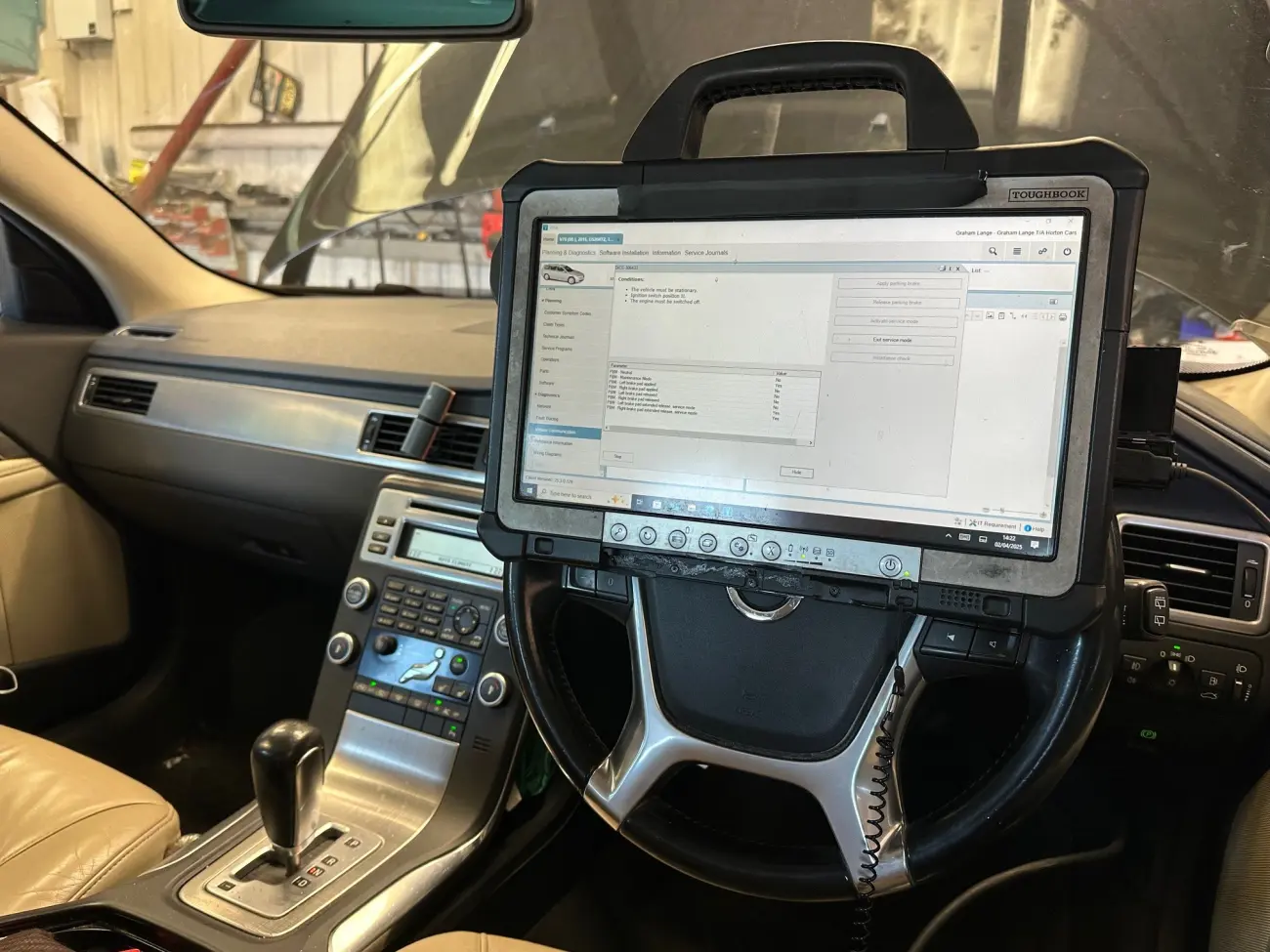
What Is Volvo VIDA? Fault Diagnosis in Volvo Vehicles
Volvo VIDA is a manufacturer-specific diagnostic and service platform designed for diagnosing electronic systems in Volvo vehicles. Unlike a basic OBD-II scanner, VIDA can provide access to a much broader range of vehicle control modules and diagnostic functions.
Modern Volvo vehicles contain numerous electronic control units responsible for systems such as engine management, transmission, ABS, airbags, body electronics, climate control, steering, parking assistance, and driver assistance. When a problem occurs in one of these systems, a generic OBD scanner may not provide enough information to identify the actual cause.
VIDA is designed to provide a deeper level of access to supported Volvo vehicles, making it an important tool for professional diagnostics and servicing.
What Is Volvo VIDA Used For?
The main purpose of VIDA is to help technicians diagnose faults and perform supported service procedures on Volvo vehicles.
Depending on the vehicle, model year, and control module, VIDA can provide functions such as:
-
Reading and clearing diagnostic trouble codes
-
Identifying electronic control modules
-
Monitoring live data
-
Checking sensor values
-
Performing supported actuator tests
-
Running diagnostic procedures
-
Checking communication between control modules
-
Accessing service and repair procedures
-
Performing certain software-related operations
-
Supporting control module replacement procedures
-
Carrying out supported configuration and calibration procedures
The exact capabilities available depend on the vehicle and the electronic systems installed in it.
Which Volvo Systems Can VIDA Diagnose?
Modern Volvo vehicles use multiple control modules that communicate with each other.
Depending on the vehicle architecture, VIDA can provide diagnostic access to systems such as the engine, transmission, ABS, airbags, climate control, body electronics, steering, parking assistance, and various driver assistance systems.
This broader access is particularly useful when an electrical problem affects more than one system.
For example, a communication problem may cause faults to appear in several control modules at the same time. Looking at only the engine ECU may not reveal the real source of the problem.
VIDA allows the technician to examine the vehicle's electronic systems more comprehensively.
How Is VIDA Different From a Generic OBD-II Scanner?
The main difference between VIDA and a standard OBD-II scanner is the level of access they provide.
OBD-II was developed as a standardized diagnostic system, particularly for emissions-related systems and basic engine diagnostics. A generic scanner can therefore be very useful for checking engine fault codes and determining why the check-engine light has appeared.
However, modern vehicles contain many electronic systems outside the basic OBD-II scope.
An ABS fault, airbag problem, body control issue, or communication fault between control modules may require manufacturer-specific diagnostic access.
VIDA is designed specifically for Volvo vehicles and can therefore provide much more detailed diagnostic information on supported systems.
In simple terms, a generic OBD scanner provides general diagnostic access, while VIDA provides manufacturer-level diagnostic capabilities for Volvo vehicles.
Does VIDA Only Read Fault Codes?
No.
Reading diagnostic trouble codes is only one part of what VIDA can do.
Once a fault code is identified, the technician may need to determine why it was generated. VIDA can assist with this process by providing live data, diagnostic procedures, component tests, and other information related to the affected system.
This is important because a fault code does not necessarily identify the component that has failed.
For example, a sensor-related code may be caused by the sensor itself, but it could also result from damaged wiring, a poor connector, an incorrect power supply, a grounding problem, or another fault within the system.
The code should therefore be treated as a starting point for diagnosis rather than an automatic instruction to replace a part.
Why Is Live Data Important?
Live data can be extremely useful when diagnosing intermittent or condition-dependent problems.
A technician may monitor parameters such as engine speed, engine temperature, accelerator position, throttle position, pressure values, sensor signals, and other system-specific measurements while the vehicle is operating.
This makes it possible to see how the system behaves when the problem occurs.
For example, a vehicle may operate normally at idle but develop a fault under acceleration. Monitoring live data during the event can help identify which parameter changes abnormally.
This type of information can be much more useful than simply clearing the fault code and waiting to see whether it returns.
Can VIDA Perform Actuator Tests?
On supported systems, VIDA can be used to perform actuator and component tests.
Actuators are components that physically perform an action based on commands from an electronic control unit. Depending on the system, they can include motors, valves, solenoids, relays, and other electronically controlled components.
During a diagnostic test, the technician can command a supported actuator to operate and observe its response.
This can help determine whether the problem is related to the component itself, its wiring, the control signal, or another part of the system.
Does VIDA Provide Volvo Service Information?
VIDA is also associated with Volvo-specific service and repair information.
This is particularly useful because diagnosing a fault is not always enough. The technician may also need to know how a particular component should be tested, removed, installed, calibrated, or configured.
Manufacturer-specific procedures can help ensure that the diagnostic and repair process follows the correct sequence.
This becomes increasingly important on modern vehicles because many electronic components require specific procedures after replacement.
Can VIDA Program an ECU?
Depending on the vehicle, control module, and available service functions, VIDA can support certain software-related procedures.
ECU programming should not be confused with replacing an ECU.
Programming generally involves updating or installing software or calibration data in an existing control unit.
ECU replacement involves physically installing another module and then carrying out the procedures required to make it compatible with the vehicle.
After a control module has been replaced, additional configuration, initialization, programming, or learning procedures may be required depending on the vehicle and module.
What Is the Difference Between ECU Programming and ECU Cloning?
ECU programming, coding, configuration, and cloning are different processes.
Programming generally refers to installing or updating the software or calibration data of a control unit.
Coding or configuration involves setting the control unit up according to the vehicle's equipment and electronic configuration.
ECU cloning is a different process that may involve transferring certain data from one control unit to another.
A fault code alone is not sufficient justification for replacing or cloning an ECU. The technician should first establish whether the control unit itself is actually defective.
Why Is Stable Battery Voltage Important?
Stable electrical power is especially important when software or programming procedures are being performed.
If the battery voltage drops significantly or communication with the vehicle is interrupted while software is being written to a control module, the procedure may fail.
In some cases, an interrupted programming operation can leave a control unit unable to operate normally and require an additional recovery or programming procedure.
For this reason, professional workshops generally use an appropriate battery support unit or stable power supply during programming operations.
Can VIDA Automatically Fix a Fault?
No.
VIDA is a diagnostic and service platform, not an automatic repair system.
For example, if VIDA reports a throttle-related fault, it does not necessarily mean that the throttle body needs to be replaced.
The technician may need to check:
-
Power supply
-
Ground connections
-
Wiring
-
Connectors
-
Sensor signals
-
Live data
-
ECU outputs
-
Mechanical components
-
Communication between control modules
Only after these checks can the actual cause of the problem be determined.
This distinction is important because replacing parts based solely on diagnostic codes can lead to unnecessary repairs and expenses.
Why Does Technical Knowledge Matter When Using VIDA?
Manufacturer-level diagnostic software can provide a large amount of information, but the information still needs to be interpreted correctly.
For example, an abnormal sensor reading does not automatically mean that the sensor is defective. The cause could be a wiring problem, incorrect voltage, poor grounding, or a mechanical issue affecting the sensor's measurement.
Similarly, a communication fault does not necessarily mean that the control module reporting the fault has failed.
Effective diagnosis therefore requires more than simply connecting VIDA to the vehicle. Electrical measurements, wiring checks, mechanical inspection, live-data analysis, and manufacturer-specific diagnostic procedures may all be necessary.
VIDA and Modern Volvo Diagnostics
Volvo vehicles have become increasingly dependent on electronic control systems. Engine management, transmission control, braking, airbags, body electronics, climate control, parking assistance, and driver assistance functions can all involve multiple interconnected control modules.
As vehicle electronics become more complex, generic OBD scanners can be insufficient for certain diagnostic problems.
Volvo VIDA provides manufacturer-specific diagnostic capabilities that allow supported systems to be examined in greater detail. Depending on the vehicle, it can provide access to fault codes, live data, diagnostic tests, service procedures, and supported software functions.
For this reason, Volvo VIDA should not be viewed simply as a fault-code reader. It is a professional diagnostic and service platform designed to help technicians understand how the vehicle's electronic systems are operating and determine the actual cause of a fault.