TR
TR EN
EN

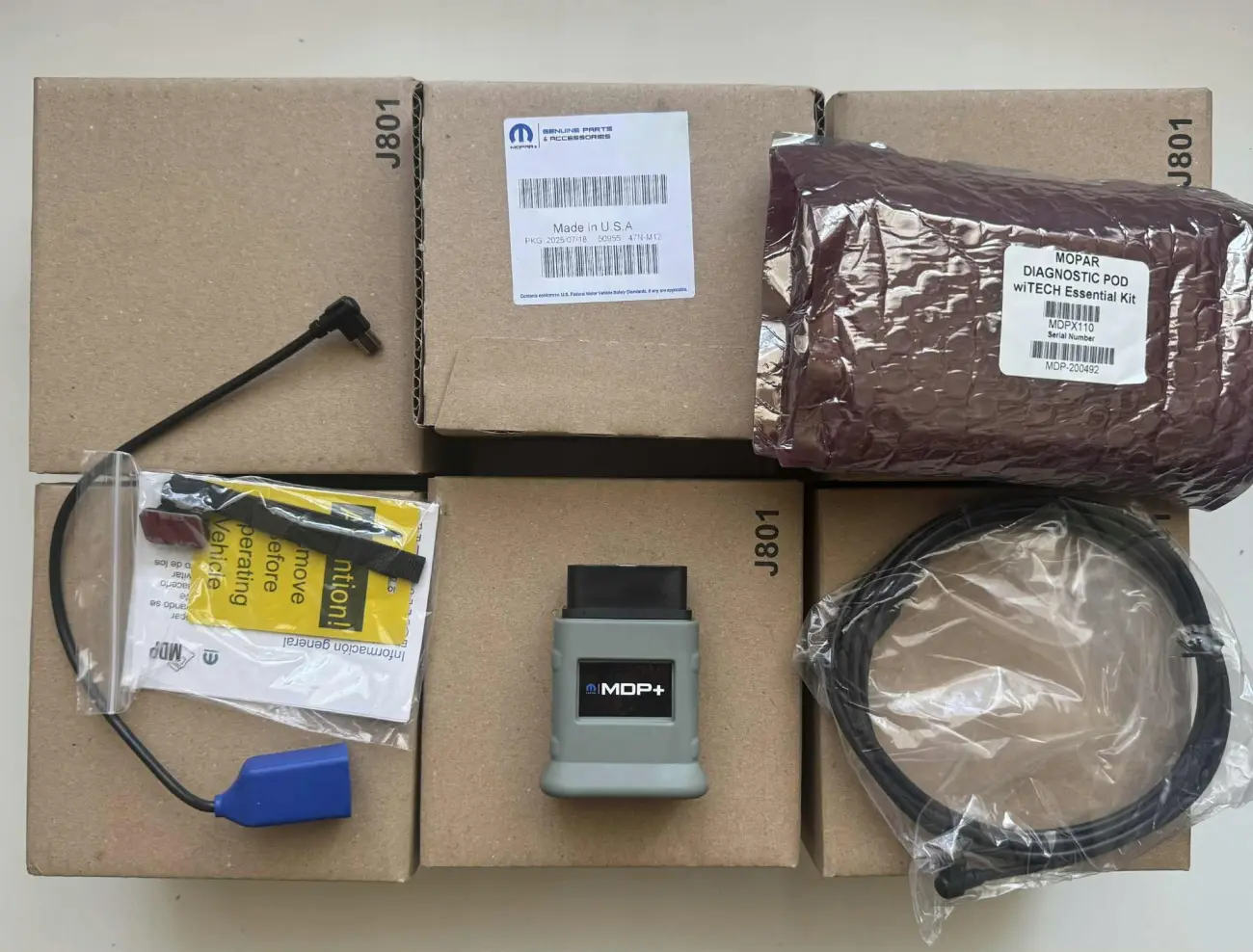
What Is Fiat wiTECH? Fiat Diagnostic Tool
Fiat wiTECH is a professional diagnostic platform used to diagnose electronic systems and perform various service procedures on Fiat and other supported Stellantis vehicles. It is especially important for authorized dealers and independent workshops that specialize in Fiat group vehicles.
Unlike a basic OBD-II scanner, wiTECH can communicate with many of the electronic control units installed throughout the vehicle. Depending on the vehicle and software version, it can provide access to the engine ECU, transmission control unit, ABS/ESP system, airbag module, body control module, climate control system, parking sensors, and other electronic systems.
For this reason, wiTECH should not simply be considered an ordinary fault-code reader.
What Is Fiat wiTECH Used For?
The primary purpose of wiTECH is to diagnose vehicle control systems, identify possible causes of faults, and perform supported service procedures.
Depending on the vehicle, wiTECH can provide functions such as:
-
Reading and clearing diagnostic trouble codes
-
Viewing control unit identification information
-
Monitoring live data
-
Performing actuator tests
-
Running system-specific diagnostic procedures
-
Checking communication between control modules
-
Performing certain configuration procedures
-
Carrying out supported software updates and programming
-
Performing certain calibration or relearn procedures
-
Supporting control unit replacement procedures
The exact functions available depend on the vehicle model, model year, control module, software version, and the specific service operation being performed.
Which Vehicles Can Be Diagnosed With wiTECH?
wiTECH is designed primarily for vehicles within the Fiat and Stellantis ecosystem.
Depending on the supported application and vehicle generation, the platform can be used with brands such as Fiat, Alfa Romeo, Lancia, and Jeep. Other Stellantis-related brands have also used different versions of the same broader diagnostic infrastructure over time.
However, not every vehicle provides exactly the same level of access.
A newer vehicle may offer diagnostic and programming functions that are not available on an older model, while a particular control module may have different service functions from another module.
How Is wiTECH Different From a Standard OBD-II Scanner?
The biggest difference between wiTECH and a generic OBD-II scanner is the level of access to the vehicle.
OBD-II provides a standardized method of accessing certain diagnostic information, particularly information related to emissions and the engine management system. A basic scanner can therefore be very useful for checking why the check-engine light is illuminated.
However, a vehicle contains many other electronic systems that are outside the normal scope of a basic OBD-II scan.
For example, an ABS fault, airbag problem, body control module fault, or communication problem between control units may not be fully accessible with a basic scanner.
wiTECH is designed to communicate with manufacturer-specific systems and therefore provides much deeper diagnostic capabilities on supported vehicles.
In simple terms:
Generic OBD-II scanner → General-purpose diagnostic access
wiTECH → Manufacturer-specific diagnostic access
This difference becomes increasingly important as vehicles become more electronically complex.
Can wiTECH Read and Clear Fault Codes?
Yes. Reading diagnostic trouble codes is one of the basic functions of wiTECH.
However, a fault code should not automatically be interpreted as proof that a particular component has failed.
For example, a sensor-related fault code does not necessarily mean that the sensor itself needs to be replaced. The same fault can sometimes be caused by damaged wiring, a poor electrical connection, a power supply problem, a ground problem, a communication issue, or another component in the system.
Therefore, the fault code is generally the starting point of the diagnostic process rather than the final diagnosis.
Why Is Live Data Important?
Live data is particularly useful when a fault occurs only under certain operating conditions.
A technician can monitor parameters such as engine speed, accelerator position, throttle position, engine temperature, manifold pressure, sensor readings, and other system-specific values in real time.
This can help determine whether a sensor is providing a plausible signal or whether a parameter changes abnormally when the problem occurs.
For intermittent faults, live data can be much more informative than simply reading and clearing stored fault codes.
What Are Actuator Tests?
One of the useful features of a manufacturer-level diagnostic platform is the ability to perform actuator tests on supported systems.
An actuator is a component that performs a physical action based on a command from an electronic control unit. Depending on the system, this could involve a motor, valve, relay, solenoid, or another electronically controlled component.
During an actuator test, the diagnostic system can command the component to operate while the technician observes its response.
This makes it possible to investigate whether the problem is related to the actuator itself, its wiring, the control signal, or another part of the system.
Can wiTECH Program an ECU?
On supported vehicles and control modules, wiTECH can be used for certain software programming and update procedures.
However, ECU programming and ECU replacement are not the same thing.
Programming generally means updating or installing appropriate software or calibration data in an existing control unit.
ECU replacement means physically installing another control unit and then carrying out the procedures required to make that module compatible with the vehicle.
Depending on the vehicle and module, this may involve configuration, initialization, security procedures, or other setup operations.
Simply installing another ECU and clearing fault codes is therefore not always enough.
ECU Programming, Coding, and Cloning Are Different
These three terms are sometimes used interchangeably, but they describe different processes.
ECU programming generally refers to installing or updating software or calibration data in a control unit.
Coding or configuration involves setting up a control module according to the equipment and configuration of the vehicle.
ECU cloning is a different process in which certain data from one ECU is transferred to another ECU.
A control unit should not automatically be replaced or cloned simply because a diagnostic code points toward an electronic problem.
The underlying cause should first be established through proper electrical, electronic, software, and mechanical diagnosis.
Does wiTECH Require an Internet Connection?
Modern manufacturer-level diagnostic systems increasingly rely on online services and manufacturer infrastructure.
Depending on the operation, wiTECH may require access to online services for functions such as software programming, security-related procedures, authorization, or other manufacturer-supported operations.
Not every diagnostic function necessarily requires the same level of online access. The requirements depend on the vehicle, control module, software version, and procedure being performed.
This online infrastructure is one of the characteristics that distinguishes professional manufacturer diagnostic platforms from simple standalone OBD scanners.
Why Is Battery Voltage Important During Programming?
Stable battery voltage is extremely important during ECU programming.
If the vehicle voltage drops significantly or communication is interrupted while software is being written to a control unit, the programming process may fail.
In some cases, an interrupted programming operation can leave a control unit unable to operate normally and require an additional recovery or programming procedure.
For this reason, a suitable battery support unit or stable power supply is normally used during professional ECU programming.
Can wiTECH Automatically Fix a Fault?
No.
Even though wiTECH is a sophisticated diagnostic platform, it does not physically repair the vehicle.
For example, if wiTECH reports a throttle-related fault, that does not automatically mean that the throttle body must be replaced.
A technician may need to check:
-
Power supply voltage
-
Ground connections
-
Wiring
-
Connectors
-
Sensor signals
-
Live data
-
ECU outputs
-
Mechanical operation
-
Communication between control modules
Only after these factors have been evaluated can the actual cause of the problem be identified.
The diagnostic tool provides information and testing capabilities. The technician still has to interpret the results correctly.
When Is wiTECH Particularly Useful?
wiTECH becomes especially valuable when a generic diagnostic scanner cannot provide enough information to identify the problem.
For example, a vehicle may have faults stored in several different control modules. There could be a communication problem between the engine ECU and another module, an ABS fault that is not visible through a basic OBD scan, or a configuration issue following the replacement of an electronic component.
In these situations, accessing the vehicle at manufacturer level can make the diagnostic process considerably more comprehensive.
Why Does Technical Knowledge Matter When Using wiTECH?
A manufacturer-level diagnostic system can provide a large amount of information, but having access to more information does not automatically guarantee a correct diagnosis.
A technician can misinterpret a live-data value, replace a component unnecessarily, or assume that a fault code identifies the failed part without performing the necessary tests.
Proper diagnosis usually requires a combination of electronic measurements, wiring checks, mechanical inspection, live-data analysis, actuator tests, and manufacturer-specific procedures.
This is why the skill of the technician remains just as important as the diagnostic equipment itself.
Fiat wiTECH and Modern Vehicle Diagnostics
Modern Fiat and Stellantis vehicles contain numerous electronic control modules, ranging from the engine management system to the body electronics, braking system, safety systems, transmission, and driver-assistance functions.
A generic OBD scanner may be sufficient for basic engine diagnostics, but it can be inadequate when a more complex electronic problem needs to be investigated.
wiTECH provides manufacturer-specific diagnostic capabilities that allow supported control modules to be examined in greater detail. Depending on the vehicle, it can provide access to fault codes, live data, actuator tests, configuration functions, and programming procedures.
For this reason, Fiat wiTECH should be viewed not simply as a device for reading and clearing fault codes, but as a comprehensive manufacturer-level diagnostic platform designed to help technicians determine what is actually happening inside the vehicle's electronic systems.