TR
TR EN
EN

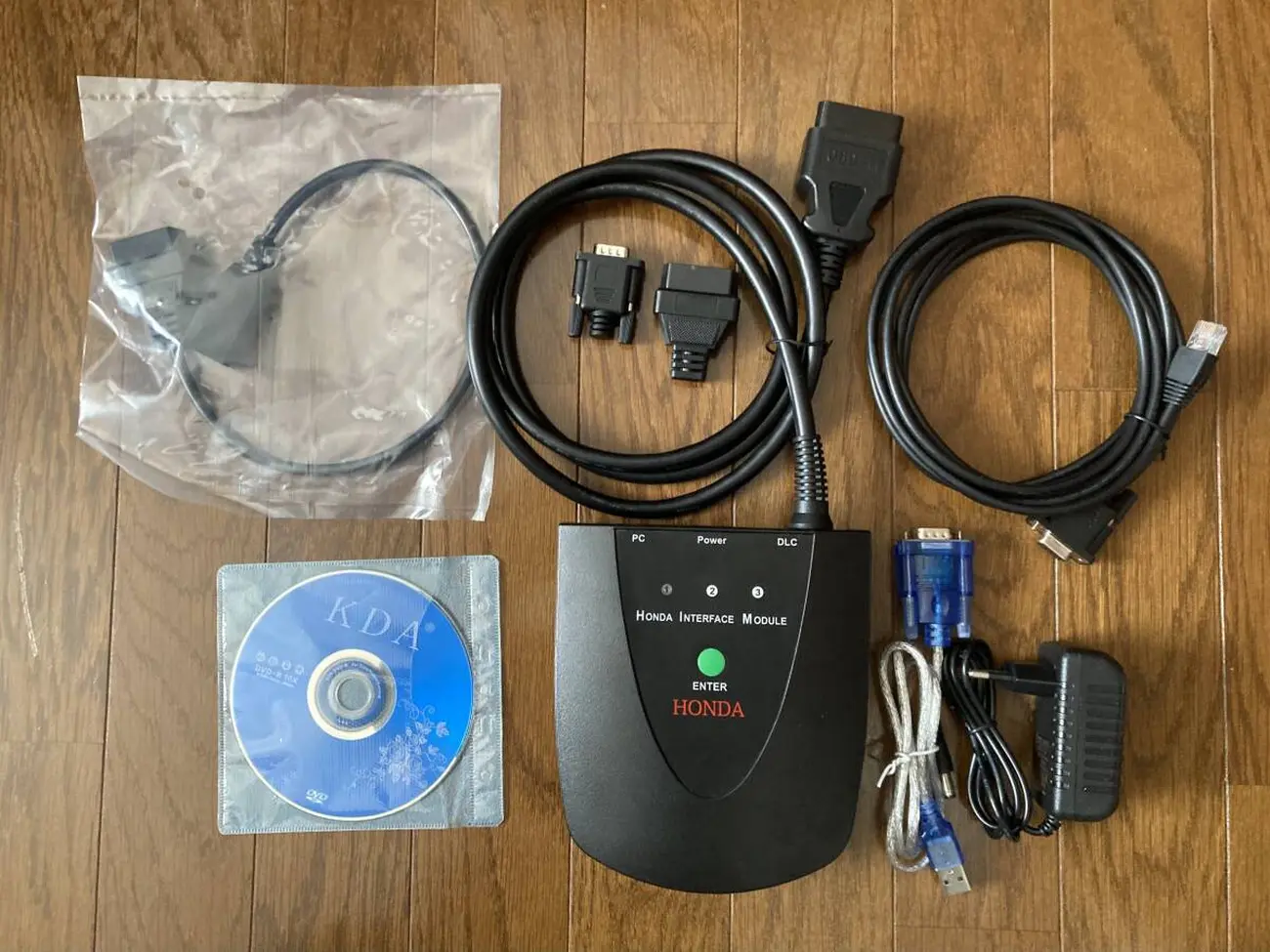
What Is Honda HDS? Fault Diagnosis in Honda Vehicles
When a Honda vehicle develops an electronic fault, a standard OBD-II scanner can provide useful information, but it may not be enough to identify the actual cause of the problem. Honda vehicles contain numerous electronic control units, sensors, actuators, and communication networks, and diagnosing these systems often requires manufacturer-specific diagnostic equipment.
Honda HDS, short for Honda Diagnostic System, is the manufacturer-level diagnostic platform developed for Honda vehicles. It provides technicians with access to functions that go considerably beyond basic fault-code reading.
Depending on the vehicle, model year, control unit, and available software functions, HDS can be used to read diagnostic trouble codes, monitor live data, perform actuator tests, carry out system checks, perform certain learning and calibration procedures, and support selected control-unit programming and service operations.
What Does Honda HDS Do?
The primary purpose of HDS is to communicate directly with the electronic control modules installed in a Honda vehicle.
A modern Honda may contain separate control units for systems such as:
-
Engine management
-
Automatic or continuously variable transmission
-
ABS and stability control
-
Airbags and SRS
-
Electric power steering
-
Body electronics
-
Climate control
-
Instrument cluster
-
Immobilizer and security systems
-
Parking and driver-assistance systems
-
Hybrid or electrified vehicle systems on applicable models
A generic scanner may communicate with some of these modules, but manufacturer-level software can provide considerably more detailed information and diagnostic procedures.
HDS can identify control modules, retrieve stored and pending fault codes, display sensor information, perform selected active tests, and guide technicians through diagnostic procedures.
Reading Fault Codes With Honda HDS
One of the most basic functions of HDS is reading diagnostic trouble codes.
However, the important advantage is not simply seeing a code on the screen. HDS can provide additional information that helps determine which part of the system should actually be investigated.
For example, an engine-related fault code may involve a sensor, wiring, power supply, ground connection, connector, actuator, or control module. Replacing the component named in the code without testing the rest of the circuit can therefore lead to unnecessary repairs.
A proper diagnosis normally combines the fault code with live data, wiring information, electrical measurements, and the symptoms experienced by the vehicle.
This is particularly important for intermittent faults. A fault may disappear after the ignition is switched off, but its diagnostic information may remain stored in the control unit.
Live Data and Sensor Information
Honda HDS can display real-time information from supported control modules.
Depending on the system being diagnosed, a technician may be able to observe values such as:
-
Engine coolant temperature
-
Throttle position
-
Accelerator pedal position
-
Engine speed
-
Intake air measurements
-
Oxygen or air-fuel sensor information
-
Fuel system parameters
-
Transmission data
-
Vehicle speed
-
ABS wheel-speed information
-
Steering angle
-
Brake-related parameters
-
Battery or charging information
-
Various switch and actuator states
Live data can be extremely useful when a fault does not occur continuously.
For example, if a vehicle loses throttle response only during acceleration, looking at the accelerator pedal position and throttle position simultaneously can help determine whether the problem originates from the pedal signal, throttle system, wiring, power supply, or control strategy.
Active Tests and Actuator Testing
Another important capability of manufacturer-level diagnostic software is the ability to command certain components to operate.
Honda HDS can perform supported active or actuator tests. During these tests, the diagnostic system sends commands to a control module and observes the response.
Depending on the vehicle, these procedures may be used to test components such as:
-
Cooling fans
-
Solenoids
-
Relays
-
Valves
-
Fuel-related components
-
Throttle-related systems
-
ABS components
-
Certain body electrical devices
This can help separate an electrical or control problem from a mechanical problem.
If a component does not respond to a commanded test, the technician can then investigate its power supply, ground, wiring, connector, control signal, and mechanical condition.
Honda HDS and ECU Diagnosis
Modern Honda vehicles rely heavily on electronic control units. The engine control module, transmission control system, ABS system, SRS system, body control functions, and other modules continuously exchange information.
HDS can identify these modules and provide information about their status and communication.
This is particularly useful when a vehicle has multiple fault codes or when several systems appear to be affected at the same time.
For example, several unrelated warning lights appearing simultaneously does not necessarily mean that several separate components have failed. A communication problem, power supply issue, weak battery, poor ground, or network fault can sometimes affect multiple modules.
A manufacturer-level diagnostic system makes it easier to investigate these relationships.
Does Honda HDS Program an ECU?
This is an area where several different operations are often confused.
ECU programming, coding or configuration, adaptation, and ECU cloning are not the same thing.
Programming generally refers to installing or updating software or calibration data in a control unit.
Configuration may involve setting a module's vehicle-specific parameters.
Learning or calibration procedures allow a control unit to establish reference values for certain components or systems.
Cloning is different again. It generally involves transferring relevant data from one control unit to another, often using specialized equipment and procedures.
Depending on the Honda model, control unit, software version, and available service functions, HDS may support certain programming, initialization, learning, or configuration procedures.
However, not every ECU can be programmed in the same way, and not every function is available for every model.
ECU Replacement and Initialization
Replacing an electronic control unit is not always as simple as unplugging the old module and installing another one.
A replacement module may need to be configured, initialized, learned, or matched to the vehicle.
Security-related systems can make this even more important. Immobilizer and key-related functions may require specific procedures before the vehicle will operate normally with a replacement module.
HDS can provide supported service procedures for these situations, depending on the vehicle and module.
This is one reason manufacturer-level diagnostic equipment can be important when replacing electronic components.
HDS Is Not a Magic Fault Finder
Having HDS does not automatically mean that a technician can identify a failed component simply by connecting a computer.
A diagnostic code usually tells you where the control system detected an abnormal condition. It does not necessarily identify the physical component that must be replaced.
For example, a fault associated with a throttle actuator could potentially be caused by:
-
The throttle body
-
An actuator motor
-
Position sensors
-
Wiring
-
Connector problems
-
Power supply
-
Ground problems
-
Communication issues
-
Control-module faults
-
Mechanical problems
The correct diagnosis requires testing.
This distinction is especially important when dealing with expensive electronic components. Replacing a throttle body, ECU, ABS module, or other control unit solely because a diagnostic code appears can result in unnecessary expense.
Honda HDS vs. a Generic OBD-II Scanner
A basic OBD-II scanner is useful for many common diagnostic tasks. It can usually retrieve standard emissions-related trouble codes and display some basic engine parameters.
Honda HDS is designed to go much deeper into Honda's electronic systems.
A generic scanner may tell you that an engine-related fault is present. HDS may provide additional access to the relevant Honda control module, manufacturer-specific codes, live parameters, active tests, and supported service procedures.
This does not make a generic scanner useless. It simply means that the two tools are designed for different levels of diagnosis.
For simple check-engine-light problems, a basic scanner may be sufficient. For complicated electronic faults involving several control units, manufacturer-specific functions can become much more valuable.
Why Stable Battery Voltage Is Important
Programming, initialization, and other electronic service procedures can be sensitive to battery voltage.
If the vehicle battery is weak or the voltage drops significantly while a control unit is being programmed, communication can be interrupted. In the worst case, an incomplete programming operation can create additional problems with the control module.
For this reason, professional technicians normally pay close attention to battery condition and use an appropriate power supply or battery support unit when required.
This is particularly important during software updates and other procedures where the diagnostic tool must maintain continuous communication with the vehicle.
Can HDS Diagnose Electrical Problems?
Yes, but the diagnostic software is only one part of the process.
HDS can show control-unit information, sensor values, fault codes, actuator states, and other diagnostic data. However, electrical diagnosis still requires physical testing.
A technician may need to use:
-
A digital multimeter
-
Wiring diagrams
-
Test leads
-
Oscilloscope
-
Battery and charging-system tester
-
Appropriate back-probing equipment
For example, if HDS indicates that a sensor signal is abnormal, the next step may be measuring the sensor's reference voltage, ground, signal wire, and continuity.
The software can show what the control unit sees. Electrical test equipment can help determine why it sees it.
Honda HDS and Modern Honda Vehicles
As Honda vehicles have become increasingly electronic, manufacturer-level diagnostic systems have become more important.
Modern vehicles can contain multiple interconnected control modules and sophisticated communication networks. Problems in one system can sometimes influence the behavior of another system.
Hybrid and electrified Honda models can introduce additional diagnostic requirements because their propulsion and energy-management systems contain components that are not found in conventional gasoline vehicles.
The exact functions available through HDS therefore depend heavily on the vehicle's model year, powertrain, equipment level, and control-module architecture.
HDS Requires Technical Knowledge
A professional diagnostic tool is only as useful as the person operating it.
Knowing how to access a fault code is relatively easy. Understanding what the code means and determining why it occurred is much more important.
A good diagnosis usually follows a logical process:
The technician identifies the symptoms, scans the vehicle, records all relevant fault codes, examines live data, performs appropriate active tests, checks wiring and power supplies, and then confirms the suspected fault before replacing parts.
This approach prevents the common mistake of treating the diagnostic code itself as the diagnosis.
When Is Honda HDS Most Useful?
Honda HDS becomes particularly valuable when a vehicle has a complicated electronic problem that cannot be adequately investigated with a basic OBD-II scanner.
It can be useful for situations involving:
-
Persistent warning lights
-
Manufacturer-specific fault codes
-
Intermittent electronic faults
-
Communication problems
-
Sensor and actuator diagnosis
-
ABS or SRS faults
-
Transmission-related electronic problems
-
Throttle and engine-control issues
-
Module replacement
-
Initialization and learning procedures
-
Supported software programming operations
For routine maintenance, a generic diagnostic scanner may be enough. For deeper Honda-specific troubleshooting, HDS provides access to a much broader range of information and service functions.
The Real Value of Honda HDS
Honda HDS should not be thought of simply as a device that reads error codes. Its main advantage is the level of communication it can provide with the vehicle's electronic systems.
It can help a technician move from a general symptom to a more precise diagnosis by combining fault codes, live data, active tests, module information, and supported service procedures.
However, the final diagnosis still depends on proper testing. HDS can show what the vehicle's control systems are reporting, but it cannot physically inspect a damaged wire, loose connector, corroded ground, or mechanically defective component by itself.
For this reason, the most effective Honda diagnosis combines HDS with electrical measurements, mechanical inspection, wiring information, and practical troubleshooting experience.