TR
TR EN
EN

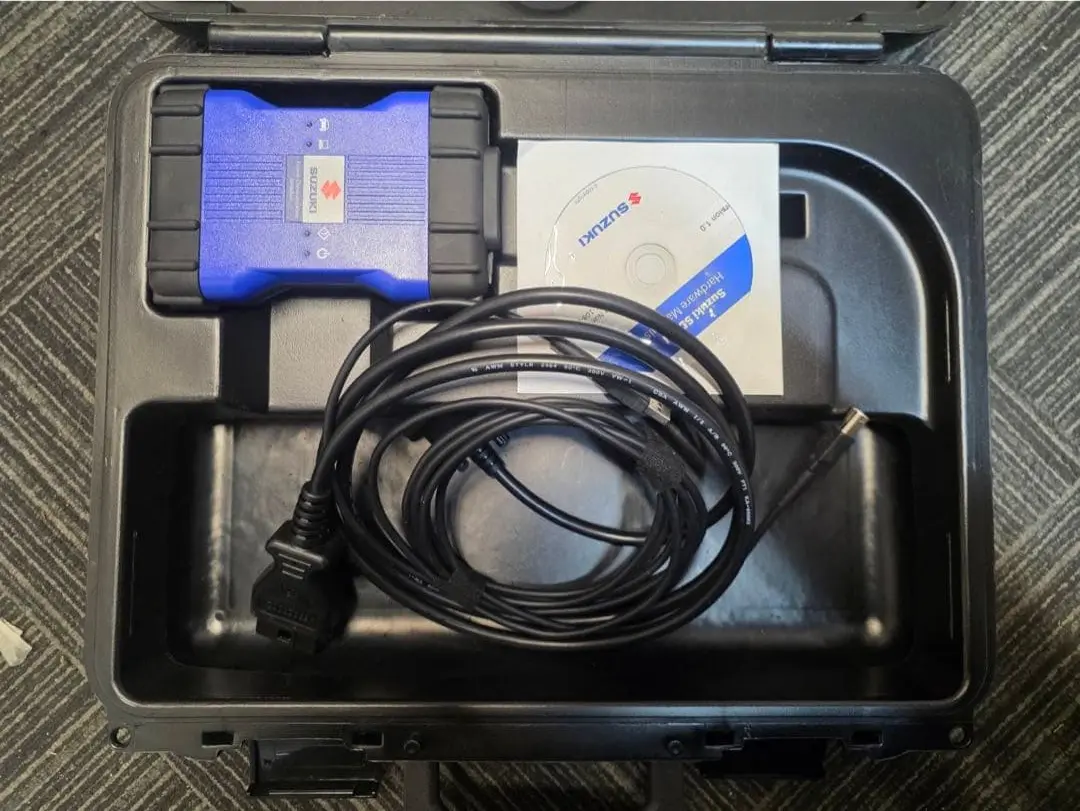
What Is Suzuki SDT-II? Fault Diagnosis in Suzuki Vehicles
Modern Suzuki vehicles contain a growing number of electronic control units that communicate with each other continuously. Engine management, transmission control, ABS, airbags, body electronics, immobilizer systems, and driver assistance features can all generate diagnostic information when something goes wrong.
A basic OBD-II scanner can be useful for reading certain diagnostic trouble codes, but it does not necessarily provide access to every system or every diagnostic function built into a Suzuki vehicle.
This is where Suzuki SDT-II becomes important. SDT-II is a manufacturer-level diagnostic system designed to communicate with Suzuki vehicles and provide technicians with access to a much broader range of diagnostic information and service functions.
What Is Suzuki SDT-II?
SDT-II stands for Suzuki Diagnostic Tool II. It is a Suzuki-specific diagnostic platform used for troubleshooting and servicing the electronic systems of supported Suzuki vehicles.
Unlike a generic diagnostic scanner, SDT-II is designed around Suzuki's own electronic architecture and diagnostic procedures. Depending on the vehicle, model year, control unit, and software version, it can provide access to functions such as fault-code reading, live-data monitoring, active tests, control-unit identification, learning procedures, calibration, and certain programming or configuration operations.
The exact functions available are not identical for every Suzuki. Newer vehicles can have different electronic architectures and diagnostic requirements than older models, so the capabilities of SDT-II depend on the particular vehicle being serviced.
Why Would a Suzuki Need SDT-II?
Consider a Suzuki with an engine warning light.
A generic scanner may retrieve an OBD-II fault code and provide a basic description. That information can be enough for an initial investigation, but it may not explain what is actually happening inside the vehicle's electronic system.
With a manufacturer-level system such as SDT-II, a technician may be able to go further by examining additional parameters, identifying the control module involved, monitoring sensor values, performing supported active tests, and following diagnostic procedures specific to the vehicle.
This can make a significant difference when the fault is intermittent or when several components could produce similar symptoms.
More Than Reading Fault Codes
Fault-code reading is probably the function most people associate with diagnostic equipment, but it is only one part of the process.
SDT-II can be used to retrieve diagnostic information from supported control units and determine which systems have detected abnormal conditions.
Depending on the vehicle, this may include the engine control module, transmission, ABS/ESP system, SRS, body control electronics, instrument cluster, air-conditioning system, immobilizer-related systems, and other modules.
The technician can then use the stored information as a starting point rather than immediately replacing a component.
This distinction is important because a fault code normally identifies a problem detected in a circuit or system. It does not necessarily identify the component that must be replaced.
Live Data Can Reveal What the ECU Is Seeing
One of the most useful parts of manufacturer-level diagnostics is live-data monitoring.
Sensors constantly send information to the vehicle's control modules. If a sensor produces an incorrect signal, the control unit may detect a value that does not match the expected operating conditions.
With appropriate SDT-II support, parameters such as engine speed, coolant temperature, throttle position, accelerator-pedal position, air-related measurements, fuel-system data, and other operating values can be monitored.
For example, suppose a Suzuki develops an intermittent throttle-related fault. Simply seeing a throttle-related code does not prove that the throttle body itself has failed.
The technician can monitor the accelerator-pedal signal and throttle position while operating the vehicle or performing a controlled test. If the pedal signal changes correctly but the throttle position does not respond as expected, the investigation can move in one direction. If the pedal signal itself is abnormal, the problem may lie elsewhere.
The diagnostic system therefore becomes a way of observing the system rather than simply reading a code.
Active Tests and Component Checks
Some faults cannot be properly investigated by looking at stored data alone.
Active tests allow the diagnostic system to send commands to certain vehicle components when the particular model supports the function. This can help determine whether an actuator, relay, solenoid, or other electronically controlled component responds to the command.
For example, if an electronically controlled component is suspected, a technician may be able to command it through the diagnostic system and observe its response.
This can help separate several possibilities:
-
a failed component
-
an electrical supply problem
-
a damaged or disconnected wire
-
a poor connector connection
-
a grounding problem
-
a communication problem
-
a control-module problem
The diagnostic software does not replace electrical testing, but it can make the testing process considerably more systematic.
Diagnosing Different Suzuki Systems
SDT-II is not limited to the engine.
Modern Suzuki vehicles contain multiple electronic systems, and the available diagnostic functions depend on the vehicle.
Engine management
Engine-related diagnosis can include fault codes, sensor values, fuel and air-management parameters, throttle-related information, and other engine operating data.
Automatic and CVT transmissions
Where supported, transmission control systems can be examined for fault codes and operating information. Electronic transmission problems should not automatically be interpreted as mechanical transmission failures, since sensors, solenoids, wiring, and control modules can also create transmission-related faults.
ABS and stability control
ABS and stability systems depend on information from wheel-speed sensors and other components. Diagnostic data can help identify communication or sensor-related problems.
SRS and airbags
Airbag and restraint systems have their own control modules and diagnostic requirements. SDT-II can provide access to supported SRS diagnostic information.
Body electronics
Depending on the model, body-related systems such as lighting, central locking, climate control, instrument functions, and other electronic features may also be accessible.
ECU Programming Is Different From ECU Cloning
The presence of programming functions in a diagnostic system can sometimes create confusion.
ECU programming means installing or updating appropriate software or calibration in a control unit according to the manufacturer's procedure.
Configuration or coding involves setting parameters so that the control unit is correctly configured for the vehicle.
Learning and calibration procedures can teach a control unit the operating characteristics or reference positions it needs after certain repairs.
ECU cloning is something different. It generally involves transferring relevant data from one control unit to another, often in situations where an ECU is being replaced.
These procedures should not be treated as interchangeable. If an ECU has a software problem, the correct solution may be a manufacturer-approved programming procedure rather than copying data from another vehicle.
What Happens When a Suzuki ECU Is Replaced?
Replacing an electronic control unit is not always a simple plug-and-play operation.
Depending on the Suzuki model and system involved, the replacement module may need to be configured, initialized, calibrated, or paired with other vehicle systems.
Security-related functions can be particularly important. The engine ECU, immobilizer system, and vehicle keys may need to communicate correctly before the vehicle can operate normally.
A manufacturer-level diagnostic platform can be useful in these situations because the technician may have access to the procedures required for the particular vehicle.
The exact procedure, however, varies between models and electronic architectures.
Immobilizer and Security Diagnosis
Starting problems are not always caused by the engine itself.
If the immobilizer system does not correctly recognize the key or if communication between security-related modules is interrupted, the engine may fail to start even when the mechanical engine components are functioning normally.
Depending on the vehicle and available service functions, SDT-II can assist with diagnosing security-related faults and performing certain supported procedures.
Security functions may require specific authorization or service access, so not every function is necessarily available in every diagnostic environment.
Transmission Diagnosis Requires More Than Reading a Code
Electronic transmission systems provide a good example of why manufacturer-level diagnostics can be useful.
A transmission warning does not automatically mean that the transmission needs to be rebuilt or replaced.
An electronic transmission or CVT system may depend on pressure sensors, speed sensors, solenoids, temperature sensors, wiring, and communication between several control units.
A diagnostic system can help identify whether the control unit has detected a sensor problem, an electrical fault, or another abnormal operating condition.
The actual repair still requires mechanical and electrical verification.
SDT-II and Standard OBD-II Scanners
Generic OBD-II scanners and manufacturer-level diagnostic systems serve different purposes.
An ordinary OBD-II scanner is useful for basic diagnostics, particularly when dealing with standardized emissions-related information. It can be an inexpensive and convenient way to retrieve common fault codes.
SDT-II is intended for much deeper interaction with supported Suzuki vehicles.
Depending on the vehicle, it may provide access to additional control modules, manufacturer-specific diagnostic information, live data, active tests, learning procedures, calibration, configuration, and supported programming functions.
For routine code checking, a generic scanner may be sufficient. For complicated Suzuki-specific faults, however, the additional information available through manufacturer-level diagnostics can be much more valuable.
Does SDT-II Automatically Find the Faulty Part?
No diagnostic device can eliminate the need for proper diagnosis.
Suppose a Suzuki reports a fault related to a sensor circuit. The sensor itself may be defective, but there are several other possibilities.
The connector could be corroded. A wire could be damaged. The sensor could have lost its power supply or ground. There could be excessive resistance in the circuit. The control module could have an internal problem.
The diagnostic code identifies an abnormal condition detected by the vehicle. The technician must determine why that condition exists.
This is why a proper diagnosis often combines SDT-II information with voltage measurements, resistance tests, continuity checks, visual inspections, wiring diagrams, and mechanical testing.
Programming Requires Stable Voltage
Special attention is necessary when a diagnostic procedure involves ECU programming or other software operations.
During programming, the control unit must maintain reliable communication with the diagnostic equipment. If vehicle voltage drops significantly or communication is interrupted during the process, the programming operation can fail.
For this reason, appropriate battery support and stable voltage are important whenever a programming procedure is being performed.
The correct power-supply requirements should always follow the manufacturer's service procedure.
SDT-II in Modern Suzuki Diagnostics
The role of diagnostic equipment has changed considerably as vehicles have become more electronically integrated.
A modern Suzuki can have several control modules communicating over the vehicle network. A fault in one system can sometimes affect another system or create communication-related symptoms.
SDT-II provides technicians with a manufacturer-oriented way to investigate these systems. Instead of treating the vehicle as a collection of isolated components, the diagnostic process can take into account the communication between control units and the operating data they exchange.
This is particularly useful when dealing with intermittent electrical faults, communication problems, sensor-related issues, and complex warning-light combinations.
The Real Value of Suzuki SDT-II
Suzuki SDT-II is much more than a device for deleting warning lights. Its main value is the additional diagnostic information and manufacturer-specific functions it can provide when working on supported Suzuki vehicles.
It can help technicians move from a general symptom to a more structured investigation: identifying the affected control unit, examining stored faults, checking live parameters, carrying out supported tests, and performing appropriate service procedures.
The most important part, however, remains the interpretation of the information. A diagnostic system can show what the vehicle has detected, but determining why the problem occurred still requires proper electrical, mechanical, and technical diagnosis.
For Suzuki vehicles with complicated electronic faults, SDT-II can therefore be an important part of the diagnostic process rather than simply another tool for reading and clearing fault codes.