TR
TR EN
EN

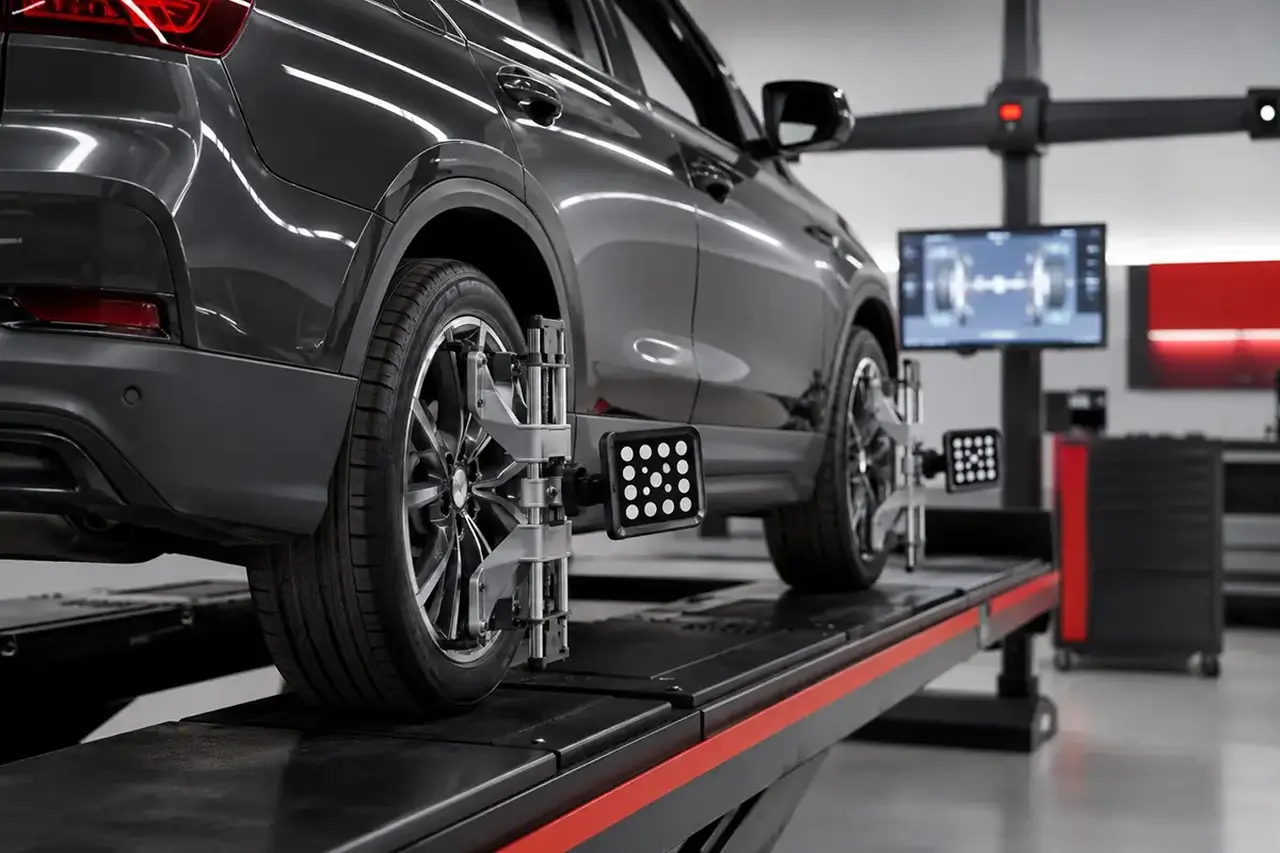
Do New Tires Need Wheel Alignment and Balancing?
One of the most common questions after buying a new set of tires is whether the vehicle also needs wheel alignment and balancing.
The answer is not exactly the same for both procedures because wheel alignment and wheel balancing are two different things.
When new tires are installed, balancing is normally required because the tire and wheel assembly needs to be balanced after mounting. Wheel alignment, on the other hand, does not automatically need to be performed every time new tires are installed.
However, if the vehicle has signs of incorrect alignment, checking it when installing new tires can be a very good idea.
This is particularly important because a problem with wheel alignment can cause expensive new tires to wear unevenly in a relatively short time.
What Is Wheel Alignment?
Wheel alignment is the process of adjusting the position and angles of the wheels according to the vehicle manufacturer's specifications.
The wheels are not simply mounted onto the vehicle at random angles. They need to maintain specific geometric relationships with the suspension, steering system, and each other.
Alignment involves several geometric measurements, including toe, camber, and caster. The exact specifications depend on the vehicle's suspension and steering design.
When the alignment is incorrect, several symptoms may appear.
For example:
-
The vehicle may pull to the left or right.
-
The steering wheel may not remain centered when driving straight.
-
The inner or outer edges of the tires may wear faster.
-
The vehicle may feel unstable at higher speeds.
-
Steering may feel different from normal.
-
New tires may begin to wear unevenly.
Therefore, wheel alignment is primarily about the geometry of the vehicle's wheels and suspension, not whether the tires are new or old.
Does Installing New Tires Change Wheel Alignment?
Under normal circumstances, simply removing old tires and installing new ones does not change the vehicle's alignment.
Wheel alignment is mainly related to the suspension and steering geometry. The fact that a tire is new does not automatically change these angles.
For example, if a vehicle has a properly aligned suspension and all four tires are replaced with new tires of the correct size, there is normally no reason to assume that the alignment has suddenly become incorrect.
However, there is an important point to consider.
If the old tires had uneven wear, that wear may have been caused by an existing alignment or suspension problem. Installing new tires without investigating the cause could allow the same problem to damage the new tires.
For this reason, installing new tires can be a good opportunity to check the vehicle's alignment, even if an alignment adjustment is not necessarily required.
Why Is Wheel Balancing Important?
Wheel balancing is completely different from wheel alignment.
The tire and wheel rotate together as one assembly. Ideally, their weight should be distributed evenly around the rotational axis.
When a new tire is mounted onto a wheel, the combined tire-and-wheel assembly may not have a perfectly even weight distribution.
A balancing machine detects this imbalance, and small wheel weights are installed at specific locations to correct it.
An unbalanced wheel can cause noticeable vibration, particularly at certain speeds.
Typical symptoms include:
-
Steering wheel vibration
-
Vibration at highway speeds
-
Body or seat vibration
-
Uneven tire wear
-
Reduced driving comfort
For this reason, wheel balancing should normally be performed when new tires are installed.
Is Balancing Done When New Tires Are Installed?
Yes.
When new tires are purchased, the tires should normally be balanced after they are mounted onto the wheels.
The balancing machine spins the wheel and tire assembly and determines where the weight distribution is uneven. Appropriate balancing weights are then added where necessary.
The important point is that balancing is needed not simply because the tire is new, but because the tire has been mounted onto the wheel and a new tire-wheel assembly has been created.
Whenever a tire is removed and replaced, checking the balance is generally good practice.
Do New Tires Always Require Wheel Alignment?
No.
A wheel alignment is not automatically required every time new tires are installed.
However, alignment should be checked if there are signs that the vehicle's geometry may not be correct.
This is especially important in the following situations.
The old tires had uneven wear
If one side of the tread is significantly more worn than the other, there may be an alignment or suspension problem.
The vehicle pulls to one side
If the vehicle consistently moves toward the left or right when driving on a reasonably straight road, alignment should be considered. Tire pressure, tire characteristics, and suspension components should also be checked.
The steering wheel is not centered
If the vehicle travels straight but the steering wheel remains noticeably turned to one side, the wheel alignment should be inspected.
The vehicle has hit a pothole or curb
A strong impact can affect suspension or steering geometry. In such cases, alignment may need to be checked even if the tires themselves are relatively new.
Suspension or steering components have been replaced
Replacing components such as tie rods, control arms, bushings, or other suspension and steering parts can affect wheel geometry. Alignment should therefore be checked after relevant repairs.
Can an Old Alignment Problem Damage New Tires?
Yes.
This is one of the most important points for anyone buying new tires.
If the old tires have worn unevenly, some drivers simply assume that the tires themselves were defective and replace them.
However, uneven tire wear can be caused by alignment problems, incorrect tire pressure, worn suspension components, or other mechanical issues.
If the underlying problem is not repaired, the new tires can eventually develop the same type of uneven wear.
For example, if the inner shoulder of an old tire is heavily worn, simply installing a new tire will not necessarily solve the problem.
The alignment and suspension system should be inspected to determine why the inner shoulder was wearing excessively.
In other words, new tires do not automatically eliminate an existing vehicle problem.
Wheel Alignment and Wheel Balancing Are Not the Same
The terms “alignment” and “balancing” are often used together, which can make them seem like the same service.
They are not.
Wheel alignment concerns the geometric position and angles of the wheels relative to the vehicle.
Wheel balancing concerns the distribution of weight in the rotating tire-and-wheel assembly.
A vehicle can have correct wheel alignment but poor wheel balance.
Likewise, it can have properly balanced wheels but incorrect alignment.
Therefore, having one service performed does not automatically mean that the other is correct.
Should All Four Wheels Be Balanced?
If all four tires are replaced, it is generally a good idea to balance all four wheel-and-tire assemblies.
Checking only the front wheels may not identify a balancing problem at the rear.
Rear-wheel imbalance can also cause vibration, particularly at higher speeds.
For this reason, when four new tires are installed, all four assemblies should normally be checked and balanced as necessary.
Balancing should also be reconsidered whenever a tire is removed and remounted or significant work is performed on the wheel.
What Should Be Checked Before a Wheel Alignment?
Before performing an alignment, the mechanical condition of the vehicle should also be considered.
A wheel alignment cannot permanently solve a problem caused by worn or damaged suspension components.
Depending on the vehicle, components such as the following may need to be inspected:
-
Tie rod ends
-
Tie rods
-
Control arms
-
Bushings
-
Shock absorbers
-
Wheel bearings
-
Steering components
-
Suspension joints and mounting points
If a component has excessive play or is damaged, an alignment performed before repairing that component may not remain correct.
A proper alignment procedure is therefore not simply a matter of changing numbers on an alignment machine. The vehicle needs to be mechanically suitable for alignment adjustment in the first place.
Check Tire Pressure After Installing New Tires
Tire pressure is another important issue that should not be overlooked when installing new tires.
The recommended pressure for the vehicle should not be confused with the pressure information molded into the tire sidewall.
The correct pressure should be based on the vehicle manufacturer's specifications. This information can usually be found on a label inside the driver's door area, on the fuel filler flap, or in the owner's manual.
Incorrect tire pressure can contribute to uneven tire wear and can also affect handling.
For example, excessive pressure can cause greater wear toward the center of the tread, while insufficient pressure can increase stress and wear on the shoulders.
Therefore, after installing new tires, the tire pressures should also be adjusted to the manufacturer's recommended values.
Can New Tires Make the Steering Feel Different?
Yes.
New tires can have a different tread pattern, rubber compound, sidewall stiffness, and internal construction compared with the tires they replace.
As a result, the steering may feel lighter or heavier, the ride may become more comfortable or firmer, and the vehicle's road behavior may feel slightly different.
This does not automatically mean that the alignment is incorrect.
However, if the steering wheel is noticeably off-center, the vehicle pulls strongly to one side, or the tires begin to wear unevenly, the alignment should be inspected.
What Is the Best Approach After Installing New Tires?
A sensible approach after purchasing new tires is to start with proper installation.
The tires should be correctly mounted onto the wheels, and the tire-and-wheel assemblies should be balanced.
The tire pressures should then be adjusted according to the vehicle manufacturer's specifications.
The condition of the old tires should also be considered. Uneven wear patterns can provide valuable clues about alignment, suspension, tire pressure, or other problems.
If the vehicle has a history of pulling to one side, an off-center steering wheel, pothole impacts, or recent suspension work, the alignment should be checked.
If necessary, the wheel geometry should be measured and compared with the manufacturer's specifications.
This approach helps ensure that the new tires are being used on a vehicle that is mechanically in good condition.
Does Wheel Alignment Increase Tire Life?
Correct wheel alignment can help reduce the risk of uneven tire wear and allow the tires to maintain more consistent contact with the road.
However, proper alignment alone does not guarantee a long tire life.
Many other factors affect how long a tire lasts, including:
-
Tire pressure
-
Driving style
-
Road conditions
-
Vehicle load
-
Suspension condition
-
Brake system condition
-
Wheel alignment
-
Wheel balancing
-
Tire age
-
Ambient temperature
-
Hard acceleration and braking
For this reason, maintaining the vehicle as a whole is just as important as installing quality tires.
So, Do New Tires Need Alignment and Balancing?
When new tires are installed, wheel balancing is normally necessary because the tire-and-wheel assembly needs to be checked after mounting.
Wheel alignment, however, is not automatically required every time new tires are installed.
Alignment should be checked when there are signs of a geometry problem, such as uneven tire wear, the vehicle pulling to one side, an off-center steering wheel, a recent pothole or curb impact, or work performed on steering or suspension components.
In simple terms, buying new tires does not mean that you must automatically pay for a wheel alignment. But it also does not mean that alignment can always be ignored.
The practical approach is to balance the wheels whenever new tires are installed and check the alignment based on the vehicle's condition.
Most importantly, look at how the old tires were wearing. Their wear pattern can tell you a great deal about what may happen to your new tires if an underlying alignment or suspension problem is left unresolved.