TR
TR EN
EN

What Is ISOFIX and What Is It Used For?
Child safety is one of the most important considerations when traveling by car, especially when young children are involved. A child seat must be properly installed and securely attached to the vehicle to provide the intended level of protection.
In addition to child seats that are secured using the vehicle's seat belt, many modern vehicles are equipped with a standardized attachment system called ISOFIX.
ISOFIX makes it easier to install a compatible child seat by connecting it directly to dedicated mounting points built into the vehicle. This can help reduce the possibility of incorrect installation and provide a secure connection between the child seat and the vehicle.
What Is ISOFIX?
ISOFIX is a standardized system designed to attach compatible child seats directly to specific mounting points in a vehicle.
Instead of relying entirely on the vehicle's seat belt to hold the child seat in place, an ISOFIX-compatible child seat uses rigid connectors that lock into dedicated mounting points attached to the vehicle's structure.
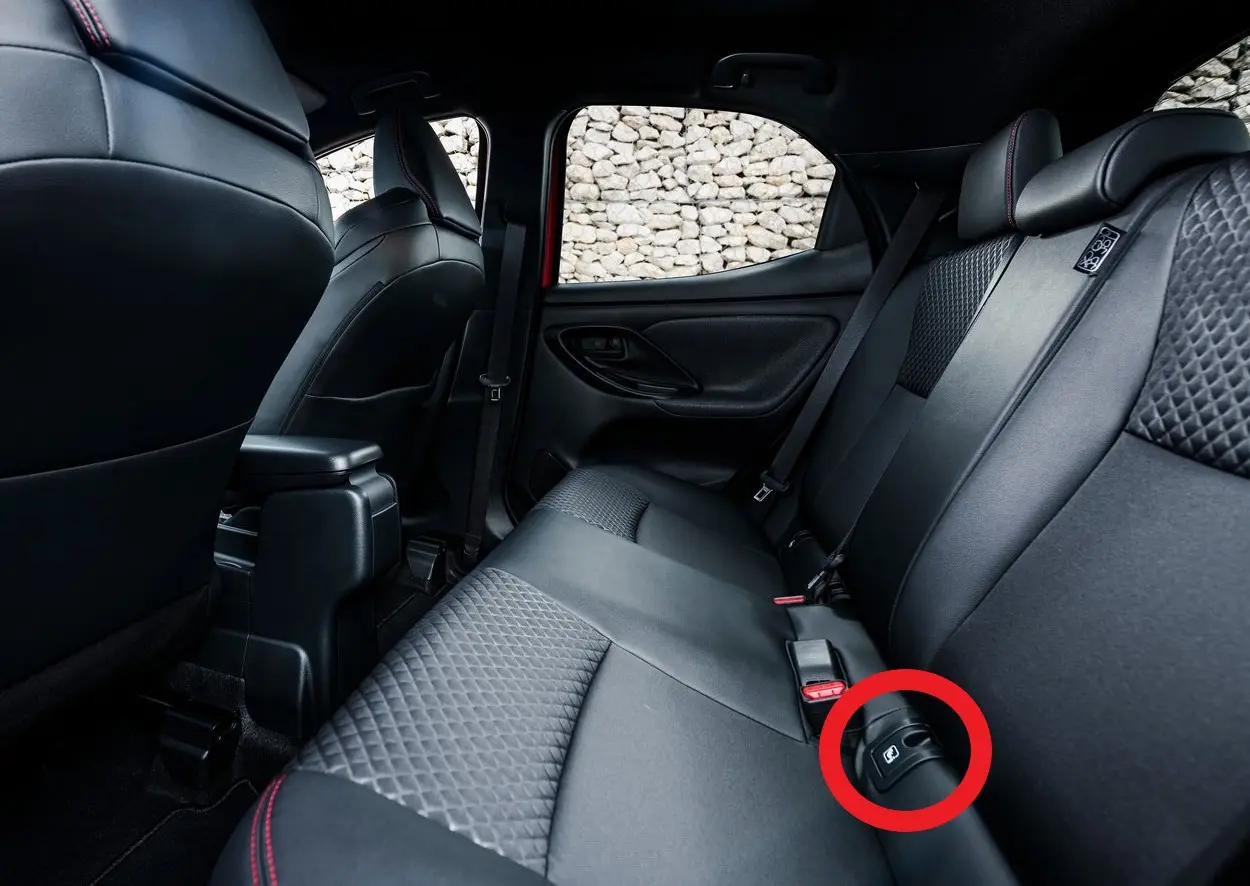
These mounting points are generally located between the rear seat cushion and the seat back. Depending on the vehicle, they may be marked with an ISOFIX label or child-seat symbol.
How Does the ISOFIX System Work?
The basic principle behind ISOFIX is relatively simple.
The vehicle has dedicated ISOFIX mounting points, while the compatible child seat has rigid connectors. These connectors are extended from the child seat and pushed into the vehicle's mounting points until they lock into place.
Many child seats have visual indicators that show whether the connectors have been properly engaged. Depending on the design, these indicators may change color when the connection is correctly locked.
Some ISOFIX child seats also use an additional restraint system, such as Top Tether or a support leg, to further limit unwanted movement.
What Is Top Tether?
Top Tether is an additional strap located at the upper part of a compatible child seat. It attaches to a dedicated anchorage point in the vehicle.
Its purpose is to help limit the forward movement of the child seat, particularly in the event of a collision.
The Top Tether anchorage point can be located in different places depending on the vehicle. It may be behind the rear seat, on the rear side of the seatback, or in the luggage compartment.
The vehicle owner's manual should always be checked to identify the correct anchorage point.
What Is an ISOFIX Support Leg?
Some ISOFIX child seats are equipped with a support leg that extends from the child seat to the vehicle floor.
The support leg helps stabilize the child seat and can reduce forward or rotational movement during a crash.
However, a support leg cannot necessarily be used in every seating position. Some vehicles have under-floor storage compartments or other floor designs that may affect whether a support leg can be safely used.
For this reason, the instructions provided by both the vehicle and child-seat manufacturer should be followed.
What Is ISOFIX Used For?
The main purpose of ISOFIX is to make it easier to secure a compatible child seat correctly and consistently.
Some of its main advantages include:
-
Making child-seat installation easier
-
Reducing the possibility of incorrect installation
-
Providing a direct connection between the child seat and the vehicle
-
Helping limit unwanted movement of the child seat
-
Making it easier to verify that the seat is properly attached
-
Making installation and removal more convenient
However, ISOFIX alone does not guarantee child safety. The child seat must also be appropriate for the child's size and weight, compatible with the vehicle, and installed according to the manufacturer's instructions.
Is ISOFIX Safer Than Using a Seat Belt?
It is not accurate to say that ISOFIX is automatically safer than a seat-belt installation in every situation.
Both installation methods can be used safely when the appropriate child seat is correctly installed and used according to the manufacturer's instructions.
One of the main advantages of ISOFIX is that it simplifies the installation process by using standardized attachment points. A seat-belt installation, on the other hand, requires the belt to follow the correct routing and to be properly tightened.
The overall safety of a child restraint system depends on several factors, including the type of child seat, its compatibility with the vehicle, correct installation, and whether the child is properly secured.
Does Every Car Have ISOFIX?
No. ISOFIX is not available in every vehicle, particularly older vehicles.
The availability of ISOFIX depends on the vehicle's model, model year, equipment level, and market. Modern vehicles are much more likely to have ISOFIX mounting points, but the exact seating positions with ISOFIX can vary.
The vehicle owner's manual is one of the best ways to determine whether ISOFIX is available.
The mounting points can also usually be found by looking between the rear seat cushion and the seatback. In some vehicles, they may be hidden beneath small covers or located slightly deeper within the seat.
Which Seats Have ISOFIX?
ISOFIX mounting points are generally found on the rear seats.
However, this does not necessarily mean that every rear seating position has ISOFIX. Some vehicles may have ISOFIX points only on the left and right rear seats, while the center rear seat may not have them.
Therefore, when buying a child seat, it is important to check not only whether the vehicle has ISOFIX, but also which seating positions have ISOFIX mounting points.
How Is an ISOFIX Child Seat Installed?
The exact installation procedure varies depending on the child seat. However, the general process involves several basic steps.
First, identify the correct ISOFIX mounting points in the vehicle.
Extend the ISOFIX connectors on the child seat and align them with the mounting points.
Push the connectors into the mounting points until they lock securely. If the child seat has visual indicators, check that they show the correct locked position.
If the seat uses a Top Tether strap or support leg, install these components according to the manufacturer's instructions.
Finally, gently check the child seat to make sure it is properly secured and does not have excessive movement.
The manufacturer's installation instructions should always take priority because different child seats can use different attachment and restraint systems.
Common ISOFIX Installation Mistakes
Although ISOFIX is designed to simplify child-seat installation, mistakes can still occur.
One common mistake is assuming that the child seat is secure simply because the connectors have entered the ISOFIX mounting points. The connectors must actually lock into place.
Another mistake is incorrectly installing the Top Tether strap or support leg. These components must be used exactly as specified by the manufacturer.
The position of the child seat, the tightness of the child's harness, and the compatibility between the seat and the vehicle are also important.
A child seat that is not correctly installed may not provide the protection expected from it in a crash.
Is ISOFIX Suitable for Every Child?
The presence of ISOFIX in a vehicle does not mean that every ISOFIX child seat can be used in that vehicle.
The child seat must be suitable for the child's height, weight, age, and developmental stage according to the applicable child-restraint system and manufacturer's instructions.
Vehicle compatibility is also important. Some child seats are approved for specific vehicles or specific seating positions.
For this reason, both the child's requirements and the vehicle's compatibility should be considered when selecting a child seat.
How Long Can an ISOFIX Child Seat Be Used?
The lifespan of an ISOFIX child seat is not determined by the ISOFIX mounting system itself.
The manufacturer specifies how long the child seat is intended to be used. The seat may need to be replaced if it has reached the manufacturer's stated service life, become significantly worn or damaged, or been involved in a serious crash.
A child seat can sometimes sustain damage that is not visible from the outside. Therefore, a seat involved in a significant collision may need to be replaced even if it appears undamaged.
Is It Safe to Buy a Used ISOFIX Child Seat?
Buying a used child seat requires particular caution.
The main concern is the seat's history. If it is not known whether the seat has previously been involved in a crash, its structural condition may be uncertain.
The ISOFIX connectors, harnesses, buckles, adjustment mechanisms, and other components should also be carefully inspected.
The production date and manufacturer's recommended service life should be checked as well. A child seat with an unknown history or significant wear may not be an appropriate choice.
What Should You Check When Using ISOFIX?
Before using an ISOFIX child seat, make sure that the seat is compatible with the vehicle and that the ISOFIX connectors are fully locked.
If the seat uses Top Tether or a support leg, make sure these are installed according to the manufacturer's instructions.
The child's harness should also be correctly adjusted. It should be secure without being unnecessarily loose or excessively tight.
It is also important to check the installation periodically, especially if the child seat has been removed and reinstalled.
Thick clothing can also affect how effectively a harness fits around a child. The harness should be adjusted appropriately so that it can restrain the child correctly.
Why Is ISOFIX Important?
ISOFIX is an important vehicle safety feature because it makes the installation of compatible child seats simpler and more standardized.
Its biggest advantage is that it can reduce installation errors by providing dedicated attachment points rather than requiring the entire child seat to be secured using the vehicle's seat belt.
However, ISOFIX is only one part of child passenger safety. Choosing the correct child seat, ensuring vehicle compatibility, installing the seat properly, and securing the child correctly are all equally important.
When choosing an ISOFIX child seat, therefore, it is important to look beyond the presence of ISOFIX itself and consider the child's size, the child seat's specifications, the vehicle's compatibility, and the complete installation instructions.