TR
TR EN
EN

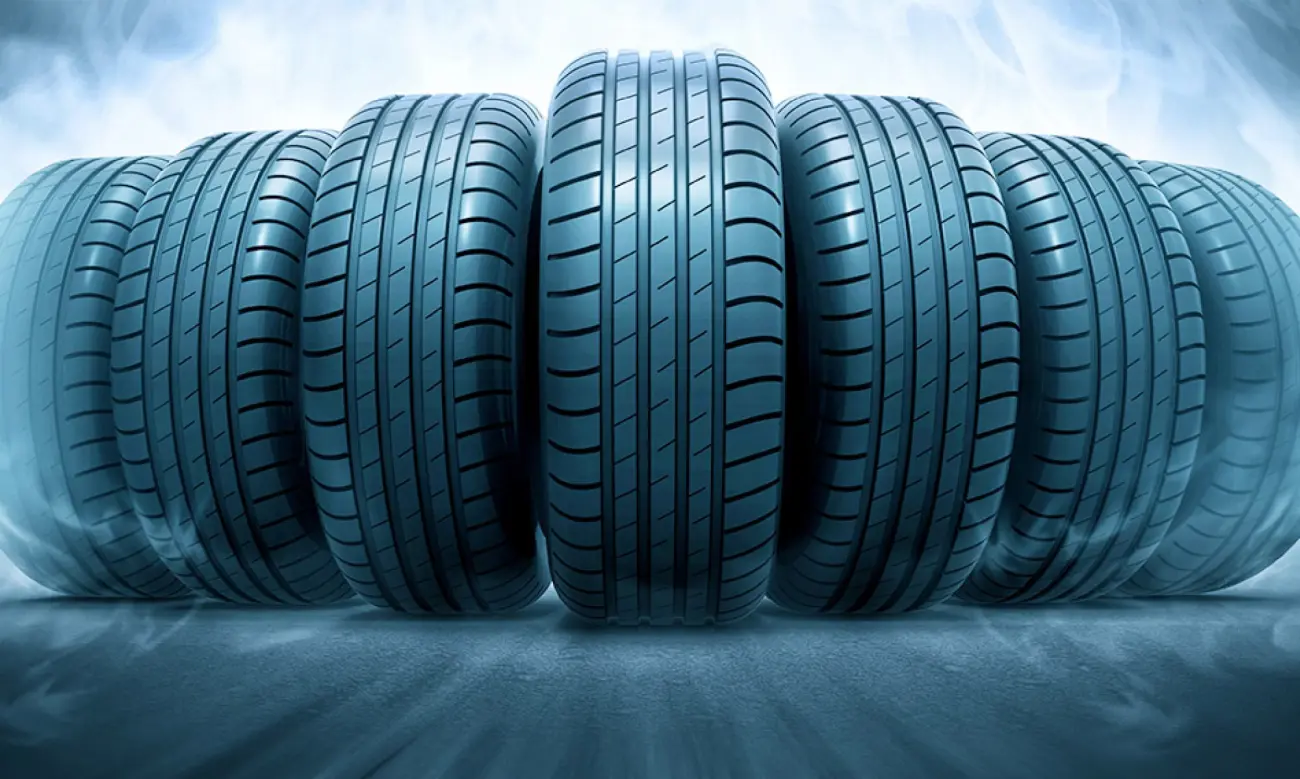
Why Are Tires Black?
If you stop by the side of the road and watch the countless cars passing by, you will notice one thing they almost all have in common: their tires are black.
At first, it may seem that black is simply the traditional color chosen by tire manufacturers. However, there is a much more important technical reason behind the color.
Most modern tires contain a material called carbon black. Carbon black does much more than give tires their characteristic black appearance. It also improves the durability, wear resistance, tensile strength, UV resistance, and electrical properties of rubber.
In other words, the black color of a tire is largely the result of engineering requirements rather than simply an aesthetic choice.
What Is the Natural Color of Rubber?
The natural rubber used in tire production is not naturally black. Depending on its composition, untreated rubber can have a much lighter appearance.
It is technically possible to produce tires in different colors by using pigments and alternative compounds. However, automotive tires must withstand extremely demanding conditions.
A tire is continuously exposed to:
-
Friction with the road
-
Mechanical deformation
-
High temperatures
-
UV radiation
-
Ozone
-
Rain and moisture
-
Heavy loads
-
Braking forces
-
Acceleration forces
For this reason, tire manufacturers need materials that provide much more than an attractive appearance.
This is where carbon black becomes important.
What Is Carbon Black?
Carbon black is a very fine form of elemental carbon that is widely used as a reinforcing material in rubber products.
In tire manufacturing, carbon black is mixed into rubber compounds in carefully controlled proportions. It can significantly improve the mechanical properties of the rubber.
Some of its important functions include:
-
Increasing wear resistance
-
Improving tensile strength
-
Increasing mechanical durability
-
Helping protect rubber from UV-related degradation
-
Influencing thermal conductivity
-
Increasing electrical conductivity
The black appearance of most tires is therefore a visible result of an important component of their rubber compound.
How Does Carbon Black Make Tires More Durable?
A tire operates under extremely demanding conditions.
It continuously contacts the road and changes shape as it rotates. During braking, acceleration, and cornering, the rubber experiences significant mechanical forces.
The tire must also withstand repeated heating and cooling cycles.
Carbon black acts as a reinforcing filler within the rubber compound. It helps improve the strength and durability of the rubber, allowing the tire to withstand repeated deformation and wear.
However, carbon black is not the only factor determining how long a tire lasts.
Tire life also depends on:
-
Rubber compound design
-
Tread pattern
-
Tire pressure
-
Wheel alignment
-
Vehicle weight
-
Driving style
-
Road surface
-
Temperature
-
Tire construction
-
Manufacturing quality
Therefore, the presence of carbon black contributes to durability, but it does not determine tire life by itself.
Does Carbon Black Improve Tire Wear Resistance?
Yes.
One of the most important reasons carbon black is used in tires is its ability to reinforce rubber and improve resistance to abrasion.
The tread is constantly rubbing against the road surface. Braking, acceleration, and cornering can increase the forces acting on the tread.
Over time, this contact causes the tread to wear.
Properly formulated rubber compounds containing carbon black can provide significantly better resistance to this type of wear.
This is one of the reasons carbon black has been so important in the development of durable automotive tires.
Does Carbon Black Protect Tires From Sunlight?
Carbon black also helps protect rubber from the effects of ultraviolet radiation.
Long-term exposure to sunlight can contribute to rubber aging. Over time, rubber can become harder, less flexible, and more susceptible to surface cracking.
UV radiation can accelerate this aging process.
Carbon black helps absorb and reduce the harmful effects of UV radiation within the rubber compound. This contributes to the long-term durability of the tire.
This is particularly important because tires are often exposed to sunlight for years, even when the vehicle is parked.
Why Can Black Tires Last Longer?
The reinforcing properties of carbon black can contribute to longer-lasting rubber compounds.
It helps improve mechanical strength and resistance to environmental degradation, which are both important for tire durability.
However, it would be inaccurate to say that a tire lasts longer simply because it is black.
Modern tire compounds are highly complex. Manufacturers combine different types of rubber, fillers, resins, and chemical additives to achieve specific performance characteristics.
Silica, for example, is widely used in modern tire compounds to improve characteristics such as wet grip and rolling resistance.
Therefore, tire durability depends on the entire compound and construction rather than color alone.
Does Carbon Black Help With Static Electricity?
Yes.
Rubber is naturally a good electrical insulator. However, a vehicle's tires can accumulate static electrical charges as they move along the road.
Carbon black can increase the electrical conductivity of the rubber compound, helping electrical charges dissipate more effectively.
This is another example of why carbon black is used for functional reasons rather than simply because it makes the tire black.
Does the Black Color Help With Heat?
Tires generate heat while they are operating.
Heat can be produced by:
-
Road friction
-
Continuous flexing of the tire
-
High speeds
-
Braking
-
Heavy loads
-
Incorrect tire pressure
Managing this heat is important for tire durability and performance.
Carbon black affects the thermal properties of the rubber compound and can help control how heat moves through the material.
However, tire heat management is not simply a matter of the black color absorbing sunlight. Tire construction, rubber formulation, tread design, speed, load, inflation pressure, and operating conditions all influence temperature.
Can Tires Be Made in Other Colors?
Yes.
There is no fundamental requirement that every tire must be black.
If carbon black is not used, rubber can have a much lighter natural appearance. Different pigments can also be added to create colored rubber products.
White, red, blue, and other colored tires are technically possible.
However, producing a tire in a different color while maintaining the required durability, UV resistance, abrasion resistance, and overall performance can be more challenging.
This is one reason black has become the standard color for automotive tires.
What Happens If You Use a Different-Colored Tire?
A colored tire is not automatically unsafe simply because it is not black.
The important issue is the composition and engineering of the rubber compound.
A tire manufacturer could theoretically develop a colored tire with appropriate durability and performance characteristics. However, eliminating carbon black or significantly changing the compound requires alternative materials and formulations to provide the necessary reinforcement and environmental resistance.
Traditional black tire compounds have the advantage of decades of development and extensive real-world use.
Why Aren't White Tires Common?
Without carbon black, rubber can naturally appear much lighter.
However, automotive tires need to operate in conditions that are very different from ordinary rubber products.
They are exposed to:
-
UV radiation
-
Ozone
-
Heat
-
Cold
-
Water
-
Road chemicals
-
Mechanical stress
-
Continuous flexing
-
Abrasion
A tire compound must therefore be designed to resist all of these factors simultaneously.
This makes the development of a colored automotive tire much more complicated than simply adding a pigment to ordinary rubber.
Are Carbon Black and Silica the Same?
No.
Carbon black and silica are different materials, although both can be used as reinforcing fillers in tire compounds.
Carbon black has traditionally been one of the most important reinforcing materials in tire manufacturing.
Silica has become increasingly important in modern tire technology because it can provide useful properties related to wet grip and rolling resistance when combined with appropriate rubber chemistry.
Many modern tire compounds use carefully balanced combinations of different materials rather than relying on one filler alone.
Are All Black Tires the Same?
Definitely not.
The fact that virtually all automotive tires are black does not mean they have the same characteristics.
A summer tire, winter tire, all-season tire, performance tire, and commercial vehicle tire may use very different rubber compounds and construction methods.
Manufacturers can change the formulation to achieve different priorities, such as:
-
Wet-weather grip
-
Dry-road handling
-
Winter traction
-
Low rolling resistance
-
Long tread life
-
High-speed stability
-
Ride comfort
-
Load-carrying capacity
Therefore, tire color tells you very little about the actual performance of the tire.
Why Did Black Tires Become the Industry Standard?
The answer is a combination of engineering and practicality.
Carbon black provides important reinforcement and helps improve the durability of rubber. It also contributes to wear resistance, UV protection, electrical properties, and thermal characteristics.
At the same time, black is a practical color for a component that is constantly exposed to road dirt, dust, mud, brake dust, and other contaminants.
All of these factors have contributed to black becoming the standard appearance of modern automotive tires.
The Real Reason Tires Are Black
The black color of a tire is not simply a design choice.
It is primarily the visible result of using carbon black and other materials in a highly engineered rubber compound.
Carbon black helps improve the mechanical strength and durability of rubber while also contributing to resistance against wear and environmental degradation.
Modern tires are far more complex than they appear. Beneath the familiar black surface is a carefully engineered combination of natural and synthetic rubber, reinforcing fillers, chemical additives, steel or textile reinforcement, and other components.
So the next time you look at a black tire, remember that its color is not just about appearance. It is closely connected to the materials and engineering that allow the tire to withstand friction, heat, UV radiation, loads, and continuous deformation throughout its service life.