TR
TR EN
EN

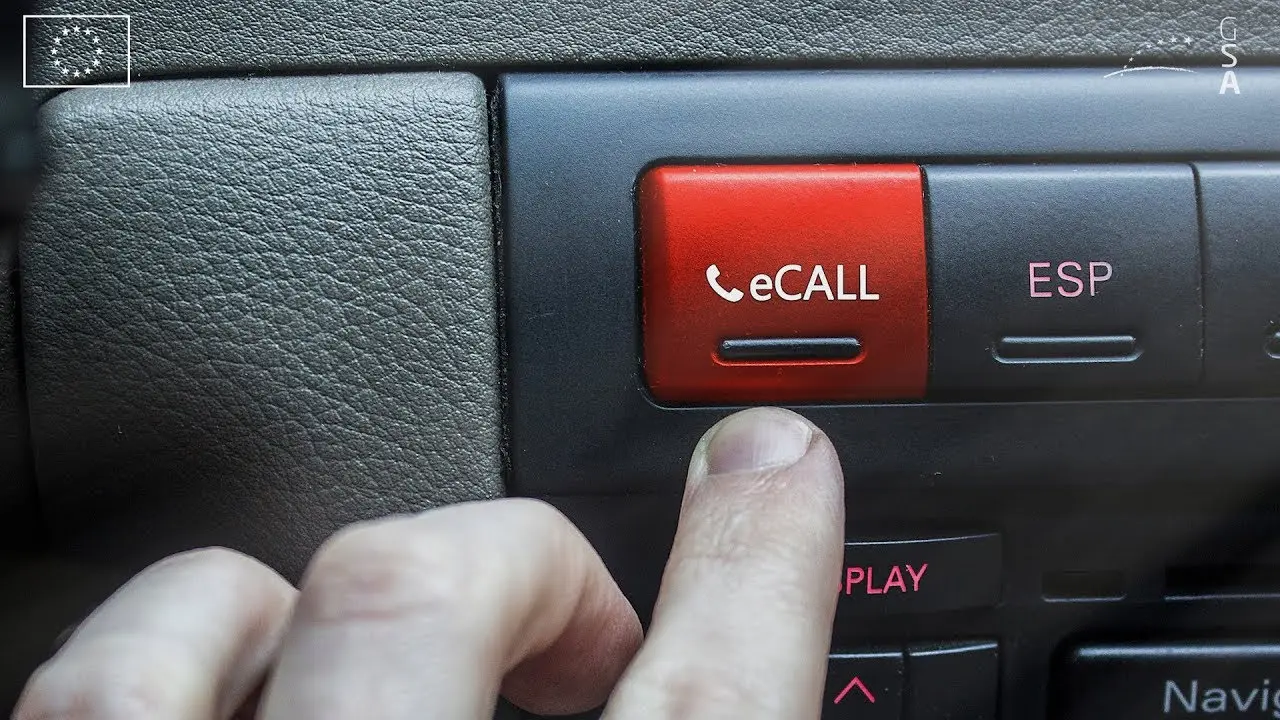
What Is the Emergency Call System (e-Call)?
Modern cars are no longer made up of only the engine, transmission, braking system, and other mechanical components. Electronic systems that allow vehicles to communicate with external services have also become an important part of modern automotive technology.
One of these technologies is e-Call (Emergency Call). It is an emergency communication system designed to automatically or manually contact an emergency response center when a serious traffic accident occurs.
The basic purpose of the system is simple: to help emergency services become aware of an accident as quickly as possible when people inside the vehicle are unable or have difficulty making an emergency call themselves.
An e-Call system can combine several technologies, including crash sensors, airbag systems, vehicle location information, mobile communication, microphones, speakers, and electronic control units.
What Does the e-Call System Do?
The primary function of e-Call is to assist with contacting emergency services after a serious accident.
When a collision occurs, the vehicle can evaluate information from various sensors and control units.
If the conditions required for an emergency call are met, the system can initiate an emergency call through the vehicle's communication system.
Important information such as the vehicle's location can also be transmitted to the emergency response center.
This can make it easier to locate the vehicle even when the occupants are unable to speak or provide their location.
The e-Call system is therefore more than simply making a telephone call. One of its most important functions is transmitting vehicle location and certain accident-related information to emergency services.
How Does e-Call Work?
The e-Call system works by combining several electronic systems in the vehicle.
When an accident occurs, sensors and control units can evaluate different types of information.
Depending on the vehicle and system, this may include:
-
Severity of the collision
-
Whether an airbag has deployed
-
Vehicle location
-
Vehicle direction
-
Vehicle identification information
-
Certain vehicle characteristics
-
Whether the call was initiated automatically or manually
When a serious accident is detected, the e-Call system attempts to establish communication with the relevant emergency response center through the mobile communication network.
A microphone and speaker inside the vehicle can then allow the occupants to communicate directly with the emergency operator.
What Is Automatic e-Call?
One of the most important features of e-Call is its ability to initiate an emergency call automatically.
For example, when a serious collision occurs, the airbag control unit or another safety system may detect the accident.
If the predefined conditions are met, the e-Call system can automatically initiate an emergency call.
This can be particularly important when the driver or passengers are unable to use a phone.
A driver may be seriously injured, unconscious, or otherwise unable to contact emergency services.
An automatic emergency call can therefore provide an additional layer of assistance after a serious accident.
How Is a Manual e-Call Made?
The e-Call system is not limited to automatic emergency calls.
Many vehicles have a dedicated e-Call or SOS button that allows the driver or passenger to manually initiate an emergency call.
The button is commonly located in the roof console, near the interior mirror, or in another easily accessible area.
It may be marked with an SOS symbol.
When the button is pressed, the emergency call procedure can be initiated.
A manual call can be useful when an emergency occurs without the vehicle necessarily being involved in a serious collision.
For example, an occupant may experience a medical emergency or another dangerous situation and need assistance.
The exact services available and the destination of the call can vary depending on the vehicle, country, and emergency communication infrastructure.
What Information Does e-Call Send?
An important characteristic of e-Call is that it can transmit more than voice communication.
During an emergency call, the system can send a defined minimum set of data to the emergency infrastructure.
Vehicle location is one of the most important pieces of information.
Location data can help emergency responders determine where the accident has occurred more quickly.
Depending on the system, other information may also be transmitted, such as vehicle identification data and whether the emergency call was initiated automatically or manually.
The exact information transmitted can vary according to the vehicle's hardware, software, market, and communication infrastructure.
For this reason, it should not be assumed that every vehicle equipped with e-Call transmits exactly the same information.
How Does e-Call Determine the Vehicle's Location?
e-Call systems can use satellite positioning technologies to determine the vehicle's location.
GPS and other GNSS-based technologies can provide the vehicle's geographic position.
Depending on the system architecture, additional positioning or communication technologies may also be used.
Location information is particularly important when the driver cannot explain where the accident occurred.
For example, if a vehicle is involved in an accident on an unfamiliar rural road or outside a populated area, automatically transmitting the vehicle's location can make it easier for emergency responders to find the vehicle.
Does e-Call Work Like a Mobile Phone?
The system uses mobile communication infrastructure, but it is not simply the same as making a normal mobile phone call.
Vehicles equipped with e-Call can have a dedicated communication module that is integrated with the vehicle's electronic systems.
The vehicle can also have a dedicated microphone and speaker for communication with the emergency operator.
Depending on the vehicle architecture, the e-Call system may communicate with several other electronic control units.
Therefore, the system is not simply a SIM card combined with a speaker.
Does an e-Call System Have a SIM Card?
Many e-Call systems use a built-in communication module together with SIM or eSIM-based connectivity.
However, the emergency communication function should not be confused with normal internet connectivity.
The primary purpose of e-Call is not general internet access. Its purpose is emergency communication.
Modern vehicles can use a telematics control unit, mobile modem, antenna, and other communication components as part of the system.
In some vehicles, e-Call can also be integrated with the manufacturer's connected-car services.
Is e-Call the Same as a Vehicle Tracking System?
No.
e-Call and continuous vehicle tracking are different technologies.
The primary purpose of e-Call is to facilitate emergency communication and transmit relevant information when an emergency occurs.
Vehicle tracking systems, on the other hand, can be designed for fleet management, continuous location monitoring, theft recovery, or other purposes.
Therefore, having e-Call in a vehicle does not necessarily mean that the vehicle is continuously being tracked.
What Is the Relationship Between e-Call and the Airbag System?
The e-Call system is not the same as the airbag system.
However, the two systems can communicate with each other because airbag and crash-control systems can provide important information about a collision.
For example, the airbag control unit may detect that a collision has occurred.
This information can then be shared with other safety-related systems.
The e-Call system can use such information when determining whether the conditions for an automatic emergency call have been met.
As a result, the e-Call system may communicate with components such as:
-
SRS/airbag control unit
-
Crash sensors
-
Body control module
-
Telematics control unit
-
Vehicle communication network
Which Control Units Communicate With e-Call?
In a modern vehicle, e-Call is generally not an isolated electronic device.
Depending on the vehicle's architecture, it may communicate with:
-
Airbag/SRS control unit
-
Body Control Module
-
Telematics Control Unit
-
CAN Bus network
-
GPS/GNSS system
-
Mobile communication module
-
Instrument cluster
-
Audio system
-
Vehicle power management system
CAN Bus and other vehicle communication networks allow different control units to exchange information.
This means an e-Call communication problem does not necessarily mean that the e-Call module itself has failed.
What Happens If the e-Call System Fails?
Like other electronic systems in a vehicle, e-Call can also develop faults.
A vehicle may display an SOS, e-Call, or emergency-call warning when a problem is detected.
Depending on the vehicle, the SOS button indicator may also illuminate or flash in a different color.
Possible causes include:
-
Telematics control unit failure
-
Mobile communication module problems
-
GPS/GNSS antenna or connection problems
-
SIM/eSIM connectivity problems
-
Low battery voltage
-
Fuse failure
-
Wiring or connector problems
-
CAN Bus communication faults
-
Microphone or speaker failure
-
Software problems
-
Antenna failure
-
Control unit hardware failure
For this reason, it is not correct to assume that the e-Call control unit itself is defective simply because an SOS warning appears.
Can Low Battery Voltage Affect e-Call?
Yes.
Low battery voltage can affect many electronic systems in a modern vehicle, including e-Call.
Problems can occur especially when a vehicle has been parked for a long time or the battery is weak.
Low voltage can cause electronic control units to record unexpected communication or system faults.
Therefore, when diagnosing an e-Call problem, the vehicle's battery and charging system should also be checked before replacing an expensive telematics control unit.
Depending on the situation, technicians may check the battery's resting voltage, voltage drop during starting, and alternator charging voltage.
How Is an e-Call Fault Diagnosed?
Proper diagnosis may require more than reading generic OBD-II fault codes.
The first step is to identify which control unit is responsible for the e-Call function in the specific vehicle.
A suitable diagnostic tool can then be used to scan the relevant module.
The diagnostic process may include:
Reading fault codes
Fault codes stored in the e-Call or telematics control unit are checked.
Checking live data
Depending on the system, communication status, GPS information, supply voltage, and other operating parameters can be evaluated.
Checking communication
The technician can determine whether the control unit is communicating correctly with the vehicle network.
Inspecting antennas and connections
GPS and mobile communication antennas, wiring, and connectors should be inspected.
Checking power supply
The module's power and ground connections should be measured.
Testing the microphone and speaker
The voice communication functions can be checked to determine whether the system can establish proper two-way communication.
Checking software
If necessary, the control unit's software version and any applicable manufacturer updates can be evaluated.
Should the e-Call Control Unit Be Replaced Immediately?
No.
As with many electronic systems, a fault message does not automatically prove that the related control unit is defective.
For example, an e-Call communication fault could be caused by:
-
The control unit
-
Wiring
-
Antenna
-
Vehicle communication network
-
Battery voltage
-
Software
-
Another electronic component
A systematic diagnostic process should therefore be completed before replacing the control unit.
Can e-Call Work Without a Normal Internet Connection?
The communication infrastructure used by e-Call is different from normal internet access.
The system can use mobile communication networks to establish an emergency call.
However, the exact communication technology and operating conditions depend on the vehicle, production period, country, and available network infrastructure.
This is particularly relevant to older vehicles because communication technologies supported when the vehicle was manufactured may not necessarily remain available indefinitely.
Can e-Call Be Added to an Older Vehicle?
It may be technically possible to install aftermarket emergency communication or telematics systems in some vehicles.
However, adding a factory-style e-Call system is not simply a matter of installing an SOS button.
Depending on the vehicle, the system may require:
-
Communication module
-
Antenna
-
Microphone
-
Speaker
-
GPS/GNSS system
-
Wiring harness
-
Control unit
-
Vehicle communication network integration
-
Software
-
Coding or configuration
For this reason, retrofitting the original factory e-Call system to a vehicle that was not equipped with it can be relatively complicated.
Does e-Call Improve Vehicle Safety?
The primary purpose of e-Call is to facilitate emergency communication after an accident.
Its automatic calling capability can be particularly useful when the driver or passengers are unable to make an emergency call themselves.
However, e-Call is not a collision-prevention system.
Unlike ABS, ESC, automatic emergency braking, lane-keeping systems, and other active safety technologies, e-Call is primarily concerned with communication after an emergency has occurred.
It is therefore more appropriate to consider e-Call part of the vehicle's emergency response and post-crash safety technology.
What Is the Future of e-Call?
As vehicles become increasingly connected, emergency communication systems are becoming more integrated into vehicle electronic architectures.
In newer vehicles, e-Call-related technologies can operate alongside broader telematics and connected-car systems.
These systems may support emergency communication, roadside assistance, remote services, vehicle status information, and other connected functions.
However, the exact operation of these systems varies depending on the manufacturer, vehicle model, model year, market, and communication infrastructure.
The Most Important Things to Know About e-Call
The e-Call system is an electronic emergency communication system that can automatically or manually contact an emergency response center after a serious accident.
One of its most important advantages is that it can initiate an emergency call even when the occupants are unable to make the call themselves.
Information such as vehicle location, vehicle identification, and call status can be transmitted to emergency services depending on the system's design.
However, reliable e-Call operation depends on many components working together, including the telematics control unit, mobile communication system, GPS/GNSS, antennas, vehicle communication network, electrical power supply, and software.
Therefore, when an SOS or e-Call warning appears on the dashboard, replacing a single component without proper diagnosis is not always the correct solution.
The entire communication system should be checked systematically to determine whether the problem is caused by the control unit, wiring, antenna, communication network, battery voltage, software, or another component.