TR
TR EN
EN

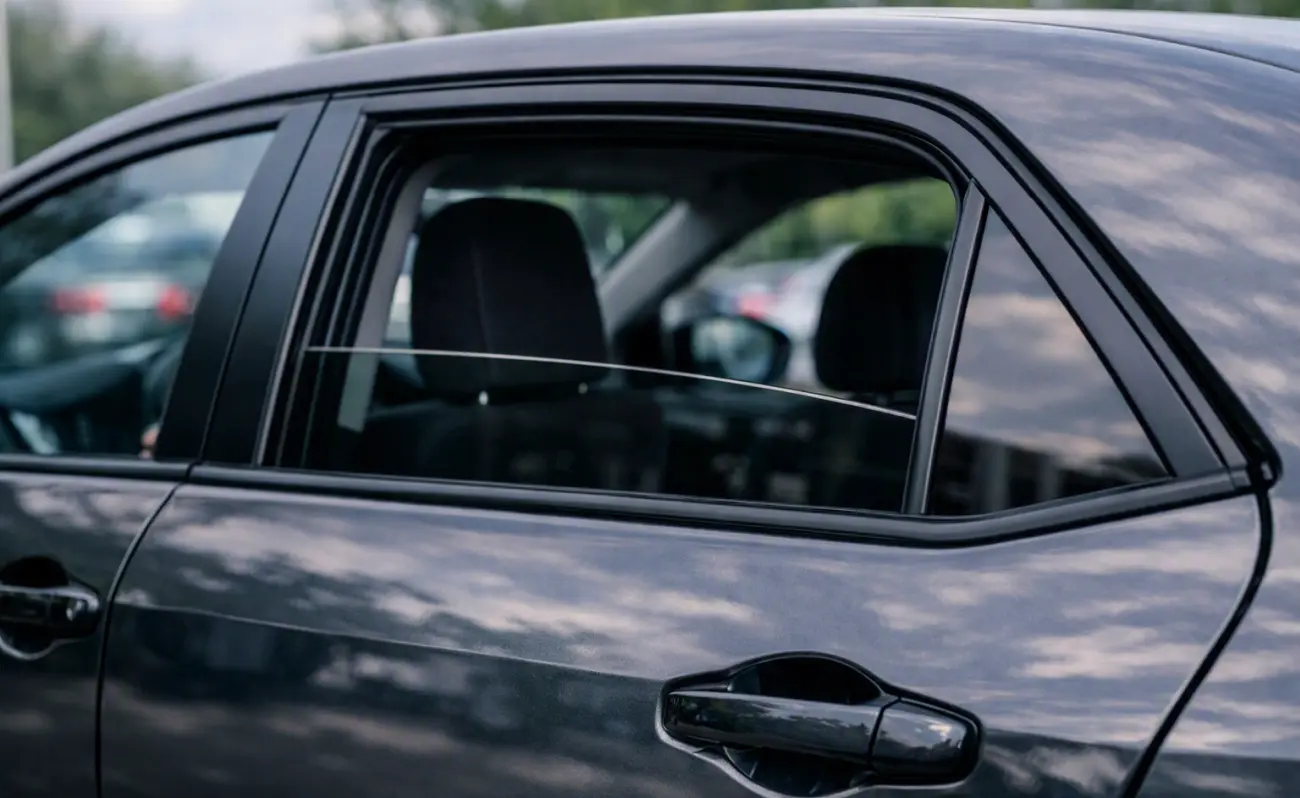
Why Don’t Some Car Rear Windows Open All the Way?
If you have ever lowered the window of a car and noticed that the glass stops a few centimeters above the bottom of the door, you may have wondered whether something is wrong with the window mechanism.
In most cases, nothing is wrong.
The fact that a car window does not disappear completely inside the door is usually the result of the vehicle’s door design. The available space inside the door, the shape of the glass, the window regulator, side-impact reinforcement, speakers, wiring, locks, and even the rear wheel arch can all determine how far the glass can travel.
This is particularly noticeable with rear windows. On many cars, the front window can drop almost completely into the door, while the rear window remains partially visible.
The Main Reason: There Is Not Enough Space Inside the Door
A car door may look relatively empty from the outside, but the inside is actually packed with components.
Behind the door panel you can find:
-
Window regulator
-
Electric window motor
-
Window guides
-
Speaker
-
Wiring harness
-
Door lock mechanism
-
Exterior and interior handle mechanisms
-
Side-impact reinforcement
-
Structural support panels
-
Water barriers and seals
The window needs a clear path to move downward. It cannot simply occupy the same space as these components.
When the glass reaches a certain point, one or more components inside the door may prevent it from traveling farther. The manufacturer therefore designs the window's maximum downward travel around the available space.
Why Is This More Common With Rear Windows?
The difference is especially noticeable with rear doors.
One major reason is the relationship between the rear door and the rear wheel arch. The rear portion of the door is often positioned close to the wheel housing, which reduces the amount of usable space available inside the lower part of the door.
Rear doors also tend to have a different shape from front doors. They may be shorter, more sharply angled, or have a different internal structure.
As the rear window moves downward, its lower edge may eventually approach:
-
The wheel arch area
-
A reinforcement section
-
The window regulator
-
The speaker
-
Other structural components
As a result, the rear window may be intentionally designed to stop several centimeters above the bottom of the door.
There Is Much More Inside a Door Than You Think
A door needs to perform several jobs at the same time.
It has to provide structural strength, protect the occupants, contain the window mechanism, accommodate electrical equipment, provide space for the locking system, and also meet noise, water-sealing, weight, and safety requirements.
The window regulator itself takes up space.
Depending on the design, the regulator may use:
-
Cables
-
Pulleys
-
Tracks
-
Sliding carriers
-
Scissor-type arms
-
Electric motors
The glass has to move around these components without making contact with them.
Therefore, simply making the glass longer does not mean it can travel farther downward.
The Shape of the Window Matters
Car windows are not simple rectangular pieces of glass.
Especially on rear doors, the glass can be:
-
Curved
-
Angled
-
Tapered
-
Narrower toward one end
-
Specially shaped to match the door frame
The shape of the lower edge is particularly important.
As the glass moves downward, its shape determines how much room it needs inside the door. Even if there appears to be space in one part of the door, another section of the glass may encounter an internal component.
The manufacturer has to consider the entire path of the glass, not just the space directly below it.
Side-Impact Reinforcement Can Limit Window Travel
Modern car doors contain structural reinforcement designed to improve occupant protection during side impacts.
These reinforcement members can occupy significant space inside the door.
The window regulator and glass therefore have to be positioned around the door's structural components.
This is one reason why the maximum window travel is not simply determined by the height of the door.
The engineers have to balance window movement with the structural requirements of the door.
Why Do Front Windows Usually Go Lower?
In many vehicles, the front door provides more favorable geometry for window travel.
Front doors are often:
-
Longer
-
Taller in the relevant area
-
Less restricted by the rear wheel arch
-
Designed with more usable internal space
The window can therefore travel farther downward.
The rear door may have a much tighter internal package, particularly near the wheel arch.
That is why it is perfectly normal for the front window to disappear almost completely while the rear window remains partially visible.
Why Not Simply Make the Window Go All the Way Down?
At first, it may seem like engineers could simply redesign the mechanism so the glass travels another few centimeters.
In reality, increasing window travel can require changes to the entire door architecture.
It could affect:
-
Window regulator placement
-
Door reinforcement
-
Speaker location
-
Wiring
-
Door-lock components
-
Door shape
-
Window glass dimensions
-
Sealing system
-
Door weight
-
Manufacturing cost
Automotive engineers have to balance all of these requirements.
If an additional few centimeters of window travel would require major changes to the door, it may not be worth the additional complexity.
Is It a Safety Requirement?
Not necessarily.
There is no universal rule saying that every car window must completely disappear inside the door.
However, safety and structural requirements influence the overall door design, and those requirements can indirectly affect how far the window can travel.
The location of side-impact reinforcement, door structure, locking mechanisms, and other components all contribute to the available space.
So while the window stopping above the bottom of the door is not itself necessarily a safety feature, it can be a consequence of the way the door has been engineered for safety and structural strength.
What If the Window Used to Go Lower?
This is where you need to distinguish between normal design behavior and an actual malfunction.
If the window has always stopped at the same position, the behavior is probably intentional.
For example, if both rear windows stop at approximately the same height, there is usually no reason to assume that the mechanism is defective.
But if the window previously went lower and has recently started stopping several centimeters higher, something may have changed.
Possible causes include:
-
Damaged window regulator
-
Bent window guide
-
Misaligned glass
-
Loose regulator mounting
-
Damaged window motor
-
Glass incorrectly installed
-
Foreign object inside the door
-
Damaged door structure
-
Door deformation following an accident
-
Excessive friction in the window channel
-
Damaged or displaced weatherstripping
In this situation, the system should be inspected rather than assuming the stopping point is normal.
What If the Window Struggles While Moving?
A healthy window should generally move smoothly.
If the glass slows down, jerks, tilts, gets stuck, or makes unusual noises while moving, the problem may not be related to the normal travel limit.
Possible causes include:
-
Dry or damaged window guides
-
Worn regulator
-
Damaged cable
-
Bent regulator mechanism
-
Weak window motor
-
Glass misalignment
-
Excessive friction from the seals
If the motor sounds like it is struggling, repeatedly operating the window can place additional stress on the motor and regulator.
The Window Motor Is Not the Only Thing That Determines Movement
A common mistake is assuming:
“The window doesn't go down far enough, so the window motor must be bad.”
The motor is only one part of the system.
The actual movement depends on the relationship between the motor, regulator, guides, glass mounting points, seals, and door structure.
If the motor operates normally but the glass physically stops at a specific point, replacing the motor may accomplish nothing.
A mechanical restriction or regulator problem needs to be investigated instead.
Frameless Windows Are Different
Some coupes and convertibles use frameless door windows.
These systems are different from conventional framed windows because the glass may move slightly when the door is opened or closed. The window can drop slightly to clear the seal and then rise again after the door closes.
In these vehicles, the window's position is controlled by additional mechanisms and calibration.
Therefore, the behavior of a frameless window should not be compared directly with that of a conventional sedan or hatchback.
Can the Window Be Made to Go Lower?
In some cases, a modified window mechanism could theoretically provide additional travel. However, this is generally not a sensible modification unless the vehicle was originally designed to allow it.
Changing the regulator position or modifying internal door components can create problems with:
-
Glass alignment
-
Door sealing
-
Window operation
-
Water leaks
-
Regulator durability
-
Glass damage
-
Side-impact protection
-
Door components
The fact that the window does not completely disappear does not mean the manufacturer made a mistake. It is usually a deliberate result of the overall door design.
How Can You Tell If It Is Normal?
A simple comparison can provide a useful clue.
Check:
-
How far the other window on the same axle goes down
-
Whether the window has always stopped at that position
-
Whether the glass moves smoothly
-
Whether there are unusual noises
-
Whether the window tilts while moving
-
Whether the stopping point is consistent
-
Whether the door has ever been damaged or repaired
If both rear windows stop at roughly the same height and operate smoothly, the behavior is very likely intentional.
If one window suddenly stops much higher than the other, especially after a repair or impact, further inspection is justified.
The Bottom Line
A car window does not have to disappear completely inside the door.
The maximum downward travel is determined by the available space inside the door and the location of the window regulator, motor, wiring, speakers, locking mechanisms, structural reinforcements, and other components. Rear windows are especially likely to stop above the bottom of the door because of the shape of the rear door and the nearby wheel arch.
The important distinction is between a window that has always stopped at the same point and a window that has recently lost part of its travel.
If it has always behaved that way, it is usually a normal design characteristic. If the window used to go lower and now stops early, moves slowly, tilts, gets stuck, or makes unusual noises, the window regulator, guides, glass alignment, wiring, motor, and door structure should be inspected.