TR
TR EN
EN

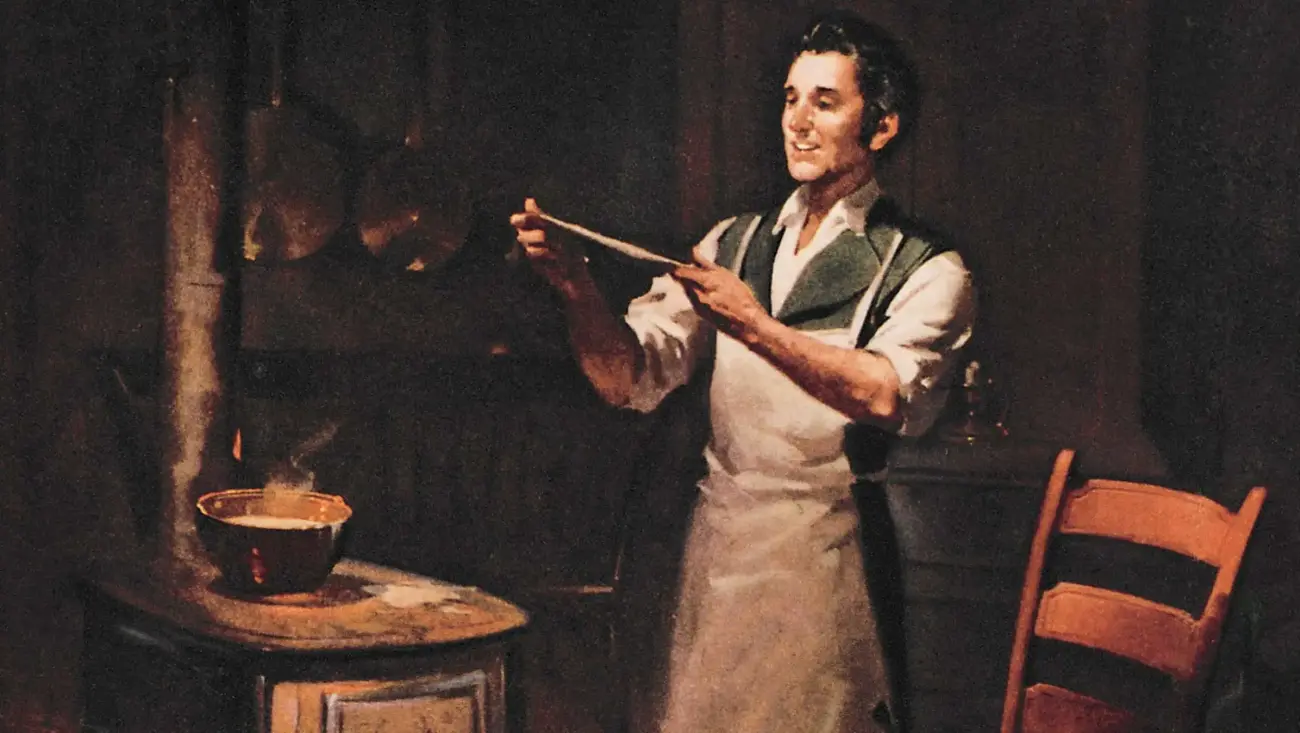
Charles Goodyear: Inventor of Vulcanized Rubber
When we think about rubber today, we probably think of tires, hoses, seals, belts, gloves, gaskets, footwear, and countless other products. Rubber is such an ordinary part of modern life that it is easy to forget how difficult the material was to use during the early 19th century.
Natural rubber had remarkable elasticity, but it also had serious limitations. It became soft and sticky in hot weather, stiff and brittle in cold temperatures, and could lose its useful shape over time. These problems made rubber difficult to manufacture into reliable commercial products.
One man devoted much of his life to solving this problem: Charles Goodyear.
Goodyear did not invent natural rubber, and he did not invent the automobile tire. His great contribution was discovering and developing the process known as vulcanization, which transformed natural rubber into a much more durable, stable, and useful material.
His story is one of persistence, experimentation, financial hardship, patent battles, and ultimately one of the most important developments in the history of rubber.
Early Life of Charles Goodyear
Charles Goodyear was born on December 29, 1800, in New Haven, Connecticut, United States. He was the son of Amasa Goodyear, a businessman involved in hardware and manufacturing.
Goodyear initially worked in his father's business, but the family business eventually failed. In the early 1830s, he began looking for opportunities elsewhere and became increasingly interested in the rapidly developing rubber industry.
At the time, natural rubber was sometimes called India rubber or caoutchouc. It was obtained from the latex of certain tropical trees and had already attracted considerable attention from American entrepreneurs.
The problem was that natural rubber was extremely difficult to control.
It could be flexible and waterproof, but its physical properties changed dramatically with temperature. A rubber product that seemed useful in one season could become almost useless in another.
Goodyear became convinced that there had to be a way to make rubber more stable.
The Rubber Industry Before Goodyear
During the first decades of the 19th century, manufacturers were already producing rubber products such as clothing, footwear, bags, and life-preserving equipment.
But the material had a fundamental weakness.
In hot conditions, untreated natural rubber could soften and become sticky. In cold conditions, it could become hard and brittle. Products made from it could deform, deteriorate, or become unpleasant to use.
This instability caused serious problems for manufacturers.
A product might appear successful when it left the factory but fail when exposed to summer heat or winter temperatures.
According to the MIT Lemelson Center, the rubber industry experienced a period of rapid enthusiasm before these problems became increasingly obvious. Goodyear entered this difficult environment and began experimenting with ways of improving rubber.
Goodyear's First Experiments With Rubber
Goodyear's interest in rubber began with attempts to develop practical rubber products.
In 1834, he presented a life-preserver air valve to a rubber company in Philadelphia. The company, however, was already experiencing serious problems with rubber products and was not particularly interested in another rubber invention.
Goodyear nevertheless continued his experiments.
He tried mixing different substances with rubber in an attempt to change its properties. One of his early successes involved nitric acid, which could make the surface of rubber smoother and less sticky.
For a short time, it appeared that he might have found a solution.
But the improvement was not enough.
Rubber products could still fail when exposed to high temperatures.
One particularly important failure involved rubber mailbags produced for the U.S. Post Office. The material could appear successful under normal conditions but then deteriorate when exposed to heat.
This failure demonstrated that Goodyear had not yet solved the fundamental problem.
He needed to change the properties of the rubber itself rather than simply treating its surface.
The Discovery of Sulfur
Goodyear eventually became interested in sulfur.
His experiments showed that sulfur could change the behavior of rubber, making it less sticky and more resistant to temperature changes. But simply adding sulfur was not enough to produce the durable material he was looking for.
Goodyear continued experimenting with combinations of rubber, sulfur, heat, and different processing methods.
This eventually led to the event that would change the history of the rubber industry.
The Famous 1839 Stove Incident
The most famous episode in Goodyear's story occurred in 1839.
Goodyear was experimenting with rubber containing sulfur. During a demonstration at a general store in Woburn, Massachusetts, some of the rubber accidentally came into contact with a hot stove.
Instead of simply melting into a sticky mass, the heated rubber developed a remarkably different texture.
Goodyear examined the material and realized that heat had caused an important transformation.
The Smithsonian describes the discovery as an accidental heating of a mixture containing India rubber, sulfur, and lead oxide, producing a much more stable material.
The event is often described as an accident, but calling it simply an accident does not tell the whole story.
Goodyear had already spent years experimenting with rubber. He understood the problems with the material, had already investigated sulfur, and was actively searching for a way to stabilize rubber.
The hot-stove incident provided the crucial clue.
What Is Vulcanization?
The process that Goodyear eventually developed became known as vulcanization.
In simple terms, vulcanization uses heat and sulfur to chemically modify natural rubber.
Natural rubber consists largely of long polymer chains. During vulcanization, sulfur creates cross-links between these polymer chains.
These cross-links change how the material behaves.
Instead of allowing the rubber chains to move too freely, the cross-linked structure gives the rubber greater stability and resilience.
As a result, vulcanized rubber can generally:
-
Maintain its shape better
-
Resist excessive softening when heated
-
Remain more flexible across a wider temperature range
-
Resist deformation
-
Provide better mechanical durability
-
Become much more useful for industrial applications
The Smithsonian describes vulcanized rubber as durable, smooth, and significantly more resistant to environmental and chemical effects than untreated natural rubber.
This was a major technological breakthrough.
Five More Years of Experimentation
The 1839 discovery did not mean Goodyear immediately had a perfect industrial process.
He continued experimenting for approximately five more years.
He tested different quantities of sulfur, different temperatures, different heating methods, and different ways of processing the rubber.
The process had to be controlled carefully.
Too little treatment could leave the rubber unsuitable for demanding applications. Excessive treatment could produce material with undesirable characteristics.
Goodyear eventually developed a practical process capable of producing rubber with the combination of flexibility, durability, and stability that manufacturers needed.
The MIT Lemelson Center notes that Goodyear continued working on the process for years before receiving his patent in 1844.
Charles Goodyear's 1844 Patent
In 1844, Goodyear received U.S. Patent No. 3,633 for his rubber-related process.
The patent represented an important milestone because it formally established his legal claim to the technology.
Smithsonian records also document Goodyear's 1844 patents and his work on machinery and rubber manufacturing.
However, obtaining a patent did not solve Goodyear's financial problems.
In fact, another difficult chapter of his life was beginning.
The Patent Battles
Vulcanized rubber was extremely valuable.
Once manufacturers understood what the process could accomplish, demand for improved rubber products increased rapidly.
But Goodyear's process was relatively straightforward to reproduce compared with many complex industrial inventions. This made patent enforcement extremely difficult.
Goodyear spent enormous amounts of money defending his intellectual property.
He became involved in numerous legal disputes with manufacturers who he believed were using his patented process without permission.
One of the most famous cases became known as The Great India Rubber Case, involving Horace Day.
The Smithsonian describes this case as one of the major American business lawsuits of the 19th century. Goodyear's claim was ultimately upheld, but the legal battles consumed enormous amounts of his money and time.
Success in Technology, Failure in Finance
One of the most remarkable aspects of Goodyear's life is the contrast between his technological achievement and his personal financial situation.
The process he developed created enormous commercial possibilities for rubber.
But Goodyear himself did not become wealthy in proportion to the importance of his invention.
His experiments were expensive.
Patent disputes were expensive.
Legal proceedings were expensive.
Manufacturing and business ventures also created financial pressure.
Goodyear spent periods in debtors' prison, and his family experienced severe financial hardship during his years of experimentation.
The MIT Lemelson Center records that Goodyear died in 1860 while still carrying substantial debts.
His story is therefore quite different from the familiar image of an inventor who discovers a revolutionary technology and immediately becomes rich from it.
Goodyear and Europe
Goodyear also attempted to protect and commercialize his invention outside the United States.
However, international patent protection created additional difficulties.
He encountered legal and technical problems in Europe, and his attempts to protect his interests there were not as successful as he had hoped.
His financial difficulties followed him across the Atlantic.
According to the MIT Lemelson Center, he even spent time in a French debtor's prison during this period.
Despite these setbacks, the technology itself continued spreading.
Manufacturers increasingly recognized the value of vulcanized rubber.
How Vulcanized Rubber Changed Industry
The importance of Goodyear's work went far beyond one particular rubber product.
Once rubber could be made more stable and durable, manufacturers could use it in a much wider range of applications.
Rubber became increasingly important for:
-
Waterproof clothing
-
Footwear
-
Belts
-
Hoses
-
Seals
-
Gaskets
-
Industrial components
-
Medical equipment
-
Electrical insulation
-
Mechanical parts
-
Transportation-related products
The material became particularly valuable wherever flexibility, sealing ability, resilience, and resistance to water were required.
The Smithsonian notes that vulcanization transformed rubber into a practical material with hundreds of applications.
This development helped establish rubber as one of the important engineering materials of the industrial age.
Charles Goodyear and the History of Tires
Because the name Goodyear is so closely associated with tires today, there is an important historical distinction to make.
Charles Goodyear did not invent the modern automobile tire.
The automobile itself did not yet exist in the form we know today when Goodyear was conducting his most important rubber experiments.
His contribution was more fundamental.
By making rubber significantly more durable and useful, vulcanization created the material foundation for many later technologies, including advanced rubber products used in transportation.
Later inventors and manufacturers developed pneumatic tires and eventually automotive tires using improved rubber technology.
Without durable rubber, the development of practical rubber tires would have been far more difficult.
The Goodyear Name and the Tire Company
Another common misunderstanding concerns the modern Goodyear Tire & Rubber Company.
Charles Goodyear did not establish the Goodyear Tire & Rubber Company.
The company was founded in Akron, Ohio, in 1898, decades after Charles Goodyear's death. It was named in his honor because of his contribution to rubber technology.
Charles Goodyear died in 1860.
The company bearing his name therefore belongs to a later generation of the rubber industry.
This distinction is important because the famous tire company and the inventor share a name, but they are not the same historical enterprise.
Why Goodyear's Discovery Was So Important
Before vulcanization, natural rubber had tremendous potential but serious practical limitations.
After vulcanization, rubber became a much more dependable engineering material.
The change can be summarized simply:
Untreated natural rubber → unstable and difficult to control
Vulcanized rubber → stronger, more durable, more temperature-resistant, and commercially practical
That transformation opened the door to an enormous expansion in rubber manufacturing.
It also demonstrates an important principle in engineering history: sometimes the value of an invention is not in creating a completely new material, but in discovering how to make an existing material useful.
Goodyear's Personality and Persistence
Goodyear's life is also a story about persistence.
He experienced repeated failures.
Products failed.
Experiments failed.
Business ventures failed.
Money disappeared.
Legal disputes consumed his resources.
Yet he continued experimenting.
His work was not based on one lucky moment alone. The famous stove incident provided the critical clue, but years of experimentation were required before that clue became a practical manufacturing process.
This is why describing Goodyear's achievement simply as an accidental discovery is misleading.
The accident mattered, but so did the years of knowledge and experimentation that allowed him to recognize its significance.
The Final Years of Charles Goodyear
Charles Goodyear's final years were marked by financial difficulties and ongoing legal and business problems.
Despite the importance of his work, he never enjoyed the financial rewards that might normally be expected from such a transformative invention.
He died on July 1, 1860, in New York City, at the age of 59.
His death came at a time when the importance of vulcanized rubber was becoming increasingly clear.
The technology he had spent decades developing would continue to expand long after his death.
Charles Goodyear's Legacy
Charles Goodyear's greatest legacy is not a particular rubber product.
It is the process that made rubber dramatically more useful.
Vulcanization helped transform natural rubber from a problematic material into an important industrial resource.
Today, rubber is found in virtually every part of modern transportation and industry.
A modern vehicle contains numerous rubber components, including tires, seals, hoses, bushings, belts, mounts, gaskets, and vibration-isolating parts.
The same basic idea that Goodyear spent decades developing continues to influence rubber technology, even though modern rubber chemistry has advanced enormously beyond the materials and processes available to him.
His contribution therefore belongs not only to the history of chemistry but also to the history of manufacturing, transportation, engineering, and modern industry.
Charles Goodyear: A Short Biography
Charles Goodyear was born in 1800 in New Haven, Connecticut.
He became interested in rubber during the 1830s when the material was still difficult to manufacture into reliable products.
After years of experiments, he discovered in 1839 that heating sulfur-treated rubber could produce a dramatically more stable material.
He spent several more years refining the process and received a U.S. patent in 1844.
His invention became known as vulcanization.
Goodyear then spent much of his life defending his patents and attempting to commercialize his technology, often while facing severe financial difficulties.
He died in 1860 without becoming wealthy from the invention that would eventually transform the rubber industry.
The Goodyear Tire & Rubber Company was founded decades later and was named in his honor.
The Man Behind Modern Rubber
Charles Goodyear's story is unusual because his greatest achievement was much larger than his personal success.
He spent years working with a material that other manufacturers had struggled to control. He endured repeated failures, financial problems, legal disputes, and personal hardship.
Yet his experiments eventually produced a process that changed the properties of rubber itself.
The significance of vulcanization can still be seen every time a vehicle moves on rubber tires, every time a rubber seal prevents a fluid leak, and every time a flexible rubber component survives heat, cold, pressure, and repeated movement.
Goodyear did not create the modern tire industry himself, but he helped create one of the technological foundations on which that industry could eventually develop.
His life is therefore remembered not simply as the story of an inventor who made a discovery, but as the story of a man who spent decades turning a difficult natural material into one of the most useful materials of the industrial world.