TR
TR EN
EN

How to Protect Your Car From Hail Damage?
Hail can cause serious damage to a vehicle within just a few minutes. Even a short hailstorm can leave dents across the hood, roof, trunk lid, and fenders. Larger hailstones can also crack windows, damage headlights and taillights, and even break a panoramic sunroof.
Although it is impossible to prevent hail from falling, you can significantly reduce the risk of damage by preparing in advance and knowing what to do when a storm approaches.
What Kind of Damage Can Hail Cause to a Car?
Hail damage is not limited to small dents in the bodywork.
Depending on the size of the hailstones, wind speed, and storm intensity, a vehicle may suffer:
-
Dents in the hood
-
Roof dents
-
Trunk lid damage
-
Fender dents
-
Cracked or broken windshield
-
Damaged side windows
-
Cracked headlights and taillights
-
Sunroof or panoramic roof damage
-
Cracked plastic trim
-
Chipped paint
The roof, hood, trunk lid, and other horizontal surfaces are particularly vulnerable because hail can strike these areas almost directly.
The Best Way to Protect a Car From Hail
The most effective protection is simple: put a solid barrier between the vehicle and the hail.
If hail is expected, park the car in:
-
A garage
-
A covered parking garage
-
A carport
-
A covered parking area
-
Another sturdy structure with a solid roof
A solid roof provides much more reliable protection than a fabric car cover. If you have access to covered parking, it should always be the first choice.
Use a Hail Protection Car Cover
If covered parking is not available, a purpose-built hail protection cover can help reduce damage.
A standard thin car cover is mainly designed to protect against dust, sunlight, rain, and other environmental contaminants. It should not be considered equivalent to a padded hail protection cover.
Hail protection covers generally use thicker or impact-absorbing materials to reduce the force transferred to the vehicle's body panels.
However, even a specialized cover cannot guarantee that the car will remain completely undamaged during a severe hailstorm.
What Should You Look for in a Hail Protection Cover?
A hail protection cover should be selected carefully.
Important features include:
-
Adequate impact-absorbing padding
-
Correct size for the vehicle
-
Secure straps or fastening points
-
A soft inner surface
-
Resistance to water and weather
-
Good wind resistance
-
Sufficient coverage for the roof, hood, trunk, and windows
The fit is particularly important.
A loose cover can move around during strong winds. If dirt or sand becomes trapped underneath it, the movement can also cause scratches in the paint.
Can a Normal Car Cover Protect Against Hail?
A normal car cover can provide some protection, but its effectiveness is limited.
It may soften the impact of smaller hailstones and prevent some light scratches or debris damage. However, large hail can still dent the vehicle through a conventional fabric cover.
Therefore, a regular car cover should not be treated as a substitute for a garage or a purpose-built hail protection system.
Can Blankets Be Used to Protect a Car?
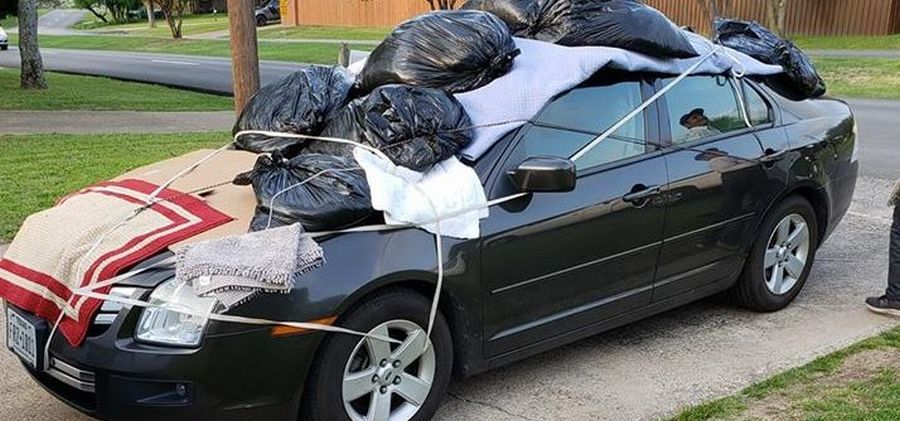
If a hailstorm is approaching and you do not have a specialized cover, thick blankets or moving blankets can be used as an emergency protective layer.
They can be placed over vulnerable areas such as:
-
The roof
-
Hood
-
Trunk lid
-
Windshield
The goal is to create additional padding between the hailstones and the vehicle.
However, the blankets must be secured properly so they do not blow away. They should also be clean, because dirt trapped between the blanket and the paint can cause scratches when the material moves.
This is an emergency measure, not a guaranteed solution for severe hail.
Should You Park Under a Tree During Hail?
Parking under a tree is generally not the best solution.
The branches may block some hailstones, but strong winds can break branches and cause them to fall onto the vehicle. The falling branches may cause considerably more damage than the hail itself.
A sturdy covered structure is a much safer option.
Is Parking Next to a Building Helpful?
Parking next to a large building can sometimes reduce direct exposure to hail, particularly if the building blocks the direction from which the wind is carrying the hail.
However, this is not as reliable as covered parking.
You should also consider the possibility of falling objects, loose materials, signs, or debris during a severe storm.
Check the Weather Before Leaving the Car Outside
One of the easiest ways to reduce hail damage is to monitor severe weather forecasts.
If there is a significant risk of thunderstorms and hail, you can move your vehicle before the storm arrives.
Weather alerts are particularly useful because hailstorms can develop quickly. Having even a few minutes of warning can be enough to move the vehicle into a garage or covered parking area.
What Should You Do If Hail Starts While You Are Driving?
If hail begins while you are driving, your first priority should be safety.
Do not continue driving simply to find a perfect parking location if doing so would put you or other road users at risk.
If possible, move to a safe covered area such as a parking garage or another sturdy covered location.
Avoid stopping in traffic lanes, on dangerous road shoulders, or in areas where visibility is severely reduced.
Large hail can damage the windshield, and heavy rain can make the road slippery at the same time. Continuing to drive through a severe hailstorm may therefore create risks beyond vehicle damage.
Can a Windshield Break During a Hailstorm?
Yes.
Large hailstones can crack or break automotive glass. Windshield damage is particularly important because cracks can interfere with visibility and may compromise the structural integrity of the glass.
Sunroofs and panoramic glass roofs can also be vulnerable during severe hail.
If the glass is damaged, it should be inspected as soon as possible rather than continuing to use the vehicle normally.
Does Car Insurance Cover Hail Damage?
Whether hail damage is covered depends on the insurance policy and the type of coverage purchased.
Some comprehensive vehicle insurance policies cover damage caused by natural events such as hail. However, coverage conditions, deductibles, exclusions, and claim procedures vary between policies and countries.
For this reason, it is worth checking the policy before severe weather occurs rather than assuming every type of hail damage will automatically be covered.
What Should You Do After a Hailstorm?
Once the storm has completely passed and it is safe to inspect the vehicle, check the bodywork carefully in good daylight.
Look for:
-
Small dents
-
Larger body dents
-
Paint chips
-
Cracked glass
-
Damaged lights
-
Broken trim
-
Damage to mirrors
-
Cracks around the sunroof
Hail dents can sometimes be difficult to see from directly above. Looking at the vehicle from different angles can make small depressions much easier to identify.
It is also a good idea to photograph the damage before attempting any repairs.
Can Hail Damage Be Repaired Without Painting?
In many cases, yes.
If the hail has created dents but the paint remains intact, paintless dent repair (PDR) may be an option.
This technique allows technicians to restore the shape of the body panel while preserving the original paint.
It can be particularly useful for vehicles with multiple small hail dents because repainting every damaged panel is not always necessary.
However, not every dent is suitable for paintless dent repair. The depth of the dent, its location, the condition of the paint, and the amount of metal deformation all matter.
Does Every Hail-Damaged Car Need to Be Repainted?
No.
If the body panel is dented but the paint is still intact, repainting may not be necessary.
If the hail has cracked, chipped, or removed the paint, conventional body repair and refinishing may be required.
The correct repair method should be determined after inspecting the actual damage rather than assuming that every hail dent requires paintwork.
Should Hail Damage Be Repaired Immediately?
It is generally better not to leave significant damage unattended for a long time.
If the paint has been chipped or cracked, the exposed metal may eventually develop corrosion. Broken glass can also allow water to enter the vehicle.
Even when the damage appears purely cosmetic, getting an inspection early can help determine whether paintless dent repair or another repair method is appropriate.
How to Reduce Hail Damage When You Have No Garage
If you do not have access to a garage, preparation becomes more important.
Keep a suitable hail protection cover available if hail is common in your area. If a storm warning is issued, install the cover before the storm reaches the vehicle.
If no specialized cover is available, thick clean blankets can provide temporary additional protection over the most exposed areas.
However, never assume that a thin car cover, blanket, or improvised protection can make a vehicle completely hail-proof.
What Is the Most Effective Hail Protection?
The protection methods can be considered in roughly this order:
Covered parking: The most reliable solution because a solid roof prevents direct hail impact.
Purpose-built hail protection cover: A useful portable solution when covered parking is unavailable, although it has limitations.
Thick blankets or padded materials: An emergency option that can reduce the force of smaller impacts.
Standard car cover: Provides some protection against light hail and debris but is not designed to stop severe hail.
Tree or building edge: May provide partial protection but introduces other risks and should not be considered a reliable solution.
A Few Minutes of Preparation Can Save a Lot of Money
Hail damage can happen surprisingly quickly, but preventing it often requires only a few minutes of preparation.
The most effective habit is to monitor severe weather warnings and move the vehicle into a solid covered location whenever significant hail is expected. If that is not possible, a properly fitted hail protection cover can reduce the impact, while thick padding can serve as an emergency alternative.
No portable cover can provide the same protection as a solid roof, especially during a severe hailstorm. The safest strategy is therefore to plan ahead rather than trying to protect the vehicle after the hail has already started.