TR
TR EN
EN

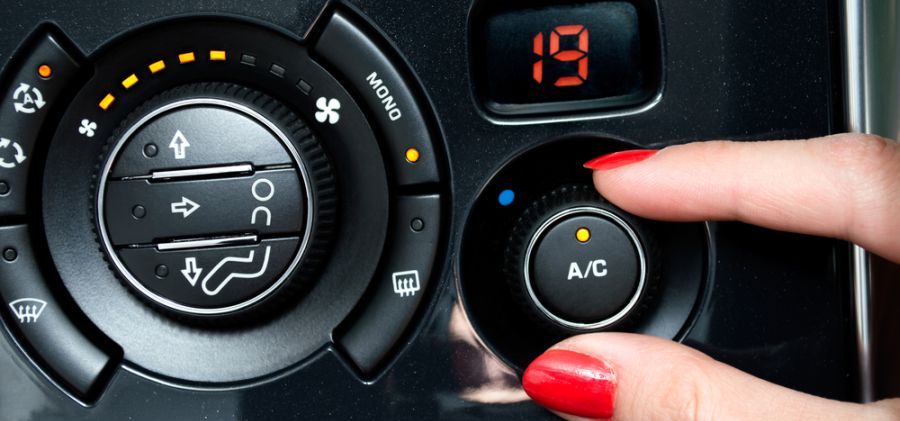
Things to Consider When Using Your Car's Air Conditioning
A car's air conditioning system is one of the most important features for driving comfort, especially during hot weather. However, using the air conditioner correctly is not only about keeping the cabin cool. Proper use can also affect fuel consumption, system performance, cabin air quality, window fogging, and the service life of the air-conditioning components.
Simply setting the temperature to the lowest possible level and running the fan at maximum speed is not always the best approach. A few simple habits can make the system more comfortable and efficient.
How Should You Use the AC in a Very Hot Car?
When a car has been parked in direct sunlight for a long time, the temperature inside the cabin can become much higher than the outside temperature.
In this situation, turning on the air conditioner at maximum cooling immediately after getting into the car is not necessarily the most effective method.
If possible, open the doors or windows briefly to allow some of the trapped hot air to escape.
Then start the engine and activate the air conditioning system. Once the vehicle starts moving, close the windows and allow the air conditioner to cool the cabin normally.
This reduces the amount of extremely hot air that the air-conditioning system initially has to deal with.
Should You Always Set the AC to the Lowest Temperature?
No.
Setting the air conditioner to the lowest possible temperature does not necessarily mean that the cabin will cool faster.
In vehicles with automatic climate control, the system automatically adjusts cooling and fan operation according to the selected temperature.
With manual air conditioning, the temperature and fan settings can be adjusted according to the conditions.
Choosing a comfortable temperature rather than constantly using maximum cooling can make the cabin more pleasant and prevent unnecessarily aggressive operation of the system.
Should You Use the Recirculation Mode?
The cabin air recirculation function can be very useful during hot weather.
When recirculation is activated, the system primarily reuses air already inside the cabin instead of continuously drawing hot air from outside.
Because the air has already been partially cooled, the air conditioner can cool it more easily.
However, using recirculation continuously for a long period is not always ideal.
The cabin air can become stale, and moisture can accumulate, which may contribute to window fogging.
For this reason, it can be useful to switch between recirculated and fresh outside air depending on the conditions.
Should You Open the Windows Before Turning on the AC?
It can be helpful when the vehicle is extremely hot.
If a car has been sitting in the sun, opening the windows for a short time allows some of the hot air to escape before the air conditioner begins working at full capacity.
Once the vehicle starts moving, the windows can be closed and the air conditioner can cool the cabin more effectively.
There is no need to leave the windows open for a long period. The goal is simply to release the initial buildup of hot air.
Should You Drive With the Windows Open While Using the AC?
Generally, no.
When the air conditioner is being used to cool the cabin, keeping the windows open allows hot outside air to enter continuously.
The air-conditioning system then has to work harder to maintain the desired temperature.
At higher speeds, open windows can also increase aerodynamic drag.
For this reason, once the cabin has reached a comfortable temperature, keeping the windows closed is usually more effective.
Why Is the Cabin Air Filter Important?
The cabin air filter helps clean the air entering the vehicle through the ventilation system.
Over time, the filter can become clogged with dust, pollen, leaves, and other particles.
A dirty or heavily clogged cabin filter can cause:
-
Reduced airflow
-
Weak ventilation even at high fan speed
-
Unpleasant odors
-
Poorer defogging performance
-
Reduced perceived air-conditioning performance
The cabin filter should therefore be inspected and replaced according to the vehicle manufacturer's maintenance recommendations.
Can a Dirty Cabin Filter Cause AC Problems?
A dirty cabin filter does not necessarily mean that the air-conditioning compressor itself is faulty.
However, a severely clogged filter can restrict airflow and make the ventilation system work less effectively.
Therefore, if the air conditioner seems weak, the problem should not automatically be blamed on low refrigerant or a faulty compressor.
The cabin filter is one of the simplest components to check.
Why Does the AC Sometimes Smell Bad?
An unpleasant, musty, or damp smell when the air conditioner is turned on is a common problem.
The evaporator becomes cold during air-conditioning operation, and condensation can form on its surface.
Over time, moisture combined with dirt and microorganisms can contribute to unpleasant odors.
This is why an air conditioner may produce a musty or sour smell when first switched on.
Replacing the cabin filter may help, but if the source of the odor is the evaporator or ventilation ducts, changing the filter alone may not solve the problem.
Should You Turn Off the AC Before Turning Off the Engine?
Some drivers turn off the cooling function a few minutes before reaching their destination while leaving the ventilation fan running.
The idea is to allow moisture around the evaporator area to decrease before the vehicle is parked.
This can sometimes help reduce the conditions that contribute to unpleasant odors.
It is not a mandatory procedure for every vehicle, and modern climate-control systems use different strategies. However, it can be a useful habit in vehicles that tend to develop a musty AC smell.
Does Using the AC Increase Fuel Consumption?
Yes.
In conventional vehicles, the air-conditioning compressor requires energy from the engine. This creates an additional load and can increase fuel consumption.
The exact increase depends on several factors, including:
-
Engine type
-
Vehicle size
-
Outside temperature
-
AC system efficiency
-
Selected cabin temperature
-
Driving conditions
-
Compressor design
Modern air-conditioning systems are more efficient than older systems, but they still require energy to operate.
Hybrid and electric vehicles operate differently because their climate-control systems may use electrically driven compressors rather than relying directly on the engine.
Is It More Economical to Use the AC or Open the Windows?
There is no single answer for every driving situation.
At lower speeds, opening the windows may sometimes require less energy than running the air conditioner.
At higher speeds, however, open windows increase aerodynamic drag. In these conditions, using the air conditioner with the windows closed may be the more practical option.
Driving speed, outside temperature, vehicle design, and AC efficiency all influence the result.
Should You Only Use the AC in Summer?
No.
Air conditioning is also useful during cold and rainy weather.
One of its important functions is helping remove moisture from the cabin air. This makes it particularly useful for clearing fogged windows.
During winter, the air conditioner can therefore be used together with the heating system.
If the windshield fogs up, directing airflow toward the windshield and activating the AC can help remove moisture more quickly.
How Can the AC Help Defog the Windshield?
When the windshield becomes fogged, restoring clear visibility should be the priority.
Select the windshield defogging or defrosting mode and allow air to flow toward the glass.
The air conditioner can help remove moisture from the air, while the heater can warm the windshield.
If necessary, turn off cabin air recirculation so that fresh outside air can enter.
The exact procedure varies between vehicles, but the basic objective is to reduce humidity and restore clear visibility as quickly as possible.
Can Using the AC Cause Engine Overheating?
A properly functioning vehicle should not normally overheat simply because the air conditioner is being used.
However, operating the AC adds load to the vehicle and can make an existing cooling-system problem more noticeable.
Potential problems include:
-
Low coolant level
-
Radiator problems
-
Cooling fan failure
-
Thermostat problems
-
Water pump problems
If the engine temperature rises abnormally when the air conditioner is operating, the cooling system should be inspected.
Continuing to drive while the engine is overheating can cause serious engine damage.
When Should the AC Refrigerant Be Checked?
Air-conditioning refrigerant should not be treated like engine oil that must simply be replaced at a fixed interval.
A properly functioning AC system is a closed system.
If refrigerant level is repeatedly becoming low, there may be a leak somewhere in the system.
Simply adding more refrigerant without finding the cause is not a proper long-term solution.
If the air conditioner is no longer cooling effectively, the system may need to be checked for:
-
Refrigerant leaks
-
Compressor problems
-
Condenser problems
-
Evaporator problems
-
Expansion valve problems
-
Pressure sensor faults
-
Other system-related issues
What Should You Do If the AC Is Not Cooling?
If the air conditioner is not cooling properly, do not immediately assume that it only needs more refrigerant.
Several components can affect cooling performance.
The following may need to be inspected:
-
Cabin air filter
-
Refrigerant level
-
Refrigerant leaks
-
Compressor
-
System pressure
-
Condenser
-
Evaporator
-
Cooling fans
-
Pressure sensors
-
Climate-control system
In some cases, the compressor may not be engaging correctly even though the AC controls appear to be working.
Finding the actual cause is more important than simply adding refrigerant.
Can AC Use Affect Health and Comfort?
Yes.
Very cold air blowing directly onto your face or body can be uncomfortable for some people.
Moving from extremely hot outdoor conditions into an excessively cold cabin can also be unpleasant.
A moderate cabin temperature and properly distributed airflow generally provide better comfort.
Instead of directing the strongest airflow directly at passengers, adjusting the vents so that air circulates throughout the cabin can create a more comfortable environment.
Why Is AC Maintenance Important?
An air-conditioning system that is neglected can gradually lose performance.
Problems such as a clogged cabin filter, dirty condenser, refrigerant leakage, compressor problems, or contamination around the evaporator can affect cooling performance.
The system should be inspected if you notice:
-
Poor cooling
-
Unusual odors
-
Abnormal noises
-
Frequent compressor cycling
-
Weak airflow
-
Unusual changes in cooling performance
A reduction in cooling performance should not simply be accepted as normal aging.
How Can You Use Your Car's AC More Efficiently?
A few simple habits can make a noticeable difference.
If the vehicle is extremely hot, allow some of the trapped hot air to escape before asking the AC system to cool the cabin.
Keep the windows closed once the cabin begins cooling, use recirculation when appropriate, and replace the cabin air filter at the recommended intervals.
During cold or rainy weather, remember that the AC can also help remove moisture and clear fogged windows.
Most importantly, if the air conditioner stops cooling properly, do not simply keep adding refrigerant. The system should be checked to determine why its performance has changed.
Correct use and regular maintenance can help the air conditioner operate more effectively, improve cabin comfort, and reduce unnecessary strain on the system.