TR
TR EN
EN

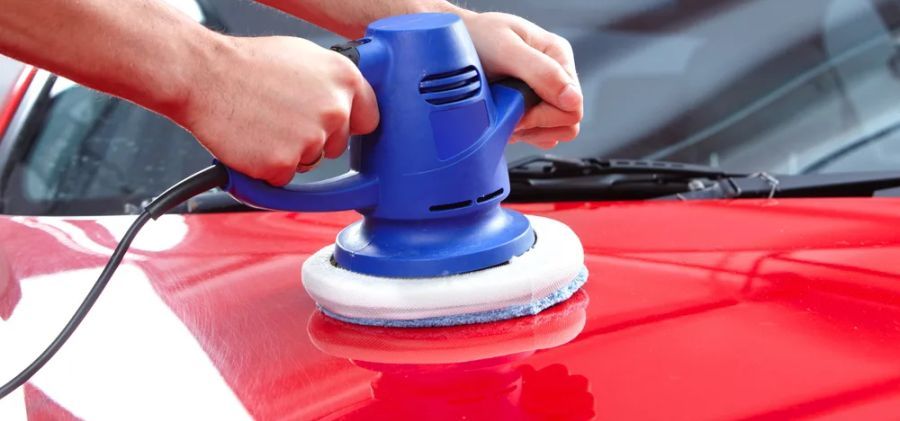
What Is Car Polishing? How Is Car Polishing Done?
Car polishing is one of the most common paint-care procedures used to improve the appearance of a vehicle's exterior. It is generally performed to reduce light scratches, swirl marks, oxidation, water spots, and dullness on the painted surface.
However, polishing is often misunderstood. Many people use the terms polishing, waxing, and compounding as if they mean the same thing. They do not.
A proper polishing process involves controlled abrasion of the upper surface of the clear coat. The purpose is to level very small imperfections and create a smoother surface that reflects light more evenly.
What Is Car Polishing?
Car polishing is a paint-correction process in which a polishing product and an appropriate pad are worked against the painted surface.
Depending on the product and pad combination, polishing can remove or reduce:
-
Fine scratches
-
Swirl marks
-
Washing marks
-
Light oxidation
-
Water spot marks
-
Paint dullness
-
Light surface defects
-
Minor paint imperfections
The process works primarily by removing a very small amount of the clear coat surrounding the defect and leveling the surface.
The result is a smoother and more reflective paint surface.
What Is the Difference Between Polish and Wax?
This is one of the most important points to understand before polishing a car.
Polish is primarily used for correction. Wax is primarily used for protection.
A polishing product can contain abrasives that remove a microscopic amount of the clear coat to reduce surface defects.
Wax, on the other hand, is applied over the paint to provide protection, gloss, and water repellency. Wax does not permanently remove scratches from the paint.
Therefore, applying wax to a scratched or heavily swirled surface does not actually repair the paint. It may temporarily improve its appearance, but the underlying defects remain.
A common detailing sequence is:
Wash → decontaminate → compound if necessary → polish → protect
Protection can be provided by wax, a synthetic sealant, or another suitable paint-protection product.
What Is the Difference Between Compound and Polish?
Compound and polish are both used for paint correction, but they generally differ in cutting strength.
A compound is normally more aggressive and is designed to deal with heavier paint defects.
A polish is generally finer and is used to refine the surface, remove light defects, and improve clarity and gloss.
For example, a heavily scratched or oxidized panel may require a compound first. After compounding, a finer polishing step may be necessary to remove the haze or micro-marring created during the cutting process.
Not every vehicle needs both steps.
If the paint only has light swirl marks and minor dullness, a finishing polish may be sufficient.
What Is the Clear Coat?
Modern automotive paint normally consists of several layers.
The clear coat is the transparent outer layer that sits above the colored base coat. It provides gloss and helps protect the underlying paint from environmental exposure.
Many of the defects visible on a vehicle's paint are located in this clear coat.
When polishing is performed correctly, a very small amount of the clear coat is removed or leveled to reduce these imperfections.
This is why polishing should not be treated as something that can be performed aggressively and repeatedly without consequences.
The clear coat is a finite layer.
What Types of Scratches Can Polishing Remove?
Polishing is most effective against defects that are relatively shallow and remain within the clear coat.
Fine scratches, washing marks, swirl marks, and light oxidation can often be reduced significantly.
A useful basic check is to run a clean fingernail gently across the scratch.
If your fingernail catches strongly in the scratch, the damage may be deeper than what a normal polishing process can safely remove.
If the scratch has gone through the clear coat and into the colored paint or primer, polishing will not restore the damaged area completely.
In such cases, paint repair may be required.
What Is Needed for a Polishing Job?
The equipment required depends on whether the job will be done by hand or with a machine.
For a basic polishing process, you may need:
-
Car shampoo
-
Clean microfiber towels
-
Paint decontamination products
-
Polishing compound or polish
-
Appropriate polishing pads
-
Dual-action or rotary polisher
-
Masking tape
-
Paint inspection light
-
Paint protection product
For beginners, a dual-action polisher is generally easier to control than a rotary machine.
A rotary polisher can provide strong correction, but it also requires greater experience because excessive heat or aggressive technique can damage the paint.
How Is Car Polishing Done?
A good polishing job begins long before the polishing machine touches the paint.
1. Wash the Car Thoroughly
The vehicle should first be washed thoroughly.
Loose dirt, dust, mud, and other contaminants need to be removed before polishing.
Polishing a dirty surface is a bad idea because trapped particles can create additional scratches as the pad moves across the paint.
The vehicle should be washed using suitable automotive cleaning products and clean washing equipment.
2. Dry the Vehicle
After washing, the vehicle should be dried completely.
Water remaining around mirrors, trim, door handles, badges, and panel gaps can later run onto the paint during polishing and make the process more difficult.
Clean microfiber drying towels are preferable to rough materials that can introduce new marks.
3. Remove Bonded Contamination
Washing does not necessarily remove every contaminant attached to the paint.
The surface may still contain:
-
Industrial fallout
-
Brake dust particles
-
Tar
-
Road contamination
-
Tree sap
-
Other bonded particles
If necessary, these contaminants should be removed before polishing.
A clean and properly prepared surface allows the polishing pad to work more consistently and reduces the chance of dragging contamination across the paint.
4. Inspect the Paint
Before starting, inspect the vehicle carefully.
Look at the paint under strong lighting and identify the types of defects present.
Determine whether the vehicle has:
-
Fine swirl marks
-
Light scratches
-
Oxidation
-
Water spots
-
Holograms
-
Paint transfer
-
Deeper scratches
This inspection determines how aggressive the polishing process needs to be.
There is no reason to use a heavy cutting compound when a mild finishing polish can achieve the desired result.
5. Mask Sensitive Areas
Plastic trim, rubber seals, badges, and other sensitive areas can be protected with masking tape.
This is particularly useful when using a machine polisher.
Some polishing products can leave residue on textured plastic or rubber, making cleanup difficult.
Masking also provides an additional safety margin around edges and areas where the paint may be thinner.
6. Perform a Test Spot
Before polishing the entire vehicle, test the selected product and pad combination on a small area.
This is one of the most important steps in paint correction.
Start with the least aggressive combination that can achieve the desired result.
If a mild polish removes the defects sufficiently, there is no reason to use a stronger compound.
A test spot also helps determine how the particular paint reacts to the selected pad, product, machine speed, and working technique.
7. Apply the Polish
Apply an appropriate amount of polishing product to the pad.
Do not use excessive amounts of product.
The pad should be placed properly against the paint before starting the machine, particularly when using a rotary polisher.
Work on a relatively small section at a time rather than trying to polish the entire hood or door in one pass.
8. Work the Panel Methodically
Move the polishing machine across the selected section using controlled, overlapping passes.
Do not concentrate on one point for too long.
The objective is to work the product evenly across the surface rather than creating excessive heat in one location.
Machine speed, pressure, pad type, product type, and the number of passes all affect the result.
The correct combination depends on the paint and the severity of the defects.
9. Wipe and Inspect the Surface
After polishing a section, remove the residue using a clean microfiber towel.
Inspect the paint under appropriate lighting.
This allows you to determine whether the defects have actually been corrected or merely hidden by residue or oils contained in the product.
If the result is satisfactory, continue with the same combination.
If more correction is required, the process can be adjusted carefully.
10. Finish With a Finer Polish if Necessary
A heavy cutting stage can sometimes leave very fine marks or haze behind.
This is especially noticeable on dark-colored vehicles.
In such cases, a finer finishing polish and a softer pad can be used to refine the surface and improve clarity.
However, not every polishing job requires multiple stages.
A well-selected one-step polishing system may be sufficient for a vehicle with relatively minor defects.
11. Protect the Paint
Polishing corrects the paint but does not necessarily provide long-term protection.
After the paint has been corrected and properly cleaned, a protective product can be applied.
Depending on the owner's preference, this could be:
-
Wax
-
Synthetic paint sealant
-
Ceramic coating
-
Another suitable paint-protection product
Protection helps preserve the corrected finish and makes future maintenance easier.
Can Car Polishing Remove All Scratches?
No.
Polishing is not capable of removing every scratch.
If a scratch has penetrated through the clear coat and reached the base coat or primer, polishing alone cannot restore the original paint.
Trying to remove a deep scratch by repeatedly polishing the area can actually create a more serious problem by unnecessarily removing clear coat.
Sometimes the safest result is to reduce the appearance of a deep scratch rather than trying to eliminate it completely.
Can Polishing Damage Car Paint?
Yes, if it is performed incorrectly.
Polishing is controlled abrasion, which means material is being removed from the paint surface.
Potential problems include:
-
Excessive clear-coat removal
-
Paint burn-through
-
Holograms
-
Uneven correction
-
Excessive heat
-
New micro-scratches
-
Damage around sharp edges
The risk is greater when an aggressive compound, aggressive pad, high machine speed, and excessive pressure are combined.
This is why the least aggressive method capable of producing the desired result is generally the better starting point.
Can You Polish a Car by Hand?
Yes.
Light polishing can be performed by hand using a suitable applicator and polishing product.
Hand polishing can work well for small areas and minor imperfections.
However, correcting an entire vehicle by hand requires considerably more time and physical effort.
A machine polisher provides more consistent mechanical action and can achieve stronger correction when used properly.
How Often Should a Car Be Polished?
There is no fixed interval for polishing a vehicle.
Unlike washing or waxing, polishing should not necessarily be treated as a routine process that must be repeated every few months.
Because polishing removes a small amount of clear coat, it should be performed when the paint actually needs correction.
If the paint is already in good condition, regular washing and paint protection are generally preferable to unnecessary polishing.
Does Polishing Make a Car Look New Again?
A well-executed polishing process can make a significant difference to the appearance of a vehicle.
Removing swirl marks, light scratches, oxidation, and surface dullness can dramatically improve the way light reflects from the paint.
The color can appear deeper and the surface can look considerably more glossy.
However, polishing cannot repair every type of paint damage. Deep scratches, dents, peeling paint, rust, and damage that has penetrated through the paint layers require other types of repair.
What Are the Most Common Polishing Mistakes?
One of the biggest mistakes is choosing a product that is more aggressive than necessary.
Another common mistake is polishing a dirty or contaminated surface.
Using a dirty pad or microfiber towel can also introduce new scratches.
Other mistakes include:
-
Working on hot paint
-
Polishing under direct sunlight
-
Applying excessive pressure
-
Staying too long on one area
-
Using too much product
-
Ignoring sharp edges
-
Skipping the test spot
-
Expecting polish to remove deep scratches
-
Polishing too frequently
Good paint correction is not about removing as much material as possible. It is about achieving the desired improvement while preserving as much clear coat as possible.
Is Car Polishing Worth It?
For a vehicle with faded-looking paint, swirl marks, light scratches, or oxidation, polishing can make a significant visual difference.
The most important point is understanding what the process actually does. Polishing is not simply making the car shiny. It is a controlled paint-correction process that modifies the surface of the clear coat.
For this reason, the right product, pad, machine, and technique are important.
A careful polishing process followed by proper paint protection can restore clarity and gloss while helping the vehicle maintain a cleaner and more attractive appearance for longer.