TR
TR EN
EN

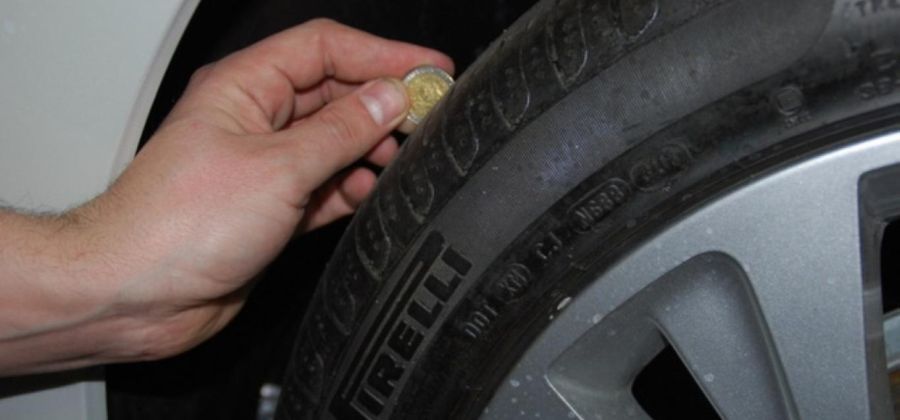
How Much Tread Depth Should a Tire Have?
Tire tread depth is one of the most important factors affecting tire performance and safety. The tread helps maintain contact with the road and, especially in wet conditions, allows water to escape from underneath the tire.
As a tire wears, its tread becomes shallower. This can reduce wet-road grip and increase the risk of losing traction on standing water. For this reason, tire condition should be monitored before the tread reaches its absolute legal limit.
What Is Tire Tread Depth?
Tire tread depth is the distance between the surface of the tread and the bottom of the main grooves. It is normally measured in millimeters.
New tires do not all have the same tread depth. The depth varies according to the tire's design, manufacturer, model, intended use, and tread pattern.
What matters during normal use is how much tread remains and whether the tire is wearing evenly.
The grooves in the tread are particularly important in wet conditions because they provide channels for water to escape from between the tire and the road.
What Is the Minimum Legal Tire Tread Depth?
For passenger cars, 1.6 mm is the commonly used legal minimum tread depth in many countries.
However, 1.6 mm should not be considered the ideal tread depth for a tire.
It represents a legal limit, not a recommendation to continue driving until exactly 1.6 mm remains.
When a tire reaches this level, it is already significantly worn. Its performance, especially in wet conditions, may be considerably worse than that of a newer tire with deeper tread.
The exact legal requirement can vary depending on the country and vehicle category, so local regulations should always be considered.
Is 1.6 mm Tread Depth Enough?
A tire with 1.6 mm of tread may still be above the legal limit in some situations, but that does not mean it has the same safety margin as a less-worn tire.
As tread becomes shallower, the grooves have less capacity to remove water.
This becomes particularly important when driving through heavy rain, standing water, or at highway speeds.
A worn tire may feel perfectly normal on a dry road. The difference can become much more noticeable when the road becomes wet.
For this reason, drivers should not wait until the last possible moment before replacing worn tires.
How Deep Is the Tread on a New Tire?
There is no single tread-depth measurement that applies to every new tire.
Different summer, winter, all-season, performance, and commercial tires can have different tread designs and depths.
Therefore, it is not correct to say that every new tire must have exactly the same number of millimeters.
Instead, the tire should be evaluated according to its original design and how much it has worn during use.
How Do You Measure Tire Tread Depth?
The most accurate way to measure tread depth is with a tire tread depth gauge.
The gauge is inserted into the tread groove and provides a measurement in millimeters.
However, measuring one point is not enough.
You should check several areas, including:
-
The inner shoulder
-
The center of the tread
-
The outer shoulder
-
Several points around the circumference of the tire
This helps identify both overall tread depth and uneven wear.
What Are Tire Tread Wear Indicators?
Modern tires have small raised sections inside the main tread grooves called tread wear indicators.
These indicators make it easier to determine when the tread has reached its wear limit.
As the tire wears, the tread surface gradually approaches the height of these indicators. When the tread becomes level with them, the tire has reached the specified wear limit.
The position of the indicators is usually marked by symbols or letters on the tire sidewall.
You should not wait until the tread looks completely smooth. The wear indicators are designed to provide an early visual indication of excessive tread wear.
Why Is Tread Depth Important in Rain?
Tread depth becomes particularly important when driving on wet roads.
When there is water between the tire and the road, the grooves in the tread help channel that water away from the contact patch.
As the tread becomes shallower, the tire's ability to evacuate water can decrease.
This can become a serious issue when driving through deep puddles or standing water at higher speeds.
Tread depth is not the only factor affecting wet-road performance, but it is an important one.
Does Lower Tread Depth Increase the Risk of Aquaplaning?
Yes, worn tread can increase the risk of aquaplaning because the tire has less capacity to remove water from the road surface.
Aquaplaning occurs when a layer of water prevents the tire from maintaining sufficient contact with the road.
When this happens, steering control and braking performance can be severely affected.
However, aquaplaning risk also depends on other factors, including vehicle speed, water depth, tire pressure, road surface, tire design, and weather conditions.
Why Is Even Tire Wear Important?
Tread depth alone does not tell you everything about a tire.
A tire may have acceptable tread depth in the center while being severely worn on one of the shoulders.
Uneven tire wear can be caused by problems such as:
-
Incorrect tire pressure
-
Incorrect wheel alignment
-
Toe or camber problems
-
Worn suspension components
-
Steering system problems
-
Wheel imbalance
-
Incorrect tire rotation
If a tire is wearing unevenly, replacing the tire without correcting the underlying problem may simply cause the new tire to wear in the same way.
Why Should You Check the Center and Edges of the Tire?
Tires do not always wear evenly across the entire tread.
For example, incorrect tire pressure can cause excessive wear toward the center or shoulders. An alignment problem can cause one edge of the tire to wear much faster than the other.
This means that measuring only the center of the tread can give you a misleading impression of the tire's condition.
A proper inspection should include the entire tread surface.
Can a Tire Be Unsafe Even If It Has Enough Tread?
Yes.
Tread depth is important, but it is not the only factor that determines whether a tire is safe.
A tire may still have considerable tread but require replacement because of:
-
Cracks
-
Bulges
-
Cuts
-
Sidewall damage
-
Exposed internal cords
-
Severe uneven wear
-
Age-related deterioration
-
Impact damage
-
Deformation
A tire inspection should therefore consider its overall physical condition, not just its tread depth.
Does Tire Age Matter?
Yes.
Tires can deteriorate with age even if they have not been used extensively.
Exposure to sunlight, heat, ozone, moisture, and environmental conditions can gradually affect the rubber.
For this reason, a tire should never be judged solely by its tread depth.
An old tire with plenty of tread may not necessarily provide the same performance as a newer tire in good condition.
The manufacturing date, storage conditions, usage history, and physical condition should all be considered.
Should All Four Tires Have the Same Tread Depth?
It is not always necessary for all four tires to have exactly the same tread depth, but tires on the same axle should generally have similar levels of wear.
A major difference in tread depth between tires can affect the vehicle's handling and braking characteristics.
This is particularly important for all-wheel-drive and four-wheel-drive vehicles. Significant differences in tire circumference can create additional concerns for the drivetrain.
When replacing only two tires, follow the vehicle manufacturer's recommendations regarding tire size, matching, and installation position.
Can You Check Tread Depth Without a Gauge?
You can get a basic idea of tire wear by inspecting the built-in tread wear indicators.
However, a tread depth gauge provides a much more accurate measurement.
It is also important to remember that visual inspection from a distance can be misleading. A tire may look acceptable while the inner shoulder is significantly more worn than the rest of the tread.
For this reason, the entire tire should be inspected.
Are Winter Tire Treads More Important?
Tread condition is particularly important for winter tires because their tread design is intended to provide traction in cold, wet, snowy, and sometimes icy conditions.
As the tread wears, the tire may lose some of its ability to perform effectively in these conditions.
Winter tires should therefore be checked before the beginning of the cold season rather than waiting until they reach the legal minimum.
The condition of the rubber and the age of the tire should also be considered.
When Should You Replace Your Tires?
A tire should be replaced when it reaches the applicable legal minimum tread depth.
However, replacement may be necessary earlier if the tire has significant uneven wear, cracks, sidewall damage, bulges, or other safety-related problems.
Drivers who frequently travel long distances, drive at highway speeds, or regularly encounter heavy rain should pay particular attention to tire condition.
The legal minimum should be treated as a limit, not as a target.
Why Should You Check Tire Tread Regularly?
Tires are the only components of the vehicle that are designed to remain in direct contact with the road, so their condition has a major effect on braking, acceleration, cornering, and overall road holding.
For this reason, tire checks should include more than just tread depth. Tire pressure, wear pattern, sidewall condition, cracks, bulges, damage, and tire age should also be examined.
The 1.6 mm figure is an important legal reference in many countries, but waiting until the tire reaches the absolute limit is not necessarily the best approach. Monitoring tire wear regularly and replacing tires when their condition starts to deteriorate can provide a greater safety margin, especially when driving in rain or on wet roads.