TR
TR EN
EN

What Is a Blind Spot in a Vehicle?
A blind spot is an area around a vehicle that the driver cannot see directly or through the vehicle's mirrors. It is one of the most important visibility issues drivers need to understand, especially when changing lanes.
Even when the rearview and side mirrors are adjusted correctly, there can still be areas beside and slightly behind the vehicle that are not visible. The size of these areas depends on the vehicle's design, mirror position, seating position, and the driver's height.
Where Is the Blind Spot?
The most common blind spots are located on the left and right sides of the vehicle, slightly behind the driver's seating position.
For example, another car may be traveling alongside your vehicle but slightly behind the rear door or rear quarter panel. You may not see it in the interior rearview mirror or the corresponding side mirror.
This is why a vehicle can seem to be completely clear when checking the mirrors, while another vehicle is actually traveling next to it.
The blind spot can be particularly dangerous when changing lanes because the driver may begin moving toward an occupied lane without realizing that another vehicle is there.
Why Do Blind Spots Exist?
Blind spots are largely a result of the physical structure of the vehicle.
The bodywork, roof pillars, rear quarter panels, seats, and mirror positions all affect the driver's field of view.
The side mirrors also cannot cover every area around the vehicle. There must always be some transition between the area visible through the mirror and the area visible directly through the driver's side window.
Vehicle size also makes a difference. A large SUV, van, pickup truck, or commercial vehicle can have considerably different blind-spot characteristics compared with a small passenger car.
How Can You Check a Blind Spot?
The safest approach is to use the mirrors and then briefly check the relevant side area before changing lanes.
First, check the interior rearview mirror to understand what is happening behind you. Then check the appropriate side mirror.
Before moving into the adjacent lane, make a quick glance over your shoulder toward the side where you intend to move.
This short check can reveal a vehicle that is not visible in the mirrors.
How Should Side Mirrors Be Adjusted?
Correct mirror adjustment can significantly reduce blind areas.
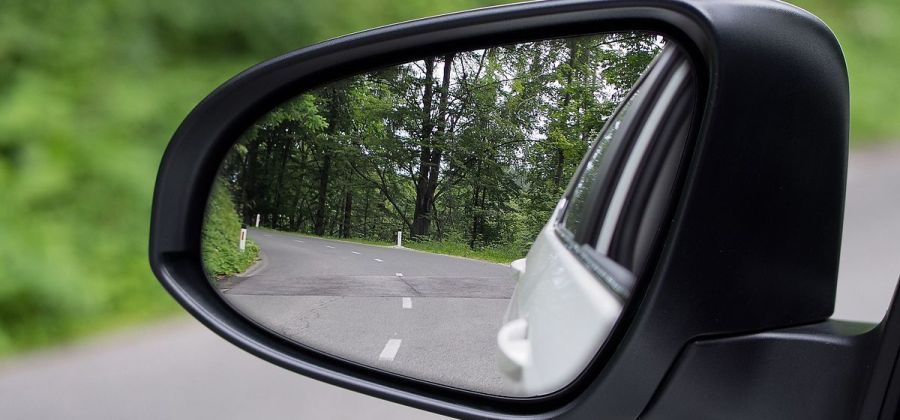
A common mistake is adjusting the side mirrors so that a large portion of the vehicle's own body is visible. While this may feel comfortable, it reduces the amount of road visible next to the vehicle.
The side mirrors can generally be positioned farther outward so that they cover more of the adjacent roadway.
With a properly adjusted mirror setup, the transition between the interior mirror and side mirrors can be improved, reducing the size of the blind area. However, drivers should not assume that correctly adjusted mirrors eliminate the need for visual checks in every situation.
Can a Vehicle Be Completely Free of Blind Spots?
In practical driving conditions, it is difficult to completely eliminate all blind areas.
Even vehicles with well-designed mirror systems can have areas that are difficult for the driver to see.
The size of the blind area can also vary considerably between different vehicles and drivers. A person's height and seating position can change the area that is visible from the driver's seat.
For this reason, mirror adjustment should be considered a way of reducing blind spots rather than assuming that they no longer exist.
Why Are Blind Spots Dangerous?
The biggest danger occurs when changing lanes.
Imagine that you are driving on a highway and another car is approaching from behind. As it moves alongside your vehicle, it can temporarily disappear from your mirror's field of view.
If you check only the mirror and immediately move into the adjacent lane, you could collide with that vehicle.
Motorcycles and bicycles can be particularly difficult to notice because they occupy less visual space than a passenger car.
A blind-spot check is therefore especially important in busy traffic.
What Is Blind Spot Monitoring?
Modern vehicles can use electronic systems to help the driver detect vehicles in areas that may be difficult to see.
A Blind Spot Monitoring or Blind Spot Warning system uses sensors, cameras, radar, or a combination of technologies to monitor areas beside and behind the vehicle.
When another vehicle is detected in a monitored blind-spot area, the system can provide a visual warning, often through a small indicator located in the side mirror.
Some systems can also provide an audible warning if the driver activates the turn signal while another vehicle is detected in the adjacent lane.
These systems are designed to assist the driver rather than replace normal observation.
What Is Blind Spot Intervention?
Some vehicles have a more advanced system called Blind Spot Intervention.
Instead of only warning the driver, the system can intervene if it detects another vehicle in the blind spot and determines that the driver is beginning to move into the occupied lane.
Depending on the vehicle, intervention may involve steering assistance or light braking to help prevent the lane change.
However, this technology should still be treated as a driver-assistance feature rather than a substitute for checking the road.
Are Blind Spot Mirrors Useful?
Small convex blind-spot mirrors can provide an additional field of view.
They are usually attached to the side mirror and provide a wider viewing angle than the main mirror.
However, convex mirrors also make objects appear smaller and can affect the driver's perception of distance. Therefore, drivers need to become familiar with the way objects appear in the additional mirror.
They should be used as an aid rather than as a replacement for proper mirror adjustment and visual checks.
Do Blind Spots Exist When Reversing?
Yes.
Blind areas are not limited to lane changes.
When reversing, areas directly behind or beside the vehicle may be difficult to see, especially in larger vehicles.
Rearview cameras and parking sensors can improve visibility, but they do not necessarily show everything around the vehicle.
Pedestrians, children, bicycles, low objects, and objects outside the camera's viewing area can still create risks.
Blind Spots on Trucks and Large Vehicles
Blind spots can be considerably more extensive on trucks, buses, vans, and other large vehicles.
The driver's seating position is higher, the vehicle is longer, and the body structure can block large areas around the vehicle.
This is also important for drivers of passenger cars. You should avoid staying alongside a large truck for longer than necessary because the truck driver may not be able to see your vehicle.
When possible, pass large vehicles safely and avoid remaining in areas where you cannot see the truck driver's mirrors.
How to Reduce Blind-Spot Risks
Good driving habits can significantly reduce the danger associated with blind spots.
Before changing lanes:
-
Check the interior rearview mirror.
-
Check the appropriate side mirror.
-
Activate the turn signal.
-
Make a quick visual check toward the side of the vehicle.
-
Change lanes only when the adjacent lane is clearly safe.
-
Continue monitoring surrounding traffic after moving into the new lane.
Do not rely solely on the absence of a vehicle in the mirror.
Blind Spot Does Not Mean the Vehicle Is Invisible
A blind spot does not necessarily mean that an entire vehicle is completely hidden.
Depending on the vehicle and mirror adjustment, only part of another vehicle may be outside the driver's field of view.
This is one reason why blind-spot detection systems can be useful. They provide an additional warning when a vehicle is detected in an area the driver may not easily see.
Nevertheless, the driver's own observation remains essential.
Why Understanding Blind Spots Matters
Blind spots are a normal consequence of vehicle design, but they do not have to become a major safety problem.
Properly adjusted mirrors can reduce the size of blind areas, while a quick shoulder check can help confirm that the adjacent lane is clear. Modern blind-spot warning and intervention systems provide an additional layer of assistance.
The important habit is simple: before changing lanes, never assume that an area you cannot see is empty.