TR
TR EN
EN


How to Tell If a Car Has Replaced or Repainted Parts?
How can you tell whether a car has any replaced parts? How can you identify painted or repainted parts on a vehicle? How should replaced and painted parts be checked? How should you inspect the bodywork when buying a used car? Is it a good idea to buy a rusty vehicle? If you are planning to buy a used car, these are important things you should know.
If you are considering buying a used car, it is important to know how to check for replaced and painted parts. Checking the vehicle using its VIN and having it professionally inspected can help you learn about previous accidents and damage repairs. However, some accidents are not reported to insurance companies, and the repairs are paid for directly by the vehicle owner.
Body damage can often be restored with paint and body filler. Paintwork caused by minor collisions, scratches, and dents is not necessarily important. What matters is whether the vehicle has replaced parts and whether it has been involved in a major accident.
In a serious accident, the engine, transmission, and chassis can suffer significant damage. No matter how well the vehicle is repaired, it may never perform like it did in its original condition. It can become a potential source of recurring problems and failures. If you still decide to buy such a vehicle, you should pay less than the market price according to its defects so that you do not suffer a loss when selling it later.
If you do not encounter an honest seller, they may hide the vehicle's replaced and painted parts from you. Or, if you are going to become the vehicle's third owner, the person selling it to you may not even know about its previous history. In such a situation, I will try to explain with pictures how you can check for replaced and painted parts.
Color Mismatch Between Panels
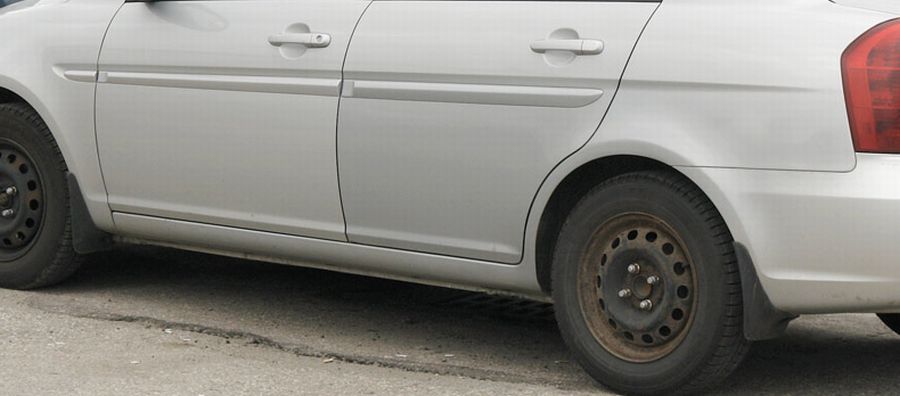
When you look at the vehicle in the photo, could you tell which part had been painted recently?
The rear door looks slightly darker, doesn't it? One of the simplest signs of a painted part is a mismatch with the vehicle's original paint and differences in color between panels. However, it is not always this easy to notice. Some skilled bodywork professionals can repaint a panel so closely to the original color that the difference is almost impossible to see.
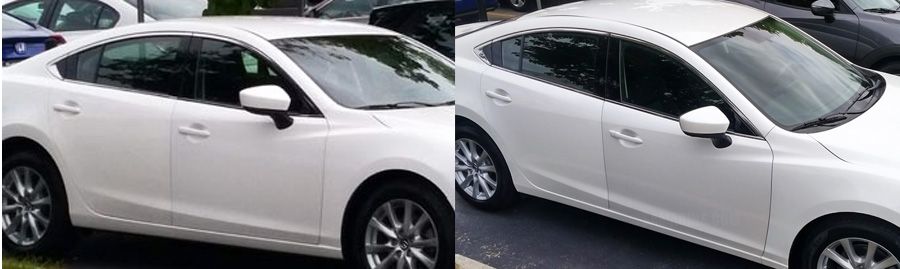
The trick is to take the vehicle into sunlight and inspect it from different distances and angles. This makes it much easier to notice differences.
Check the Hood, Doors, and Trunk Lid
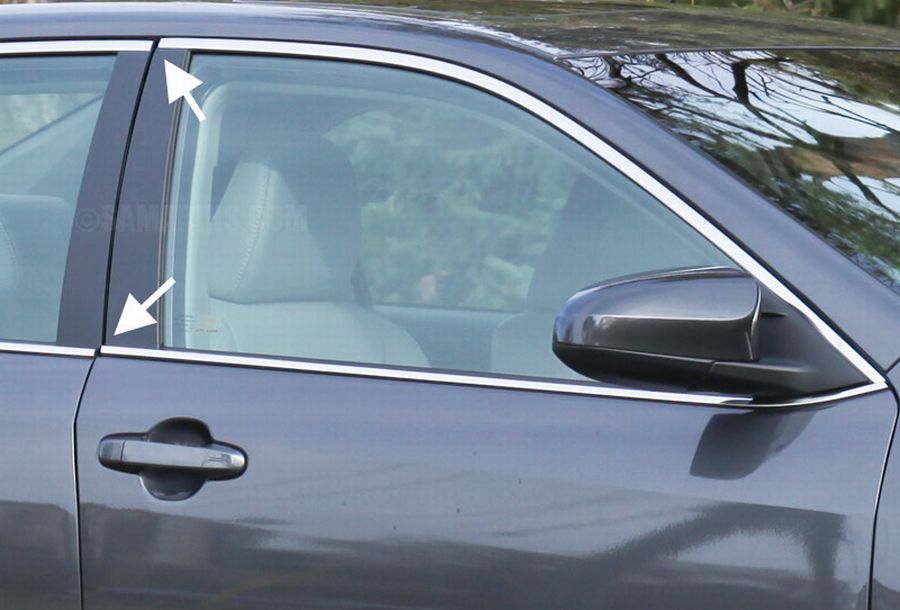
The front passenger door of this vehicle does not close easily. If you look at the arrows, you can also see that the front door is not properly aligned. A misaligned door does not always mean that the vehicle has been in an accident, but it is a reason to be suspicious.
On older vehicles, door hinges can wear out and cause the door to sag. In such a case, the door may not close properly or easily because the locking mechanism and the striker are no longer aligned. This usually occurs more frequently on the driver's door because it is used much more often.
Check the Body Lines
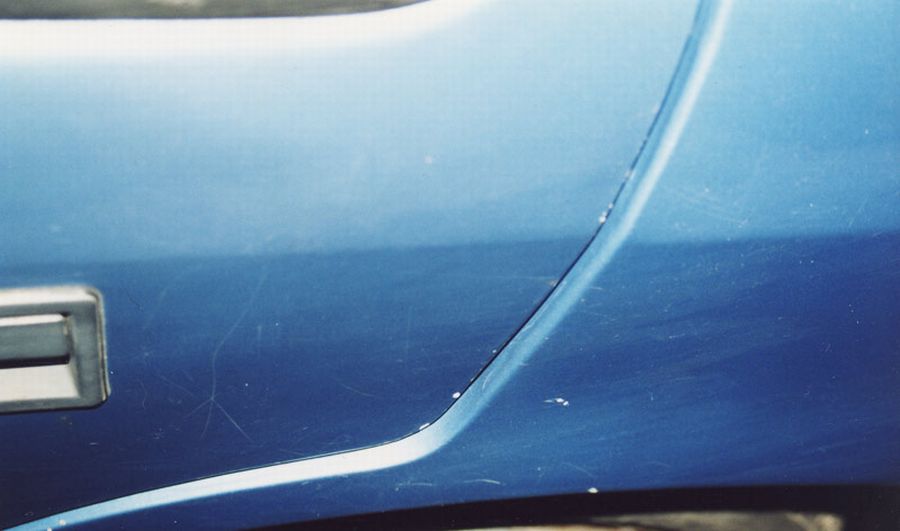
Inspect the entire body of the vehicle and check the alignment of the body lines. The body lines on the hood, doors, and trunk should remain aligned when they are closed. When you examine the vehicle in the picture, you can easily see that the body line on the rear door is not aligned with the surrounding panels. This is an important clue that should not be ignored.
Check the Front and Rear Bumpers
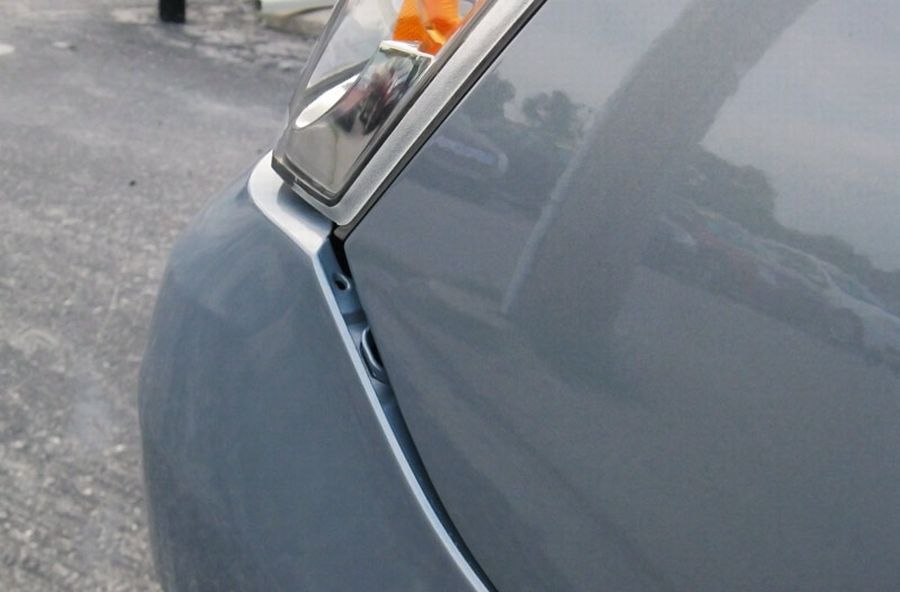
If you look at the front bumper of the car in the picture, you can see that it is not properly seated. If you look more carefully, you can also see that the color of the bumper is different. It is clear that some work has been done on the front bumper. If you notice something like this, you should inspect the area more closely and ask the seller about it.
Check both bumpers of the vehicle. Since bumpers are made from composite and plastic materials, they can crack and break easily during an accident. Broken and repaired bumpers can be a strong indication that the vehicle has been involved in a traffic accident.
Compare It With the Other Side
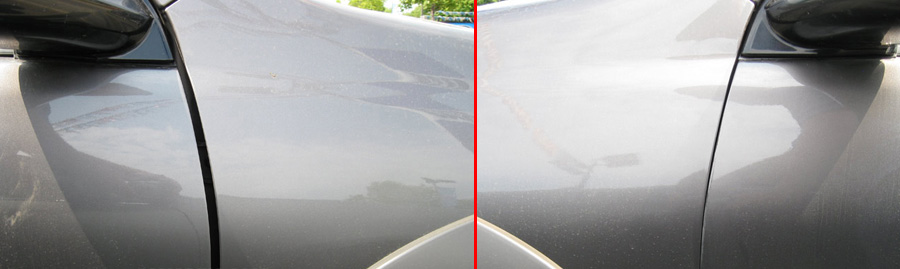
If something does not look right, compare it with the corresponding part on the other side. For example, in the picture there is a large gap between the right door and the fender of the vehicle. When we check the left side, there is almost no gap.
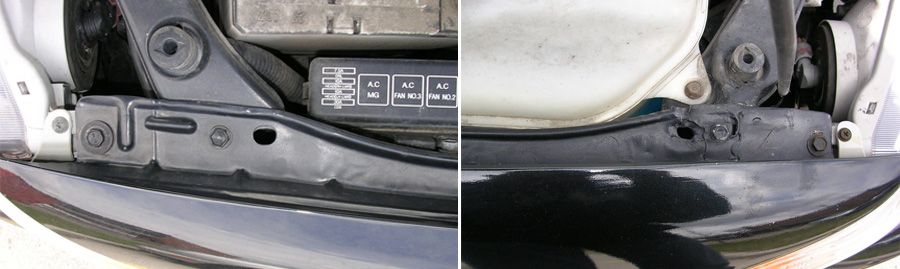
Now let's compare the two pictures of the black Toyota above. When you open the hood, it is quite easy to see which side has been damaged. Everything looks normal on the left front fender, while the right front fender has suffered an impact. When you look at the area around the two bolts holding the fender in place, it is clear that the vehicle has been involved in a minor accident. It is also quite obvious that the quality of the paintwork is poor.
Check the Lines in the Paint Reflection
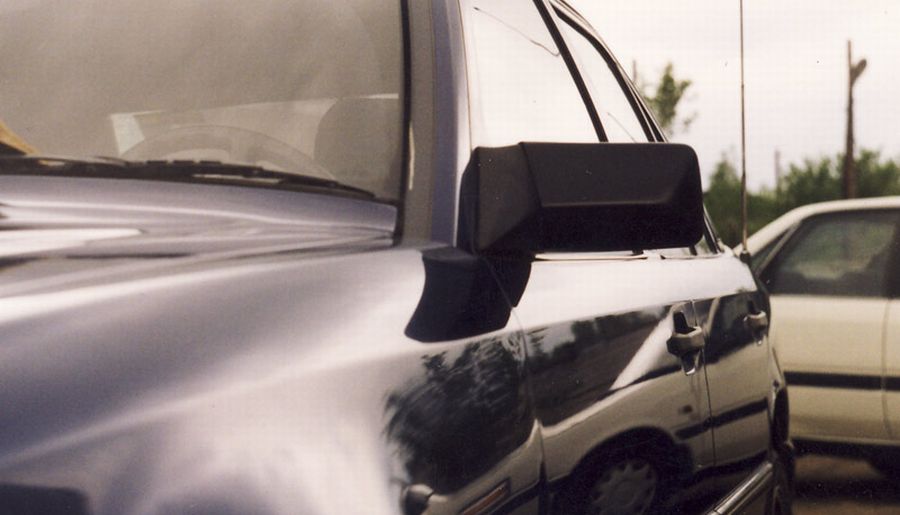
Check the reflections in the paint. For example, this car looks almost new. The lines are straight, the fender and doors are properly aligned, and the paint looks consistent and smooth.
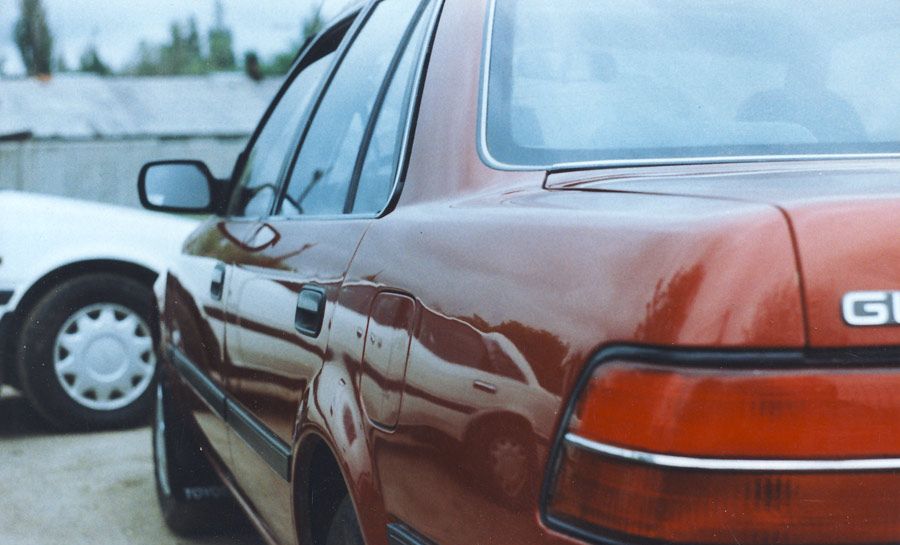
However, when you look at the rear fender of this vehicle, you can see irregularities in the reflection. In this case, you should suspect that the fender has been repaired or repainted.
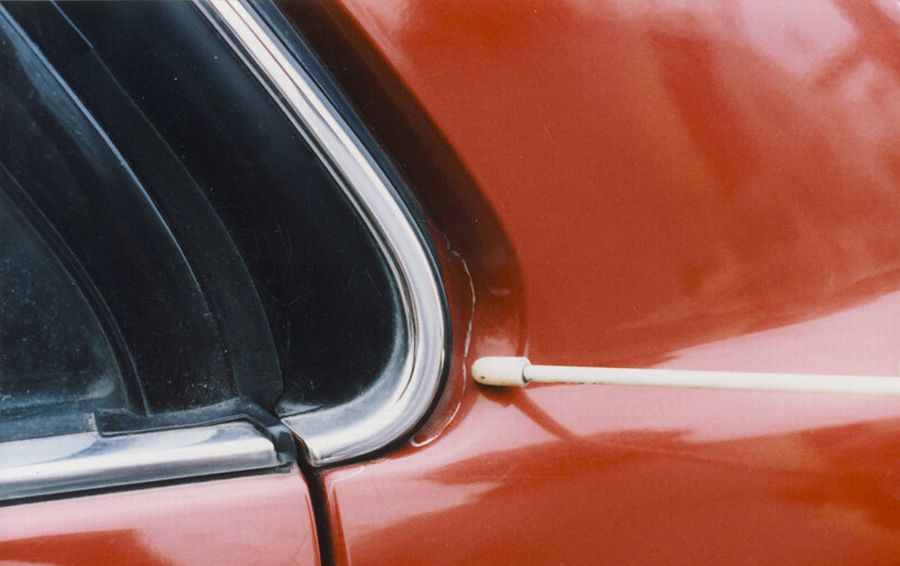
When we look more closely at the fender, we can see that the clear coat is peeling. This is a definite sign that the fender has been painted.
Check the Headlights and Taillights
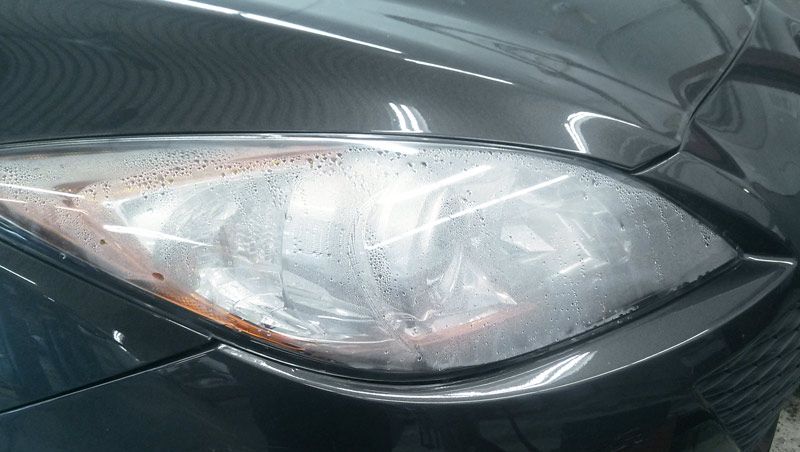
Check whether there is condensation inside the headlights or taillights. This can generally indicate a cracked headlight or taillight housing. Carefully inspect the area around the fogged light. If the light needs to be replaced, this can be quite expensive.
Compare both headlights. If one is old and the other is new, the newer headlight was probably installed recently. The most likely reason for this is that the vehicle was involved in an accident.
Check for Differences in Paint Texture
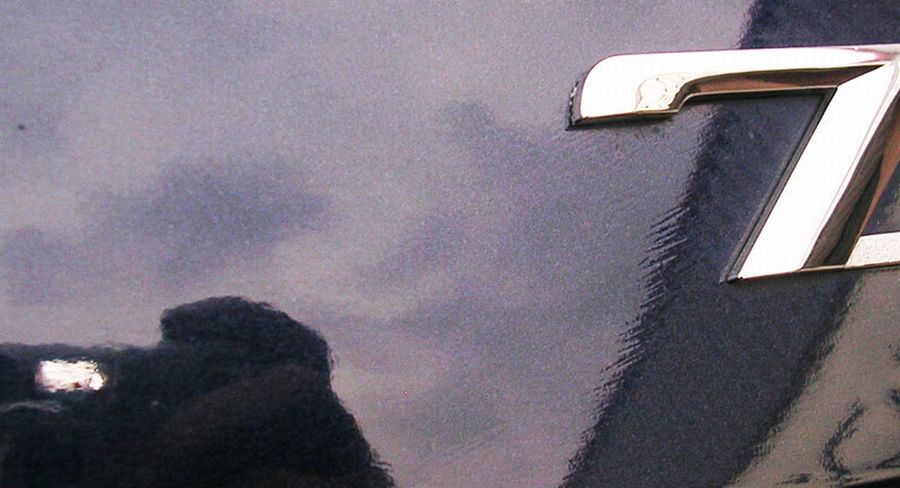
Look at the quality and texture of the paint. Fresh paint has a different texture. Sanding marks are also frequently visible during bodywork repairs. You can clearly see the sanding marks in this photo. This is a clear indication that the vehicle has been painted.
Check the surface of the paint with the palm of your hand and try to feel its texture. Original factory paint should be smooth and even. Repainted panels, however, may feel rough and have an orange-peel texture.
Look for Paint Marks
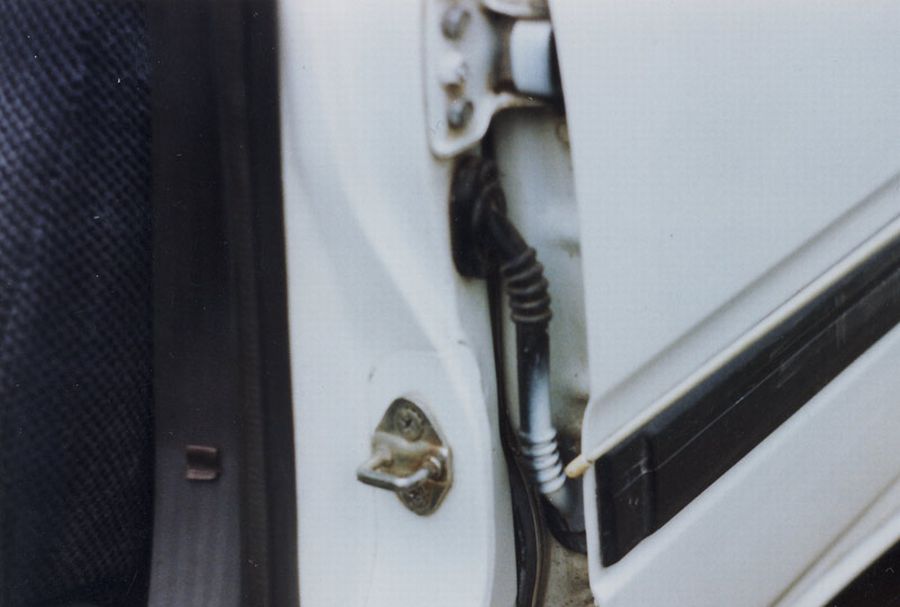
During vehicle production, the body is painted before the wiring and other components are installed. This ensures that wiring harnesses and accessory components are not painted. When we look at the door wiring harness in the picture, we can see that the vehicle has been worked on and that paint was sprayed over the wiring during the repainting process.
Peeling Paint
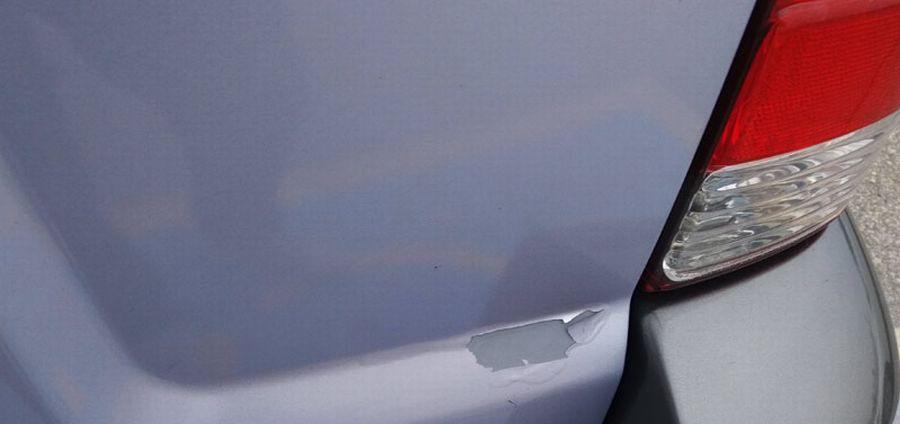
Peeling or flaking paint is an indication of poor-quality paintwork. You can often find peeling paint on bumpers.
Check the Bolts on the Panels
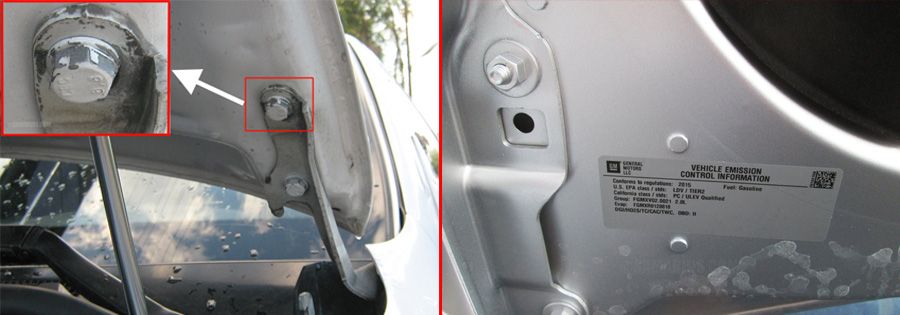
Open the hood and trunk lid and inspect the bolts. Do they look untouched, or have the bolts been damaged or scratched?
If you look at the picture on the right, you can see that there are no signs of damage to the bolts and that the original sticker is still present. If the sticker is missing and the bolts have been damaged or marked, the hood may have been replaced or removed and reinstalled and adjusted.
Avoid Flood-Damaged Vehicles
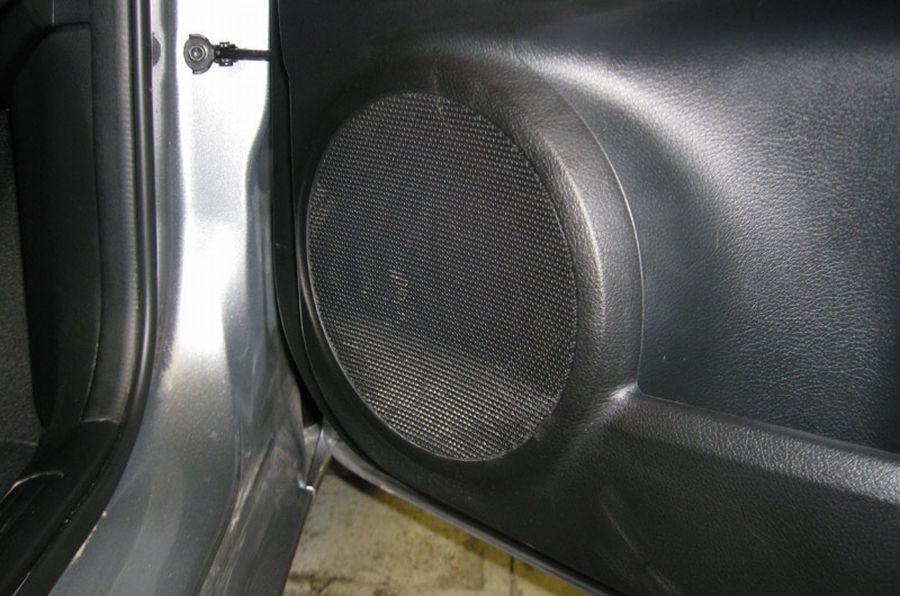
Avoid buying flood-damaged vehicles. Even if these vehicles have been restored, they can remain prone to failures throughout the rest of their service life. Various electrical and electronic components can fail, while corrosion and mold can develop inside the vehicle. These vehicles have become increasingly common in the used-car market.
Open the vehicle's doors and check the speakers. The dirty and white area of the speaker shown in the picture indicates that the vehicle may have been exposed to flooding. Both speakers should be checked in this situation.
Also pay attention to the smell inside the vehicle. The seller may have used excessive air freshener or perfume to hide a mold smell. Alternatively, you may notice a strong detergent smell from intensive cleaning. If a vehicle has just come from a car detailing shop and is immediately being offered for sale, this can also be a reason to be suspicious.
Check the floor mats and underneath the carpeting. Inspect the plastic components for signs of peeling or damage. A vehicle that has been exposed to water will usually leave some clues. Checking the vehicle using its VIN can also provide information about its history.
Should You Buy a Car With Rust on the Body?
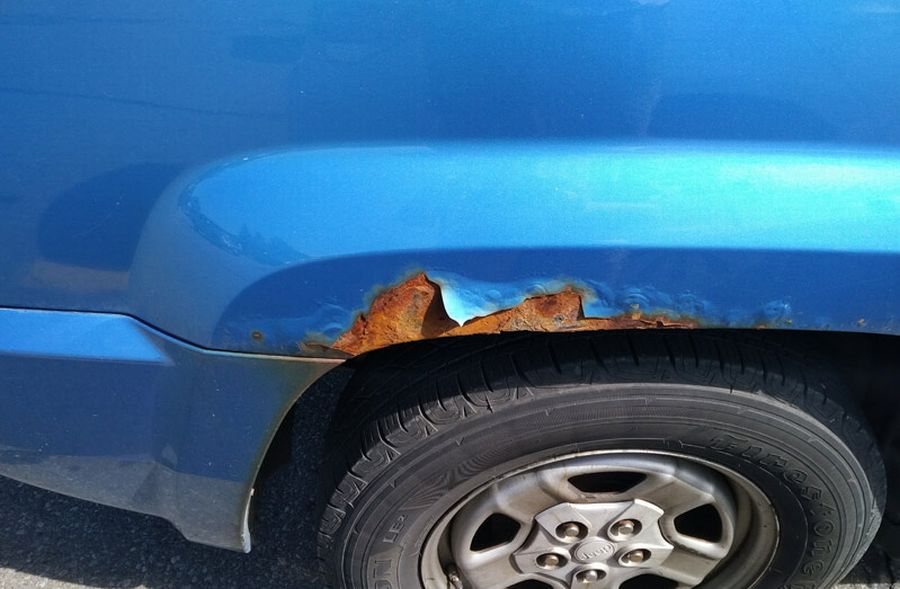
Especially during winter, heavy use of road salt can cause vehicles to rust. If the necessary precautions against corrosion are not taken, small areas of rust may begin to appear on vehicles that are more than 7–10 years old. This rust can be temporarily repaired. However, once corrosion begins, it is very difficult to stop.
Although the metal components of modern vehicles are better protected, rust problems have not been completely eliminated.
Even if the rusty areas of a vehicle are cleaned and repaired, the rust may appear again later. More importantly, if the exterior of the vehicle is already rusty, the condition of the internal components may be even worse. The brake lines and the underside of the vehicle may already be starting to corrode.
For this reason, just like heavily damaged vehicles, excessively rusty vehicles should also be avoided.