TR
TR EN
EN

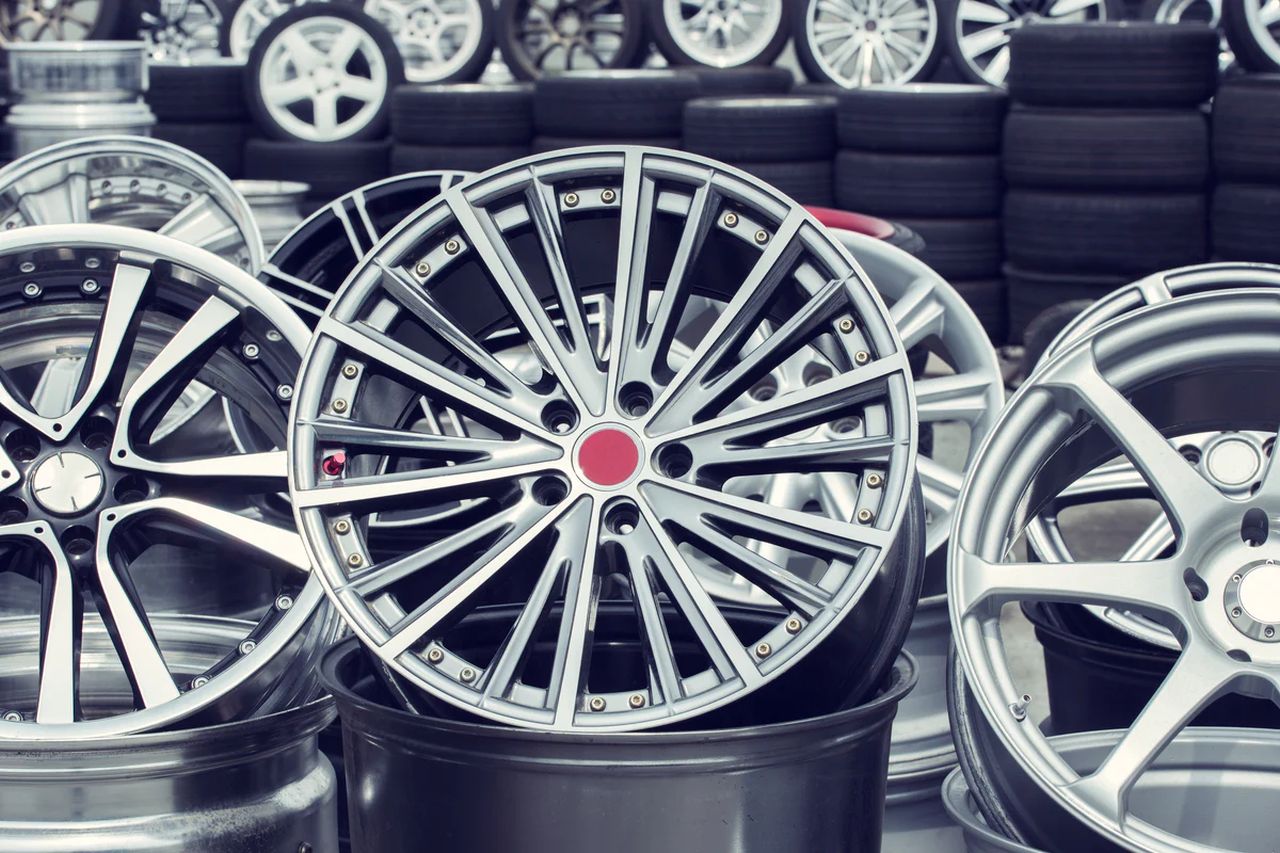
What Should You Pay Attention to When Choosing Car Wheels?
Choosing wheels for a car is often treated as a matter of appearance. Wheel design, color, and size can significantly change the way a vehicle looks, but a wheel is much more than a visual accessory. Its dimensions, mounting specifications, weight, and compatibility with the vehicle directly affect safety, handling, ride comfort, and even suspension and tire life.
A wheel that looks perfect on a car may still be the wrong choice if its offset, bolt pattern, center bore, or load capacity is unsuitable. For this reason, wheel selection should always begin with technical compatibility rather than appearance.
Start With the Correct Wheel Size
The first thing to determine is the wheel size recommended for the vehicle.
Wheel diameter is usually expressed in inches. For example, a 17-inch wheel is designed to work with a tire that has a 17-inch inner diameter. Common passenger-car wheel sizes include 15, 16, 17, 18, and 19 inches.
Increasing wheel diameter can create a sportier appearance and may allow the use of wider, lower-profile tires. However, larger wheels do not automatically mean better performance.
As the wheel diameter increases, the tire sidewall generally becomes shorter if the overall tire diameter is kept close to the original specification. This can make steering response sharper, but it can also reduce ride comfort and increase the risk of damage from potholes and road impacts.
For everyday driving, the manufacturer's recommended wheel and tire sizes are usually the safest starting point.
Pay Attention to Wheel Width
Wheel width is another important specification. It is normally expressed in inches, such as 6.5J, 7J, 7.5J, or 8J.
The width of the wheel must be compatible with the tire width. Installing a tire that is too narrow or too wide for the wheel can negatively affect how the tire sits on the rim.
A wider wheel can accommodate a wider tire, which may provide more grip in certain conditions. However, unnecessarily increasing wheel width can also increase weight, rolling resistance, steering effort, and the possibility of the tire or wheel contacting suspension components or the bodywork.
The correct combination should therefore be determined by considering both the wheel manufacturer's specifications and the tire manufacturer's approved rim-width range.
Check the Bolt Pattern
The bolt pattern is one of the most important compatibility measurements.
It describes the number of wheel bolts or studs and the diameter of the circle on which they are positioned. It may be written in forms such as 5x112, 5x114.3, 4x100, or 5x10⁸.
For example, 5x112 means that the wheel has five mounting holes arranged on a 112 mm pitch circle diameter.
The bolt pattern must match the vehicle. A wheel with an incorrect bolt pattern should not be installed simply because the wheel appears to fit.
Using unsuitable adapters or forcing a wheel into place can create serious safety problems.
Wheel Offset Is Critical
Offset, commonly abbreviated as ET, determines the position of the wheel relative to the vehicle's hub.
This measurement is particularly important when changing to aftermarket wheels.
A higher positive offset moves the wheel farther inward toward the suspension. A lower offset moves it outward toward the fender.
Changing the offset too much can cause several problems. The wheel may come too close to the suspension components, or the tire may protrude toward the fender and rub against the bodywork.
Incorrect offset can also alter the steering geometry and place additional loads on wheel bearings and suspension components.
For this reason, simply choosing a wheel with the same diameter as the original does not guarantee compatibility. The ET value must also be checked.
Check the Center Bore
The center bore is the diameter of the hole in the middle of the wheel that fits over the vehicle's hub.
A wheel with a center bore smaller than the vehicle's hub cannot be installed properly.
If the wheel's center bore is larger than the hub, hub-centric rings may sometimes be used to achieve the correct fit, provided the wheel and ring combination is designed appropriately.
The center bore is important because the wheel needs to be correctly centered during installation. A poorly centered wheel can contribute to vibration and mounting problems.
Do Not Ignore Load Capacity
Every wheel has a maximum load rating.
This is especially important for SUVs, commercial vehicles, electric vehicles, and vehicles that regularly carry heavy loads.
A wheel may physically fit the vehicle while still having an insufficient load rating. This is a serious issue because the wheel must safely support the weight transferred through the tires during normal driving, braking, cornering, and impacts.
The load capacity of the selected wheels should therefore be equal to or greater than the requirements of the vehicle.
Wheel Weight Matters More Than Many Drivers Think
Two wheels with exactly the same diameter and width can have very different weights.
A lighter wheel can reduce unsprung mass and rotational mass. Depending on the vehicle and wheel design, this can contribute to more responsive handling and suspension behavior.
Heavy wheels can make the suspension work harder and may negatively affect acceleration and ride quality.
However, the lightest wheel available is not automatically the best wheel. Strength, construction quality, load rating, and manufacturing standards are equally important.
A lightweight wheel from a reputable manufacturer is very different from an extremely light wheel whose structural quality is questionable.
Consider the Wheel Material and Construction
Most passenger cars use aluminum alloy wheels or steel wheels.
Steel wheels are generally durable and practical, particularly for winter use and vehicles where cost and resistance to impacts are priorities. Their disadvantage is that they are usually heavier and offer fewer styling options.
Alloy wheels are lighter in many cases and provide a much wider range of designs. They can also offer advantages in terms of brake clearance and heat dissipation, depending on their construction.
There are also different manufacturing methods, including cast and forged construction.
Forged wheels can offer excellent strength-to-weight characteristics, but they are usually considerably more expensive. A properly manufactured cast wheel from a reputable manufacturer can still be entirely suitable for normal road use.
Make Sure the Wheel Clears the Brakes
Brake clearance is an issue that is sometimes overlooked when downsizing wheels.
A wheel may have the correct bolt pattern, center bore, width, and offset but still fail to provide enough clearance for the brake caliper.
This is particularly important on vehicles with large brake systems, performance brakes, or aftermarket brake upgrades.
The shape of the spokes and the internal profile of the wheel can be just as important as the diameter when determining brake clearance.
Therefore, if changing wheel size significantly, compatibility should be checked rather than assumed based only on the wheel diameter.
Think About Tire Compatibility
Wheel selection and tire selection should be treated as one decision.
A new wheel may require a different tire size, especially when moving from a smaller to a larger diameter.
The new tire should maintain an appropriate overall diameter so that the vehicle's speedometer, ABS, traction control, and other systems continue to operate within their intended parameters.
A significant change in tire diameter can also affect gearing, ground clearance, acceleration, and fuel consumption.
For modern vehicles equipped with sophisticated electronic systems, keeping the overall rolling circumference close to the manufacturer's approved specifications is particularly important.
Avoid Excessive Changes in Wheel Size
Installing very large wheels can make a vehicle look significantly more aggressive, but there are trade-offs.
For example, moving from a 16-inch wheel to a 19-inch wheel may require a much lower-profile tire. The vehicle may feel more responsive on smooth roads, but bumps and potholes will generally be felt more strongly.
The risk of tire sidewall damage and wheel bending can also increase on poor roads.
In addition, larger and wider wheels may increase weight and rolling resistance. Depending on the vehicle, this can affect fuel consumption and acceleration.
The best wheel size is therefore not necessarily the largest size that can physically fit.
Check Fender and Suspension Clearance
Before installing a different wheel and tire combination, clearance should be checked at full steering lock and throughout suspension travel.
Potential contact areas include:
-
Inner fender and suspension components
-
Brake calipers
-
Shock absorbers and springs
-
Control arms
-
Outer fenders
-
Wheel arch liners
A combination that does not rub while the car is parked may still contact the body during cornering, when the suspension compresses, or when the steering is turned fully.
This is one reason why a wheel and tire combination that works on one version of a vehicle may not necessarily work on another.
Be Careful With Wheel Spacers and Adapters
Wheel spacers can change the effective offset and move the wheel outward. In some applications, this can solve a clearance problem or provide the desired appearance.
However, spacers also change the loads acting on the wheel hub and bearings. Poor-quality spacers or incorrect installation can create serious safety risks.
Adapters require even more caution because they change the wheel mounting interface itself.
If spacers or adapters are necessary, they should be specifically designed for the vehicle and wheel combination, correctly sized, and installed according to the manufacturer's requirements.
Don't Choose a Wheel Only by Its Appearance
A common mistake is to find a wheel that looks good and then try to make it fit the car.
The correct order should be the opposite.
First determine the vehicle's approved wheel dimensions and mounting specifications. Then narrow the choices based on diameter, width, offset, bolt pattern, center bore, load capacity, brake clearance, and tire compatibility.
Only after these technical requirements have been satisfied should design become the deciding factor.
Check the Quality and Certification
Wheel quality is not something that should be sacrificed to save money.
Poorly manufactured wheels may have inadequate structural strength, inconsistent dimensions, poor surface treatment, or insufficient quality control.
When purchasing aftermarket wheels, it is worth checking the manufacturer's reputation and the applicable approval or certification requirements for the market where the vehicle is used.
A wheel is a structural component connecting the tire to the vehicle. It should therefore be treated with the same seriousness as other safety-critical components.
Wheel Installation Is Also Important
Even a correctly selected wheel can cause problems if it is installed incorrectly.
The correct wheel bolts or nuts must be used. Their thread size, seat type, length, and specifications must match the wheel and vehicle.
Wheel fasteners should be tightened to the manufacturer's specified torque rather than simply tightened as much as possible.
After installation, the wheels should also be checked for proper seating and the tires should be balanced.
If vibration appears after installing new wheels, wheel balance, tire uniformity, mounting, center bore fit, and possible wheel deformation should all be considered.
The Right Wheel Is a Balance
A good wheel choice is not simply the one that makes a car look better. It is the combination that provides proper mechanical compatibility while maintaining the vehicle's intended driving characteristics.
Before buying a new set of wheels, check the diameter, width, bolt pattern, ET/offset, center bore, load rating, brake clearance, and tire compatibility. Then consider the wheel's weight, construction quality, appearance, and price.
For a daily-driven vehicle, staying close to the manufacturer's approved specifications is generally the easiest way to avoid unwanted problems while still allowing plenty of room to personalize the car.