TR
TR EN
EN

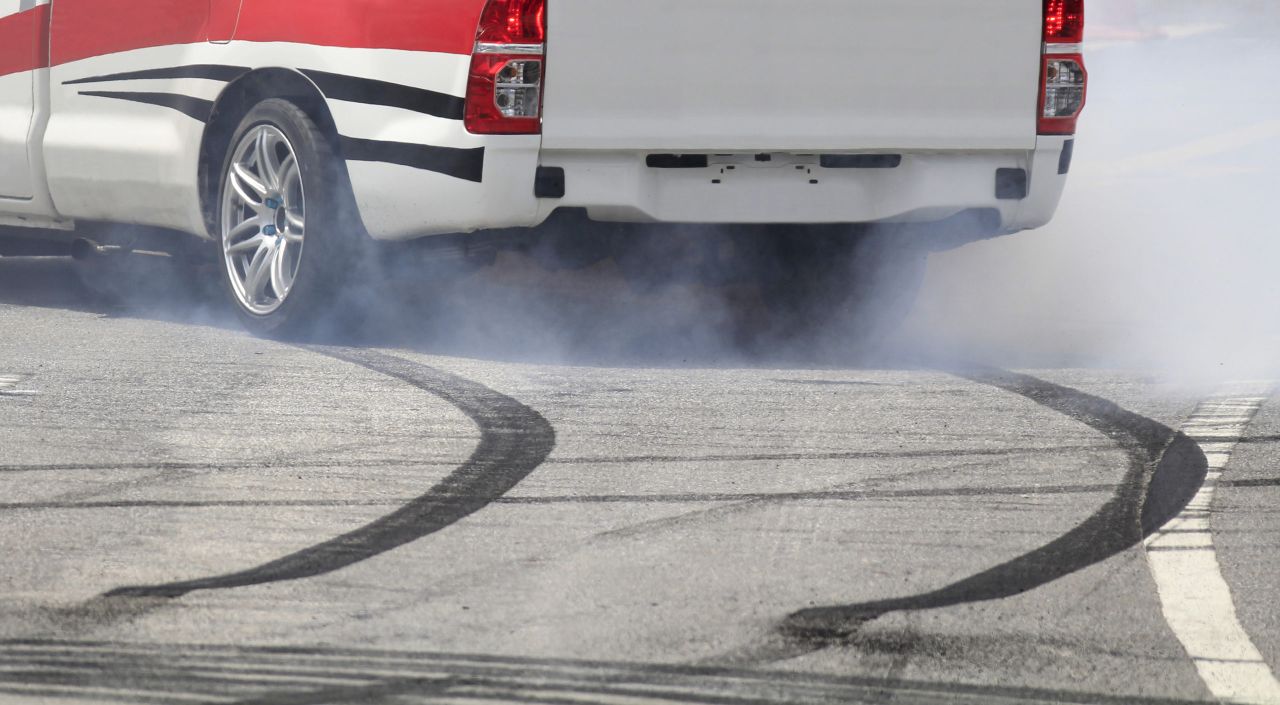
What Is Wheelspin? How Can You Prevent a Car from Wheelspin?
Wheelspin is a loss of traction that occurs when the driven wheels rotate faster than the vehicle can move forward. It is particularly common when accelerating on wet, snowy, icy, muddy, or loose road surfaces.
Wheelspin is not limited to high-performance cars. Even an ordinary passenger car can spin its tires when the driver applies too much throttle, especially when the road has limited grip.
Apart from reducing acceleration, excessive wheelspin can make the vehicle harder to control. Understanding why it happens and how to prevent it can therefore make driving both safer and more predictable.
What Is Wheelspin?
Wheelspin occurs when the torque delivered to the driven wheels exceeds the amount of traction available between the tires and the road.
Under normal conditions, the tires rotate at a speed that corresponds closely to the vehicle's forward movement. The tire tread maintains sufficient contact with the road, allowing the engine's power to accelerate the vehicle.
When the available grip is exceeded, the tires begin to slip against the road surface. The wheels may spin rapidly while the vehicle gains relatively little speed.
This is what is commonly called wheelspin.
A typical example is pulling away quickly on a wet road. The driver presses the accelerator, the engine speed rises sharply, but the vehicle does not accelerate as quickly as expected. At the same time, the tires may produce a squealing sound or the traction-control warning light may begin flashing.
Why Does a Car Spin Its Tires?
The basic reason is simple: the tires cannot transmit all of the available driving force to the road.
Several factors can make this happen.
Slippery road surfaces are one of the most common causes. Rain, snow, ice, mud, sand, gravel, and spilled fluids can dramatically reduce available grip.
Excessive throttle input can also cause wheelspin. Even on relatively good asphalt, suddenly applying a large amount of engine torque can exceed the tires' available traction.
Worn tires are another important factor. As tread depth decreases, the tire's ability to maintain grip in difficult conditions can deteriorate.
Incorrect tire pressure can also affect traction and handling. Both underinflation and overinflation can change the way the tire contacts the road.
The vehicle's drivetrain also matters. A powerful engine can produce enough torque to overcome tire grip much more easily than a low-powered engine.
Does Wheelspin Mean the Engine Has Too Much Power?
Not necessarily.
Wheelspin is determined by the relationship between available engine torque and available tire grip.
A relatively low-powered car can spin its wheels on ice because the road offers very little traction. Meanwhile, a powerful sports car may accelerate without noticeable wheelspin on dry, high-grip asphalt.
This is why horsepower alone does not determine whether a vehicle will experience wheelspin.
Tires, road conditions, vehicle weight distribution, drivetrain configuration, suspension, and throttle input all play a role.
What Happens During Wheelspin?
When a tire loses traction, some of the engine's energy is no longer being used efficiently to move the vehicle forward.
Instead, energy is being used to overcome the friction between the tire and road.
The wheel may rotate much faster than its actual forward speed would suggest.
In severe cases, the driver may hear loud tire squealing or see smoke coming from the tires. However, wheelspin does not need to be dramatic to affect vehicle behavior. Even relatively small amounts of tire slip can reduce acceleration efficiency.
On a slippery corner, excessive wheelspin can be particularly problematic because the driven tires may also be responsible for maintaining the vehicle's direction.
How Does Traction Control Prevent Wheelspin?
Modern cars use electronic traction-control systems to reduce wheelspin automatically.
The system relies primarily on wheel-speed sensors. These sensors monitor how quickly the wheels are rotating and allow the vehicle's electronic control systems to identify excessive slip.
When wheelspin is detected, the system can intervene in several ways depending on the vehicle.
It may:
-
Reduce engine torque
-
Close the electronic throttle
-
Adjust ignition timing
-
Reduce fuel delivery
-
Apply the brakes to an individual spinning wheel
-
Redistribute torque in an all-wheel-drive system
The driver may notice the traction-control indicator flashing while the system is working.
This is usually a sign that the vehicle has detected wheel slip and is actively trying to restore traction.
How Can You Prevent a Car From Wheelspin?
The most effective method is to avoid demanding more traction than the tires can provide.
Use the accelerator smoothly
Suddenly pressing the accelerator is one of the easiest ways to make the driven wheels spin.
Instead, apply throttle progressively. This allows the tires to build traction without being overwhelmed by a sudden increase in torque.
This technique is particularly useful when pulling away on wet, snowy, or icy roads.
Use appropriate tires
Tires are one of the most important components affecting traction.
A vehicle equipped with worn or unsuitable tires will have a much harder time maintaining grip on slippery roads.
For winter conditions, properly selected winter tires can make a significant difference because their rubber compound and tread design are optimized for low temperatures and reduced-grip surfaces.
Tire condition should also be checked regularly. Uneven wear, cracks, insufficient tread depth, or aging can all affect performance.
Maintain correct tire pressure
Correct tire pressure helps maintain the intended contact between the tire and the road.
The recommended pressure should be taken from the vehicle manufacturer's specifications rather than from the maximum pressure printed on the tire sidewall.
Pressure should also be checked when the tires are cold because temperature affects tire pressure readings.
Avoid aggressive acceleration on slippery surfaces
If the road is wet, icy, snowy, or covered with loose material, there is less available traction.
Using a large amount of throttle in these conditions makes wheelspin much more likely.
Smooth acceleration is generally much more effective than trying to overcome a lack of grip with additional engine power.
How Does the Type of Drivetrain Affect Wheelspin?
The drivetrain configuration has a major influence on how a vehicle behaves when traction is limited.
Front-wheel drive
In a front-wheel-drive vehicle, the front tires are responsible for both steering and transmitting engine power.
During acceleration, weight transfers toward the rear of the vehicle. This can reduce the load on the front tires and make them more susceptible to wheelspin during hard acceleration.
This is why powerful front-wheel-drive cars can sometimes struggle to put all their engine torque onto the road.
Rear-wheel drive
In a rear-wheel-drive vehicle, acceleration transfers weight toward the rear, increasing the load on the driven wheels.
This can help traction during acceleration.
However, a powerful rear-wheel-drive vehicle can still produce significant wheelspin if the engine generates more torque than the rear tires can handle.
All-wheel drive
All-wheel drive can distribute engine torque between multiple wheels, which generally improves traction during acceleration.
However, AWD does not eliminate the possibility of wheelspin.
If all four tires are on an extremely slippery surface, all four can lose grip.
This is why all-wheel drive should not be confused with unlimited traction. AWD can distribute available traction more effectively, but it cannot create traction that the road surface does not provide.
Should Traction Control Always Be Left On?
For normal road driving, traction control should generally remain enabled.
The system is designed to help prevent excessive wheelspin and maintain vehicle stability.
Some vehicles allow the driver to reduce or temporarily disable traction-control intervention. This can sometimes be useful in specific circumstances, such as trying to free a vehicle that is stuck in deep snow or loose terrain.
However, disabling traction control on public roads can make the vehicle more difficult to control, particularly when the driver is not experienced with managing wheel slip.
For everyday driving, leaving the system active is generally the safest choice.
Can Changing Gears Help Prevent Wheelspin?
Yes, depending on the conditions.
In a manual-transmission vehicle, using a higher gear when starting on a very slippery surface can sometimes reduce the amount of torque reaching the wheels.
For example, starting in second gear instead of first may make it easier to control wheel torque in certain low-grip conditions.
The same principle can be incorporated into automatic transmissions through winter or snow driving modes.
These modes may change the transmission's starting gear, shift strategy, throttle response, and torque management to reduce wheelspin.
The exact operation depends on the vehicle.
Why Does Wheelspin Happen More Easily on Wet Roads?
Water reduces the available friction between the tire and road surface.
Modern tires are designed with grooves that help evacuate water from beneath the tread. However, when the road is very wet, the amount of water can exceed the tire's ability to clear it effectively.
This can reduce traction and, at higher speeds, contribute to aquaplaning.
Wheelspin can therefore occur much more easily when accelerating on a wet road.
Sudden throttle inputs should be avoided, particularly when the vehicle is already traveling at speed or when the road contains standing water.
Can Wheel Alignment Cause Wheelspin?
Wheel alignment is not normally the primary cause of wheelspin, but incorrect alignment can affect how the tires contact the road.
Incorrect toe, camber, or other alignment settings can cause uneven tire wear and reduce the tire's ability to work properly.
If a vehicle repeatedly loses traction under conditions where it should not, tire condition, pressure, alignment, suspension components, and drivetrain operation should all be considered.
What Should You Do When the Car Starts Spinning Its Tires?
The first step is to reduce the amount of accelerator input.
Continuing to press the accelerator harder usually does not restore traction. In fact, it can make the situation worse.
Smoothly reducing throttle allows the driven tires to regain grip.
If the traction-control system is functioning correctly, it may also intervene automatically.
On a slippery corner, abrupt steering, braking, or throttle changes should be avoided. Smooth and controlled inputs give the tires the best opportunity to regain traction.
Is Wheelspin Harmful to the Car?
Occasional minor wheelspin is not necessarily harmful, but repeated aggressive wheelspin can place additional stress on several components.
Depending on the circumstances, excessive wheelspin can increase stress on:
-
Tires
-
Clutch
-
Transmission
-
Differential
-
Driveshafts
-
CV joints
-
Engine mounts
A sudden transition from wheelspin to full traction can be particularly demanding because the drivetrain experiences a rapid change in load.
For this reason, deliberately producing wheelspin repeatedly is not a good way to operate a normal road car.
The Most Effective Way to Prevent Wheelspin
Preventing wheelspin is primarily about maintaining the right balance between engine torque and available tire grip.
Good tires, correct tire pressure, appropriate acceleration, a properly functioning traction-control system, and adapting your driving to road conditions can make a significant difference.
The key is to remember that the engine can produce more force than the tires are capable of transmitting to the road. When that happens, adding more throttle does not necessarily make the car accelerate faster.
Smooth throttle control and sufficient tire grip are the two most important factors in preventing wheelspin. On wet, snowy, icy, or loose surfaces, driving within the available traction is far more effective than trying to overcome poor grip with engine power.