TR
TR EN
EN

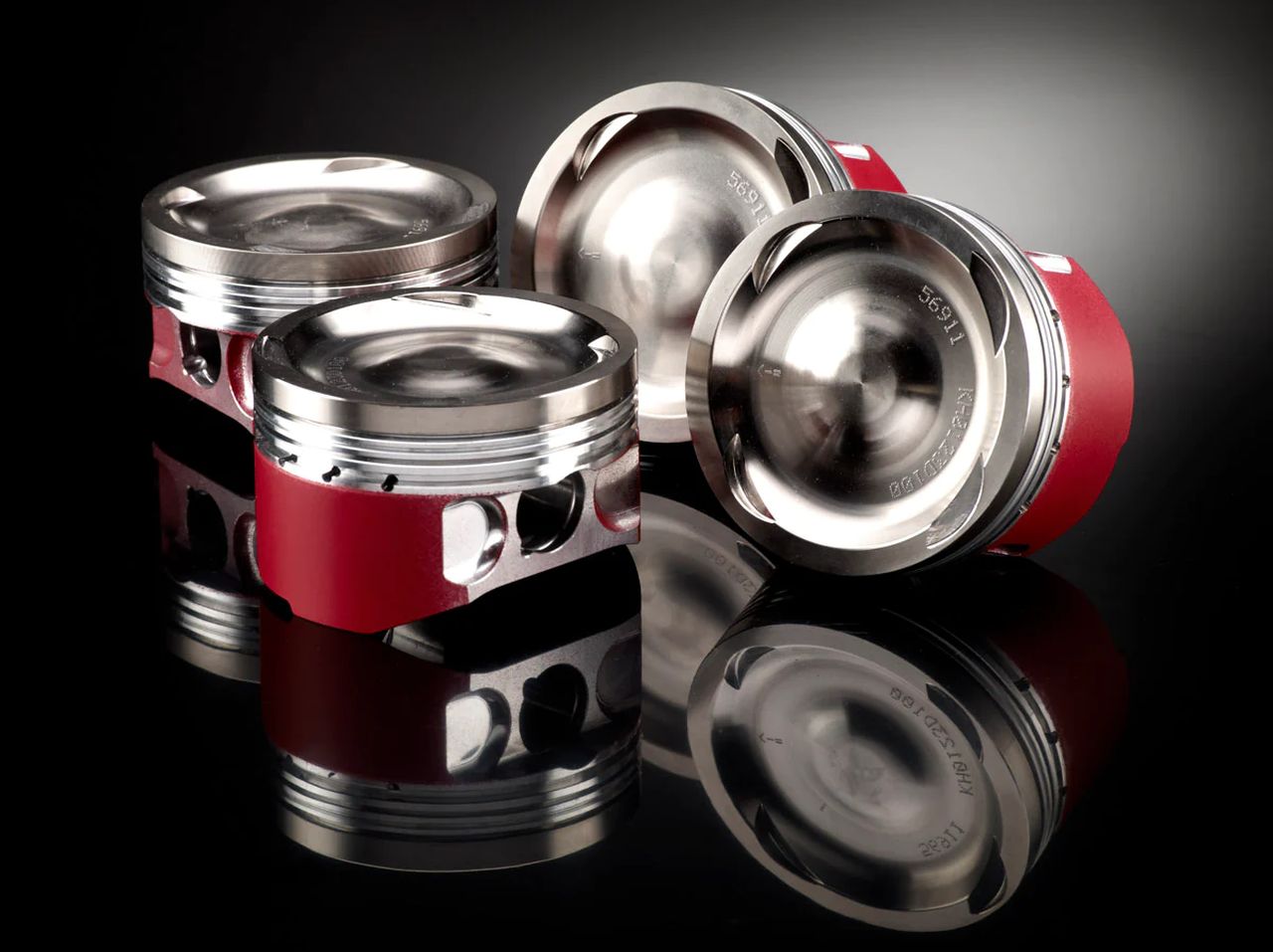
What Are Forged Pistons and Cast Pistons? What Are the Differences?
The piston is one of the most heavily stressed components inside an internal combustion engine. It moves up and down inside the cylinder thousands of times per minute while being exposed to high temperatures, combustion pressure, and significant mechanical loads.
Although pistons may look relatively simple from the outside, the manufacturing method has a major influence on their strength, weight, expansion characteristics, durability, and suitability for different types of engines.
Two of the most common piston manufacturing methods are casting and forging. This is why engine builders often encounter the terms cast piston and forged piston when choosing components.
A forged piston is not automatically better for every engine, just as a cast piston is not necessarily an inferior component. The right choice depends on the engine's design, power output, operating temperature, compression ratio, intended use, and cost requirements.
What Is a Cast Piston?
A cast piston is produced by pouring molten aluminum alloy into a mold. Once the metal cools and solidifies, the resulting piston blank is machined to its final dimensions.
This manufacturing process is relatively efficient and allows manufacturers to produce large numbers of pistons at a reasonable cost.
Cast pistons are widely used in standard passenger-car engines because they can provide sufficient strength and durability for normal operating conditions.
Modern cast pistons are not simply basic aluminum components. Manufacturers carefully select alloys and design the piston crown, skirt, ring lands, and internal structure according to the engine's requirements.
For a naturally aspirated or moderately stressed street engine operating within its original factory specifications, a properly designed cast piston can last for a very long time.
What Is a Forged Piston?
A forged piston is manufactured from an aluminum alloy billet or forging blank that is shaped under very high pressure.
Instead of simply allowing molten metal to solidify inside a mold, forging mechanically forms the material. This process changes the internal structure of the metal and can produce a component with favorable strength characteristics.
Forged pistons are commonly associated with high-performance and modified engines because they can tolerate demanding operating conditions when correctly designed and matched to the application.
They are frequently used in engines with:
-
High boost pressure
-
Higher cylinder pressures
-
Increased power output
-
Higher engine speeds
-
Modified compression ratios
-
Track or competition use
However, the term “forged” by itself does not guarantee superior performance. The alloy, design, dimensions, manufacturing quality, and application are all important.
Why Is the Manufacturing Process Important?
The major difference between cast and forged pistons begins with how the metal is formed.
During casting, molten metal is poured into a mold and allowed to solidify. During forging, the material is mechanically formed under substantial pressure.
This affects the internal structure of the metal.
Forging can produce a more controlled grain structure and improve the material's resistance to certain types of mechanical stress. This is particularly valuable when the piston is exposed to high cylinder pressures and severe operating conditions.
That does not mean casting is inherently weak. A properly engineered cast piston can easily meet the requirements of a standard production engine.
The difference becomes much more important when the engine is pushed beyond its original operating limits.
Forged vs. Cast: Strength
One of the biggest advantages associated with forged pistons is their strength.
A well-designed forged piston can withstand very high mechanical and thermal loads, making it attractive for high-output engines.
When cylinder pressure increases, the piston experiences greater loads every time combustion occurs. Turbocharged and supercharged engines can generate significantly higher cylinder pressures than many naturally aspirated engines.
A forged piston can provide an additional margin of strength in such applications.
Cast pistons can also be extremely durable under their intended operating conditions. The problem occurs when the engine is modified to produce substantially more power than the original piston was designed to handle.
For example, increasing turbocharger boost can dramatically increase cylinder pressure. In such an engine, the additional strength of a properly selected forged piston can become valuable.
Forged Pistons Are Not Always Stronger in Every Respect
It is important to avoid an oversimplification.
People sometimes assume that every forged piston is automatically stronger than every cast piston under every condition.
That is not technically accurate.
Piston strength depends on much more than the manufacturing method. Alloy selection, piston geometry, crown thickness, ring-land design, skirt structure, cooling, compression ratio, and thermal management all influence durability.
A poorly designed forged piston can still fail.
Likewise, a high-quality cast piston can provide excellent reliability when used within its intended operating range.
Weight Differences
Weight is another important consideration.
Forged pistons can be designed with relatively thin sections while still providing the required strength. This can allow manufacturers to optimize the piston for high-performance applications.
Reducing reciprocating mass can have several benefits.
A lighter piston requires less energy to accelerate and decelerate as it changes direction at the top and bottom of the cylinder. This can reduce mechanical loads and make it easier for an engine to operate at high RPM.
However, not every forged piston is lighter than every cast piston.
The final weight depends on the specific design.
A forged piston designed for an extremely high-power turbocharged engine may actually be heavier than an OEM cast piston because additional material is required to withstand the intended cylinder pressure.
Heat Resistance and Thermal Behavior
Pistons operate in a very hot environment.
The piston crown is directly exposed to combustion gases, while the piston skirt moves rapidly inside the cylinder. Heat management therefore plays a major role in piston durability.
Forged pistons are often selected for demanding applications because their material properties can provide good resistance to high mechanical and thermal loads.
However, piston temperature is not determined by material alone.
Oil squirters, piston crown design, combustion timing, air-fuel ratio, boost pressure, cooling system performance, and engine calibration all affect piston temperature.
Even a high-quality forged piston can be damaged by excessive combustion temperature.
Thermal Expansion Is an Important Difference
One of the most important characteristics of many forged aluminum pistons is their thermal expansion behavior.
Forged pistons can expand differently from cast pistons as their temperature increases. Because of this, the piston-to-cylinder clearance must be carefully calculated.
A piston that is too tight inside the cylinder can expand until there is insufficient clearance. This can result in piston-to-wall contact, scuffing, or even seizure.
For this reason, many forged pistons require a carefully specified piston-to-wall clearance.
This is particularly important during engine assembly.
A builder cannot simply install a forged piston using the exact same clearance specifications as an OEM cast piston and assume everything will work correctly.
What Is Piston Slap?
Piston slap is a noise that can occur when there is excessive movement between the piston and cylinder wall.
Some forged piston designs can produce more noticeable noise when the engine is cold because of their thermal expansion characteristics and the clearance required between the piston and cylinder wall.
As the engine warms up, the piston expands and the operating clearance changes.
A slight amount of cold-engine noise does not automatically indicate a problem, especially with certain high-performance piston designs.
However, excessive piston noise should never be dismissed without diagnosis.
Cast Pistons Can Be More Suitable for Daily-Driven Engines
For a normal passenger car, a cast piston can be the more sensible option.
Factory engines are engineered as complete systems. The piston, connecting rod, crankshaft, cylinder head, fuel system, cooling system, and engine calibration are designed to work together.
If the engine operates within its factory power and temperature limits, replacing the original cast pistons with forged units may provide little practical benefit.
In such a situation, the additional cost of forged pistons may not translate into a meaningful improvement in everyday driving.
Forged Pistons Become More Attractive as Engine Stress Increases
The situation changes when the engine is heavily modified.
Increasing boost pressure, compression ratio, RPM, or power output can significantly increase piston loading.
A modified turbocharged engine, for example, may operate at cylinder pressures far above those encountered in the original factory configuration.
This is one of the main reasons forged pistons are commonly used in performance engine builds.
They can provide the additional strength required when the engine is operating outside its original design parameters.
Are Forged Pistons Better for Turbo Engines?
They can be, particularly when a turbocharged engine is being built for significantly higher power.
Turbocharging increases the amount of air entering the engine. With the correct fuel supply and engine calibration, this allows the engine to produce more power.
However, greater air mass and combustion pressure also increase the load on the piston.
A properly selected forged piston can therefore provide a useful safety margin in a high-boost application.
That does not mean every turbo engine needs forged pistons.
Many factory turbocharged engines successfully use cast or other piston designs for hundreds of thousands of kilometers. The manufacturer determines the piston design according to the intended boost level, power output, thermal conditions, and durability requirements.
Cost Is One of the Biggest Differences
Forged pistons are generally more expensive than conventional cast pistons.
The price difference does not stop with the piston itself.
A forged piston engine build may require:
-
Cylinder honing
-
Precise piston-to-wall clearance
-
New piston rings
-
Balancing
-
Different connecting rods
-
Bearing inspection or replacement
-
Engine management calibration
-
Additional machining
This means switching to forged pistons is usually part of a broader engine-building project rather than a simple replacement.
For a standard engine, the cost may not be justified.
Which One Lasts Longer?
There is no universal answer.
A cast piston operating within its intended limits can last for a very long time. In a factory engine, the piston may survive hundreds of thousands of kilometers without requiring replacement.
A forged piston can also have excellent durability, particularly under high-load conditions, but its lifespan depends heavily on how the engine is tuned and used.
An incorrectly tuned high-boost engine can destroy forged pistons surprisingly quickly.
Common causes of piston damage include:
-
Detonation
-
Pre-ignition
-
Excessive exhaust gas temperature
-
Lean air-fuel mixtures
-
Excessive boost
-
Incorrect ignition timing
-
Insufficient cooling
-
Poor lubrication
-
Excessive RPM
This demonstrates an important point: a forged piston is not a substitute for a proper engine tune.
What Happens If a Cast Piston Is Used in a High-Boost Engine?
This depends on the piston design and the amount of additional power being produced.
A modestly increased boost level may be tolerated by some factory cast pistons, while a substantial increase in cylinder pressure can push the piston beyond its safe operating range.
Possible failure modes include cracked ring lands, damaged piston crowns, skirt damage, excessive wear, or complete piston failure.
The exact limit cannot be determined simply by saying “cast” or “forged.” The piston manufacturer's specifications and the engine's actual operating conditions are much more important.
Can You Put Forged Pistons in a Standard Engine?
Yes, forged pistons can be installed in a standard engine if they are correctly designed for that engine.
However, doing so does not automatically increase horsepower.
If the engine remains at its original power output and operating conditions, the forged pistons mainly provide a different material and durability characteristic rather than magically producing more power.
The engine's power comes from the entire combination of airflow, fuel delivery, compression, ignition, boost where applicable, exhaust flow, and calibration.
Simply installing forged pistons does not make an engine more powerful.
Forged Piston vs. Cast Piston: Which Should You Choose?
The answer depends primarily on the intended use of the engine.
For a standard daily-driven vehicle, a properly designed cast piston is often completely adequate. It is economical, reliable, and well suited to the engine's original operating conditions.
For a high-performance or heavily modified engine, forged pistons can make much more sense. Their strength and design flexibility can provide the additional durability needed when cylinder pressures and engine speeds are significantly increased.
The important thing is not to choose a piston simply because one type sounds more advanced.
A piston must be selected according to the engine's complete specification, including power target, RPM range, boost pressure, compression ratio, fuel type, cylinder dimensions, piston-to-wall clearance, and intended use.
In a factory engine, the original cast piston may already be exactly what the engine needs. In a heavily modified performance engine, however, a properly engineered forged piston can become one of the most important components in building a reliable bottom end.