TR
TR EN
EN

History of Automotive Lighting Technology
The automotive industry has made remarkable progress over the past century, particularly in the field of lighting. Since the invention of the automobile, lighting technology has undergone a remarkable journey, evolving from simple oil and gas lamps to today’s advanced LED and laser lighting systems.
The First Headlights: Oil and Gas Lamps
Early automobiles did not come equipped with lighting systems as standard equipment. Owners either ordered them as optional equipment for an additional cost or installed them later as accessories. In the early days of motoring, lighting was used both to personalize vehicles and to improve visibility.
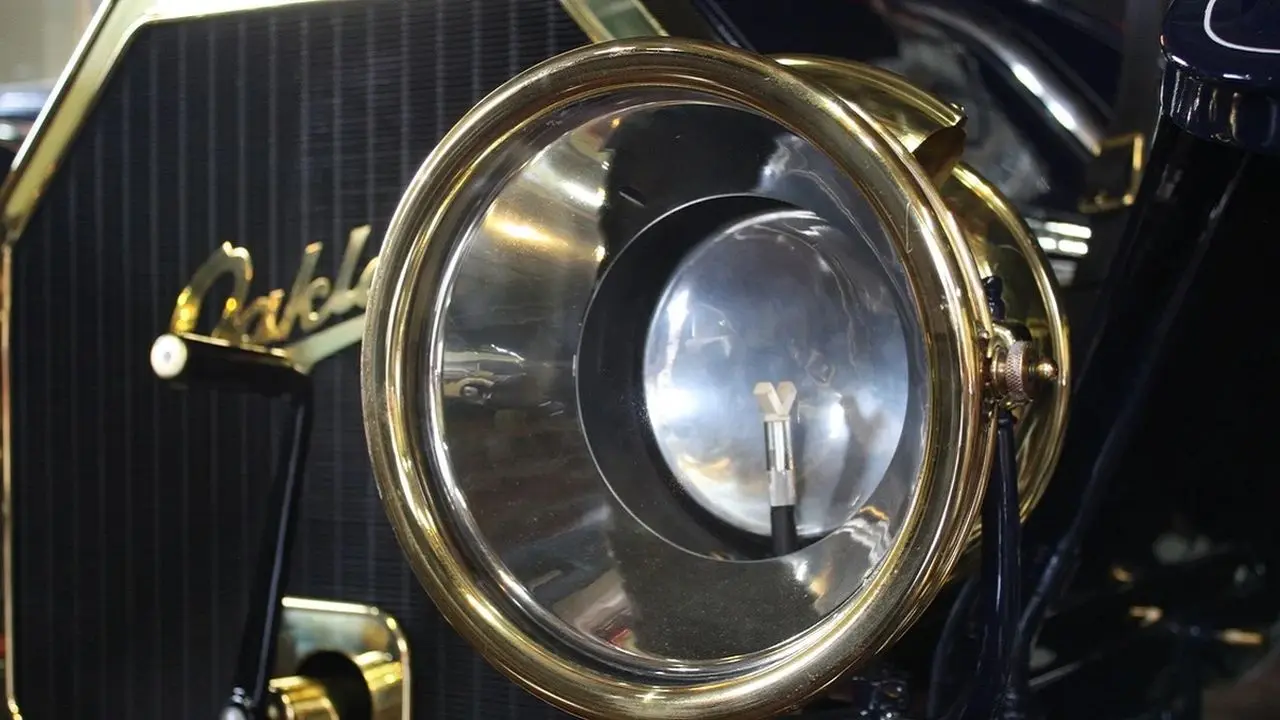
The first automotive lighting systems were adapted directly from horse-drawn carriages and were primarily intended to make the vehicle visible to others. Oil lamps were mounted onto the vehicle body and provided only a minimal amount of illumination. Despite their limited performance, these lamps were often elegantly designed. Brass and glass housings helped reduce the effects of the wind hitting vehicles traveling at speeds of around 50 or 60 km/h.
A basic gas lamp consisted of a body where the gas was stored and burned, a valve used to control the gas flow, and a wick that allowed the flame to burn.
The next major development was the acetylene-powered headlight. Unlike earlier lamps, acetylene headlights not only helped make vehicles visible but also illuminated the road ahead.
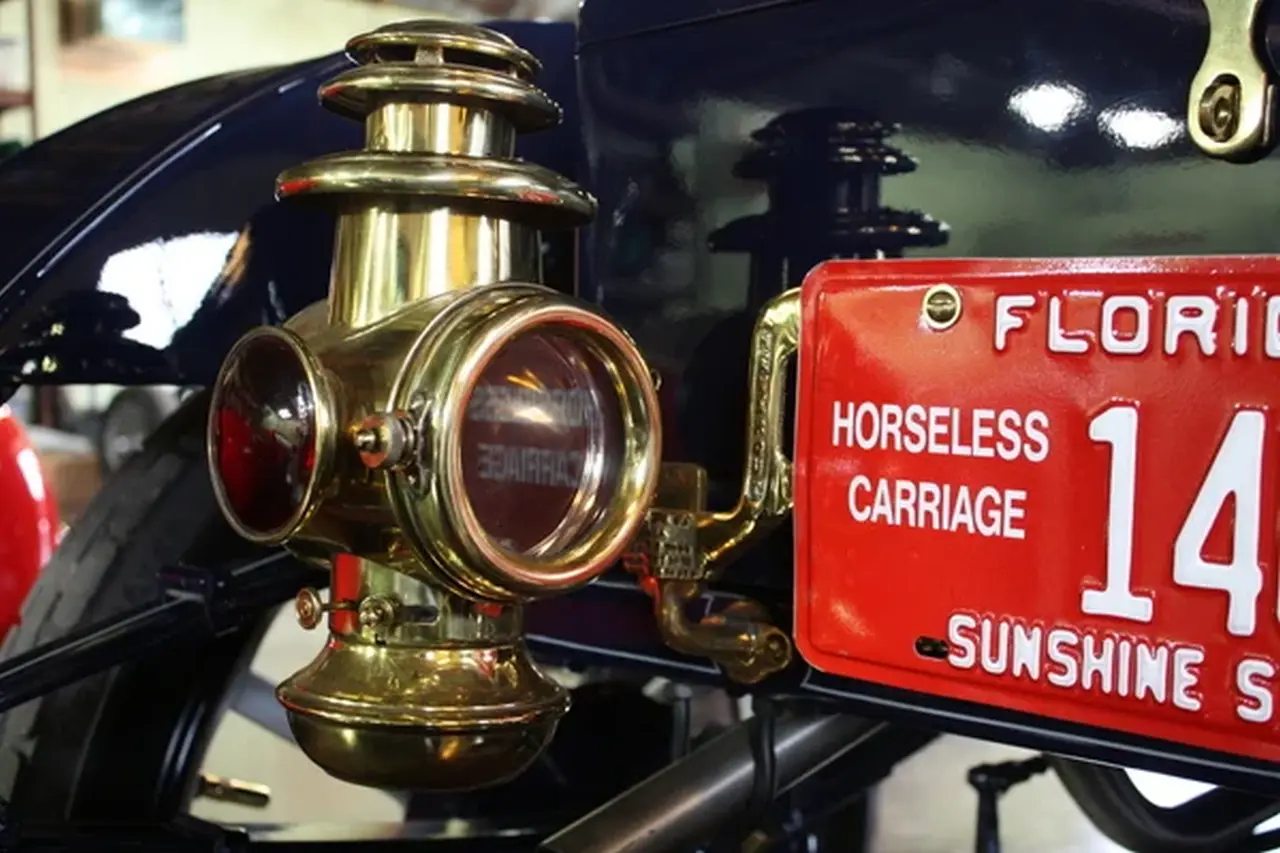
Acetylene gas was produced by reacting calcium carbide with water. This chemical reaction allowed acetylene gas to be generated quickly. The gas was stored in a chamber inside the lamp and burned when needed through a valve that allowed the gas to reach the wick.
Both oil and acetylene lamps required drivers to use matches to ignite them. However, some vehicles were equipped with automatic ignition systems that allowed drivers to turn the lights on from behind the steering wheel. Drivers would manually light the lamps before setting off and extinguish them at the end of the journey.
One advantage of these systems was that they provided an independent source of illumination without requiring electricity or batteries. However, acetylene lamps continued burning until their fuel was exhausted and therefore required frequent refilling. Filling the lamps with highly flammable acetylene gas also presented a potential safety hazard.
Gas lamps were used as automotive lighting solutions from the late 19th century through the first quarter of the 20th century. From the appearance of the first automobile prototypes in the 1880s, these lamps served as a source of illumination for vehicles.
Gas lamps were particularly common during the early 1900s. However, their popularity declined toward the end of the 1910s as electric headlights were developed and became more widespread. By the mid-1920s, many automobile manufacturers were equipping their vehicles with electric headlights as standard.
The period when gas lamps were most widely used in automobiles was approximately between 1900 and 1920.
Electricity: The Revolution in Automotive Lighting
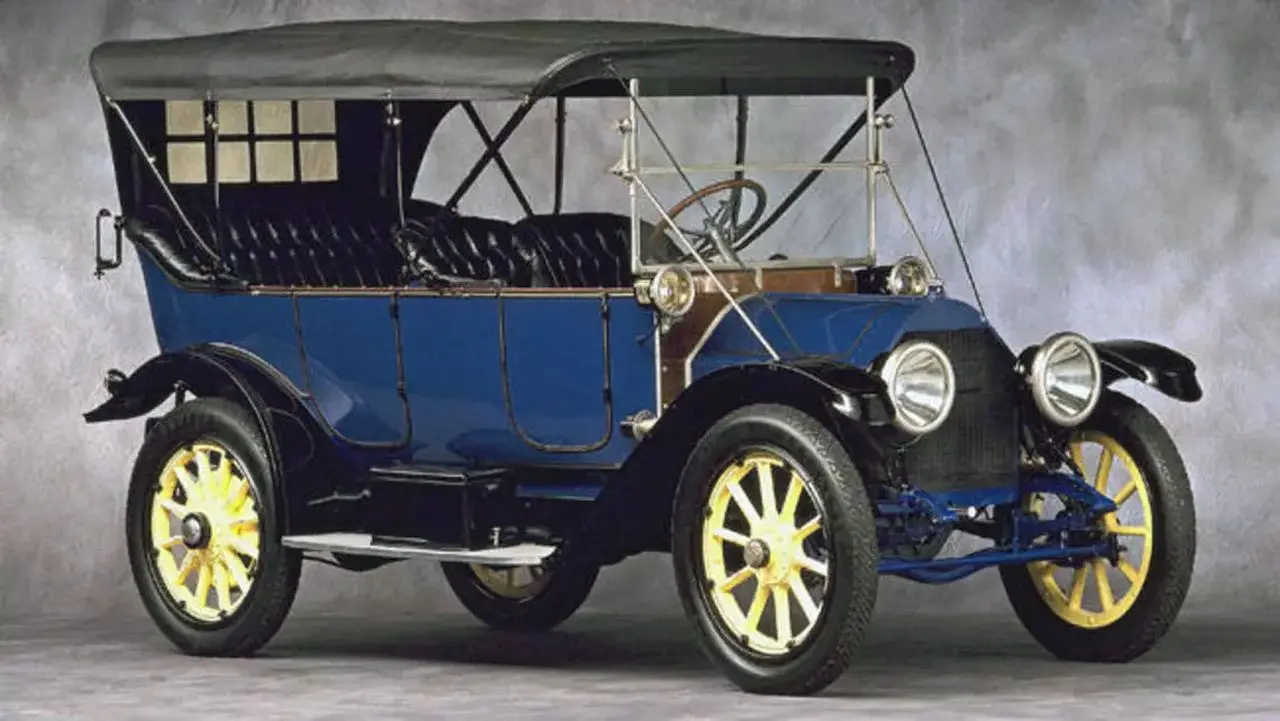
Electricity became a genuine turning point in automotive lighting. It overcame many of the limitations of gas lamps and made it possible for vehicles to use lighting systems that were more efficient, safer, and capable of operating for longer periods.
At the beginning of the 20th century, the advantages of electric headlights were quickly recognized by the automotive industry. Compared with gas lamps, electric lights provided brighter and more consistent illumination, required less maintenance, and were generally more reliable. By 1912, Cadillac became the first automobile manufacturer to make a fully electric lighting system standard equipment on its vehicles.
As electric lighting became more widely adopted, bulbs of different types and sizes began to be produced. Initially, most automobiles were equipped with 6-volt electrical systems. However, 12-volt systems became the industry standard in the early 1950s, paving the way for brighter lighting and more powerful electrical systems capable of supporting larger vehicles.
Electric headlights did more than make nighttime driving safer. They also began to influence automobile design. During the 1930s, integrated headlight designs gave vehicles a smoother and more aerodynamic appearance.
Halogen Headlights: Brighter and More Efficient
The introduction of halogen technology into the automotive industry represented another major milestone in vehicle lighting. These lamps were first introduced for automotive applications during the 1960s. They initially became popular in Europe, while widespread adoption in the United States did not occur until the early 1980s because their use had previously been restricted by federal regulations.
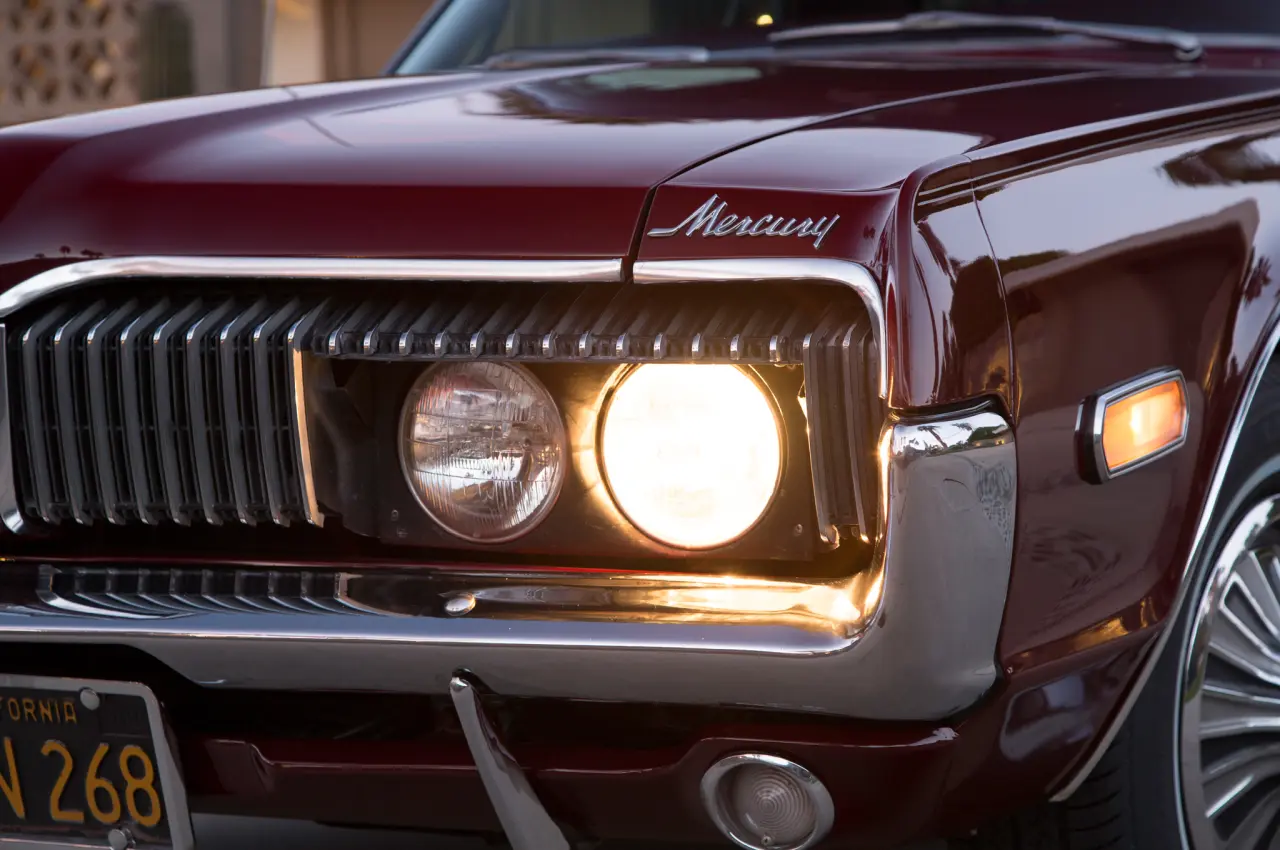
Halogen bulbs essentially contain a tungsten filament, but the bulb is filled with halogen gas. When the lamp heats up, this gas allows evaporated tungsten to return to the filament. This cycle helps extend filament life and allows the bulb to operate at a higher temperature and produce brighter light.
European automakers took advantage of the improved illumination offered by halogen technology in an effort to create safer nighttime driving conditions. Compared with conventional bulbs, halogen lamps produced a clearer and whiter light, improving visibility for drivers at night.
During this period, halogen headlights were offered as standard or optional equipment, particularly on higher-end and luxury vehicles. Later, changes to regulations in the United States during the early 1980s helped halogen lighting become increasingly popular there as well.
Automakers promoted the advantages of halogen technology by emphasizing longer bulb life, improved visibility, and an overall better nighttime driving experience. By the late 1980s, halogen headlights had become standard equipment on many vehicles around the world.
Halogen lighting was therefore regarded as a major advancement in automotive lighting technology and helped establish the foundation for further innovations in the years that followed.
High-Intensity Discharge (HID) and Xenon Headlights
Following the revolution brought about by halogen headlights, the next major step came with the introduction of High-Intensity Discharge (HID) headlights in the early 1990s. Unlike traditional halogen bulbs, HID headlights do not use a filament to generate light. Instead, they create a high-voltage electrical arc between two electrodes inside a tube filled with xenon gas. This is why HID headlights are commonly referred to as xenon headlights.
The advantages of xenon headlights quickly became apparent. They produced significantly brighter and whiter light than halogen bulbs while generally consuming less energy. Their light color was also closer to natural daylight, giving drivers clearer and more comfortable visibility at night. This could be particularly beneficial in rainy or foggy conditions.
Because of their superior performance, xenon headlights became popular in the luxury vehicle segment. Many premium automakers offered HID lighting as standard or optional equipment on new models. As the technology became more affordable, HID lighting gradually appeared in mid-range and even some entry-level vehicles.
However, HID headlights also introduced new challenges. Their high light output could cause significant glare for other drivers if the headlights were not correctly aimed. As a result, many countries introduced specific regulations governing HID headlight systems. HID lighting also required a more complex ballast system, making installation and maintenance more complicated.
High-Intensity Discharge and xenon headlights therefore represented another major step forward in automotive lighting, offering improved nighttime illumination while also introducing new technical and regulatory considerations.
LED and Laser Lighting: The Modern Era
In recent years, automotive lighting technology has undergone another major transformation with innovative and energy-efficient solutions such as LED and laser lighting.
LED Lighting
LEDs have been used in many applications for a long time, but their adoption in the automotive industry is relatively recent. Compared with traditional halogen and HID lamps, LEDs consume significantly less energy. They also offer a much longer service life, while their compact size gives automotive designers greater freedom to create flexible and innovative lighting designs.
LED headlights quickly became popular across the automotive market because they provide bright, clear illumination while consuming relatively little energy and offering long service life. LEDs also turn on and off almost instantly, making them particularly suitable for applications such as brake lights and turn signals, where rapid response can improve the visibility of a vehicle to other road users.
Laser Lighting
Laser lighting is a relatively new technology in the automotive world. Laser diodes generate light that is converted through a special phosphor material to produce high-intensity white light. Laser headlights can provide extremely high light intensity and a narrower beam compared with conventional lighting technologies.
However, laser lighting systems also present technical challenges, including cooling requirements resulting from their high energy density. Despite these challenges, automakers have continued to develop and apply the technology, particularly in premium vehicles.
Laser lighting can be especially useful during high-speed highway driving. Its highly focused beam can provide a longer illumination range than many conventional headlight systems, giving drivers greater visibility at higher speeds.
The Evolution Continues
The history of automotive lighting technology is a story of continuous evolution, beginning with simple oil lamps and progressing through gas, electric, halogen, HID, LED, and laser lighting systems. Each technological step has aimed to improve visibility, efficiency, reliability, and nighttime driving safety.
Today, automotive lighting is no longer limited to simply illuminating the road. Modern systems can help drivers perceive their surroundings more effectively and can become an important part of the vehicle’s overall safety technology.
As automotive technology continues to develop, lighting systems are expected to become even more intelligent, adaptive, efficient, and closely integrated with other vehicle safety and driver-assistance systems.