TR
TR EN
EN

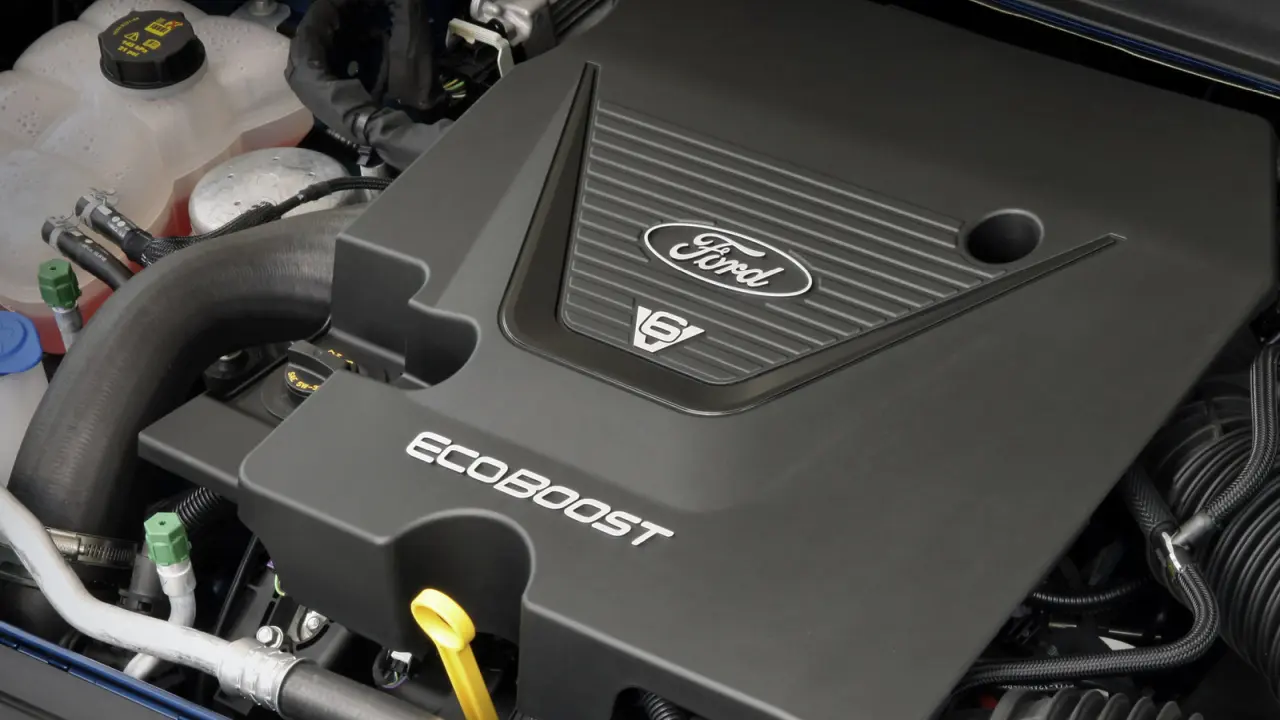
What Is an EcoBoost Engine? What Are Its Advantages and Disadvantages?
EcoBoost is Ford's engine technology family designed to combine the performance of a relatively large engine with the fuel efficiency and emissions characteristics of a smaller engine.
The basic idea is known as downsizing. Instead of using a naturally aspirated engine with a large displacement, Ford uses a smaller-displacement engine equipped with turbocharging, direct fuel injection, and advanced engine management to produce strong power and torque.
EcoBoost is not a single engine. It is a broad family that has included three-, four-, six- and even larger-cylinder applications, depending on the vehicle and market.
Ford has used EcoBoost engines in vehicles ranging from compact cars to pickup trucks and performance models.
What Does EcoBoost Mean?
The name EcoBoost combines two ideas:
-
Eco refers to efficiency and emissions
-
Boost refers to turbocharged air pressure
The concept is relatively straightforward.
A smaller engine normally has a limited amount of air available for combustion. A turbocharger forces additional air into the engine, allowing more fuel to be burned when required.
As a result, a small turbocharged engine can produce power comparable to a naturally aspirated engine with considerably greater displacement.
For example, a turbocharged 1.5- or 1.6-liter engine can provide the type of torque that would traditionally require a larger naturally aspirated engine.
How Does an EcoBoost Engine Work?
The exact design varies between EcoBoost engines, but the basic operating principle is similar.
The engine uses a combination of:
-
Turbocharging
-
Direct fuel injection
-
Electronic engine management
-
Variable valve timing on many versions
-
Intercooling
-
Downsized displacement
The turbocharger compresses incoming air before it enters the combustion chamber.
Because the compressed air contains more oxygen, the engine can inject additional fuel and produce more power.
The ECU continuously monitors parameters such as:
-
Engine speed
-
Intake pressure
-
Air temperature
-
Throttle position
-
Fuel pressure
-
Oxygen levels
-
Knock activity
-
Coolant temperature
It then adjusts fuel injection, ignition timing, boost pressure and valve timing to keep the engine operating efficiently.
What Is the Role of the Turbocharger?
The turbocharger is one of the most important components in an EcoBoost engine.
A turbocharger uses exhaust gas energy to spin a turbine.
That turbine is connected to a compressor wheel on the intake side.
As the compressor rotates, it forces additional air into the engine.
This allows the engine to behave as though it has a greater effective airflow capacity than its physical displacement would suggest.
The result is strong torque from a relatively small engine.
Why Does Ford Use Small Turbocharged Engines?
The main reason is engine downsizing.
A smaller engine generally has less internal friction and can consume less fuel when the driver is not demanding high power.
When additional power is required, the turbocharger increases the amount of air entering the engine.
This creates a useful combination:
Small displacement during light-load operation + turbocharged power when needed.
This is one of the fundamental principles behind EcoBoost.
What Is Direct Fuel Injection?
Most modern EcoBoost engines use direct fuel injection.
Instead of injecting fuel into the intake port, the injector sprays fuel directly into the combustion chamber.
This allows the ECU to control the timing and quantity of fuel very precisely.
Direct injection can contribute to:
-
Improved combustion control
-
Better fuel efficiency
-
Higher power density
-
Reduced fuel consumption under certain operating conditions
-
Better control of the air-fuel mixture
It also works particularly well with turbocharging.
What Is an Intercooler?
Turbocharging increases intake-air temperature.
The intercooler reduces the temperature of the compressed air before it enters the engine.
Cooler intake air is denser, meaning the engine can receive more oxygen for a given volume.
Depending on the EcoBoost application, the intercooler arrangement can vary significantly.
Performance-oriented versions generally place greater emphasis on controlling intake temperatures under sustained high load.
What Types of EcoBoost Engines Exist?
There is no single EcoBoost displacement or engine architecture.
Ford has developed numerous versions over the years, including:
-
1.0-liter three-cylinder EcoBoost
-
1.5-liter three-cylinder and four-cylinder applications
-
1.6-liter four-cylinder EcoBoost
-
2.0-liter four-cylinder EcoBoost
-
2.3-liter four-cylinder EcoBoost
-
2.7-liter V6 EcoBoost
-
3.0-liter V6 EcoBoost
-
3.5-liter V6 EcoBoost
The technology has therefore been used for very different purposes.
A small three-cylinder EcoBoost is designed with efficiency and everyday driving in mind, while a 3.5-liter V6 EcoBoost can be used in high-performance or heavy-duty applications.
What Are the Advantages of an EcoBoost Engine?
EcoBoost engines have several important advantages.
Strong Power From Small Displacement
One of the biggest advantages is high power density.
Turbocharging allows a smaller engine to produce substantial power.
This means a relatively compact engine can provide performance that would traditionally require a larger naturally aspirated engine.
Strong Low- and Mid-Range Torque
Turbocharged engines can produce significant torque at relatively low engine speeds.
This is especially useful in everyday driving.
The driver does not necessarily need to rev the engine aggressively to accelerate.
This characteristic is particularly valuable in:
-
SUVs
-
Pickup trucks
-
Family cars
-
Performance vehicles
Better Fuel Economy Under Light Loads
A smaller engine can consume less fuel when operating under low loads.
During steady cruising, the engine may not need to produce its maximum power, allowing the downsized architecture to provide efficiency benefits.
However, this does not mean every EcoBoost engine will always use less fuel than every naturally aspirated engine.
Driving style has a major influence.
Lower Displacement Does Not Mean Low Performance
EcoBoost demonstrates how engine displacement alone no longer tells the whole performance story.
A modern turbocharged four-cylinder can produce power that was once associated with much larger engines.
This is one reason turbocharged engines have become so common across the automotive industry.
Good Performance Potential
Many EcoBoost engines have considerable aftermarket potential.
Depending on the specific engine, modifications can include:
-
ECU tuning
-
Intake upgrades
-
Intercooler upgrades
-
Exhaust modifications
-
Turbocharger upgrades
-
Fuel-system improvements
-
Cooling upgrades
However, modifications should always be matched to the engine's actual hardware and intended operating limits.
Useful Torque for Towing
Larger EcoBoost engines, particularly V6 versions, can provide substantial torque at low engine speeds.
This makes them useful in applications where pulling power matters.
The 2.7-liter and 3.5-liter V6 EcoBoost engines, for example, have been used extensively in Ford trucks.
Turbocharging allows these engines to produce strong torque without requiring extremely large displacement.
What Are the Disadvantages of EcoBoost Engines?
EcoBoost technology also has disadvantages.
The biggest issue is that a turbocharged downsized engine is mechanically and thermally more complex than a simple naturally aspirated engine.
Turbocharger Adds Complexity
A naturally aspirated engine does not need a turbocharger, intercooler, boost-control system, charge pipes and many of the associated components.
An EcoBoost engine does.
This means there are more components that can eventually require maintenance or repair.
The turbocharger itself operates at very high temperatures and speeds.
Higher Thermal Loads
Turbocharged engines generally operate under higher thermal and cylinder-pressure loads than comparable naturally aspirated engines.
This places additional demands on:
-
Engine oil
-
Cooling system
-
Turbocharger
-
Pistons
-
Valves
-
Exhaust system
-
Head gasket
-
Intercooler
Good thermal management is therefore critical.
Fuel Consumption Can Rise Sharply Under Heavy Load
The efficiency advantage of a small turbocharged engine is not unlimited.
When the turbocharger is producing significant boost, the engine is burning considerably more fuel.
If the driver frequently uses high boost, accelerates aggressively or drives at high speed, the real-world fuel economy may be much worse than the official figures suggest.
In some situations, a larger naturally aspirated engine driven gently can approach or even beat the fuel consumption of a smaller turbocharged engine.
Direct Injection Can Create Additional Maintenance Concerns
Direct-injection engines have an important characteristic that is different from traditional port-injected engines.
Because fuel is injected directly into the combustion chamber, fuel does not continuously wash over the intake valves.
On some direct-injection engines, this can contribute to intake-valve carbon deposits over time.
The severity depends on the specific engine design, PCV system, driving conditions and maintenance history.
It should not be assumed that every EcoBoost engine will develop serious carbon buildup, but it is a consideration with direct-injection technology.
Turbocharger Maintenance Matters
Turbochargers depend heavily on proper lubrication and temperature control.
Using the correct oil and changing it at the appropriate interval is especially important.
Repeated hard driving followed by immediate shutdown can also create unnecessary thermal stress in some turbocharged applications.
Modern vehicles often have improved cooling strategies, and some turbo systems use water cooling or other thermal-management solutions, but proper maintenance remains important.
Are EcoBoost Engines Reliable?
There is no single answer because EcoBoost is an engine family, not one specific engine.
Reliability varies according to:
-
Engine generation
-
Displacement
-
Model year
-
Vehicle application
-
Maintenance
-
Driving style
-
Cooling system condition
-
Oil quality
-
Turbocharger condition
-
Previous modifications
Some EcoBoost engines have developed very strong reliability records, while particular generations or applications have experienced specific issues.
Therefore, evaluating an EcoBoost-powered used vehicle should always be done according to its exact engine code, generation and model year rather than simply asking whether "EcoBoost is reliable."
Why Is Oil So Important in an EcoBoost?
Engine oil is particularly important because it performs several jobs simultaneously.
It lubricates:
-
Engine bearings
-
Camshafts
-
Timing components
-
Pistons and other internal components
-
Turbocharger bearings
It also helps remove heat from internal components.
Because turbochargers operate at extremely high speeds and temperatures, oil degradation or insufficient lubrication can contribute to turbocharger damage.
Using the correct oil specification and maintaining appropriate oil-change intervals is therefore an important part of EcoBoost ownership.
Does EcoBoost Require Premium Fuel?
Not necessarily.
The required fuel grade depends on the exact EcoBoost engine and vehicle.
Some EcoBoost engines are designed to operate normally on regular fuel, while higher-performance applications may recommend or benefit from higher-octane fuel.
Turbocharged engines can be more sensitive to knock because of the higher cylinder pressures created under boost.
The correct fuel specification should therefore always be determined from the vehicle manufacturer's requirements.
Is EcoBoost Good for City Driving?
It can be.
A small EcoBoost engine can work well in urban traffic because turbocharging provides useful torque without requiring a large-displacement engine.
However, repeated short trips can be less favorable for any modern turbocharged engine because the engine and oil may not always reach their ideal operating temperature.
Frequent stop-and-go driving can also increase fuel consumption considerably.
Driving habits and maintenance matter more than the EcoBoost name itself.
Is EcoBoost Good for Long-Distance Driving?
Yes.
Long-distance driving can actually provide favorable operating conditions for a turbocharged engine when the vehicle is driven at a steady speed.
Once the engine reaches normal operating temperature, the powertrain can operate efficiently under a relatively stable load.
A modern EcoBoost engine can therefore be perfectly suitable for highway and long-distance use.
EcoBoost vs. Naturally Aspirated Engine
The main difference is how the engine produces its power.
A naturally aspirated engine relies entirely on atmospheric pressure and engine displacement to fill its cylinders.
An EcoBoost engine uses a turbocharger to force additional air into the combustion chambers.
This gives EcoBoost engines several advantages:
-
Higher torque from smaller displacement
-
Higher power density
-
Potentially better efficiency at light loads
-
Stronger acceleration without very high displacement
The naturally aspirated engine, however, generally has:
-
Simpler hardware
-
More linear power delivery
-
No turbocharger
-
Lower boost-related thermal loads
-
Fewer forced-induction components
Neither approach is automatically better. The choice depends on the vehicle and intended use.
EcoBoost vs. Diesel
EcoBoost and modern diesel engines use different strategies to achieve efficiency and torque.
A diesel engine benefits from high compression ratios and the characteristics of diesel combustion.
EcoBoost uses gasoline, turbocharging and direct injection.
Modern diesel engines can provide excellent low-RPM torque and fuel economy, especially under heavy loads and long-distance driving.
EcoBoost engines can provide:
-
Higher-revving characteristics
-
Strong performance
-
Lower emissions complexity in some applications
-
Smooth gasoline-engine operation
The better choice depends heavily on driving conditions and vehicle requirements.
Can an EcoBoost Engine Be Tuned?
Yes.
ECU tuning is one of the most common modifications for turbocharged EcoBoost engines.
A tune can alter parameters such as:
-
Boost pressure
-
Ignition timing
-
Fuel delivery
-
Throttle behavior
-
Torque limits
-
Transmission behavior on compatible vehicles
Because the turbocharger is already part of the factory design, ECU tuning can produce noticeable changes in performance.
However, more boost does not automatically mean a better engine.
The calibration must remain within the limits of the:
-
Turbocharger
-
Fuel system
-
Cooling system
-
Engine internals
-
Transmission
-
Clutch
-
Drivetrain
Can EcoBoost Engines Be Modified for More Power?
Yes, but the potential varies considerably between engines.
A mild modification package may include an ECU tune and intercooler upgrade.
More aggressive builds can involve:
-
Larger turbochargers
-
High-flow intake systems
-
Exhaust modifications
-
Upgraded intercoolers
-
Larger injectors
-
High-pressure fuel-system upgrades
-
Stronger engine internals
-
Additional cooling
The correct modification path depends on the specific EcoBoost engine.
A 1.0-liter three-cylinder EcoBoost and a 3.5-liter V6 EcoBoost should not be treated as if they have the same tuning characteristics.
Does EcoBoost Save Fuel?
It can, but the answer depends heavily on how the engine is driven.
The basic theory is simple: a smaller engine can operate efficiently under light loads, while the turbocharger provides additional power when necessary.
But if the driver frequently uses the turbocharger at high boost, the engine is effectively being asked to behave like a much larger engine.
Fuel consumption will then increase.
This is why the driver's right foot has a major influence on the real-world efficiency of an EcoBoost engine.
What Is the Difference Between EcoBoost and Hybrid Technology?
EcoBoost is primarily an internal-combustion engine technology.
Hybrid technology adds an electric motor and battery system to the powertrain.
An EcoBoost engine can therefore exist without any hybrid system.
Ford has also combined turbocharged gasoline engines with electrification in some applications, but the two technologies should not be confused.
EcoBoost describes the combustion-engine technology, while hybridization describes how electrical propulsion is integrated into the vehicle.
Are All EcoBoost Engines the Same?
No.
This is one of the most important things to understand about the EcoBoost name.
A 1.0-liter three-cylinder EcoBoost and a 3.5-liter V6 EcoBoost may share the same general philosophy, but they are completely different engines in terms of:
-
Architecture
-
Displacement
-
Number of cylinders
-
Turbocharger configuration
-
Fuel system
-
Power output
-
Cooling
-
Intended application
-
Maintenance requirements
Therefore, any reliability or performance discussion about EcoBoost should specify the exact engine.
Which Ford Models Use EcoBoost Engines?
Ford has used EcoBoost engines across a very wide range of vehicles.
Depending on the market and model year, EcoBoost technology has appeared in:
-
Fiesta
-
Focus
-
Puma
-
Escape
-
Kuga
-
Fusion
-
Mondeo
-
Mustang
-
Bronco
-
Ranger
-
Explorer
-
F-150
-
Other Ford models
The engine configuration varies substantially between these vehicles.
Is an EcoBoost Engine Worth Buying?
An EcoBoost-powered vehicle can be an excellent choice when the specific engine is well suited to the intended use.
The advantages are particularly attractive to drivers who want:
-
Good performance
-
Strong torque
-
Moderate displacement
-
Modern fuel efficiency
-
Turbocharged acceleration
-
A relatively compact engine
However, buyers should not purchase a used vehicle solely because it has the EcoBoost badge.
The exact engine generation, maintenance history and vehicle condition are far more important.
For a used EcoBoost vehicle, it is worth checking:
-
Service history
-
Oil-change records
-
Turbocharger condition
-
Cooling system
-
Engine oil level and condition
-
Intake and boost system
-
Misfire history
-
Diagnostic trouble codes
-
Previous ECU tuning
-
Evidence of overheating
-
Fuel-system condition
Final Takeaway
EcoBoost is Ford's family of turbocharged gasoline engines designed to combine the efficiency advantages of smaller displacement with the performance and torque normally associated with larger engines.
Its main technologies include turbocharging, direct fuel injection, intercooling and sophisticated electronic engine management.
The biggest advantages are strong torque, high power density, good performance from relatively small engines and potentially good fuel economy during light-load driving.
The disadvantages include greater mechanical complexity, higher thermal loads, turbocharger-related maintenance, potentially higher fuel consumption under heavy load and the additional considerations associated with direct injection.
Most importantly, EcoBoost is not one specific engine. Different EcoBoost generations and engine sizes can have very different characteristics. When evaluating reliability, performance or maintenance requirements, the exact engine and model year should always be considered rather than treating the entire EcoBoost family as a single design.