TR
TR EN
EN

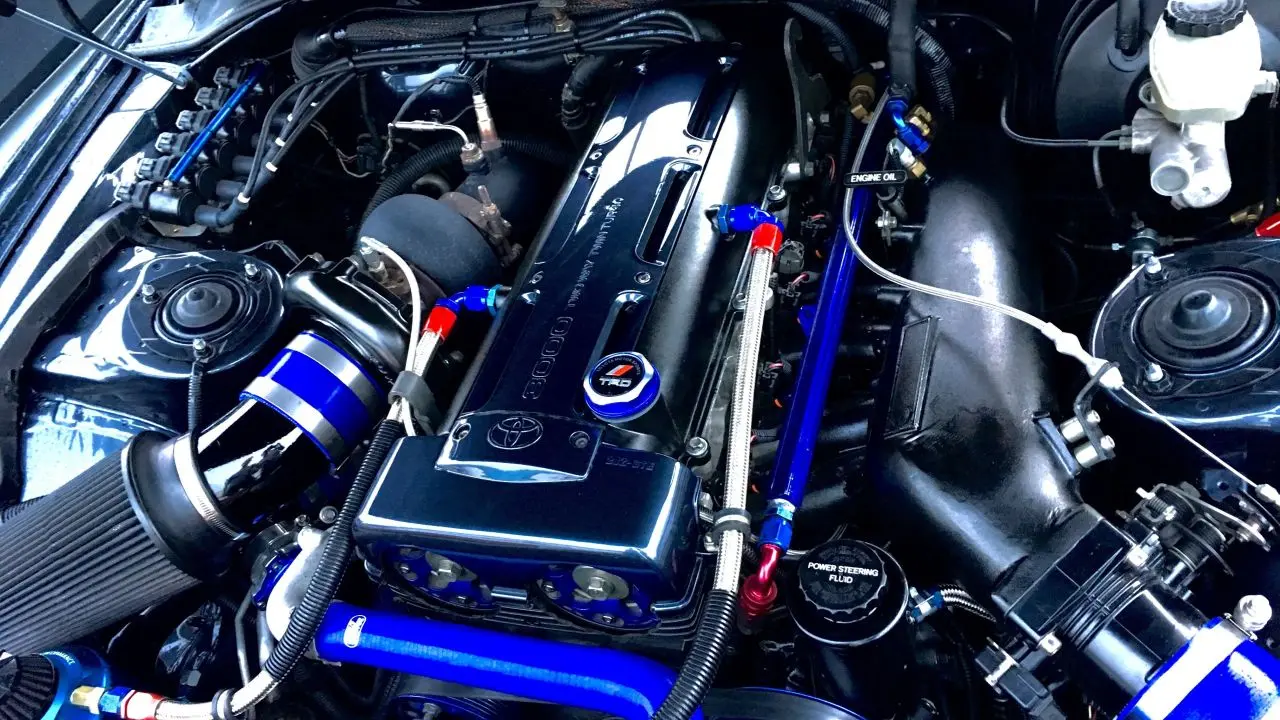
What Is a 2JZ Engine? What Are Its Features?
The 2JZ engine is one of Toyota's most famous performance engines and one of the most recognizable Japanese inline-six engines ever produced.
Developed by Toyota in the 1990s, the 2JZ belongs to the JZ engine family and became especially famous because of its strong iron-block construction, smooth inline-six architecture, excellent aftermarket support, and enormous tuning potential.
The engine is best known through the Toyota Supra, particularly the fourth-generation Supra and its legendary 2JZ-GTE twin-turbocharged engine. However, the 2JZ was not exclusive to the Supra. Toyota used different versions of the engine in several models and applications.
The name "2JZ" therefore describes an engine family rather than a single exact specification. Different versions were designed for different purposes, and the naturally aspirated 2JZ-GE is mechanically different from the turbocharged 2JZ-GTE in several important ways.
What Does 2JZ Mean?
Toyota's engine naming system can initially look complicated, but the name provides useful information.
In 2JZ:
-
2 identifies the generation within the JZ family
-
JZ identifies the engine family
The letters and suffixes that follow, such as GE or GTE, identify different versions and configurations.
The most famous examples are:
-
2JZ-GE – naturally aspirated version
-
2JZ-GTE – turbocharged performance version
Both are 3.0-liter inline-six engines, but their specifications and intended applications differ.
What Type of Engine Is the 2JZ?
The 2JZ is a:
-
3.0-liter inline-six
-
Four-stroke gasoline engine
-
DOHC engine
-
24-valve engine
-
Longitudinally mounted engine in many applications
-
Naturally aspirated or twin-turbocharged depending on version
The inline-six configuration is particularly important to the character of the engine.
An inline-six has excellent inherent mechanical balance because its reciprocating components can be arranged in a naturally smooth configuration.
This contributes to the 2JZ's reputation for smooth operation and makes it an attractive platform for high-performance applications.
What Is the 2JZ-GE?
The 2JZ-GE is the naturally aspirated version of the 2JZ.
It was designed primarily for normal road-car applications rather than extreme performance.
Depending on the market and model year, specifications varied, but the engine generally produced somewhere around 200–230 horsepower in factory form.
The 2JZ-GE became popular because it combined:
-
Smooth inline-six operation
-
3.0-liter displacement
-
Strong low- and mid-range torque
-
Good durability
-
Toyota reliability
-
A strong aftermarket foundation
Although the GE is not the famous turbo version, it shares the basic architecture that made the 2JZ platform so interesting to enthusiasts.
What Is the 2JZ-GTE?
The 2JZ-GTE is the high-performance version of the engine.
It was developed with turbocharging and higher-performance components and became famous through the Toyota Supra.
The 2JZ-GTE uses:
-
3.0-liter displacement
-
Inline-six configuration
-
DOHC cylinder heads
-
24 valves
-
Twin turbochargers
-
Intercooling
-
Strong internal components
-
An iron cylinder block
Depending on market and generation, factory power ratings varied.
The Japanese-market version was officially rated at approximately 280 PS, while the North American-market version was rated at approximately 320 hp.
These official figures are only part of the 2JZ-GTE story, because the engine became famous for its ability to handle significantly more power when properly built and tuned.
Why Is the 2JZ-GTE So Famous?
The 2JZ-GTE became legendary for several reasons.
The engine combines a robust bottom end with a strong aftermarket ecosystem and a relatively straightforward turbocharged architecture.
Its reputation was strengthened by the fourth-generation Toyota Supra, which became an icon of Japanese performance cars.
The engine's popularity grew even further through:
-
Motorsport
-
Drag racing
-
Tuning culture
-
Engine swaps
-
Performance builds
-
Movies and popular culture
-
The growing international interest in Japanese performance cars
However, the idea that every completely stock 2JZ can automatically produce enormous power is misleading.
The engine's famous tuning potential comes from the combination of its basic architecture, available aftermarket components, proper fuel and engine management, and the ability to strengthen supporting systems as power increases.
What Is the 2JZ Engine's Displacement?
The 2JZ has a displacement of approximately 3.0 liters.
The engine uses:
-
Bore: approximately 86 mm
-
Stroke: approximately 86 mm
This creates a nearly square bore-to-stroke configuration.
The 3.0-liter displacement gives the engine a useful balance between torque and high-RPM performance.
How Many Cylinders Does a 2JZ Have?
The 2JZ has six cylinders arranged in a straight line.
This is known as an inline-six or straight-six configuration.
The inline-six layout provides excellent mechanical balance and smooth power delivery.
Compared with a V6, an inline-six can also have a simpler cylinder-head arrangement because all six cylinders are located in a single bank.
Is the 2JZ a DOHC Engine?
Yes.
The 2JZ uses double overhead camshafts, or DOHC.
There are two camshafts in the cylinder head:
-
One operates the intake valves
-
One operates the exhaust valves
With four valves per cylinder, the engine has 24 valves in total.
The DOHC arrangement allows the engine to breathe effectively and provides engineers with greater control over valve operation.
What Is the 2JZ-GTE's Compression Ratio?
Compression ratio varies depending on the specific 2JZ version and market.
The 2JZ-GTE generally uses a relatively conservative compression ratio compared with many naturally aspirated gasoline engines.
This is appropriate for a turbocharged engine because the engine must operate under significant cylinder pressures once boost is applied.
The exact compression ratio should therefore be considered according to the specific engine generation rather than assuming every 2JZ-GTE has identical specifications.
Does the 2JZ Have an Iron Block?
Yes.
One of the most important characteristics of the 2JZ is its cast-iron cylinder block.
This construction contributes significantly to the engine's reputation for strength.
Iron is heavier than aluminum, which means the 2JZ is not a lightweight engine. However, the rigid block provides a strong foundation for high-cylinder-pressure applications.
This is particularly useful when the engine is modified for substantially higher power.
Why Is the 2JZ Block Considered Strong?
A turbocharged engine operating at high boost produces significantly higher cylinder pressure than a naturally aspirated engine.
The 2JZ's robust block architecture gives it a strong foundation for handling these loads.
However, block strength is only one part of engine durability.
At high power levels, other components become increasingly important, including:
-
Pistons
-
Connecting rods
-
Bearings
-
Head gasket
-
Cylinder head
-
Fuel system
-
Cooling system
-
Lubrication system
-
Engine management
This is why simply saying that a 2JZ is "indestructible" is inaccurate.
It is a strong engine, but it still has mechanical limits.
What Turbochargers Does the 2JZ-GTE Use?
The 2JZ-GTE was designed around a twin-turbocharger system.
The exact turbocharger arrangement differs between versions and markets.
Early versions used a sequential twin-turbo strategy designed to improve both low-speed response and high-RPM airflow.
The system was intended to reduce the compromise between turbocharger response and high-speed power.
Later versions and modified engines are often converted to single-turbo systems.
A large single turbo can produce significantly more top-end power, while a smaller turbo can prioritize faster response.
What Is Sequential Twin Turbocharging?
A sequential twin-turbo system uses two turbochargers in a staged manner rather than simply having both operate identically throughout the entire RPM range.
The goal is to improve response at lower engine speeds while providing sufficient airflow as engine speed and load increase.
This was particularly useful for making a relatively large performance engine more responsive in everyday driving.
Modern turbocharger technology has evolved considerably since the 2JZ was introduced, but the sequential system was an important part of the engine's original design.
Does the 2JZ-GTE Have an Intercooler?
Yes.
The turbocharged 2JZ-GTE uses an intercooler to reduce the temperature of compressed intake air.
When a turbocharger compresses air, the air temperature increases.
Hot intake air is less desirable because it can reduce air density and increase the risk of abnormal combustion.
The intercooler helps lower the temperature before the air enters the engine.
This improves the conditions under which the engine produces power.
What Is the 2JZ-GTE Fuel System Like?
The turbocharged engine requires a fuel system capable of supplying sufficient fuel under boost.
The factory configuration uses electronic fuel injection.
When power is increased substantially, the factory fuel system may no longer be sufficient.
High-power builds may therefore require upgrades to:
-
Fuel injectors
-
Fuel pump
-
Fuel lines
-
Fuel pressure control
-
Engine management
The correct fuel system depends on the target power level and the specific engine setup.
Why Is the 2JZ Good for Tuning?
The 2JZ is attractive to tuners because it has a combination of characteristics that provide a strong starting point for performance modifications.
These include:
-
Strong iron block
-
Inline-six configuration
-
Turbocharged factory version
-
Strong aftermarket support
-
Large availability of replacement components
-
Extensive tuning knowledge
-
Large selection of turbocharger systems
-
Good cylinder-head airflow
-
Strong engine architecture
The engine has been modified into everything from relatively mild street builds to extremely high-output competition engines.
How Much Power Can a 2JZ Handle?
There is no single horsepower number that applies to every 2JZ.
This is one of the most misunderstood aspects of the engine.
A stock 2JZ-GTE can handle considerably more power than its factory output when properly tuned, but the actual safe limit depends on factors such as:
-
Engine condition
-
Fuel quality
-
Air-fuel ratio
-
Ignition timing
-
Turbocharger
-
Boost pressure
-
Engine RPM
-
Cooling
-
Oil temperature
-
Detonation
-
ECU calibration
-
Supporting hardware
At higher power levels, factory components eventually become limitations.
A serious high-power build may require upgraded pistons, connecting rods, head studs, bearings, fuel system components, turbocharger, cooling system, and engine management.
Can a 2JZ Be Converted to a Single Turbo?
Yes.
Single-turbo conversions are extremely common in the 2JZ tuning world.
A single turbocharger can offer several advantages:
-
Simpler exhaust-side packaging
-
Larger potential airflow
-
Stronger high-RPM performance
-
Greater tuning flexibility
-
Easier turbocharger selection
However, a larger turbocharger can also increase turbo lag.
A small single turbo may provide rapid response but have limited maximum airflow.
A very large turbo may produce enormous top-end power but require higher engine speed before reaching its full potential.
The ideal turbocharger therefore depends on how the car will be used.
Is the 2JZ-GE the Same as the 2JZ-GTE?
No.
They belong to the same engine family, but they should not be considered identical.
The GTE was specifically developed for turbocharged performance applications and has important differences in areas such as:
-
Compression ratio
-
Pistons
-
Fuel system
-
Turbocharger system
-
Intake system
-
Exhaust system
-
Engine management
-
Cooling
-
Internal components
There are also different versions of both engines, so compatibility should always be checked based on the exact engine code and generation.
Can a 2JZ-GE Be Turbocharged?
Yes, a 2JZ-GE can be turbocharged.
This is one reason naturally aspirated 2JZ engines are also popular among enthusiasts.
However, turbocharging a GE is not simply a matter of adding a turbocharger.
A proper conversion requires consideration of:
-
Turbocharger
-
Exhaust manifold
-
Intercooler
-
Fuel system
-
ECU calibration
-
Intake system
-
Exhaust
-
Cooling
-
Oil supply and return
-
Ignition system
-
Engine internals
-
Drivetrain
The compression ratio and internal configuration of the specific GE version also need to be taken into account.
What Cars Used the 2JZ Engine?
The 2JZ family was used in several Toyota and Lexus models.
The most famous application is undoubtedly the Toyota Supra.
Other applications included selected versions of:
-
Toyota Aristo
-
Toyota Crown
-
Toyota Chaser
-
Toyota Mark II
-
Toyota Cresta
-
Lexus GS 300
-
Other Toyota and Lexus applications depending on market and generation
The exact engine version varied between vehicles.
The 2JZ-GTE is especially associated with the Supra and Aristo, while naturally aspirated versions were used more broadly.
Why Is the Toyota Supra So Important to the 2JZ?
The fourth-generation Toyota Supra, known as the A80 Supra, gave the 2JZ-GTE its legendary reputation.
The combination of:
-
Rear-wheel drive
-
Six-speed manual availability
-
3.0-liter twin-turbo inline-six
-
Strong chassis
-
Limited-slip differential
-
Large aftermarket
-
Excellent tuning potential
created an extremely desirable performance platform.
The Supra's popularity later expanded beyond the original market through motorsport, tuning culture, video games, and popular media.
As a result, the name "2JZ" became almost synonymous with the fourth-generation Supra.
What Makes an Inline-Six Good for Performance?
An inline-six has excellent primary and secondary mechanical balance.
This allows it to operate smoothly without the same level of inherent vibration found in some other engine configurations.
The long, straight cylinder arrangement also provides a straightforward relationship between the crankshaft and the cylinders.
For performance applications, the smoothness of an inline-six can be particularly useful because the engine can operate at high RPM without excessive vibration from the basic cylinder arrangement.
Is the 2JZ a Reliable Engine?
The 2JZ has earned a strong reputation for durability, but reliability depends on condition and maintenance.
A well-maintained factory engine can be very durable.
Problems can still occur due to:
-
Neglected oil changes
-
Cooling-system failures
-
Overheating
-
Poor tuning
-
Detonation
-
Excessive boost
-
Fuel-system problems
-
Modified wiring
-
Poor-quality aftermarket components
A heavily modified 2JZ should not automatically be considered more reliable than a stock engine.
In fact, once power is increased significantly, the number of systems that need to work correctly increases dramatically.
What Are the Common 2JZ Problems?
The engine is generally respected for durability, but age has become an important factor because many 2JZ-powered vehicles are now decades old.
Potential issues include:
-
Oil leaks
-
Cooling-system deterioration
-
Aging hoses
-
Ignition-system problems
-
Sensor failures
-
Vacuum leaks
-
Turbocharger wear
-
Fuel-system aging
-
Timing-belt-related maintenance
-
Wiring problems
-
Gasket deterioration
On a modified car, additional problems can result from poorly installed aftermarket components.
Does the 2JZ Use a Timing Belt?
Yes.
The 2JZ uses a timing belt rather than a timing chain.
The timing belt synchronizes the camshafts with the crankshaft so that the valves operate at the correct time.
Timing-belt maintenance is therefore an important part of 2JZ ownership.
A neglected timing belt can become a serious reliability risk.
Does the 2JZ Have Variable Valve Timing?
Later versions of the engine incorporated VVT-i, Toyota's variable valve timing technology.
VVT-i allows the engine to alter valve timing according to operating conditions.
This can improve:
-
Low-speed torque
-
Throttle response
-
Fuel efficiency
-
Emissions
-
Overall drivability
Not every 2JZ version has the same VVT-i configuration, so the exact engine generation matters.
Why Is the 2JZ So Popular for Engine Swaps?
The 2JZ is also popular outside Toyota vehicles.
Its inline-six architecture, turbocharged versions, aftermarket support, and reputation for strength have made it a popular engine-swap candidate.
Enthusiasts have installed 2JZ engines into a wide variety of vehicles.
However, an engine swap involves much more than physically installing the engine.
The builder must consider:
-
Transmission compatibility
-
Engine mounts
-
Wiring
-
ECU
-
Fuel system
-
Cooling
-
Exhaust
-
Driveshaft
-
Differential
-
Brakes
-
Suspension
-
Vehicle electronics
A successful swap therefore requires the entire vehicle to be considered as a system.
Why Is the 2JZ So Heavy?
The 2JZ's iron block contributes to its durability but also makes it relatively heavy.
Compared with a modern aluminum-block engine of similar displacement, the 2JZ can add significant mass to the vehicle.
This can affect:
-
Front/rear weight distribution
-
Handling
-
Suspension setup
-
Vehicle balance
For some performance builds, the additional weight is an acceptable compromise for the engine's strength and tuning potential.
Is the 2JZ Good for a Daily-Driven Car?
A stock or mildly modified 2JZ can be perfectly suitable for everyday driving.
The inline-six layout provides smooth operation, while the relatively large displacement provides useful torque.
However, the age of most original 2JZ-powered vehicles is now an important consideration.
A used car equipped with a 2JZ may require more attention simply because components such as hoses, seals, sensors, fuel-system parts, and cooling components have aged.
A reliable daily-driver 2JZ is therefore more about condition and maintenance than simply the engine's reputation.
Why Is the 2JZ Still Relevant Today?
The 2JZ remains relevant because it represents an important period in Japanese performance-engine development.
It combines:
-
Traditional mechanical strength
-
Inline-six smoothness
-
Turbocharging
-
Advanced-for-its-time engine management
-
Strong aftermarket potential
Its reputation has also been reinforced by decades of real-world tuning and motorsport experience.
Even though modern engines can achieve impressive power with smaller displacement, direct injection, turbocharging, variable valve systems, and advanced electronics, the 2JZ remains highly respected because of its robust architecture and enormous tuning ecosystem.
Final Takeaway
The 2JZ engine is a 3.0-liter Toyota inline-six that became famous for its smooth operation, strong construction, turbocharged performance, and extraordinary tuning potential.
The naturally aspirated 2JZ-GE and turbocharged 2JZ-GTE are the best-known versions, with the GTE becoming legendary through the fourth-generation Toyota Supra.
Its iron block, inline-six configuration, DOHC 24-valve cylinder head, turbocharging potential, and huge aftermarket support have made the 2JZ one of the most iconic Japanese performance engines ever produced.
Its reputation should not be reduced to the idea that it is simply an "indestructible engine." The real strength of the 2JZ comes from a combination of robust engineering, a strong factory architecture, extensive tuning knowledge, and the availability of supporting hardware.
That combination is what has allowed the 2JZ to remain one of the most respected performance engine platforms long after its original production era.