TR
TR EN
EN

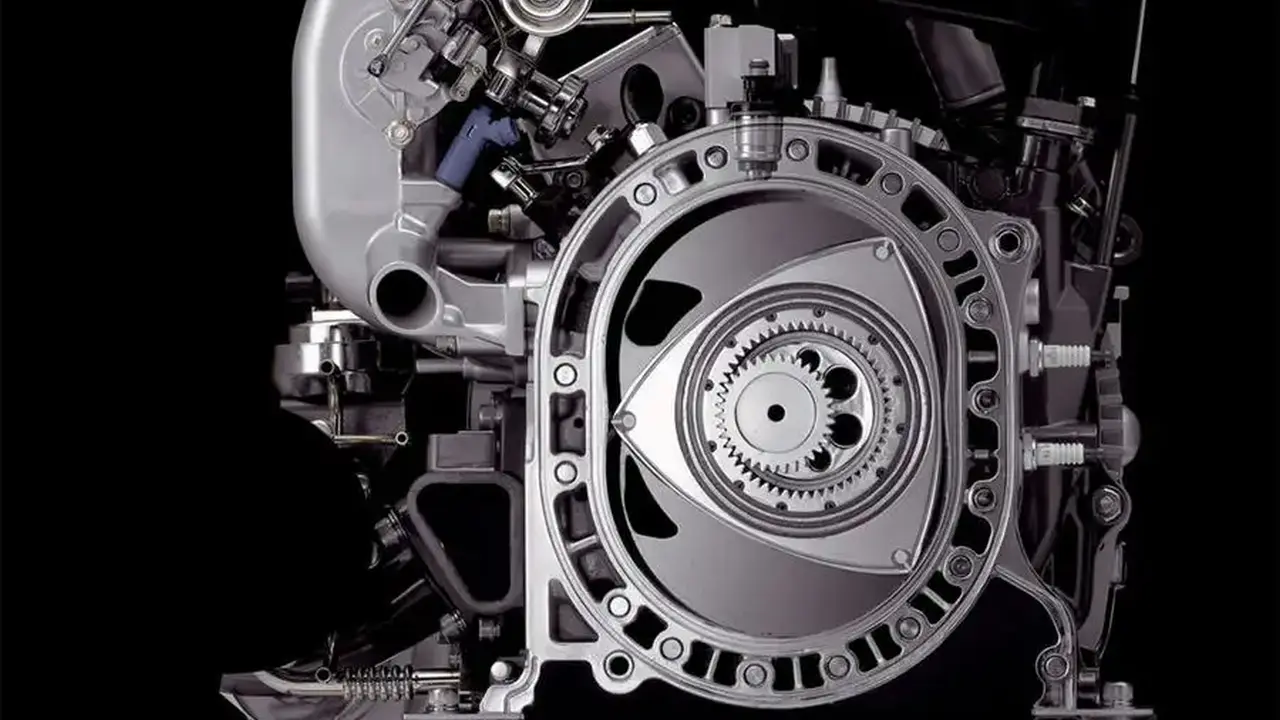
What Is a Wankel Engine? How Does It Work?
The Wankel engine is a type of internal combustion engine that produces power using a rotating triangular rotor instead of conventional pistons.
Unlike a traditional piston engine, where pistons move up and down inside cylinders, a Wankel engine uses a rotor that moves continuously around an eccentric shaft inside a specially shaped housing. This unusual design makes the engine compact, lightweight, mechanically simple, and capable of very high engine speeds.
The Wankel engine is most closely associated with Mazda, which developed the technology into a practical production engine and used it in vehicles such as the RX-7 and RX-8.
Although Wankel engines have never become as common as piston engines, their distinctive characteristics have made them one of the most interesting engine designs in automotive history.
What Is a Wankel Engine?
The Wankel engine is a rotary internal combustion engine invented by German engineer Felix Wankel.
The fundamental difference between a Wankel and a conventional piston engine is the way mechanical movement is produced.
A piston engine uses:
-
Pistons
-
Connecting rods
-
Crankshaft
-
Cylinders
-
Valves
A Wankel engine primarily relies on:
-
A triangular rotor
-
Rotor housing
-
Eccentric shaft
-
Apex seals
-
Side seals
-
Intake and exhaust ports
-
Spark plugs
Instead of converting the piston's reciprocating motion into rotational motion through a connecting rod and crankshaft, the Wankel rotor directly produces rotary movement around the eccentric shaft.
This eliminates many moving parts found in a conventional engine.
Who Invented the Wankel Engine?
The basic rotary engine concept was developed by Felix Wankel, who worked for many years on rotary combustion technology.
Wankel's work eventually attracted the attention of automobile manufacturers, most importantly NSU and later Mazda.
Mazda became the manufacturer most strongly associated with the technology and invested heavily in solving the practical problems that had prevented rotary engines from becoming widely successful.
The result was a series of production rotary engines that eventually became famous for their compact size, high-revving nature, and distinctive sound.
How Does a Wankel Engine Work?
The operating principle is similar to a four-stroke piston engine.
A conventional four-stroke engine completes:
-
Intake
-
Compression
-
Power
-
Exhaust
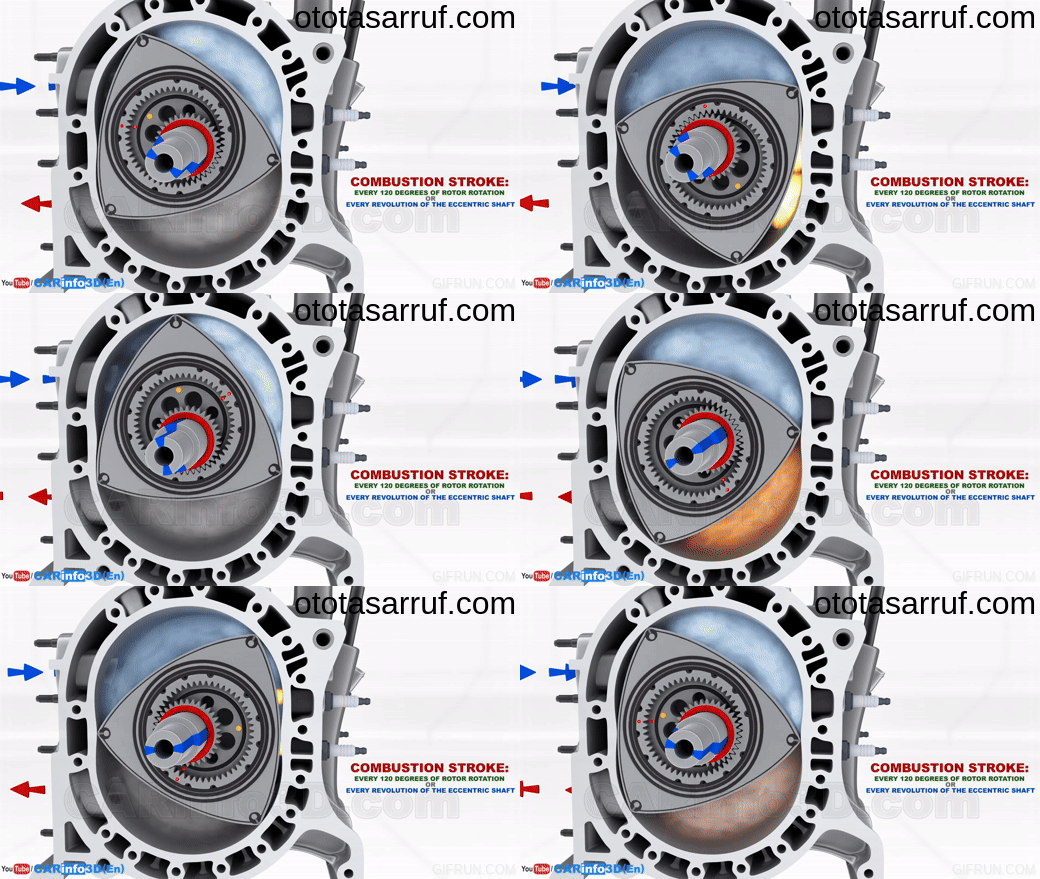
A Wankel engine performs the same basic combustion cycle, but the four processes occur in different sections of the rotor housing as the rotor moves.
The rotor creates three separate working chambers.
As the rotor rotates, the volume of each chamber continuously changes.
This changing volume performs the same basic functions that piston movement performs in a conventional engine.
The Rotor Is the Heart of the Engine
The most recognizable component of a Wankel engine is its triangular rotor.
However, the rotor is not a simple equilateral triangle.
It has a distinctive curved shape known as a Reuleaux triangle.
Each of its three corners has an apex seal that maintains contact with the inside surface of the rotor housing.
The rotor rotates around an eccentric shaft rather than simply spinning around its own center.
This movement causes the three combustion chambers around the rotor to expand and contract continuously.
What Happens During the Intake Stroke?
As one of the rotor's chambers increases in volume, it passes the intake port.
The increasing chamber volume creates a low-pressure area that draws the air-fuel mixture into the engine.
Unlike many modern piston engines, traditional Wankel designs generally use ports rather than conventional intake valves to control gas flow.
The rotor then continues moving, carrying the air-fuel mixture away from the intake area.
What Happens During Compression?
As the rotor continues its movement, the chamber begins to decrease in volume.
The trapped air-fuel mixture is compressed between the rotor and housing.
This is the Wankel equivalent of the compression stroke in a piston engine.
The chamber continues to become smaller until the mixture reaches the required compression level.
What Happens During Combustion?
When the compressed mixture reaches the combustion area, the spark plugs ignite it.
The resulting combustion creates rapidly expanding gases.
These gases push against one of the rotor's faces.
Instead of pushing a piston downward, the expanding gases force the rotor to continue rotating.
The rotor transfers this motion to the eccentric shaft, which ultimately provides the engine's output.
What Happens During Exhaust?
After combustion, the chamber moves toward the exhaust port.
As the chamber's volume decreases, the burned gases are forced out through the exhaust port.
The cycle then continues as the same chamber eventually reaches the intake area again.
At the same time, the other two chambers of the rotor are performing different stages of the combustion cycle.
This is one of the most interesting characteristics of the Wankel engine: three combustion chambers are operating simultaneously at different stages of the cycle.
How Does the Rotor Turn the Output Shaft?
The rotor is connected to an eccentric shaft.
The rotor does not rotate around the exact centerline of the shaft.
Instead, the rotor follows an eccentric orbital movement around it.
The geometry of the rotor and eccentric shaft converts the gas pressure generated by combustion into continuous rotational motion.
This arrangement eliminates the connecting rods and conventional crankshaft mechanism found in a piston engine.
The result is a very smooth mechanical rotation.
Does a Wankel Engine Have Pistons?
No.
A Wankel engine does not use conventional reciprocating pistons.
This is one of the defining characteristics of the design.
There are no piston rings in the traditional sense, no connecting rods, and no conventional cylinder bores.
Instead, the rotor itself separates the combustion chambers and transfers the combustion force to the eccentric shaft.
What Are Apex Seals?
Apex seals are among the most important components in a Wankel engine.
The three corners of the rotor must remain sealed against the inner surface of the rotor housing.
The apex seals perform this job.
There are also other sealing components, including side and corner seals.
Maintaining proper sealing is essential because combustion pressure must remain inside the working chamber.
If the seals wear excessively, the engine can lose compression and develop starting, power, emissions, and fuel-consumption problems.
Why Is Sealing So Difficult in a Wankel?
The sealing system is one of the major engineering challenges of the rotary engine.
The rotor continuously moves across the housing surface while the combustion chambers are exposed to:
-
High temperatures
-
Combustion pressure
-
Friction
-
Rapid changes in gas pressure
-
Different lubrication conditions
The seals must maintain contact with the housing while allowing the rotor to move freely.
This makes the sealing system considerably different from piston rings in a conventional engine.
Why Does a Wankel Engine Need Oil?
Lubrication is particularly important in a rotary engine.
One reason is that the apex and other rotor seals need lubrication while they move against the housing.
Many Wankel designs intentionally introduce a small amount of engine oil into the combustion process to lubricate the seals.
As a result, some oil consumption is normal for certain rotary engines.
This is different from a modern piston engine, where significant oil consumption can indicate a problem.
For this reason, checking the oil level regularly is especially important when operating a rotary engine.
Why Is a Wankel Engine So Compact?
One of the biggest advantages of the Wankel design is its high power-to-size ratio.
A rotary engine can produce substantial power from a physically small package.
A conventional piston engine requires cylinders, pistons, connecting rods, valve mechanisms, and a crankshaft.
The Wankel eliminates many of these components.
This allows the engine to be:
-
Short
-
Compact
-
Lightweight
-
Mechanically simple
The compact dimensions can also give vehicle designers more freedom when positioning the engine.
Why Does a Wankel Engine Rev So High?
The Wankel's rotary movement is one of the reasons it has such a distinctive high-RPM character.
There are no pistons repeatedly changing direction at the top and bottom of a cylinder.
Instead, the rotor moves continuously in one direction.
This eliminates many of the inertia and vibration-related limitations associated with reciprocating components.
As a result, properly designed Wankel engines can operate at very high engine speeds.
The high-RPM character is one of the reasons rotary-powered sports cars became so popular among enthusiasts.
Is a Wankel Engine Smooth?
Yes.
A Wankel engine can be exceptionally smooth because its primary moving component rotates rather than repeatedly reversing direction.
A piston engine contains several components that accelerate and decelerate continuously.
The Wankel has much less reciprocating mass.
This contributes to:
-
Smooth operation
-
Low vibration
-
Compact packaging
-
High-RPM capability
However, smooth mechanical operation does not necessarily mean the engine is perfect in every area. Combustion characteristics, emissions, fuel consumption, and sealing remain important considerations.
What Are the Advantages of a Wankel Engine?
The Wankel design offers several important advantages.
Compact size
The engine can produce substantial power from a relatively small physical package.
Low weight
With fewer major moving components, a rotary engine can be considerably lighter than many piston engines producing comparable power.
High power-to-weight ratio
The combination of low mass and continuous combustion events gives the engine an impressive power-to-weight potential.
High-RPM capability
The rotor's continuous movement allows the engine to operate at high engine speeds.
Smooth operation
The absence of conventional reciprocating pistons and connecting rods contributes to smoothness.
Fewer major moving parts
The mechanical architecture is comparatively simple.
Distinctive character
The sound, throttle response, and high-RPM behavior of a rotary engine are unlike those of most piston engines.
What Are the Disadvantages of a Wankel Engine?
The same characteristics that make a Wankel attractive also create significant engineering challenges.
The biggest disadvantages include:
-
Apex seal wear
-
Higher oil consumption
-
Relatively high fuel consumption
-
Emissions challenges
-
Heat management
-
Lower low-speed efficiency
-
More demanding maintenance
-
Sensitivity to poor lubrication
-
Difficult cold starting when compression is reduced
These issues have limited the widespread adoption of rotary engines in mass-market vehicles.
Does a Wankel Engine Use More Fuel?
Generally, yes.
Fuel economy has historically been one of the weaknesses of the Wankel engine.
The shape of the combustion chamber and the combustion process can create efficiency challenges compared with modern piston engines.
A rotary engine can also produce substantial exhaust heat and may require additional fuel under certain operating conditions.
This does not mean every Wankel engine has poor fuel economy under every condition, but compared with modern piston engines of similar performance, fuel consumption has generally been one of the rotary engine's compromises.
Why Does a Wankel Produce More Heat?
Thermal management is another important challenge.
The geometry of the combustion chamber and the relatively long combustion path can contribute to significant heat transfer to the engine housing and exhaust system.
Rotary engines can therefore place substantial thermal demands on:
-
Coolant
-
Engine oil
-
Exhaust components
-
Catalytic converters
-
Intake systems
A properly maintained cooling system is extremely important for a rotary engine.
Overheating can create serious consequences for the housing, seals, and other components.
Is a Wankel Engine Reliable?
The answer depends heavily on the engine design, maintenance, condition, and operating environment.
A properly maintained rotary engine can provide enjoyable and reliable service, but it generally requires more attention to certain areas than a conventional piston engine.
Important factors include:
-
Oil level
-
Oil quality
-
Cooling system condition
-
Ignition system condition
-
Compression
-
Fuel system health
-
Apex seal condition
-
Proper warm-up
-
Correct operating temperature
A neglected rotary engine can develop serious problems relatively quickly.
What Happens When Apex Seals Wear?
Worn apex seals can cause a reduction in engine compression.
Symptoms may include:
-
Difficult starting
-
Poor hot starting
-
Loss of power
-
Rough running
-
Increased fuel consumption
-
Increased emissions
-
Misfires
-
Low compression readings
One particularly well-known symptom on some rotary engines is difficult hot starting.
However, these symptoms can have other causes as well, so proper compression testing and diagnosis are necessary before blaming the apex seals.
Why Are Rotary Engines Associated With Mazda?
Mazda is the manufacturer most strongly associated with Wankel technology.
While other companies experimented with rotary engines, Mazda invested heavily in developing the concept for practical automotive use.
The company used rotary engines in numerous models and motorsport applications.
The most famous examples include:
-
Mazda RX-7
-
Mazda RX-8
-
Mazda Cosmo
-
Mazda 787B
The Mazda 787B became especially famous after winning the 24 Hours of Le Mans in 1991.
Its rotary engine remains one of the most recognizable examples of the technology's performance potential.
What Is the Mazda RX-7 Rotary Engine?
The RX-7 became one of the most famous rotary-powered sports cars in history.
Different generations used different versions of Mazda's rotary engine family.
The later RX-7 models became particularly famous for their twin-turbocharged rotary engines.
The combination of a compact engine, low vehicle weight, rear-wheel drive, and high-revving power delivery made the RX-7 an important sports car.
Its rotary engine also became a major part of the vehicle's identity.
What Is the RX-8 Rotary Engine?
The Mazda RX-8 used the Renesis rotary engine.
The Renesis was developed with an emphasis on improving efficiency and emissions compared with earlier rotary designs.
One of its major differences was its port arrangement.
The engine used side intake and exhaust ports, which helped Mazda pursue better emissions performance and improved airflow characteristics.
The RX-8 demonstrated that Mazda was still actively developing rotary technology for modern road vehicles.
Why Did Mazda Stop Using Rotary Engines in Normal Cars?
The biggest obstacles were not simply mechanical.
Modern emissions regulations and fuel-efficiency requirements became increasingly difficult for rotary engines to satisfy economically.
The rotary engine's combustion characteristics, oil consumption, emissions behavior, and fuel efficiency created challenges as regulations became stricter.
As a result, Mazda eventually stopped using a Wankel engine as the primary propulsion system in its mainstream sports cars.
However, Mazda did not completely abandon rotary technology.
The company later brought the rotary concept back in a different role.
Can a Wankel Engine Be Used as a Range Extender?
Yes.
One of the more interesting modern applications of rotary technology is as a range-extender engine for electrified vehicles.
In this configuration, the rotary engine does not necessarily drive the wheels directly.
Instead, it can operate as a generator that produces electricity for the vehicle's battery or electric motor system.
Mazda has used a small rotary engine in this type of application.
The compact size of a rotary engine is particularly attractive for this purpose because a range extender can be packaged into a relatively small space.
Wankel Engine vs. Piston Engine
The two designs perform the same fundamental task—converting chemical energy from fuel into mechanical energy—but they do it in completely different ways.
A piston engine uses reciprocating pistons, connecting rods, valves, and a crankshaft.
A Wankel uses a rotating rotor, housing, seals, and an eccentric shaft.
The piston engine generally has advantages in:
-
Fuel efficiency
-
Emissions control
-
Low-speed torque
-
Long-term mass-market practicality
-
Modern development support
The Wankel has advantages in:
-
Compactness
-
Weight
-
Smoothness
-
High-RPM operation
-
Power-to-weight ratio
-
Mechanical simplicity
Neither design is universally superior. They simply prioritize different engineering characteristics.
Can a Wankel Engine Be Turbocharged?
Yes.
Rotary engines can work very well with forced induction.
The RX-7 is one of the best-known examples.
Turbocharging can dramatically increase the power output of a rotary engine, but it also increases the demands placed on:
-
Apex seals
-
Cooling system
-
Fuel system
-
Ignition system
-
Lubrication
-
Exhaust system
-
Engine management
Proper calibration becomes especially important when a rotary engine is modified for higher boost pressure.
Does a Wankel Engine Have a Crankshaft?
Not in the conventional sense.
A Wankel uses an eccentric shaft, which performs the role of transmitting engine output to the drivetrain.
The eccentric shaft is mechanically different from the crankshaft of a piston engine because it interacts with the rotor's orbital movement rather than receiving force from connecting rods.
This is one of the key mechanical differences between the two engine types.
How Many Cylinders Does a Wankel Engine Have?
This question is slightly misleading because a Wankel engine does not have conventional cylinders.
Instead, it has rotors and working chambers.
A single-rotor engine has three working chambers because the rotor has three sides.
Two-rotor engines have six working chambers in total.
However, rotary engines are often described using terms such as "single-rotor" or "two-rotor" rather than using cylinder counts.
Why Does a Rotary Engine Sound Different?
The engine's sound comes from its unique combustion and exhaust characteristics.
Because the rotor continuously moves and combustion events occur differently from a piston engine, the exhaust pulses have a distinctive character.
At high RPM, the engine can produce a smooth, unusual, high-pitched sound that has become strongly associated with rotary-powered Mazda models.
The 787B's distinctive sound is perhaps the most famous example.
Is a Wankel Engine Good for Everyday Driving?
It can be, but it requires the owner to understand its characteristics.
A rotary-powered vehicle can be perfectly usable as a road car when properly maintained.
However, owners need to be more attentive to:
-
Oil level
-
Cooling system
-
Ignition components
-
Engine temperature
-
Starting behavior
-
Maintenance intervals
-
Compression condition
A rotary engine is not necessarily unsuitable for daily use. It simply rewards owners who understand its specific maintenance requirements.
Is the Wankel Engine Dead?
Not necessarily.
The Wankel engine is no longer common as a conventional automotive powerplant, but the technology remains relevant in specialized applications.
Its compact dimensions make it particularly interesting for:
-
Range extenders
-
Generators
-
Lightweight power systems
-
Motorsport
-
Experimental applications
-
Other compact internal-combustion systems
The modern use of a rotary engine as a range extender demonstrates that an engine design does not have to disappear completely simply because it is no longer ideal for conventional direct vehicle propulsion.
Final Takeaway
The Wankel engine is one of the most unusual internal combustion engine designs ever developed for automobiles.
Instead of pistons moving up and down inside cylinders, it uses a triangular rotor that continuously moves inside a specially shaped housing. The changing volume around the rotor performs the intake, compression, combustion, and exhaust processes.
Its compact size, low weight, smooth operation, and high-RPM capability make it technically fascinating and highly appealing to enthusiasts. At the same time, sealing, oil consumption, fuel economy, emissions, and thermal management have prevented the Wankel from becoming as widespread as the conventional piston engine.
The rotary engine's story is therefore not simply one of failure or success. It represents a different approach to the internal combustion engine—one that found its most famous expression in Mazda's sports cars and continues to have potential in specialized modern applications.