TR
TR EN
EN

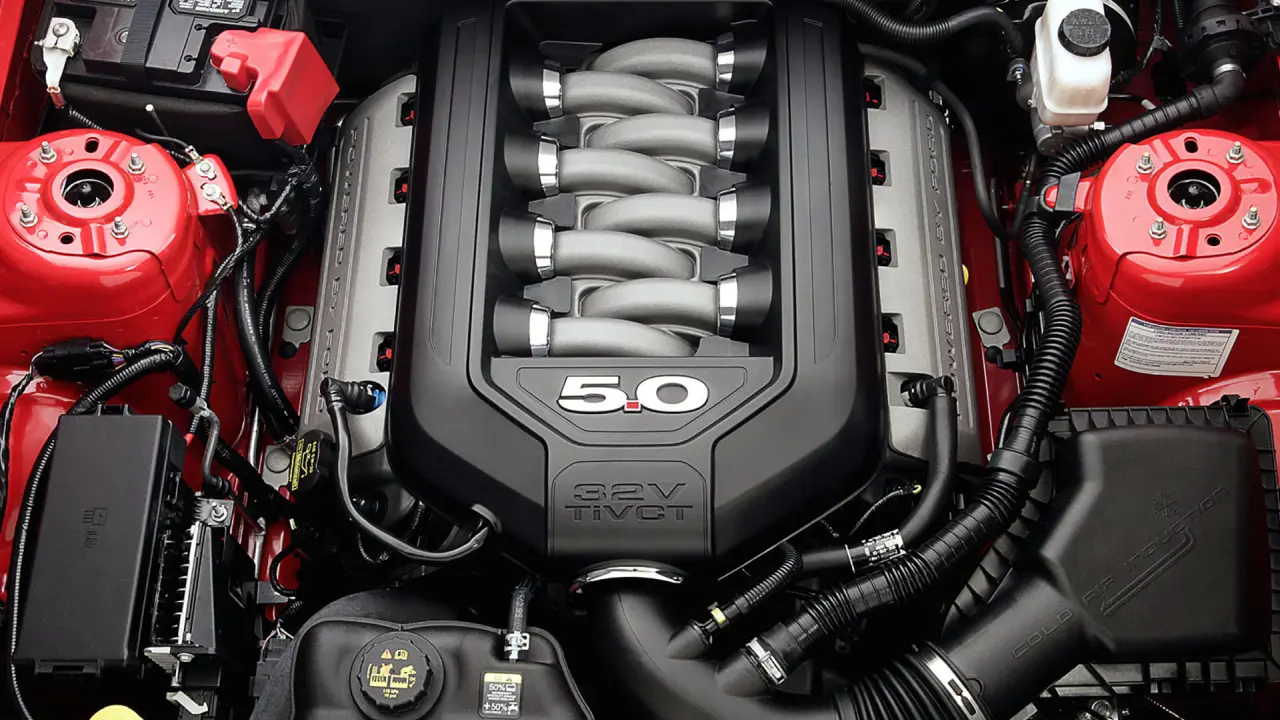
What Is a Coyote Engine?
The Coyote engine is a family of modern 5.0-liter naturally aspirated V8 engines developed by Ford, best known for powering the Ford Mustang GT. Coyote engines are part of Ford's modern V8 strategy and are known for combining traditional American V8 displacement with technologies such as dual overhead camshafts, four valves per cylinder, variable camshaft timing, and advanced fuel injection.
The name "Coyote" does not refer to just one specific engine version. Ford has developed several generations of the Coyote platform, with significant changes to the cylinder heads, intake system, fuel injection, internal components, electronics, and power output over the years.
Although the Mustang is the model most strongly associated with the Coyote, versions of the engine have also been used in vehicles such as the Ford F-150.
Where Did the Coyote Engine Come From?
The Coyote was developed as Ford moved toward a more modern high-performance V8 architecture.
The first production Coyote appeared for the 2011 model year Mustang GT. It replaced the previous 4.6-liter Modular V8 in the Mustang GT and increased displacement to approximately 5.0 liters.
From the beginning, the engine was designed around several important characteristics:
-
5.0-liter displacement
-
V8 cylinder arrangement
-
DOHC cylinder heads
-
Four valves per cylinder
-
Variable camshaft timing
-
Aluminum construction
-
High-revving character
This combination made the Coyote very different from the older pushrod V8 engines that had traditionally powered many American performance cars.
Why Is It Called a 5.0-Liter Engine?
The Coyote is commonly referred to as Ford's 5.0-liter V8.
Its actual displacement is approximately 4.95 liters, but Ford markets it as a 5.0-liter engine.
This is why terms such as:
-
5.0 Coyote
-
Coyote 5.0
-
5.0 Ti-VCT
-
5.0 V8
are commonly used to describe the engine.
It is important to remember that not every Ford 5.0-liter V8 is a Coyote. Ford has produced other 5.0-liter engines throughout its history.
Is the Coyote Engine a V8?
Yes.
The Coyote uses a conventional 90-degree V8 configuration, with four cylinders on each side of the engine.
Its V8 layout provides the characteristics traditionally associated with large-displacement American engines:
-
Strong torque
-
High power potential
-
Strong acceleration
-
Distinctive exhaust sound
-
Excellent performance potential
However, the Coyote adds modern technology to this traditional V8 formula.
What Makes the Coyote Different From Older Ford V8s?
One of the biggest differences is the valvetrain architecture.
Older Ford performance V8s such as the 5.0 HO were based on a more traditional OHV/pushrod design.
The Coyote instead uses DOHC cylinder heads with four valves per cylinder.
That means the Coyote has:
-
Four camshafts
-
32 valves
-
Two intake valves per cylinder
-
Two exhaust valves per cylinder
This design allows Ford to control the intake and exhaust valves much more precisely and gives the engine excellent airflow potential at higher RPM.
What Does DOHC Mean?
DOHC stands for Double Overhead Camshaft.
Each cylinder bank has two camshafts:
-
One controlling the intake valves
-
One controlling the exhaust valves
Because a Coyote is a V8 with two cylinder banks, the complete engine has four camshafts.
This configuration gives engineers considerable control over valve timing and allows the engine to breathe effectively at high engine speeds.
What Is Ti-VCT?
One of the Coyote engine's important technologies is Ti-VCT, which stands for Twin Independent Variable Camshaft Timing.
The system can continuously adjust camshaft timing according to engine speed, load, throttle position, and other operating conditions.
This allows the engine to use different valve timing strategies depending on what it needs to do.
At low engine speeds, the system can prioritize drivability and torque. At higher engine speeds, it can optimize airflow and power.
Ti-VCT helps balance several objectives that would otherwise conflict with each other:
-
Low-speed torque
-
High-RPM power
-
Throttle response
-
Fuel efficiency
-
Emissions
-
Everyday drivability
Why Can the Coyote Rev So High?
The Coyote's high-RPM capability is one of the characteristics that separates it from many traditional large-displacement American V8s.
Its DOHC architecture, four-valve cylinder heads, efficient airflow, variable camshaft timing, and modern engine management allow it to continue producing power at engine speeds where some older pushrod V8s would already be approaching their practical limits.
This gives the Coyote a distinctive character.
Instead of relying entirely on low-RPM torque, it can continue building power as engine speed rises.
How Much Horsepower Does a Coyote Make?
Power output varies considerably depending on the generation and application.
The first Mustang Coyote produced roughly 400 horsepower, while later versions progressively increased output.
Depending on the model year and specific version, factory Coyote engines have produced approximately:
-
Around 400 hp in early applications
-
Around 435 hp in later versions
-
Around 460 hp in third-generation Mustang applications
-
Around 480 hp in newer versions
-
Significantly more in special high-performance applications
These figures should always be considered in the context of the specific model year, because Ford has continuously updated the engine.
Which Vehicles Use the Coyote Engine?
The Coyote is most strongly associated with the Ford Mustang GT.
However, it has also been used in other Ford applications.
Different versions have appeared in:
-
Ford Mustang
-
Ford F-150
-
Certain Ford performance applications
-
Selected international Ford models
The Coyote used in an F-150 is not necessarily identical to the version used in a Mustang.
The calibration, intake system, exhaust arrangement, accessory configuration, and torque characteristics can differ depending on the vehicle.
What Are the Generations of the Coyote Engine?
The Coyote family has evolved significantly since its introduction.
Rather than being one unchanged engine, it has gone through several major development stages.
First-generation Coyote
Introduced around the 2011 model year, the first Coyote established the basic formula: 5.0-liter displacement, DOHC heads, 32 valves, and Ti-VCT.
Second-generation Coyote
Ford introduced major updates around the 2015 Mustang generation.
The engine received revisions to areas such as the cylinder heads, intake system, valvetrain, and other components, increasing performance and improving the engine's overall characteristics.
Third-generation Coyote
The 2018 Mustang brought another major evolution.
One of the most important changes was the introduction of a dual fuel-injection system, combining direct injection with port fuel injection.
The engine also received a higher compression ratio and other internal and airflow improvements.
Fourth-generation Coyote
The latest Mustang generation continued the development of the Coyote platform with further improvements to airflow, power delivery, combustion, electronics, and overall efficiency.
This long-term evolution is one of the reasons the Coyote remains competitive despite its naturally aspirated configuration.
What Is Dual Fuel Injection?
Later Coyote engines combine port fuel injection and direct fuel injection.
With port injection, fuel is sprayed into the intake port before entering the combustion chamber.
With direct injection, fuel is injected directly into the combustion chamber.
Using both systems gives Ford greater control over fuel delivery across different operating conditions.
The combination can help optimize:
-
Power
-
Fuel economy
-
Emissions
-
Combustion control
-
Throttle response
It also gives the engine greater flexibility than a traditional single-injection system.
Why Is the Coyote Important to the Mustang?
The Coyote became an important part of the modern Mustang's identity.
The Mustang has a long history of V8 engines, but increasingly strict emissions and fuel-efficiency requirements made it necessary to modernize the traditional V8 formula.
The Coyote allowed Ford to retain:
-
Large-displacement V8 character
-
Naturally aspirated power
-
High-RPM performance
-
Strong acceleration
-
A distinctive exhaust note
while incorporating modern engine technology.
This combination helped the Mustang GT remain competitive against modern performance cars with smaller turbocharged engines.
What Are the Advantages of the Coyote Engine?
The Coyote has several characteristics that make it attractive to enthusiasts.
High power potential
A 5.0-liter V8 provides a strong foundation for producing substantial naturally aspirated power.
High-RPM capability
The DOHC, four-valve architecture allows the engine to breathe effectively at high engine speeds.
Advanced valve timing
Ti-VCT allows the engine to adapt its valve timing to different operating conditions.
Strong aftermarket support
The Coyote has an enormous aftermarket ecosystem, with extensive options for intake systems, exhausts, camshafts, forced induction, fuel systems, and engine management.
Naturally aspirated performance
Unlike many modern performance engines, the Coyote can produce substantial power without relying on a turbocharger.
Forced-induction potential
The engine can also serve as a strong foundation for turbocharger or supercharger projects when properly prepared and calibrated.
Everyday usability
In factory form, the Coyote combines high performance with the drivability expected from a modern production engine.
What Are the Disadvantages of the Coyote?
The engine's strengths also come with some compromises.
Fuel consumption
A 5.0-liter naturally aspirated V8 will generally consume more fuel than a smaller turbocharged engine, particularly during aggressive driving.
Size and weight
An eight-cylinder engine occupies more space and generally weighs more than smaller four- or six-cylinder alternatives.
Maintenance costs
The Coyote's four camshafts, 32 valves, advanced fuel system, and other components can make certain repairs more expensive than those on simpler engines.
Heat management
High-performance V8 applications generate substantial heat, particularly when modified for significantly higher power.
Drivetrain stress
Once the engine is heavily modified, the clutch, transmission, differential, axles, and other components may also require upgrades.
Is the Coyote Engine Reliable?
The Coyote has generally developed a strong reputation as a durable performance engine.
However, no engine family is completely free from problems.
Reliability depends on:
-
Model year
-
Engine generation
-
Maintenance history
-
Oil-change intervals
-
Cooling system condition
-
Driving style
-
Modifications
-
ECU calibration
-
Previous abuse
A completely stock engine with a good maintenance history is a very different proposition from a heavily modified Coyote that has spent years running aggressive boost and aftermarket calibrations.
When buying a used Coyote-powered vehicle, the modification history can be just as important as the mileage.
Can the Coyote Engine Be Modified?
Absolutely.
The Coyote is one of the most widely supported modern V8 platforms in the aftermarket.
Common modifications include:
-
ECU tuning
-
Cold-air intake systems
-
Intake manifolds
-
Throttle bodies
-
Headers
-
Cat-back exhaust systems
-
Camshafts
-
Superchargers
-
Turbochargers
-
Fuel-system upgrades
-
Cooling upgrades
The exact combination depends on the desired power level.
A mild naturally aspirated build requires very different supporting hardware from a high-power forced-induction build.
Can a Coyote Be Turbocharged?
Yes.
The Coyote can be used in turbocharged applications capable of producing substantially more power than the factory naturally aspirated configuration.
However, adding a turbocharger is not simply a matter of installing the turbo itself.
As boost pressure increases, the engine requires more:
-
Fuel
-
Cooling capacity
-
ECU calibration
-
Airflow
-
Exhaust flow
-
Ignition control
At higher power levels, the transmission, clutch, differential, axles, and other drivetrain components must also be considered.
The engine's internal components and the desired power target also become increasingly important.
Is the Coyote Good as a Naturally Aspirated Engine?
Yes.
This is actually one of the Coyote's defining characteristics.
The engine does not need forced induction to deliver strong performance.
Its relatively large displacement, efficient cylinder heads, high-RPM capability, and variable valve timing allow it to produce impressive power while maintaining the immediate throttle response associated with a naturally aspirated engine.
For enthusiasts who value linear power delivery and a traditional high-revving V8 character, this is one of the Coyote's biggest attractions.
Does the Coyote Consume a Lot of Fuel?
It can, but consumption depends heavily on how the vehicle is driven.
A Coyote cruising steadily on a highway is operating under very different conditions from one being repeatedly accelerated to high RPM.
Fuel consumption increases significantly with:
-
Aggressive acceleration
-
High engine speeds
-
Frequent stop-and-go driving
-
Short trips
-
Heavy traffic
-
High vehicle loads
Therefore, the Coyote is not designed primarily as a fuel-economy engine.
Its purpose is to provide the performance and character of a large naturally aspirated V8 while incorporating modern technology.
Is the Coyote the Same as the Ford Modular 5.0?
The Coyote has a historical connection to Ford's Modular engine family, but it should not simply be considered the same engine as earlier Modular V8s.
The Coyote introduced a substantially different modern architecture and was developed as Ford's next-generation 5.0-liter DOHC V8 for performance applications.
Older Ford 5.0-liter engines and the Coyote may share certain broad design philosophies, but they should not be treated as interchangeable engines.
Why Is the Coyote So Popular?
The Coyote became popular because it combines several characteristics that enthusiasts rarely get from a single engine.
It offers:
-
Large-displacement V8 power
-
Naturally aspirated performance
-
High-RPM capability
-
Modern valve technology
-
Strong aftermarket support
-
Excellent tuning potential
-
Broad application across different Ford platforms
It can remain a relatively civilized factory engine while also serving as the foundation for serious performance builds.
That versatility is a major part of its appeal.
The Future of the Coyote Engine
The continued development of the Coyote demonstrates how Ford has adapted the traditional naturally aspirated V8 to modern requirements.
Instead of simply increasing displacement, Ford has continuously improved areas such as:
-
Fuel injection
-
Combustion efficiency
-
Airflow
-
Valve timing
-
Engine management
-
Emissions control
-
Thermal management
This has allowed the Coyote to remain relevant while many performance manufacturers have moved toward smaller turbocharged engines and electrification.
Final Takeaway
The Coyote engine is Ford's modern 5.0-liter DOHC V8 family and one of the most recognizable performance engines associated with the Mustang GT.
Its combination of 32 valves, variable camshaft timing, high-RPM capability, naturally aspirated power, and extensive aftermarket support makes it very different from the older pushrod V8s that traditionally dominated American performance cars.
The Coyote is not simply a powerful V8. Its real significance comes from the way it combines traditional V8 displacement and sound with modern engine technology.
For enthusiasts, that combination makes the Coyote one of the most versatile modern American V8 platforms—capable of serving as a reliable daily-driver engine in factory form while also providing an extremely strong foundation for serious performance modifications.