TR
TR EN
EN

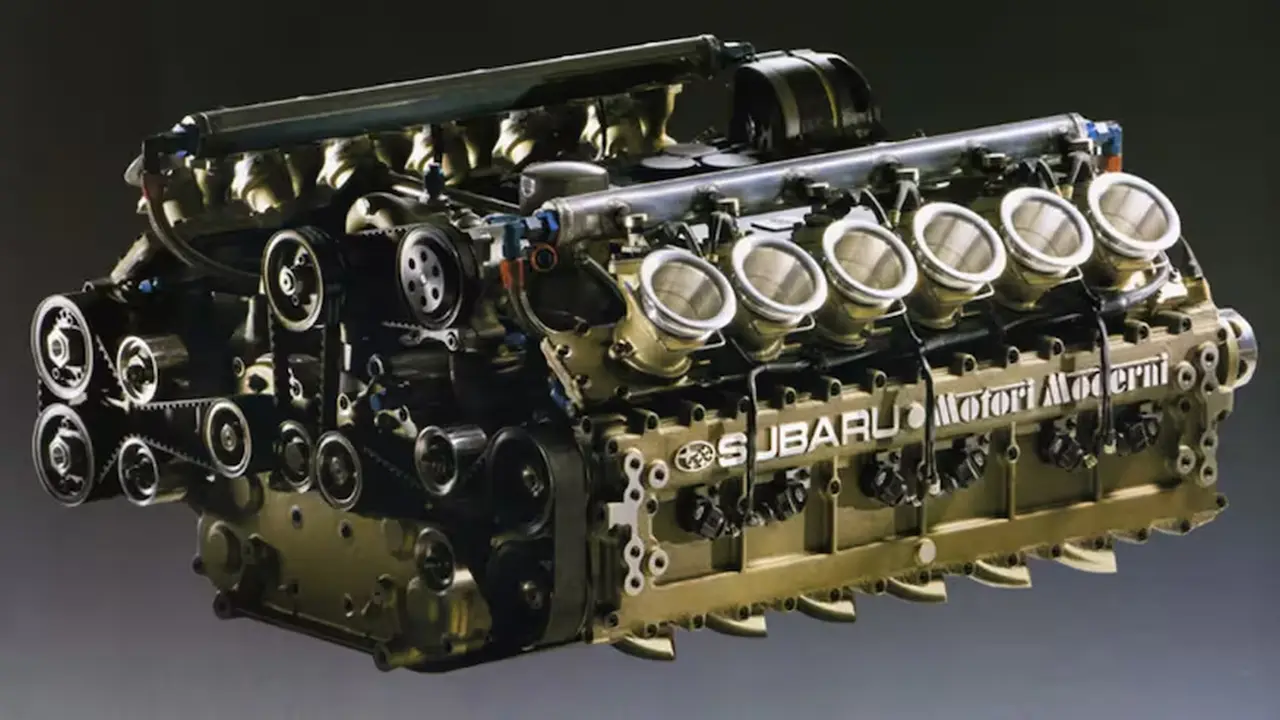
What Is a Boxer Engine? What Are Its Advantages and Disadvantages?
A boxer engine is a type of horizontally opposed internal combustion engine in which the cylinders are arranged in two banks facing each other across the crankshaft. Unlike a conventional inline engine, where the pistons move in the same general direction, boxer engine pistons move horizontally toward and away from each other.
The name "boxer" comes from the movement of the opposing pistons. When viewed from the side, the pistons appear to move toward each other and away from each other in a motion that resembles two boxers throwing punches.
Boxer engines are not as common as inline-four or V6 engines, but they have a distinctive design that provides some important advantages, particularly in terms of balance, engine height, and vehicle dynamics. They are strongly associated with manufacturers such as Subaru and Porsche, although other manufacturers have also used horizontally opposed engines throughout automotive history.
How Does a Boxer Engine Work?
The basic operating principle is the same as any other four-stroke internal combustion engine.
A gasoline boxer engine generally follows four strokes:
Intake → Compression → Power → Exhaust
Air and fuel enter the cylinder during the intake stroke. The mixture is compressed, ignited, and burned during the power stroke. The resulting force pushes the piston, turning the crankshaft and ultimately producing mechanical power.
What makes the boxer engine different is the physical arrangement of the cylinders and pistons.
The cylinders are positioned horizontally on opposite sides of the crankshaft.
For example, a four-cylinder boxer engine has:
-
Two cylinders on one side
-
Two cylinders on the opposite side
-
A central crankshaft
-
Horizontally moving pistons
-
A relatively low engine height
The opposing piston movement is one of the defining characteristics of the design.
Boxer Engine vs Inline Engine
An inline engine places all of its cylinders in a single row.
For example, an inline-four engine has four cylinders arranged vertically or at an angle in one bank.
A boxer-four engine instead places two cylinders on each side of the crankshaft.
This makes the boxer engine considerably wider but much shorter in height.
That difference has a major effect on engine packaging.
An inline engine generally occupies less lateral space but requires more vertical space. A boxer engine does the opposite: it is wide and low.
Boxer Engine vs V Engine
A boxer engine is sometimes confused with a V engine because both use two cylinder banks.
However, they are not the same design.
In a typical V engine, the two cylinder banks are arranged at an angle and share crankshaft journals in a way that allows opposing cylinders to be paired on the same crankpin.
In a true boxer engine, each opposing piston generally has its own crankpin.
This means the two opposing pistons move in opposite directions at the same time.
That distinction is important because not every horizontally opposed engine is technically a true boxer engine.
Why Is a Boxer Engine So Well Balanced?
One of the biggest advantages of the boxer layout is its inherent mechanical balance.
The opposing pistons move in opposite directions, which allows their reciprocating forces to largely cancel each other.
This reduces certain forms of vibration without requiring as much additional balancing hardware.
A well-designed boxer engine can therefore operate very smoothly.
This is particularly valuable as engine speed increases because reducing vibration can improve:
-
Refinement
-
Durability
-
Driver comfort
-
Mechanical stability
-
High-RPM behavior
Engine balance is one of the main reasons manufacturers have continued to use horizontally opposed engines despite their packaging disadvantages.
Low Center of Gravity
Another major advantage is the engine's low height.
Because the cylinders extend horizontally from the crankshaft rather than vertically upward, the engine can be mounted relatively low in the vehicle.
This lowers the vehicle's center of gravity.
A lower center of gravity can reduce body roll during cornering and help the vehicle feel more stable and responsive.
This characteristic is particularly important in performance-oriented cars.
Subaru has used boxer engines extensively in combination with symmetrical all-wheel-drive systems, while Porsche has used flat-six engines in numerous sports cars.
The low engine position is particularly valuable in vehicles where handling and weight distribution are important design priorities.
Better Handling Characteristics
A lower engine can contribute to improved vehicle dynamics.
When a car enters a corner, its body naturally wants to roll outward. A lower center of gravity reduces the leverage acting on the body.
This can help produce:
-
Less body roll
-
More predictable cornering
-
Improved stability
-
Better steering response
-
Greater driver confidence
Of course, the engine layout is only one factor in handling. Suspension geometry, tire selection, weight distribution, chassis stiffness, differential design, and electronic systems also have major effects.
A boxer engine does not automatically make a vehicle handle better, but its low-mounted design gives engineers a useful foundation for achieving a low center of gravity.
Compact Height, But Wide Dimensions
The boxer engine's low profile comes with an important trade-off.
It is wide.
Instead of extending upward, the cylinder banks extend outward toward the sides of the engine bay.
This can make packaging more difficult.
Engineers have to consider the available space for:
-
Suspension components
-
Steering components
-
Exhaust manifolds
-
Turbochargers
-
Cooling systems
-
Engine accessories
-
Crash structures
Therefore, the boxer layout solves one packaging problem while creating another.
What Are the Main Advantages of a Boxer Engine?
The boxer configuration offers several important advantages.
Low center of gravity
The engine can be installed lower in the vehicle, helping reduce the overall center of gravity.
Excellent inherent balance
Opposing piston movement helps cancel certain reciprocating forces.
Smooth operation
Reduced vibration can contribute to refined operation and good mechanical behavior at high engine speeds.
Good performance potential
The layout can be used effectively in naturally aspirated, turbocharged, hybrid, and high-performance applications.
Distinctive engine character
Boxer engines have a unique sound and mechanical character, particularly in certain exhaust configurations.
Suitable for performance vehicles
The low engine height is particularly useful when chassis dynamics are a major priority.
What Are the Disadvantages of a Boxer Engine?
The design also has several drawbacks.
The biggest disadvantage is packaging.
Because the engine is wide, access to the sides of the engine can be difficult.
This can make some maintenance operations more complicated than they would be on an inline engine.
Other disadvantages can include:
-
Greater engine width
-
More complicated packaging
-
Difficult access to some components
-
Potentially higher manufacturing complexity
-
More demanding exhaust routing
-
Higher service costs in some applications
-
Greater space requirements around the cylinder heads
The exact disadvantages depend heavily on the engine and vehicle.
Is a Boxer Engine More Difficult to Maintain?
It can be.
One of the most frequently mentioned disadvantages of boxer engines is access to components located on the sides of the engine.
For example, spark plugs on some boxer engines can be positioned close to the chassis or suspension components.
This may make a relatively simple service operation more time-consuming.
However, this does not mean that every boxer engine is difficult or expensive to maintain.
The actual serviceability depends on:
-
Engine bay design
-
Vehicle platform
-
Cylinder head layout
-
Accessory placement
-
Exhaust routing
-
Service procedures
A well-engineered boxer engine can be perfectly serviceable, even if its layout is less convenient than an inline engine.
Why Do Subaru Vehicles Use Boxer Engines?
Subaru has made horizontally opposed engines one of the defining characteristics of its vehicles.
The low engine profile works well with Subaru's vehicle architecture and its emphasis on all-wheel drive and low center-of-gravity dynamics.
The boxer configuration also allows the engine to remain relatively low while providing adequate clearance around the drivetrain.
Subaru's boxer engines have included four-cylinder and six-cylinder designs, with both naturally aspirated and turbocharged versions used over the years.
Why Does Porsche Use Boxer Engines?
Porsche is another manufacturer strongly associated with horizontally opposed engines.
The Porsche 911 is particularly famous for its rear-mounted flat-six engine.
The flat-six configuration provides a low engine profile and has been used as part of the 911's distinctive mechanical architecture for decades.
Porsche has also used flat-four engines in some models.
In performance applications, the low profile and smooth operation of a flat engine can be particularly attractive.
Are Boxer Engines Always Flat-Four or Flat-Six?
No.
A boxer engine can be designed with different cylinder counts.
Historically and in modern automotive applications, you can encounter:
-
Flat-twin
-
Flat-four
-
Flat-six
-
Flat-eight
-
Flat-twelve
The most recognizable automotive examples today are generally flat-four and flat-six engines.
Motorcycles have also used horizontally opposed engines, particularly BMW's famous flat-twin configuration.
Boxer Engine Sound
Boxer engines can have a distinctive exhaust note.
However, the sound is not determined by the cylinder arrangement alone.
It also depends on:
-
Firing order
-
Crankshaft design
-
Exhaust manifold design
-
Exhaust pipe length
-
Turbocharger configuration
-
Muffler design
-
Engine displacement
-
Number of cylinders
This is why two different boxer engines can sound completely different.
The distinctive sound associated with some Subaru boxer engines, for example, is influenced not only by the boxer configuration but also by the engine's firing characteristics and exhaust design.
Boxer Engine and Turbochargers
Boxer engines can be naturally aspirated or turbocharged.
Turbocharging a boxer engine does not fundamentally change its operating principle.
The turbocharger uses exhaust energy to compress incoming air, allowing the engine to burn more fuel and produce more power.
However, packaging a turbocharger and its related components around a wide boxer engine can require careful engineering.
The location of:
-
Turbocharger
-
Intercooler
-
Exhaust manifolds
-
Downpipe
-
Intake system
can have a major effect on engine-bay layout and thermal management.
Does a Boxer Engine Have Better Fuel Economy?
Not necessarily.
Engine layout by itself does not determine fuel economy.
Fuel consumption depends on factors such as:
-
Engine displacement
-
Compression ratio
-
Injection system
-
Valve timing
-
Turbocharging
-
Vehicle weight
-
Transmission
-
Aerodynamics
-
Driving style
-
Engine management
A modern boxer engine can be highly efficient, but an inline engine can also achieve excellent fuel economy.
The boxer configuration is primarily valuable for mechanical balance and packaging characteristics rather than directly reducing fuel consumption.
Does a Boxer Engine Last Longer?
There is no universal rule that boxer engines last longer than inline or V engines.
Engine longevity depends much more on design quality, materials, lubrication, cooling, maintenance, operating conditions, and driving style.
A properly maintained boxer engine can achieve very high mileage.
However, some boxer engines have developed reputations for specific issues depending on the generation and application.
Therefore, reliability should always be evaluated based on the specific engine family, rather than simply assuming that boxer engines are either exceptionally reliable or unreliable.
Boxer Engine Oil Consumption
Oil consumption is sometimes discussed in relation to horizontally opposed engines.
Because the cylinders are positioned horizontally, gravity affects the way oil behaves differently compared with a conventional vertical cylinder arrangement.
However, it would be inaccurate to claim that every boxer engine naturally consumes more oil.
Oil consumption depends on piston rings, cylinder design, valve seals, PCV operation, tolerances, oil control, engine condition, and manufacturer specifications.
If a particular boxer engine has excessive oil consumption, the specific engine design and condition should be investigated rather than blaming the boxer layout alone.
Boxer Engine Cooling
Cooling a boxer engine also requires careful engineering.
The cylinder banks extend outward, giving each side relatively good exposure to airflow, but the overall cooling system still needs to control temperatures across both cylinder banks.
Modern boxer engines use sophisticated:
-
Coolant passages
-
Thermostats
-
Water pumps
-
Radiators
-
Cooling fans
-
Temperature sensors
-
Engine management strategies
Turbocharged boxer engines may require additional thermal management because turbochargers generate significant heat.
Boxer Engine vs Inline-Four
The boxer-four and inline-four are two very different approaches to producing four-cylinder power.
An inline-four is generally:
-
Narrower
-
Taller
-
Easier to package in many engine bays
-
Often easier to service
A boxer-four is generally:
-
Wider
-
Lower
-
Naturally well balanced
-
Capable of providing a low center of gravity
Neither configuration is universally better.
The choice depends on what the manufacturer is trying to achieve with the vehicle.
Boxer Engine vs V6
A flat-six and V6 both provide six cylinders, but their packaging characteristics are very different.
A V6 is generally narrower than a flat-six but taller.
A flat-six is wider and lower.
The flat-six's inherent balance can also provide very smooth operation.
This makes the boxer/flat-six layout attractive for certain sports cars where engine height and mechanical refinement are particularly important.
Is a Boxer Engine Good for a Daily Driver?
Yes.
There is nothing inherently unsuitable about a boxer engine for everyday driving.
A modern boxer engine can provide:
-
Smooth operation
-
Good torque
-
Reasonable fuel economy
-
Strong reliability when properly maintained
-
Comfortable everyday drivability
The main consideration is maintenance access and the specific engine's service requirements.
If a particular boxer engine has expensive or labor-intensive maintenance procedures, that may be more important to an everyday owner than the basic engine layout itself.
Why Isn't the Boxer Engine Used Everywhere?
The main reason is packaging.
Modern vehicle manufacturers have to fit increasingly complex systems into limited engine compartments.
They must accommodate:
-
Crash structures
-
Steering systems
-
Suspension components
-
Catalytic converters
-
Turbochargers
-
Intercoolers
-
Emissions equipment
-
Cooling systems
-
Hybrid components
-
Battery systems
A narrow inline engine can often provide more flexibility in this environment.
The boxer engine's width can make certain vehicle architectures more difficult to design around.
This is why inline engines remain much more common in the automotive industry.
Is a Boxer Engine Better Than an Inline Engine?
There is no simple winner.
A boxer engine offers a low center of gravity and excellent inherent balance, but its width can complicate packaging and maintenance.
An inline engine is often simpler to package and manufacture, but its greater height can result in a higher engine position.
The better design depends on the vehicle's priorities.
For a compact front-wheel-drive family car, an inline engine may make more sense.
For a sports car where a low center of gravity is extremely important, a boxer engine can offer significant advantages.
Final Takeaway
A boxer engine is a horizontally opposed engine in which cylinders are positioned on opposite sides of the crankshaft. Its distinctive layout gives it two major strengths: excellent mechanical balance and a low center of gravity.
These characteristics can improve refinement and contribute to strong vehicle dynamics, which explains why boxer engines have become closely associated with performance-oriented vehicles from manufacturers such as Subaru and Porsche.
The trade-off is packaging. Boxer engines are wide, and their layout can make some components more difficult to access during maintenance.
Ultimately, a boxer engine is not inherently better or worse than an inline or V engine. It is a different engineering solution with its own strengths and compromises. For vehicles where a low engine position, smooth operation, and distinctive mechanical character are important, the boxer configuration remains a highly effective design.