TR
TR EN
EN

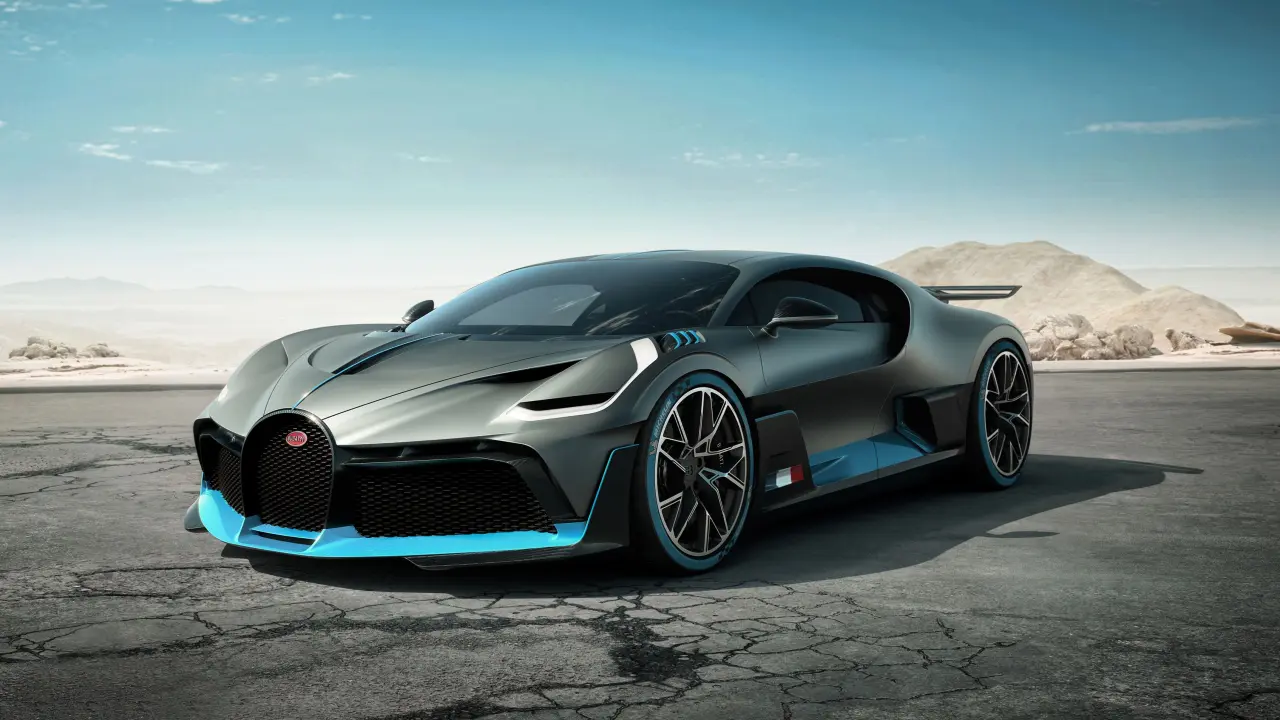
What Is a Mid-Engine Car? What Are Its Advantages and Disadvantages?
A mid-engine car is a vehicle in which the engine is positioned between the front and rear axles rather than being located ahead of the front axle or behind the rear axle. In most passenger and performance cars, the term usually refers to an engine mounted behind the driver and ahead of the rear axle, although the broader definition is based on the engine's position within the wheelbase.
Mid-engine layouts are strongly associated with sports cars, supercars, and racing vehicles because placing the engine closer to the center of the vehicle can improve weight distribution and handling characteristics.
Models such as the Ferrari 296 GTB, McLaren Artura, Chevrolet Corvette, Lamborghini Huracán, and many racing cars demonstrate why this layout has become so important in performance-oriented vehicle design.
What Does Mid-Engine Mean?
The easiest way to understand a mid-engine layout is to compare it with the other common engine positions.
In a front-engine car, the engine is located toward the front of the vehicle.
In a rear-engine car, the engine is positioned behind the rear axle.
In a mid-engine car, the engine is placed within the wheelbase, between the front and rear axles.
The engine does not necessarily have to be physically located exactly in the geometric center of the car. The important point is that the engine mass is positioned relatively close to the center of the vehicle.
In most modern performance cars, the engine is mounted behind the passenger compartment but ahead of the rear axle. This configuration is often called a rear-mid-engine layout.
Why Is the Engine Placed in the Middle?
The engine is one of the heaviest components in a vehicle.
Where that weight is positioned has a major effect on how the vehicle responds to steering, braking, and acceleration.
When a large mass is concentrated at one end of the vehicle, the car's handling characteristics can become more pronounced at that end.
Moving the engine closer to the center of the wheelbase can reduce the vehicle's rotational inertia around its vertical axis.
In simple terms, the car can become more responsive to steering inputs because there is less heavy mass concentrated far away from the center.
This is one of the main reasons the mid-engine configuration is so popular in performance cars.
How Does a Mid-Engine Layout Affect Weight Distribution?
Weight distribution is one of the biggest advantages of a mid-engine design.
A conventional front-engine rear-wheel-drive car may have a significant amount of its weight over the front axle.
A mid-engine rear-wheel-drive car can place a larger percentage of its mass closer to the center of the chassis.
The exact weight distribution depends on:
-
Engine size
-
Transmission position
-
Battery location
-
Fuel tank position
-
Vehicle dimensions
-
Drivetrain configuration
-
Suspension design
A mid-engine car does not automatically have perfect weight distribution, but the layout gives engineers more freedom to create a balanced chassis.
Mid-Engine and Handling
Handling is probably the most important reason for choosing a mid-engine configuration.
Because the engine is located near the center of the vehicle, the car can respond quickly to steering inputs.
When entering a corner, the chassis can feel more balanced and less reluctant to change direction.
This can provide:
-
Faster turn-in
-
Greater agility
-
Better balance
-
More predictable weight transfer
-
Strong cornering potential
However, the benefits depend heavily on suspension geometry, tire performance, aerodynamics, electronic stability systems, and the vehicle's overall setup.
A mid-engine layout by itself does not guarantee that a car will handle better than every front-engine vehicle.
Mid-Engine Cars and Weight Transfer
Every car experiences weight transfer during acceleration, braking, and cornering.
During hard acceleration, weight moves toward the rear.
During braking, weight moves toward the front.
During cornering, the load shifts from one side of the vehicle to the other.
A mid-engine layout can make these changes easier for engineers to manage because the largest mass in the vehicle is already located relatively close to the center.
This can contribute to more consistent behavior when the car is driven aggressively.
Why Are Mid-Engine Cars Often Rear-Wheel Drive?
Many traditional mid-engine sports cars use rear-wheel drive.
This creates an interesting combination.
The engine is located close to the center, while the driven rear wheels are positioned directly behind it.
During acceleration, weight naturally transfers toward the rear axle.
That additional rear-wheel load can improve traction.
This is particularly useful when a powerful engine is producing high torque.
The result can be strong acceleration without requiring all-wheel drive.
Mid-Engine and Traction
One of the major advantages of a mid-engine layout is the ability to combine excellent rear-wheel traction with balanced chassis behavior.
When the driver accelerates out of a corner, the rear tires receive increased vertical load.
This helps them transfer engine torque to the road.
Modern performance cars can further improve traction with:
-
Limited-slip differentials
-
Electronic differentials
-
Traction control
-
Torque vectoring
-
Performance tires
-
Active aerodynamics
-
All-wheel drive
This is one reason mid-engine cars can achieve extremely high levels of corner-exit performance.
What Is the Difference Between Mid-Engine and Rear-Engine?
These two layouts are often confused.
A mid-engine car places the engine within the wheelbase, generally close to the center of the vehicle.
A rear-engine car places the engine behind the rear axle.
The difference has a major effect on handling.
A rear-engine car can have very strong traction because a large amount of weight is concentrated over the driven rear axle.
However, the rear-heavy mass distribution can also produce different handling characteristics, particularly during rapid changes in direction.
The Porsche 911 is one of the best-known examples of a rear-engine sports car, while many Ferrari, Lamborghini, and McLaren sports cars use rear-mid-engine layouts.
Advantages of a Mid-Engine Layout
Better weight distribution
One of the main advantages is the ability to position the vehicle's mass closer to the center.
This can improve overall chassis balance.
Excellent cornering potential
A well-designed mid-engine vehicle can provide exceptional grip and agility during cornering.
Quick steering response
With less heavy mass concentrated at the front or rear extremities, the car can respond quickly to steering inputs.
Strong acceleration traction
In rear-wheel-drive mid-engine cars, acceleration naturally transfers weight toward the rear axle, helping the driven tires maintain traction.
Lower rotational inertia
Keeping the engine close to the vehicle's center can reduce the resistance of the car to rotation around its vertical axis.
This can make the vehicle feel more agile.
Excellent platform for performance cars
The layout allows engineers to create a highly balanced chassis capable of supporting high levels of engine power, tire grip, and aerodynamic performance.
Efficient use of aerodynamic balance
Mid-engine packaging can also provide engineers with greater freedom when designing front and rear aerodynamic components.
The chassis can be balanced around a centrally concentrated mass, while aerodynamic downforce can be distributed between the axles.
Disadvantages of a Mid-Engine Layout
The mid-engine configuration also introduces several important compromises.
Limited cabin space
Placing the engine behind the passenger compartment can reduce available interior space.
Engine noise, vibration, and heat can also become more noticeable.
Reduced practicality
Many mid-engine sports cars have limited luggage space compared with conventional front-engine vehicles.
There may be a small front trunk and a small rear storage compartment, but neither necessarily offers the practicality of a normal passenger car.
More complicated packaging
The engine, transmission, cooling system, exhaust system, intake system, suspension, and drivetrain must all fit into a relatively compact area.
This makes vehicle engineering more complicated.
Higher maintenance costs
Access to certain engine components can be more difficult than on a conventional front-engine car.
This can increase labor time during maintenance or repairs.
Heat management challenges
The engine is located close to the passenger compartment and rear bodywork.
Managing heat from the engine, exhaust, turbocharger, and transmission therefore becomes particularly important.
More demanding handling characteristics
Although mid-engine cars can provide excellent balance, they can also respond quickly to driver inputs.
If the rear tires lose grip during cornering, the vehicle may rotate rapidly.
This makes proper tire condition, suspension setup, and driver skill particularly important.
Is a Mid-Engine Car Difficult to Drive?
A modern mid-engine car does not necessarily feel difficult to drive during normal conditions.
Electronic stability control, traction control, advanced differentials, sophisticated suspension systems, and high-performance tires can make modern mid-engine cars remarkably predictable.
However, when electronic safety systems are reduced or disabled and the vehicle is driven near its limits, the characteristics of the layout become much more noticeable.
A mid-engine car can change direction very quickly.
This is a major advantage on a racetrack, but it also means that mistakes can develop rapidly when the vehicle is driven beyond the available grip.
Mid-Engine Cars and Oversteer
Oversteer occurs when the rear tires lose grip and the rear of the vehicle begins to rotate outward relative to the corner.
Mid-engine cars are often capable of strong corner-exit traction, but once the rear tires exceed their available grip, the vehicle can react quickly because of its low rotational inertia.
This does not mean every mid-engine car is inherently difficult or dangerous.
Modern chassis tuning can provide a large amount of stability.
However, tire temperature, road surface, throttle position, suspension setup, and driver input remain extremely important.
How Does a Mid-Engine Layout Affect Braking?
Braking performance depends primarily on the brakes, tires, suspension, ABS calibration, aerodynamic downforce, and weight distribution.
A mid-engine configuration can provide a balanced platform for braking because the vehicle's mass is concentrated closer to the center.
However, weight still transfers toward the front during hard braking.
This means the front tires continue to carry a substantial portion of the braking load.
Engineers must carefully balance the brake system and suspension to ensure stable behavior under heavy deceleration.
Mid-Engine Turbocharged Cars
Modern mid-engine cars increasingly use turbocharged engines.
Turbocharging allows manufacturers to produce substantial power from relatively compact engines.
However, turbocharged mid-engine packaging creates additional thermal-management requirements.
Engineers must manage:
-
Turbocharger heat
-
Exhaust temperatures
-
Intake-air temperatures
-
Engine-bay temperatures
-
Intercooler efficiency
-
Cooling airflow
-
Oil temperature
-
Transmission temperature
Because the engine is located behind the cabin, airflow management becomes particularly important.
Cooling a Mid-Engine Car
Cooling is one of the major engineering challenges of a mid-engine vehicle.
The engine is often located far from the main front air intakes.
This means coolant may need to travel through long pipes or channels between the radiator system and the engine.
Some vehicles use large front radiators connected to the engine by long coolant circuits.
Others use additional side-mounted radiators or multiple cooling systems.
High-performance mid-engine cars can have separate cooling circuits for different components, including the engine, transmission, intercooler, and hybrid systems.
Mid-Engine Hybrid and Electric Cars
The mid-engine concept is not limited to conventional gasoline engines.
Hybrid performance cars can use a combustion engine mounted in a mid-engine position while electric motors provide additional propulsion.
Some systems place electric motors on the front axle, creating all-wheel drive.
This can provide a combination of:
-
Centralized engine mass
-
Electric front-axle traction
-
Instant electric torque
-
High total system output
-
Advanced torque distribution
Electric vehicles can also use a similar philosophy by placing heavy battery components low and centrally within the floor.
However, an EV does not normally use the traditional mid-engine layout because it does not require a conventional combustion engine.
Why Don't Ordinary Cars Use Mid-Engine Layouts?
The main reason is packaging.
For a normal family car, practicality is more important than maximum cornering performance.
A front-engine layout makes it easier to provide:
-
A spacious passenger compartment
-
A large luggage area
-
Simple cooling-system packaging
-
Easier engine access
-
Lower production costs
-
Flexible vehicle design
A mid-engine layout sacrifices some of these advantages in exchange for improved performance characteristics.
For a sports car, that trade-off can make sense.
For a family sedan or compact hatchback, it usually does not.
Mid-Engine vs Front-Engine
A front-engine vehicle generally offers better practicality, easier maintenance access, and simpler packaging.
A mid-engine vehicle generally offers greater chassis balance and performance potential.
Neither layout is universally superior.
The best choice depends on the vehicle's intended purpose.
A family car benefits from the packaging advantages of a front-engine configuration, while a dedicated sports car can benefit much more from the handling characteristics of a mid-engine layout.
Mid-Engine vs Rear-Engine
Mid-engine and rear-engine layouts can both provide excellent rear traction, but they achieve it differently.
The rear-engine configuration places the engine behind the rear axle, creating a more rear-biased mass distribution.
The mid-engine configuration keeps the engine closer to the center of the wheelbase.
This generally allows more neutral chassis behavior and lower rotational inertia.
However, rear-engine vehicles have demonstrated that an intelligently engineered chassis can deliver exceptional performance despite their distinctive weight distribution.
The Porsche 911 is the classic example.
Is a Mid-Engine Layout Good for Daily Driving?
Technically, yes.
Practically, it depends on the vehicle.
A modern mid-engine sports car can be perfectly usable on public roads.
However, factors such as:
-
Limited storage
-
Low ground clearance
-
Difficult engine access
-
Expensive tires
-
High maintenance costs
-
Firm suspension
-
Increased cabin heat
-
Limited visibility
can make ownership less convenient than a conventional vehicle.
The mid-engine layout itself does not make a car unsuitable for daily use. The compromises usually come from the vehicle's overall sports-car design.
Why Are Mid-Engine Cars Popular in Motorsports?
Motorsports place a strong emphasis on cornering performance, braking stability, traction, and weight distribution.
The mid-engine configuration can provide an excellent foundation for these requirements.
The engine can be positioned near the center of the chassis, while the suspension and aerodynamic systems can be optimized around this central mass.
This is one reason why many racing and high-performance cars use a mid-engine layout.
Is a Mid-Engine Car Always Faster?
No.
Lap time is determined by the entire vehicle, not simply the location of the engine.
Factors such as:
-
Power
-
Torque
-
Weight
-
Tires
-
Aerodynamics
-
Suspension
-
Brakes
-
Transmission
-
Differential
-
Driver skill
all affect performance.
A well-developed front-engine sports car can outperform a poorly engineered mid-engine vehicle.
The mid-engine layout simply provides a particularly effective platform for achieving high levels of performance.
Final Takeaway
A mid-engine car places its engine within the vehicle's wheelbase, usually behind the passenger compartment and ahead of the rear axle. This arrangement allows a large amount of the vehicle's mass to be concentrated near its center.
The result can be excellent weight distribution, quick steering response, strong traction, and outstanding cornering capability.
The disadvantages are mainly related to packaging and practicality. Mid-engine vehicles can have limited cabin and luggage space, more complicated cooling systems, difficult engine access, higher maintenance costs, and demanding thermal-management requirements.
For sports cars and racing vehicles, these compromises can be worthwhile because handling and performance are priorities. For ordinary family cars, the packaging advantages of a front-engine layout generally make much more sense.
Ultimately, the greatest strength of the mid-engine layout is not simply where the engine is located. It is the way that location allows engineers to build the rest of the vehicle around a more centralized mass, creating a chassis capable of delivering precise and highly responsive handling.