TR
TR EN
EN

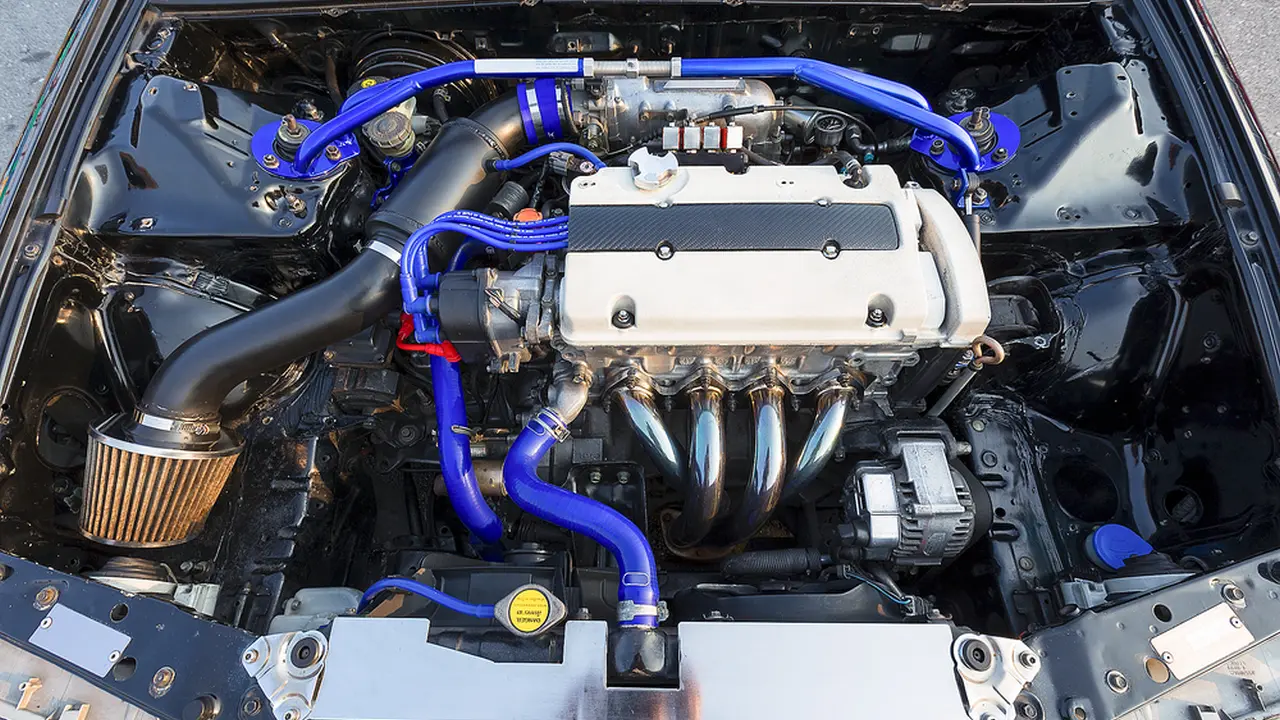
What Are Stage 1, Stage 2, and Stage 3 Modifications?
In the automotive performance world, terms such as Stage 1, Stage 2, and Stage 3 are commonly used to describe different levels of engine and performance modifications.
However, there is an important point to understand from the beginning: Stage 1, Stage 2, and Stage 3 are not universal technical standards. Their exact meaning can vary between tuning companies, vehicle manufacturers, engine platforms, and even individual tuners.
In general, the stages describe how far an engine has been modified from its original factory configuration and how much supporting hardware is required.
What Does “Stage” Mean in Car Tuning?
A stage is essentially a way of grouping modifications according to their level of complexity and performance potential.
A simplified interpretation is:
Stage 1: Mostly software-based modifications with the factory hardware remaining largely unchanged.
Stage 2: ECU tuning combined with selected hardware upgrades that improve airflow and engine breathing.
Stage 3: More extensive hardware modifications, often involving a larger turbocharger or major engine upgrades, together with a custom ECU calibration.
The exact boundary between these stages is not fixed.
One tuning company may call a particular setup Stage 2, while another may classify the same setup as Stage 1+ or Stage 3.
Stage 1 Tuning
Stage 1 is generally the least invasive level of performance tuning.
On a turbocharged gasoline or diesel engine, Stage 1 usually involves an ECU remap or software calibration.
The tuner modifies parameters such as:
-
Boost pressure
-
Fuel delivery
-
Ignition timing
-
Torque limits
-
Throttle response
-
Air-fuel targets
-
Turbocharger control
-
Transmission torque limits on some vehicles
The objective is to make better use of the engine's existing hardware.
Because the factory turbocharger, intercooler, injectors, exhaust system, and other major components are usually retained, Stage 1 is often the easiest performance upgrade to reverse.
How Much Power Does Stage 1 Add?
There is no universal Stage 1 horsepower figure.
The potential gain depends on the engine, factory calibration, turbocharger, fuel quality, transmission, and the tuner.
A small turbocharged engine may respond very differently from a larger turbocharged engine.
For example, two engines producing the same factory horsepower may have completely different tuning potential because their turbochargers, compression ratios, cooling systems, and factory safety margins are different.
A responsible Stage 1 calibration should therefore be developed around the specific engine rather than a generic horsepower target.
Is Stage 1 Safe?
Stage 1 can be relatively conservative when the engine is healthy and the calibration is properly developed.
However, tuning always changes the operating conditions of the engine.
Additional boost and torque can increase the load on:
-
Turbocharger
-
Pistons
-
Connecting rods
-
Bearings
-
Clutch
-
Dual-mass flywheel
-
Automatic transmission
-
Cooling system
A vehicle with worn components may therefore develop problems after tuning even if the tune itself is not inherently defective.
The condition of the car matters just as much as the stage number.
Stage 1 on Naturally Aspirated Engines
Stage 1 is usually less dramatic on naturally aspirated engines.
Without a turbocharger or supercharger, there is generally less additional airflow available through software changes alone.
An ECU calibration may improve throttle response, ignition timing, fueling, and other parameters, but the horsepower increase is often considerably smaller than on a turbocharged engine.
This is why naturally aspirated engines typically require hardware modifications for significant power gains.
What Is Stage 2?
Stage 2 generally means that ECU tuning is combined with hardware modifications.
The purpose of these modifications is to allow the engine to move more air or reduce restrictions so that the ECU calibration can take advantage of the changes.
Depending on the engine, Stage 2 may include:
-
Performance intake
-
Larger intercooler
-
Cat-back exhaust
-
High-flow exhaust components
-
Downpipe
-
High-flow catalytic converter
-
Upgraded charge pipes
-
Improved cooling
-
Stronger clutch
Not every Stage 2 setup includes all of these components.
The required hardware depends heavily on the engine and the tuning company's definition of Stage 2.
Why Does Stage 2 Need Hardware?
A factory engine is designed around a specific balance between airflow, temperature, boost pressure, fuel delivery, emissions, noise, reliability, and cost.
When the ECU is tuned beyond the factory calibration, some of the original components can become restrictions.
For example, increasing turbocharger boost can increase intake-air temperature.
A larger intercooler can help control that temperature.
Similarly, a restrictive exhaust component can limit exhaust flow when the engine is producing significantly more power.
Stage 2 hardware is therefore intended to support the new operating conditions rather than simply add cosmetic modifications.
Is a Downpipe Always Stage 2?
Not necessarily.
A downpipe is often associated with Stage 2 tuning on turbocharged engines, particularly when the factory downpipe and catalytic converter create significant exhaust-flow restrictions.
However, some tuning companies classify a downpipe-equipped vehicle as Stage 2, while others may use different stage definitions.
The important point is not the label itself but whether the ECU calibration is designed for the actual hardware installed on the vehicle.
Does Stage 2 Require a Bigger Intercooler?
Again, not always.
A larger intercooler becomes more useful when the factory intercooler cannot adequately control intake temperatures under increased boost and repeated high-load operation.
A larger intercooler can help reduce heat soak and maintain more consistent performance.
However, simply installing the largest intercooler available does not automatically make a car Stage 2.
The hardware should match the engine's airflow requirements and intended power level.
Stage 2 and Exhaust Modifications
Exhaust modifications are common in Stage 2 builds.
The goal is generally to improve exhaust gas flow and reduce restrictions.
Depending on the engine, this may involve:
-
Downpipe
-
High-flow catalytic converter
-
Cat-back exhaust
-
Larger exhaust piping
-
Performance resonator
-
Less restrictive muffler
However, removing emissions equipment purely for performance can create legal and emissions problems depending on local regulations.
A performance-oriented exhaust does not necessarily mean removing every restriction.
A properly engineered system should provide appropriate flow while maintaining acceptable temperature, noise, and emissions characteristics.
Stage 3 Tuning
Stage 3 generally represents a much more substantial performance build.
At this level, the factory hardware may no longer be capable of supporting the desired power output.
One of the most common Stage 3 modifications on a turbocharged engine is a larger or upgraded turbocharger.
Other modifications may include:
-
Larger turbocharger
-
Upgraded fuel injectors
-
Higher-capacity fuel pump
-
Larger intercooler
-
Upgraded intake
-
Larger exhaust system
-
Stronger clutch
-
Transmission upgrades
-
Upgraded engine cooling
-
Custom ECU calibration
-
Internal engine upgrades
The exact combination depends on the target power level.
Why Does Stage 3 Usually Need a Larger Turbo?
A factory turbocharger has a limited airflow capacity.
Increasing boost pressure can produce more power, but a small turbocharger eventually reaches a point where it becomes inefficient.
At that point, increasing boost may produce excessive heat rather than useful additional airflow.
A larger turbocharger can move more air efficiently and maintain the desired airflow at higher engine speeds.
The trade-off is that a larger turbocharger can also introduce additional turbo lag and may require significantly more supporting hardware.
Does Stage 3 Always Mean Forged Internals?
No.
This is a common misconception.
A Stage 3 setup does not automatically require forged pistons and connecting rods.
Whether the factory internals can survive depends on the specific engine and the desired power level.
Some engines have strong factory internals and can tolerate substantial power increases.
Others have relatively weak connecting rods, pistons, or ring lands and may require internal upgrades at comparatively modest power levels.
The correct approach is to evaluate the engine platform and the actual target power rather than assuming that every Stage 3 build requires the same components.
What Are Forged Pistons and Connecting Rods?
Forged components are manufactured using a process that can provide different material properties and strength characteristics compared with many factory cast components.
In high-power applications, forged pistons and connecting rods can provide additional durability against the increased mechanical and thermal loads associated with high boost and cylinder pressure.
However, forged internals are not automatically necessary for every tuned engine.
They become more relevant as the desired power and cylinder pressure move beyond the capabilities of the factory components.
Stage 3 Fuel System Requirements
A larger turbocharger can potentially move considerably more air.
That additional air requires an appropriate amount of fuel.
The factory fuel system may therefore become a limitation.
Depending on the engine, a Stage 3 build may require:
-
Larger injectors
-
Higher-flow fuel pump
-
Upgraded high-pressure fuel pump
-
Fuel-pressure control
-
Larger fuel lines
-
Additional fuel-system monitoring
The fuel system must be capable of supplying the required amount of fuel under maximum load.
Insufficient fuel delivery can create dangerous combustion conditions.
Why Is ECU Tuning Important at Stage 3?
At Stage 3, the factory ECU calibration is usually no longer appropriate for the modified hardware.
A larger turbocharger, different injectors, increased airflow, and altered exhaust flow all change how the engine operates.
A Stage 3 calibration may need to account for:
-
Boost pressure
-
Turbocharger efficiency
-
Airflow
-
Fuel pressure
-
Injection timing
-
Ignition timing
-
Lambda targets
-
Torque limits
-
Intake temperature
-
Exhaust temperature
-
Knock control
-
Variable valve timing
For this reason, Stage 3 builds often benefit from a custom calibration based on the actual hardware, rather than a generic file intended for another configuration.
Stage 1 vs. Stage 2 vs. Stage 3
The simplest way to understand the stages is to think about how much of the original engine configuration remains unchanged.
Stage 1 generally focuses on software.
Stage 2 adds hardware intended to support increased airflow and power.
Stage 3 involves major hardware changes and often requires a different turbocharger and fuel system.
But these descriptions are guidelines rather than engineering standards.
What Happens to Torque?
One of the most noticeable effects of tuning is often an increase in torque.
This can make the vehicle feel dramatically faster even if the horsepower increase appears relatively modest.
However, increased torque can place significant stress on the drivetrain.
The clutch and transmission may be the first components to reveal the additional load.
A vehicle with a manual transmission may begin experiencing clutch slip.
An automatic transmission may reach its torque limit or require a revised transmission calibration.
The dual-mass flywheel can also experience additional stress.
Does Stage 1 Require a Stronger Clutch?
Not automatically.
If the original clutch is healthy and the torque increase remains within its capacity, it may work perfectly well.
However, a worn clutch can begin slipping after a tune because the additional engine torque exceeds the clutch's remaining capacity.
This is why the condition of the clutch matters when tuning a high-mileage vehicle.
Can Stage 2 or Stage 3 Damage the Transmission?
It can increase the risk.
A transmission has mechanical and thermal limits.
Increasing engine torque can increase:
-
Clutch-pack load
-
Gear load
-
Shaft stress
-
Transmission temperature
-
Differential load
Some modern automatic transmissions also have electronic torque limits programmed into their control systems.
A performance build should therefore consider the transmission as part of the complete powertrain rather than focusing only on the engine.
Does Stage 3 Make a Car Uncomfortable for Daily Driving?
It can.
The more aggressively an engine is modified, the greater the possibility that its behavior will move away from factory refinement.
A large turbocharger may produce more turbo lag.
A heavy clutch may require more pedal effort.
A larger exhaust may produce more cabin noise.
A highly aggressive ECU calibration may make throttle response less predictable.
A track-oriented Stage 3 configuration can therefore be extremely fast while being less convenient for everyday driving.
A properly designed street-oriented build can minimize these compromises, but there is usually still a trade-off between maximum performance and daily usability.
What About Fuel Consumption?
Tuning does not automatically cause a specific percentage increase in fuel consumption.
Fuel consumption depends on how the vehicle is driven and how the calibration is configured.
During light-load cruising, a properly calibrated tuned engine can sometimes maintain reasonable fuel economy.
When the additional performance is used frequently, however, fuel consumption will naturally increase because the engine is producing more power and generally consuming more fuel.
This becomes particularly noticeable on high-power Stage 3 builds.
Can Stage 1, 2, and 3 Be Used on Diesel Engines?
Yes.
The same general concept is used for turbocharged diesel engines, although the specific modifications are different.
Diesel tuning often focuses heavily on:
-
Boost pressure
-
Injection quantity
-
Injection timing
-
Rail pressure
-
Turbocharger airflow
-
Exhaust gas temperature
-
DPF operation
-
EGR operation
-
Transmission torque limits
A Stage 1 diesel tune may require only ECU calibration.
A Stage 2 setup may add intake, intercooler, exhaust, or other supporting modifications.
Stage 3 may involve a larger turbocharger, upgraded fuel system, and more extensive engine modifications.
What About Hybrid and Modern Engines?
Modern hybrid powertrains make the traditional Stage 1/2/3 terminology more complicated.
A hybrid vehicle may have:
-
Internal combustion engine control
-
Electric motor control
-
Battery management
-
Inverter control
-
Transmission control
-
Thermal management
Changing the combustion engine's software does not necessarily mean the entire hybrid system has been optimized.
Electric assistance can also change how torque is delivered through the drivetrain.
As a result, stage terminology for hybrid vehicles is highly dependent on the specific platform and tuning company.
Are Stage Numbers Official?
No.
This is perhaps the most important thing to remember.
There is no universal automotive authority that defines exactly what constitutes Stage 1, Stage 2, or Stage 3.
The terms are primarily marketing and tuning terminology.
One company might define:
Stage 1: ECU remap
Stage 2: ECU remap + downpipe + intercooler
Stage 3: upgraded turbo + fuel system + custom calibration
Another company may use completely different definitions.
Therefore, when buying a tune, asking "What Stage is this?" is not enough.
It is much more useful to ask:
Which hardware is required, what power and torque are expected, what fuel is required, and what limitations remain on the engine and transmission?
Should You Skip Directly From Stage 1 to Stage 3?
It depends on the build.
There is no technical rule requiring an engine to progress through every stage.
A vehicle can theoretically move directly from a stock configuration to a high-power build if all of the necessary hardware and calibration work are performed correctly.
The "stage" terminology simply provides a convenient way to describe the level of modification.
Is Stage 1, 2, or 3 Best for a Daily Driver?
For most daily-driven vehicles, Stage 1 or a conservative Stage 2 setup is usually the more practical choice.
Stage 1 offers a relatively simple way to improve performance while retaining most factory hardware.
A carefully planned Stage 2 setup can provide a more noticeable improvement while still maintaining reasonable drivability.
Stage 3 is more appropriate when the owner specifically wants a substantial increase in power and is willing to accept higher cost, maintenance requirements, drivetrain stress, and possible compromises in everyday usability.
What Should You Check Before Tuning?
Before increasing engine power, the vehicle should be mechanically healthy.
Important checks include:
-
Engine compression
-
Oil condition
-
Cooling system
-
Turbocharger condition
-
Spark plugs on gasoline engines
-
Injectors
-
Fuel pressure
-
Intake and boost leaks
-
Ignition system
-
Clutch condition
-
Transmission condition
-
Engine fault codes
-
Cooling and intercooling performance
A tune should not be used to compensate for an existing mechanical problem.
If an engine already has a boost leak, misfire, fuel-pressure problem, overheating issue, or lubrication problem, increasing power can make the situation considerably worse.
Final Takeaway
Stage 1, Stage 2, and Stage 3 are convenient ways of describing increasing levels of vehicle modification, but they are not universal technical classifications.
Stage 1 usually focuses on ECU software and extracting more performance from the factory hardware.
Stage 2 generally adds supporting hardware to improve airflow, cooling, and exhaust flow.
Stage 3 usually involves major hardware changes such as a larger turbocharger, upgraded fuel system, stronger drivetrain components, and custom ECU calibration.
The stage number itself is less important than the actual components and calibration behind it.
A well-built Stage 1 can be more reliable and enjoyable than a poorly designed Stage 3. The right modification level is the one that matches the engine, drivetrain, fuel system, intended power output, and the way the vehicle will actually be used.