TR
TR EN
EN

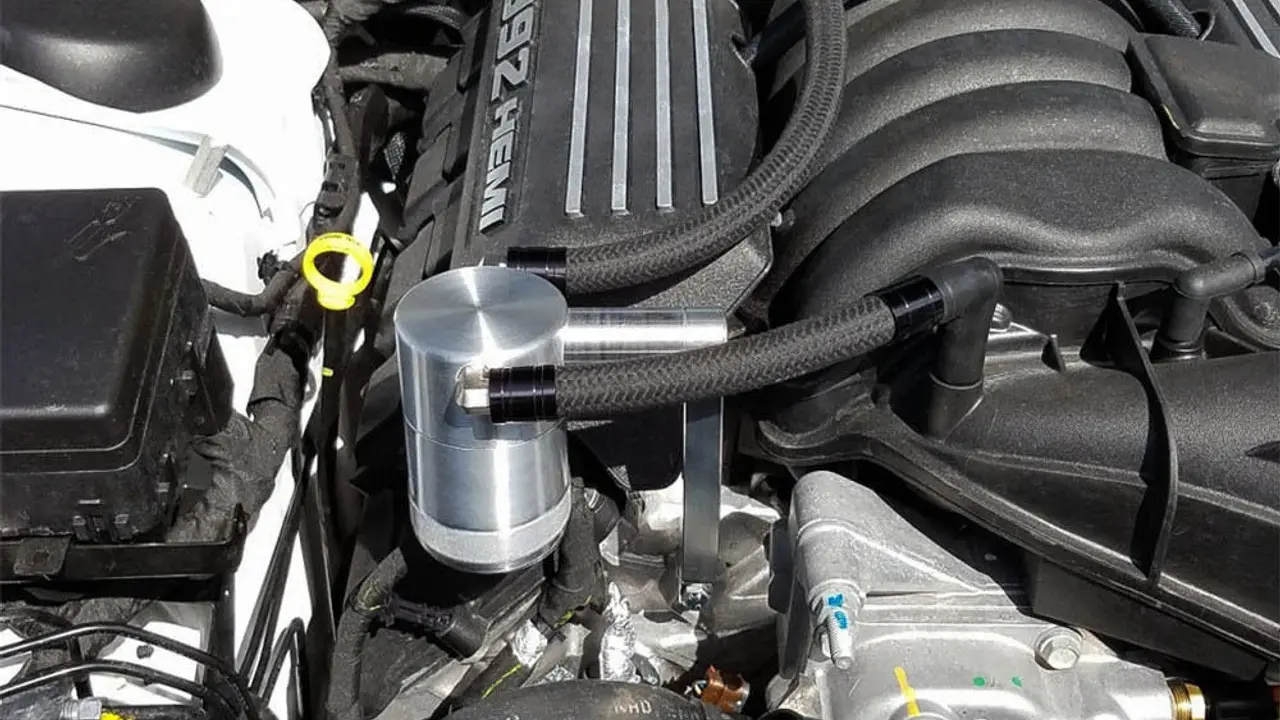
What Is an Oil Catch Tank? What Does It Do?
An Oil Catch Tank, also known as a catch can, is an auxiliary component designed to capture oil vapor, oil droplets, and condensation carried through the engine's crankcase ventilation system.
It is particularly common on turbocharged gasoline and diesel engines. Its primary purpose is to reduce the amount of oil vapor entering the intake system through the PCV or CCV system.
An Oil Catch Tank is not a direct horsepower upgrade. Its main purpose is to help keep the intake system cleaner and reduce oil accumulation in areas such as the intake piping, intercooler, throttle body, and intake manifold.
Why Does an Engine Produce Oil Vapor?
While an engine is running, a small amount of combustion pressure can pass between the piston rings and cylinder walls into the crankcase. These gases are known as blow-by gases.
Blow-by gases can contain:
-
Oil vapor
-
Fuel vapor
-
Water vapor
-
Combustion gases
-
Very small oil droplets
If these gases were allowed to accumulate inside the crankcase, crankcase pressure could increase and place additional stress on seals, gaskets, and other engine components.
Modern engines therefore use a crankcase ventilation system to control and recycle these gases.
What Is the PCV System?
PCV (Positive Crankcase Ventilation) is a system that controls crankcase gases and routes them back into the engine so they can be burned during normal combustion.
A typical system allows blow-by gases to leave the crankcase, pass through an oil separation or ventilation system, and then return to the intake system.
The purpose is to control crankcase pressure while also preventing these gases from being released directly into the atmosphere.
How Does an Oil Catch Tank Work?
An Oil Catch Tank is installed in the crankcase ventilation line.
Gas coming from the crankcase passes through the tank. Internal baffles, filters, or other separation structures slow and redirect the gas flow, allowing some of the heavier oil droplets and condensed liquids to separate from the gas.
The separated liquid collects at the bottom of the tank while the cleaner gas continues toward the intake system.
In simple terms, the flow can be represented as:
Crankcase → Oil Catch Tank → Intake System
The exact arrangement depends on the engine and the design of its factory ventilation system.
What Does an Oil Catch Tank Do?
The primary purpose of an Oil Catch Tank is to reduce the amount of oil and liquid carried into the intake system by crankcase ventilation gases.
Depending on the engine, this can help reduce:
-
Oil accumulation in intake pipes
-
Oil entering the turbocharger inlet
-
Oil accumulation inside the intercooler
-
Intake manifold contamination
-
Oil residue around the throttle body
-
Some sources of intake-valve contamination
The actual benefit varies considerably between engines.
Does an Oil Catch Tank Increase Performance?
An Oil Catch Tank should not be considered a direct horsepower upgrade.
Its main purpose is to control oil vapor rather than increase engine output.
Installing a catch tank on an intake system that is already relatively clean may produce little or no measurable power increase.
However, on an engine where significant oil accumulation occurs in the intake system, reducing that contamination can help maintain cleaner airflow components over the long term.
For this reason, an Oil Catch Tank is better described as a supporting or protective modification rather than a traditional performance upgrade.
Oil Catch Tanks on Turbocharged Engines
Catch tanks are particularly popular on turbocharged engines.
Because of the way turbocharged intake systems are designed, oil vapor from the crankcase ventilation system can reach:
-
Turbocharger inlet
-
Charge pipes
-
Intercooler
-
Throttle body
-
Intake manifold
As mileage increases or under demanding operating conditions, oil deposits can accumulate in these areas.
A properly designed catch tank can reduce the amount of oil entering the intake system.
Why Is There Oil Inside an Intercooler?
Finding some oil inside an intercooler does not automatically mean that the turbocharger is failing.
Oil vapor from the crankcase ventilation system can enter the intake system and eventually reach the turbocharger, charge pipes, and intercooler.
When this vapor comes into contact with cooler surfaces, it can condense and accumulate inside the intake system.
Therefore, some oil inside an intercooler can be a normal consequence of the engine's ventilation system.
However, excessive oil accumulation should be investigated because it can also be associated with turbocharger problems, excessive blow-by, or PCV system issues.
Oil Catch Tanks on Diesel Engines
Oil Catch Tanks can also be useful on diesel engines.
This is particularly relevant to diesel engines equipped with EGR systems.
Crankcase ventilation gases can introduce oil vapor into the intake, while the EGR system introduces exhaust gases containing soot.
When these two flows combine, they can create sticky deposits inside the intake system.
Over time, this mixture can contribute to contamination of:
-
EGR valve
-
Intake manifold
-
Intake runners
-
Throttle body area
A catch tank can reduce the oil component of this contamination, but it does not eliminate soot produced by the EGR system.
The Relationship Between an Oil Catch Tank and EGR
The EGR system returns a controlled amount of exhaust gas to the intake system under certain operating conditions.
The crankcase ventilation system can also introduce oil vapor into the intake.
On some diesel engines, these two flows meet in the same general area.
The resulting mixture of oil vapor and soot can create deposits over time.
An Oil Catch Tank can therefore help reduce one of the components contributing to this buildup.
It should not, however, be considered an EGR cleaning device.
Oil Catch Tanks on Direct-Injection Gasoline Engines
Direct-injection gasoline engines have another reason why catch tanks are sometimes considered useful.
On a conventional port-injected engine, fuel is injected upstream of the intake valve. This can provide some cleaning effect on the valve area.
With direct injection, fuel is injected directly into the combustion chamber rather than passing over the intake valves.
As a result, oil vapor entering through the crankcase ventilation system can contribute to intake-valve deposits.
An Oil Catch Tank can reduce one potential source of contamination.
However, it cannot completely prevent carbon buildup on direct-injection intake valves.
Single-Chamber vs. Baffled Catch Tanks
There are many different Oil Catch Tank designs on the market.
Simple tanks may essentially consist of an empty chamber, while more advanced products use:
-
Internal baffles
-
Filters
-
Multi-stage separation systems
-
Condensation surfaces
The internal design is extremely important because the tank needs to separate oil droplets from the gas stream.
Two catch tanks that look almost identical from the outside can have very different separation performance.
For this reason, choosing a catch tank based only on its appearance or capacity is not ideal.
What Collects Inside an Oil Catch Tank?
The liquid collected inside the tank can consist of more than just engine oil.
Depending on the engine and operating conditions, it may contain:
-
Engine oil
-
Water
-
Condensation
-
Fuel vapor condensate
-
Blow-by residue
During cold weather, water and condensation can make up a significant portion of the collected liquid.
This is especially common when a vehicle is frequently driven for short distances before the engine reaches full operating temperature.
Does an Oil Catch Tank Need to Be Emptied?
Yes.
The liquid accumulated inside the catch tank needs to be checked and drained periodically.
The required interval depends on:
-
Engine type
-
Driving conditions
-
Ambient temperature
-
Engine mileage
-
Blow-by volume
-
Catch tank capacity
Allowing the tank to become completely full can reduce its effectiveness and potentially interfere with the ventilation system.
Checking the tank should therefore become part of the vehicle's maintenance routine if a catch tank is installed.
Why Does a Catch Tank Collect More Liquid in Winter?
Cold weather can significantly increase condensation.
When a vehicle is repeatedly used for short trips, the engine may not remain at operating temperature long enough to evaporate all of the moisture accumulated in the crankcase ventilation gases.
Water vapor can then condense on the cooler surfaces inside the tank and hoses.
As a result, a catch tank may collect a mixture containing considerably more water during winter.
This is particularly noticeable in vehicles used primarily for short-distance city driving.
What Should Be Considered During Installation?
Although installing a catch tank may appear simple, the original crankcase ventilation system must continue to operate correctly.
Important considerations include:
-
Correct hose diameter
-
Unrestricted gas flow
-
Avoiding sharp bends
-
Secure mounting
-
Protection from excessive engine-bay heat
-
Easy access for draining
-
Properly sealed connections
The PCV system depends on controlled airflow.
If the catch tank or hoses create excessive restriction, the modification can cause problems rather than solve them.
What Happens If an Oil Catch Tank Is Installed Incorrectly?
Incorrect installation can interfere with crankcase ventilation and change the pressure balance inside the engine.
Potential problems can include:
-
Oil leaks
-
Air leaks
-
Rough idle
-
Engine warning lights
-
Unstable engine operation
-
Increased crankcase pressure
This is why installing a catch tank should not simply mean cutting a hose and placing a container in the middle.
Modern engines can have carefully engineered PCV systems, and their original operating characteristics should be preserved.
Should Every Car Have an Oil Catch Tank?
No.
An Oil Catch Tank is not mandatory for every engine.
Modern engines often have sophisticated factory oil separators and crankcase ventilation systems that are perfectly adequate under normal operating conditions.
A catch tank becomes more relevant in certain applications, particularly:
-
Modified turbocharged engines
-
High-boost applications
-
Engines with noticeable intake oil accumulation
-
Certain direct-injection engines
-
High-mileage engines with increased blow-by
The factory PCV system should always be considered before deciding whether an additional catch tank is actually necessary.
Can an Oil Catch Tank Prevent Turbocharger Failure?
No.
A catch tank does not protect a turbocharger from mechanical failure.
If a turbocharger has damaged bearings, excessive shaft play, or a sealing problem, installing a catch tank will not repair the turbocharger.
Likewise, if an intake system contains an unusually large amount of oil, the cause should be investigated instead of simply installing a catch tank.
Potential sources can include the turbocharger, PCV system, excessive blow-by, or other engine-related problems.
Can an Oil Catch Tank Fix a PCV Problem?
No.
An Oil Catch Tank cannot replace a faulty PCV valve or repair a defective crankcase ventilation system.
A malfunctioning PCV system can affect:
-
Crankcase pressure
-
Idle quality
-
Oil consumption
-
Vacuum levels
-
Air-fuel mixture
-
Engine operation
If the PCV system is faulty, the underlying problem should be repaired first.
A catch tank should be considered an additional component, not a replacement for the factory ventilation system.
Can an Oil Catch Tank Reduce Oil Consumption?
Normally, it should not be used as a solution for actual engine oil consumption.
If a healthy engine carries a noticeable amount of oil vapor through its crankcase ventilation system, a catch tank can capture some of that oil before it reaches the intake.
However, if an engine is burning oil because of:
-
Worn piston rings
-
Turbocharger problems
-
Valve stem seals
-
Excessive blow-by
-
Other mechanical faults
an Oil Catch Tank will not solve the underlying problem.
Is an Oil Catch Tank Necessary for Performance Cars?
Not necessarily.
However, it can be a useful supporting modification depending on the engine and its operating conditions.
For example, a turbocharged engine running higher boost may produce more demanding crankcase ventilation conditions.
If the engine is known to carry significant oil vapor into the intake system, a properly designed catch tank can help keep the intake tract cleaner.
The purpose is still not to directly increase horsepower, but to reduce contamination and help maintain the intake system.
What Should You Look for When Buying an Oil Catch Tank?
Choosing a catch tank based only on capacity is not enough.
Important factors include:
-
Internal baffle design
-
Oil separation efficiency
-
Filtration system
-
Hose diameter
-
Connection quality
-
Tank capacity
-
Drain accessibility
-
Heat resistance
-
Mounting options
-
Compatibility with the vehicle's PCV system
A large tank with poor internal separation can be less effective than a smaller tank with a well-designed baffling system.
What Are the Disadvantages of an Oil Catch Tank?
Catch tanks also have some disadvantages.
Regular maintenance: The collected liquid needs to be drained.
Incorrect installation can cause problems: Restricting PCV airflow can affect engine operation.
Poor-quality products may be ineffective: A simple empty container may provide very little oil separation.
Additional hoses and connections: The engine bay gains additional plumbing and potential leak points.
Not necessary for every engine: Some factory PCV systems already provide excellent oil separation.
Is an Oil Catch Tank Worth Installing?
It depends on the engine and how the vehicle is used.
On a completely stock vehicle with an effective factory crankcase ventilation system, an additional catch tank may provide little practical benefit.
On the other hand, a modified turbocharged engine, a high-boost application, or an engine with significant intake oil accumulation may benefit from one.
The important thing is to identify the actual reason for installing the system rather than treating a catch tank as a universal performance upgrade.
Final Takeaway
An Oil Catch Tank is designed to separate oil vapor, oil droplets, and condensation from gases flowing through the crankcase ventilation system before those gases return to the engine's intake.
Its main benefit is helping reduce oil contamination in components such as the intake piping, intercooler, throttle body, and intake manifold.
It is particularly relevant to certain turbocharged, diesel, and direct-injection engines, as well as modified performance applications.
However, an Oil Catch Tank is not a horsepower modification, a turbocharger upgrade, or a replacement for a faulty PCV system.
Its effectiveness depends heavily on the internal design of the tank, correct hose sizing, proper installation, and compatibility with the engine's original ventilation system.
When correctly selected and installed, a good catch tank can be a useful supporting component that helps keep the intake system cleaner and reduces the amount of oil and condensation circulating through the engine's ventilation system.