TR
TR EN
EN

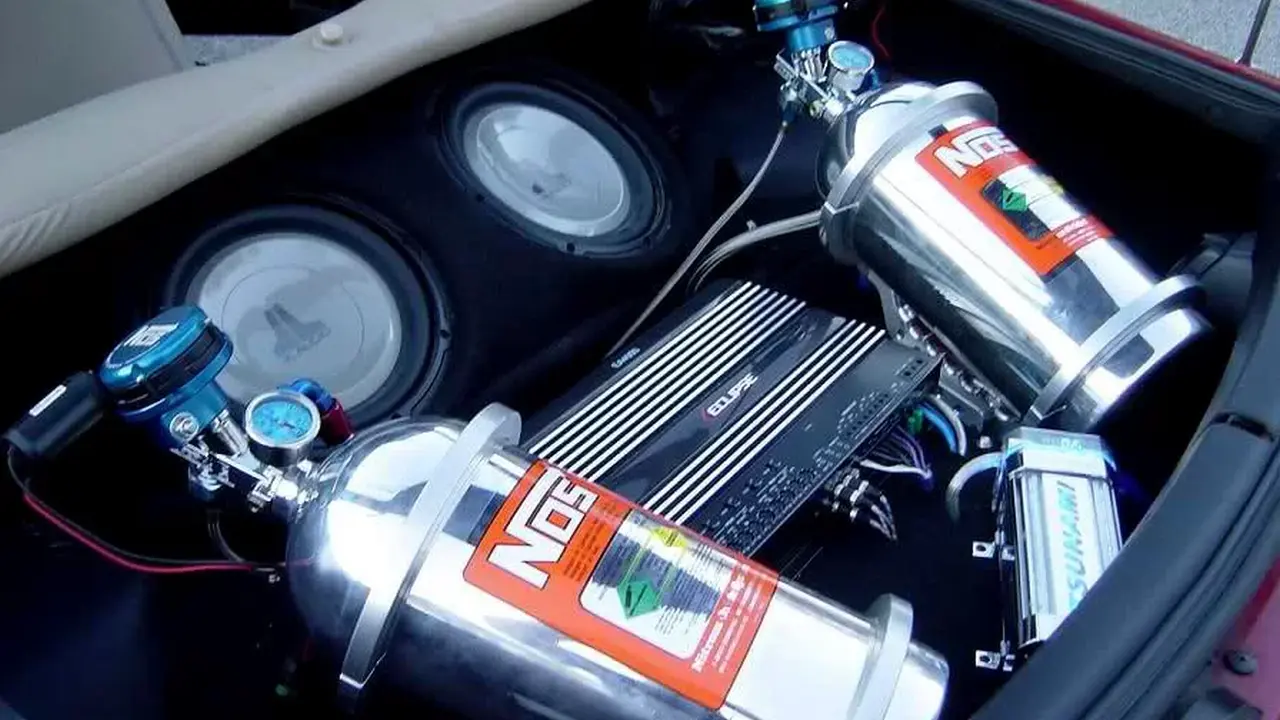
What Is NOS (Nitrous Oxide System)? How Does It Work?
NOS is a popular term used in the automotive world for a nitrous oxide system, a performance system designed to temporarily increase the power output of an internal combustion engine.
Nitrous oxide, commonly written as N₂O, contains oxygen that can help an engine burn more fuel when introduced into the intake system. Unlike a conventional engine modification that permanently changes the engine's airflow characteristics, a nitrous system is generally used only when additional power is requested.
The result can be a significant temporary increase in engine power, which is why nitrous oxide has been used extensively in drag racing, motorsports, and high-performance street applications.
What Does NOS Stand For?
NOS is commonly used as shorthand for a nitrous oxide system, but NOS is also the name of a well-known manufacturer of nitrous systems.
In everyday automotive language, people often use "NOS" to describe nitrous oxide in general, even when the actual system is produced by another company.
The chemical used by these systems is nitrous oxide, N₂O.
What Is Nitrous Oxide?
Nitrous oxide is a chemical compound consisting of two nitrogen atoms and one oxygen atom.
When it is introduced into an engine under the appropriate conditions, it provides additional oxygen that can support the combustion of additional fuel.
This is the fundamental reason nitrous oxide can increase engine power.
An engine's power is strongly influenced by how much air and fuel it can effectively burn. Nitrous oxide allows the engine to increase the amount of oxygen available during combustion without relying solely on naturally aspirated airflow or a larger turbocharger.
How Does a Nitrous System Work?
A nitrous system stores nitrous oxide in a pressurized bottle.
When the system is activated, nitrous oxide is delivered toward the engine's intake system through dedicated plumbing and control components.
As the nitrous enters the intake system, the additional oxygen available during the combustion process allows the engine to burn additional fuel.
This produces a larger combustion event and can temporarily increase engine torque and horsepower.
The system is normally activated only under specific operating conditions rather than continuously.
Why Does Nitrous Oxide Increase Power?
The key is oxygen availability.
An engine needs oxygen to burn fuel. If more oxygen can be introduced into the combustion process, additional fuel can potentially be burned as well.
More fuel and oxygen burned efficiently can produce more energy during the power stroke.
Nitrous oxide therefore does not simply act as a conventional fuel or a chemical that directly creates horsepower. Its primary role is to help provide additional oxygen so that the engine can support a larger amount of combustion.
Does Nitrous Oxide Itself Contain Fuel?
No.
Nitrous oxide is not a fuel.
It acts as an oxygen-bearing compound that supports combustion. The engine still needs an appropriate amount of fuel to take advantage of the additional oxygen.
This is one of the most important principles of nitrous tuning.
Simply adding more nitrous without providing the appropriate fuel and engine calibration can create an excessively lean combustion condition and potentially cause serious engine damage.
What Happens Inside the Engine?
During normal operation, the engine draws air into the cylinders through the intake system.
With a nitrous system activated, additional nitrous oxide enters the intake stream.
Under combustion conditions, nitrous oxide can release oxygen that becomes available to support combustion.
The engine can then burn additional fuel.
The increased combustion energy produces a higher cylinder pressure during the power stroke, increasing torque at the crankshaft.
Because this happens only while the system is active, the additional power is generally temporary.
Wet vs. Dry Nitrous Systems
Nitrous systems are commonly divided into two broad categories: dry systems and wet systems.
Dry nitrous systems introduce nitrous oxide without directly adding fuel through the nitrous delivery system. The engine's existing fuel system is expected to provide the additional fuel required, usually with appropriate electronic control.
Wet nitrous systems introduce nitrous oxide together with additional fuel through the system itself.
The choice between these approaches depends on the engine, fuel system, ECU strategy, intended power increase, and overall vehicle configuration.
What Is a Nitrous Plate System?
A plate system places a nitrous delivery component between the throttle body and intake manifold.
The plate contains passages or nozzles designed to distribute the system's contents into the intake airflow.
This configuration can provide relatively even distribution and is commonly associated with performance applications.
The exact design varies according to the engine and manufacturer.
What Is a Direct-Port Nitrous System?
A direct-port system uses individual delivery points for the engine's cylinders.
Instead of introducing nitrous into a single location upstream of the intake manifold, the system distributes it more directly to the individual intake runners.
This type of arrangement can provide more precise cylinder-to-cylinder distribution and is generally associated with more advanced high-performance applications.
What Is a Single-Nozzle System?
A single-nozzle system introduces nitrous at one point in the intake tract.
It is mechanically simpler than a direct-port arrangement and can be suitable for certain applications when properly matched to the engine.
However, intake manifold design and airflow distribution can affect how evenly the additional mixture reaches the cylinders.
Does Nitrous Oxide Make an Engine Faster?
Yes, a properly designed and calibrated nitrous system can significantly increase engine output while it is active.
One of the biggest advantages of nitrous is that the system can provide a large increase in power without requiring a permanently larger engine, turbocharger, or supercharger.
This makes it particularly attractive for applications where temporary additional power is desired.
Why Is Nitrous Popular in Drag Racing?
Nitrous is especially useful in drag racing because the additional power is only needed for a relatively short period.
A drag racing engine does not necessarily need to operate with maximum additional power during normal driving.
Nitrous can therefore provide a substantial power increase during acceleration while remaining inactive during normal operation.
This makes it possible to build an engine around a specific baseline power level and use nitrous when additional performance is required.
Does Nitrous Oxide Reduce Intake Air Temperature?
Nitrous systems can produce a cooling effect as the pressurized nitrous changes state and enters the intake system.
The resulting reduction in intake charge temperature can increase charge density.
Denser intake air contains more oxygen per unit volume, which can further contribute to the system's ability to increase engine output.
The exact cooling effect depends on the system design, pressure, delivery method, and operating conditions.
Is Nitrous the Same as a Turbocharger?
No.
A turbocharger uses exhaust energy to compress intake air before it enters the engine.
A nitrous system introduces nitrous oxide into the intake system to provide additional oxygen and, depending on the system design, additional fuel.
The two technologies can also be combined.
A turbocharged engine can use nitrous to provide additional power under specific conditions, although this requires careful consideration of cylinder pressure, fueling, ignition timing, engine strength, and thermal load.
Nitrous vs. Supercharger
A supercharger mechanically compresses intake air using power from the engine.
Nitrous oxide, on the other hand, is stored separately and introduced into the engine when required.
A supercharger provides additional airflow whenever it is operating, while a nitrous system is normally used as an on-demand power increase.
Both approaches can produce substantial performance gains, but they place different demands on the engine and supporting systems.
Can Nitrous Be Used on a Turbocharged Engine?
Yes, nitrous can be combined with turbocharging.
In some applications, nitrous can also be used to help improve turbocharger response or provide additional power.
However, combining forced induction with nitrous can substantially increase cylinder pressure and thermal stress.
The engine, fuel system, ignition system, ECU calibration, and cooling system must therefore be capable of handling the additional load.
This is not an area where simply adding components without proper calibration is appropriate.
Does Nitrous Damage an Engine?
Nitrous oxide does not automatically damage an engine.
The risk comes from using a system that is poorly matched, incorrectly calibrated, or operated beyond what the engine and supporting components can safely handle.
Potential problems include:
-
Excessive cylinder pressure
-
Detonation
-
Pre-ignition
-
Excessive combustion temperature
-
Piston damage
-
Ring-land damage
-
Head-gasket failure
-
Connecting-rod damage
-
Valve damage
-
Fuel-system limitations
A properly engineered system can be reliable, while an improperly configured system can cause catastrophic engine failure.
Why Is Fuel Calibration So Important?
When additional oxygen is introduced into the engine, the engine must have enough fuel available to maintain an appropriate air-fuel mixture.
If the engine receives additional oxygen without sufficient fuel, combustion can become excessively lean.
A lean mixture under high load can dramatically increase the risk of detonation and excessive combustion temperatures.
For this reason, the fuel system and engine management strategy are critical parts of any serious nitrous installation.
What About Ignition Timing?
Ignition timing is another important consideration.
Increasing cylinder pressure can change the engine's sensitivity to ignition timing and detonation.
Depending on the application, the ignition strategy may need to be adjusted when the nitrous system is active.
Modern engines can require sophisticated ECU calibration because ignition timing, fuel delivery, throttle control, knock detection, and other systems may all interact.
Can a Stock Engine Use Nitrous?
Some stock engines can tolerate a relatively modest increase in cylinder pressure, while others have very little safety margin.
There is no universal amount of nitrous that can be considered safe for every stock engine.
Engine compression ratio, piston design, connecting rods, cylinder head, fuel system, cooling capacity, ECU calibration, engine condition, and fuel quality all matter.
A stock engine that is healthy and designed with sufficient strength may tolerate a mild performance increase, while another engine may suffer damage under similar conditions.
Does Nitrous Increase Engine Wear?
It can.
Whenever engine output increases substantially, mechanical and thermal loads can also increase.
Higher cylinder pressure places additional stress on:
-
Pistons
-
Connecting rods
-
Crankshaft
-
Bearings
-
Head gasket
-
Valves
-
Valve train components
The frequency and duration of nitrous use also matter.
An engine regularly operated under extreme additional load will generally experience more stress than the same engine operating at its normal factory output.
What Is a Nitrous Bottle?
The nitrous bottle is the pressurized container used to store the nitrous oxide.
The bottle is one of the most visible components of a typical system and is commonly mounted securely inside the vehicle or in a dedicated area.
Proper mounting and handling are extremely important because the bottle contains a pressurized substance.
The bottle should be installed according to the manufacturer's safety requirements and protected from inappropriate heat exposure or physical damage.
Does a Nitrous Bottle Need to Be Refilled?
Yes.
Unlike a turbocharger or supercharger, a nitrous system relies on a finite supply of nitrous oxide.
Once the bottle is depleted, the system cannot provide its additional power until it is refilled.
How long a bottle lasts depends on the system configuration and how frequently it is activated.
What Is a Nitrous Solenoid?
A solenoid is an electrically controlled valve used to control the flow of the system.
When the system is activated, the appropriate solenoids open according to the system's control strategy.
Nitrous and fuel systems may use separate control components.
The solenoids are therefore important for controlling when the additional components are delivered to the engine.
What Is a Nitrous Controller?
More advanced systems can use electronic controllers to manage the delivery of nitrous.
A controller can allow the system to be integrated with engine speed, throttle position, traction conditions, and other operating parameters.
This can make the power increase more progressive and easier to manage than a simple on/off arrangement.
Can Nitrous Help Reduce Turbo Lag?
In certain specialized applications, nitrous can be used as part of a strategy to improve turbocharger response.
The concept is based on increasing engine output and exhaust energy under conditions where the turbocharger has not yet reached its desired operating state.
However, this is an advanced application and requires careful integration between the engine, turbocharger, fuel system, ignition strategy, and ECU.
Does Nitrous Improve Fuel Economy?
Nitrous systems are primarily designed for performance, not fuel economy.
Using nitrous increases the engine's ability to produce power and generally requires additional fuel during operation.
Although combustion efficiency and operating conditions can vary, a nitrous system should not be considered a fuel-saving modification.
What Are the Advantages of Nitrous Oxide?
A properly engineered nitrous system can offer several advantages:
-
Large temporary power increase
-
Relatively compact hardware
-
On-demand power
-
Lower permanent engine modifications than some forced-induction conversions
-
Strong acceleration improvement
-
Useful for motorsport applications
-
Can be combined with naturally aspirated or forced-induction engines
One of the biggest attractions is its ability to provide additional power only when needed.
What Are the Disadvantages?
Nitrous also has significant disadvantages.
Finite supply: The bottle eventually needs to be refilled.
Additional engine stress: Higher cylinder pressure can increase mechanical and thermal loads.
Fuel-system requirements: The engine must have sufficient fuel delivery capacity.
Calibration requirements: Incorrect ignition or fuel calibration can cause serious damage.
Installation complexity: Plumbing, electrical control, bottle mounting, and engine management all need to be considered.
Potential reliability problems: Poorly designed systems can create major engine problems.
Regulatory considerations: The legality and requirements for nitrous systems can vary depending on the country and intended vehicle use.
Is Nitrous Oxide Legal on Street Cars?
The legal status of nitrous systems varies by jurisdiction.
A system that is acceptable for a competition vehicle may not necessarily be legal for public-road use.
Local regulations can address emissions equipment, vehicle modifications, safety requirements, and the transportation or installation of pressurized systems.
For this reason, legality should always be checked according to the regulations applicable to the vehicle's location and intended use.
Is NOS the Same as Nitrous?
In automotive conversation, the terms are often used interchangeably.
Technically, however, NOS is a brand name, while nitrous oxide is the chemical compound used in the system.
Many different manufacturers produce nitrous oxide systems and components.
Therefore, a vehicle can have a nitrous system without using a product manufactured by NOS.
Is a Nitrous System Better Than a Turbocharger?
Neither system is universally better.
A turbocharger can provide sustained additional power without requiring a finite bottle supply.
Nitrous provides a temporary and often substantial increase in power when activated.
The best choice depends on the intended application.
For a street car seeking continuous additional power, forced induction may make more sense. For a drag racing application where short bursts of additional power are valuable, nitrous can be extremely effective.
What Makes a Nitrous System Reliable?
Reliability depends on the entire combination rather than the nitrous hardware alone.
A reliable setup requires:
-
A healthy engine
-
Adequate fuel delivery
-
Appropriate ECU calibration
-
Suitable ignition strategy
-
Correct system compatibility
-
Proper monitoring
-
Secure installation
-
Appropriate thermal management
-
Components rated for the intended application
The engine should always have an adequate safety margin for the additional power being requested.
Final Takeaway
A NOS or nitrous oxide system is essentially an on-demand power adder for an internal combustion engine.
By introducing nitrous oxide into the engine, the system can increase the oxygen available for combustion and allow the engine to burn additional fuel. This can produce a substantial temporary increase in torque and horsepower.
The technology is relatively straightforward in principle, but the additional power places greater demands on the engine, fuel system, ignition system, and engine management.
That is why the most important part of a nitrous installation is not simply adding more nitrous. The system needs to be properly matched to the engine and calibrated as a complete package.
When engineered correctly, nitrous oxide can be one of the most effective ways to obtain a temporary increase in engine performance, particularly in applications where maximum power is needed for a limited period.