TR
TR EN
EN

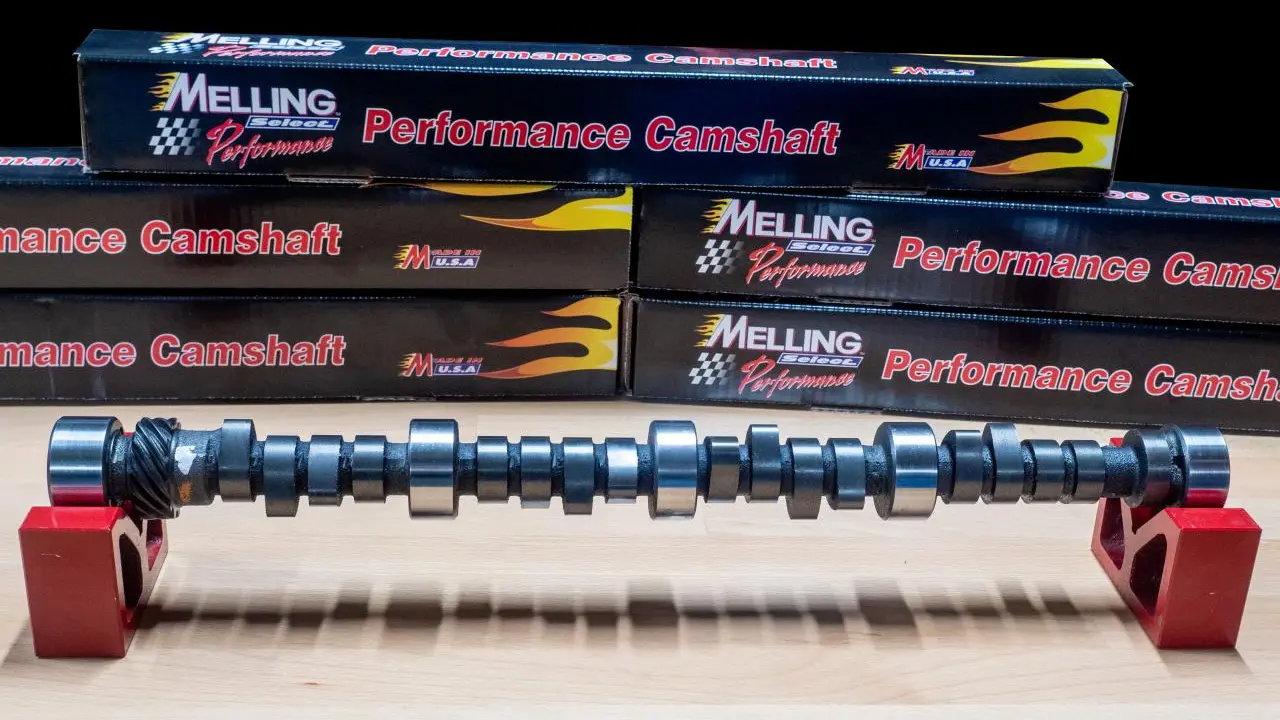
What Is a Performance Camshaft?
A performance camshaft is a modified or specially designed camshaft developed to change the way an engine's valves open and close. By altering valve timing, lift, duration, and sometimes the separation between intake and exhaust events, a performance camshaft can change an engine's power delivery, RPM range, throttle response, and overall character.
The camshaft is one of the most important components in an internal combustion engine because it determines when the intake and exhaust valves open, how far they open, and how long they remain open.
A performance camshaft does not simply make an engine more powerful by itself. Its real purpose is to change the engine's breathing characteristics so that the engine can move more air through the cylinders under the conditions for which the camshaft was designed.
What Does a Camshaft Do?
The camshaft controls the movement of the engine's valves.
In a four-stroke engine, the basic cycle consists of:
-
Intake
-
Compression
-
Power
-
Exhaust
During the intake stroke, the intake valve must open so that air, or an air-fuel mixture depending on the engine design, can enter the cylinder.
During the exhaust stroke, the exhaust valve must open to allow burned gases to leave the cylinder.
The camshaft controls these valve movements mechanically or through a variable valve timing system.
The shape of the camshaft lobes determines how the valves behave.
What Makes a Camshaft a Performance Camshaft?
A performance camshaft generally uses different valve timing and lift characteristics compared with a standard factory camshaft.
The main characteristics that can be changed include:
-
Valve lift
-
Valve duration
-
Intake valve opening timing
-
Intake valve closing timing
-
Exhaust valve opening timing
-
Exhaust valve closing timing
-
Valve overlap
-
Lobe separation angle
These parameters determine how the engine breathes at different engine speeds.
A camshaft designed for low-RPM torque will have different characteristics from one designed for high-RPM power.
What Is Camshaft Lift?
Lift refers to how far the camshaft causes the valve to open.
A higher-lift camshaft opens the valve farther, assuming the rest of the valve train is capable of supporting that movement.
Greater valve lift can increase the opening area available for airflow.
More airflow can potentially improve cylinder filling, particularly at higher engine speeds.
However, simply increasing lift does not guarantee more power.
The cylinder head, valve size, intake manifold, exhaust system, valve springs, rocker arms, and other components all influence how effectively the additional lift can be used.
What Is Camshaft Duration?
Duration describes how long a valve remains open during the engine cycle.
It is commonly expressed in degrees of crankshaft rotation.
A performance camshaft may use longer duration than the factory camshaft.
Longer duration can allow the engine to continue flowing air for a greater portion of the intake or exhaust cycle.
This can be beneficial at higher RPM because the air has less time to enter and leave the cylinder.
However, longer duration can also reduce low-speed cylinder filling.
This is one reason aggressive performance camshafts often move the engine's strongest power toward higher RPM.
What Is Valve Overlap?
Valve overlap occurs when the intake and exhaust valves are open at the same time for a portion of the engine cycle.
Overlap can help use the movement of exhaust gases to assist fresh air entering the cylinder.
At high RPM, this can improve cylinder filling under the right conditions.
However, excessive overlap can cause undesirable behavior at low engine speeds.
It can contribute to:
-
Rough idle
-
Reduced low-RPM torque
-
Poorer drivability
-
Increased emissions
-
Greater sensitivity to camshaft tuning
This is why an aggressive performance camshaft may produce a noticeable lopey or uneven idle.
Why Does a Performance Camshaft Increase High-RPM Power?
An engine needs to move a large amount of air as RPM increases.
At higher engine speeds, there is less time available for each intake and exhaust event.
A performance camshaft can keep the valves open longer and, depending on its design, open them farther.
This can help the engine breathe more effectively at high RPM.
As a result, the engine's power curve can shift toward higher engine speeds.
For example, an engine that originally produces strong torque at relatively low RPM may become more powerful at higher RPM after installing a suitable performance camshaft.
The trade-off is that low-RPM behavior may become less impressive.
Does a Performance Camshaft Increase Horsepower?
It can.
However, the amount of additional horsepower depends on the entire engine combination.
A performance camshaft works best when the other components can take advantage of its characteristics.
Potential supporting modifications include:
-
Cylinder head work
-
Higher-flow intake system
-
Performance exhaust
-
Appropriate valve springs
-
Suitable compression ratio
-
ECU calibration
-
Correct ignition timing
-
Fuel-system capacity
Installing an aggressive camshaft on an otherwise completely stock engine may produce a smaller improvement than expected.
In some cases, an incorrectly matched camshaft can even reduce overall drivability and low-speed performance.
Does a Performance Camshaft Increase Torque?
It can change torque significantly, but the effect depends on the camshaft profile.
A camshaft designed for high-RPM power may move the engine's torque peak higher in the RPM range.
This means the engine may produce more torque at high RPM while producing less torque at low RPM.
On the other hand, a mild performance camshaft can be designed to improve mid-range torque without sacrificing too much everyday drivability.
Therefore, there is no single "performance camshaft" specification that is ideal for every engine.
Performance Camshaft vs. Stock Camshaft
A stock camshaft is generally designed around a broad range of requirements.
The manufacturer needs the engine to provide:
-
Good fuel economy
-
Smooth idle
-
Low emissions
-
Reliable cold starts
-
Good low-speed drivability
-
Reasonable high-RPM performance
-
Long component life
A performance camshaft usually places greater emphasis on a specific operating range.
It may sacrifice some low-speed smoothness or fuel economy in exchange for improved airflow and power at higher engine speeds.
This is why a factory camshaft is usually better suited to normal daily driving, while a performance camshaft can be more appropriate for a modified or enthusiast-oriented engine.
Does a Performance Camshaft Make the Engine Idle Rough?
It can.
Aggressive camshaft profiles often use longer duration and increased overlap.
At low engine speeds, this can reduce the stability of the combustion process.
As a result, the engine may develop a characteristic uneven or "lopey" idle.
This behavior is often associated with modified performance engines.
A mild performance camshaft, however, can provide additional performance while maintaining relatively smooth idle quality.
Does a Performance Camshaft Affect Fuel Consumption?
Yes, potentially.
Fuel consumption can change because the camshaft alters the engine's airflow and combustion characteristics.
An aggressive camshaft may reduce efficiency at low engine speeds and can require different fueling and ignition calibration.
In addition, drivers often operate modified engines at higher RPM, which naturally increases fuel consumption.
A properly matched mild performance camshaft does not necessarily result in a dramatic increase in fuel consumption under normal driving conditions.
Does a Performance Camshaft Require ECU Tuning?
In many cases, proper ECU calibration is highly recommended.
Changing valve timing and lift changes the amount of air entering the engine and the characteristics of the combustion process.
The ECU may need to adjust parameters such as:
-
Fuel injection
-
Ignition timing
-
Idle control
-
Variable valve timing
-
Throttle behavior
Modern engines with sophisticated electronic management can be particularly sensitive to camshaft changes.
A camshaft installation followed by appropriate calibration can therefore produce much better results than simply installing the mechanical component without adjusting the engine management system.
Performance Camshafts and Variable Valve Timing
Modern engines often use variable valve timing systems.
These systems can dynamically change camshaft timing according to engine speed, load, and operating conditions.
Examples include systems that adjust:
-
Intake camshaft timing
-
Exhaust camshaft timing
-
Camshaft phasing
-
Valve lift
When a performance camshaft is installed in an engine with variable valve timing, compatibility becomes especially important.
The camshaft profile must work correctly with the engine's variable timing system.
A camshaft designed for an older fixed-timing engine may not be suitable for a modern engine with advanced valve control.
What Is a Camshaft Profile?
The camshaft profile refers to the geometry of the cam lobes and the resulting valve movement.
The profile determines how quickly the valve opens, how far it opens, how long it stays open, and how quickly it closes.
Two camshafts can have the same maximum lift but behave very differently because their profiles may have different opening and closing characteristics.
This is why comparing camshafts based only on maximum lift is not enough.
What Is Lobe Separation Angle?
Lobe separation angle, often abbreviated as LSA, describes the angular relationship between the intake and exhaust camshaft lobes.
It influences valve overlap and the overall behavior of the engine.
A narrower lobe separation can generally increase overlap, potentially producing stronger characteristics in certain high-performance applications.
A wider separation can provide different power delivery and idle characteristics.
The correct value depends on the engine's cylinder head, intake system, exhaust system, compression ratio, RPM range, and intended use.
Does a Performance Camshaft Work With a Turbocharged Engine?
Yes, but turbocharged engines require careful camshaft selection.
A camshaft designed for a naturally aspirated engine may not be ideal for a turbocharged application.
Valve overlap is particularly important.
Too much overlap can allow pressurized intake air to escape into the exhaust system under certain operating conditions.
This can reduce efficiency and alter turbocharger behavior.
Turbocharged engines therefore often use camshaft profiles specifically designed around forced induction.
The correct camshaft depends on the turbocharger, boost level, cylinder head, compression ratio, exhaust system, and desired RPM range.
Can a Performance Camshaft Be Used in a Diesel Engine?
Performance camshafts can also be used in diesel engines, although the requirements are different from gasoline engines.
Diesel combustion characteristics, compression ratios, injection timing, turbocharger operation, and cylinder pressure all need to be considered.
A camshaft designed for a gasoline engine is not automatically suitable for a diesel engine.
In modern diesel engines, camshaft modifications also need to work with the fuel injection system, turbocharger, emissions equipment, and ECU strategy.
Do You Need Stronger Valve Springs?
Depending on the camshaft, stronger valve springs may be necessary.
Higher lift and more aggressive cam profiles can place additional demands on the valve train.
At high RPM, the valve must follow the camshaft profile accurately.
If the valve spring is not strong enough, valve float can occur.
Valve float means the valve no longer follows the camshaft profile correctly.
This can cause:
-
Loss of power
-
Misfires
-
Poor engine operation
-
Valve train damage
-
In severe cases, major engine damage
For this reason, valve springs should always be selected according to the camshaft manufacturer's specifications and the intended RPM range.
What Is Valve Float?
Valve float is a condition in which the valve spring cannot maintain proper control of the valve at high engine speed.
Instead of following the camshaft precisely, the valve can lose contact with the intended movement profile.
This is particularly dangerous in engines operating at high RPM.
An aggressive performance camshaft can increase the risk if the rest of the valve train has not been upgraded appropriately.
Does a Performance Camshaft Increase the Engine's RPM Limit?
A performance camshaft can be designed for higher RPM operation, but installing one does not automatically make an engine safe at higher RPM.
The entire valve train must be capable of operating at the desired engine speed.
Components such as:
-
Valve springs
-
Retainers
-
Rocker arms
-
Lifters
-
Pushrods
-
Valves
-
Connecting rods
-
Pistons
may become limiting factors.
The engine's maximum safe RPM should therefore be determined by the complete engine configuration rather than the camshaft alone.
Can a Performance Camshaft Improve Throttle Response?
It can, but the result depends on the camshaft profile and engine setup.
A mild camshaft designed for improved mid-range performance can make the engine feel more responsive.
An aggressive high-RPM camshaft, however, may make the engine feel less responsive at low RPM.
This is another example of why performance modifications involve compromises.
Improving one part of the engine's operating range can sometimes reduce performance in another.
Is a Performance Camshaft Suitable for a Daily-Driven Car?
It can be, especially when a mild profile is selected.
For a daily driver, an extremely aggressive camshaft may create problems such as:
-
Rough idle
-
Poor low-speed torque
-
Increased fuel consumption
-
Reduced drivability
-
Higher emissions
-
Greater valve train stress
A milder performance camshaft can provide a more balanced combination of power and everyday usability.
The ideal setup depends on whether the vehicle is primarily used for commuting, spirited road driving, or track use.
How Much Does a Performance Camshaft Lower Fuel Economy?
There is no universal percentage.
Fuel economy depends on the engine, camshaft profile, ECU calibration, compression ratio, intake and exhaust systems, driving style, and transmission.
A mild camshaft combined with a properly tuned engine may have only a small effect on fuel consumption.
A highly aggressive camshaft can have a more noticeable effect, particularly during low-speed driving and frequent acceleration.
What Are the Advantages of a Performance Camshaft?
A properly selected performance camshaft can provide several advantages:
-
Increased high-RPM power
-
Improved cylinder filling
-
Higher valve lift
-
Longer valve duration
-
A broader or shifted power band
-
More aggressive engine character
-
Improved performance when matched with other engine modifications
-
Greater potential for high-RPM operation when the complete valve train is upgraded appropriately
The exact benefits depend on the camshaft design and the engine it is installed in.
What Are the Disadvantages of a Performance Camshaft?
Performance camshafts can also introduce compromises.
Reduced low-RPM torque: Aggressive profiles can move the engine's strongest performance higher in the RPM range.
Rougher idle: Increased duration and overlap can make the engine idle less smoothly.
Higher fuel consumption: Depending on the setup and driving style, efficiency can decrease.
Increased valve train stress: More aggressive profiles can place greater demands on springs, lifters, retainers, and other components.
Additional tuning requirements: The ECU may need to be recalibrated.
Higher installation cost: Supporting modifications may be required for the camshaft to work correctly.
Reduced everyday drivability: An aggressive camshaft designed for racing may not be pleasant in normal traffic.
What Should You Consider When Choosing a Performance Camshaft?
The most important question is not simply how much lift or duration a camshaft has.
You should first determine what the engine is supposed to do.
Consider:
-
Desired power band
-
Target RPM range
-
Naturally aspirated or turbocharged operation
-
Engine displacement
-
Cylinder head design
-
Compression ratio
-
Intake system
-
Exhaust system
-
ECU calibration
-
Valve spring capacity
-
Intended use
A camshaft should be selected as part of the entire engine combination.
A profile that works extremely well on a high-RPM track engine may perform poorly in a street car.
Is a Performance Camshaft Worth It?
A performance camshaft can be an effective engine modification when the correct profile is selected for the intended application.
Its biggest advantage is that it can change the way the engine breathes, allowing the engine to be optimized for a different RPM and power range.
However, a performance camshaft should not be viewed as an isolated upgrade.
The best results come when the camshaft is matched with the cylinder head, intake, exhaust, compression ratio, valve train, fuel system, and ECU calibration.
For a daily-driven car, a mild performance camshaft can offer a useful improvement without completely sacrificing drivability.
For a track-oriented engine, a more aggressive profile can move the power band toward higher RPM and unlock considerably more performance when the rest of the engine is built to support it.
Ultimately, the best performance camshaft is not necessarily the one with the highest lift or longest duration. It is the one whose valve timing and profile match the engine's airflow characteristics, RPM range, and intended purpose.