TR
TR EN
EN

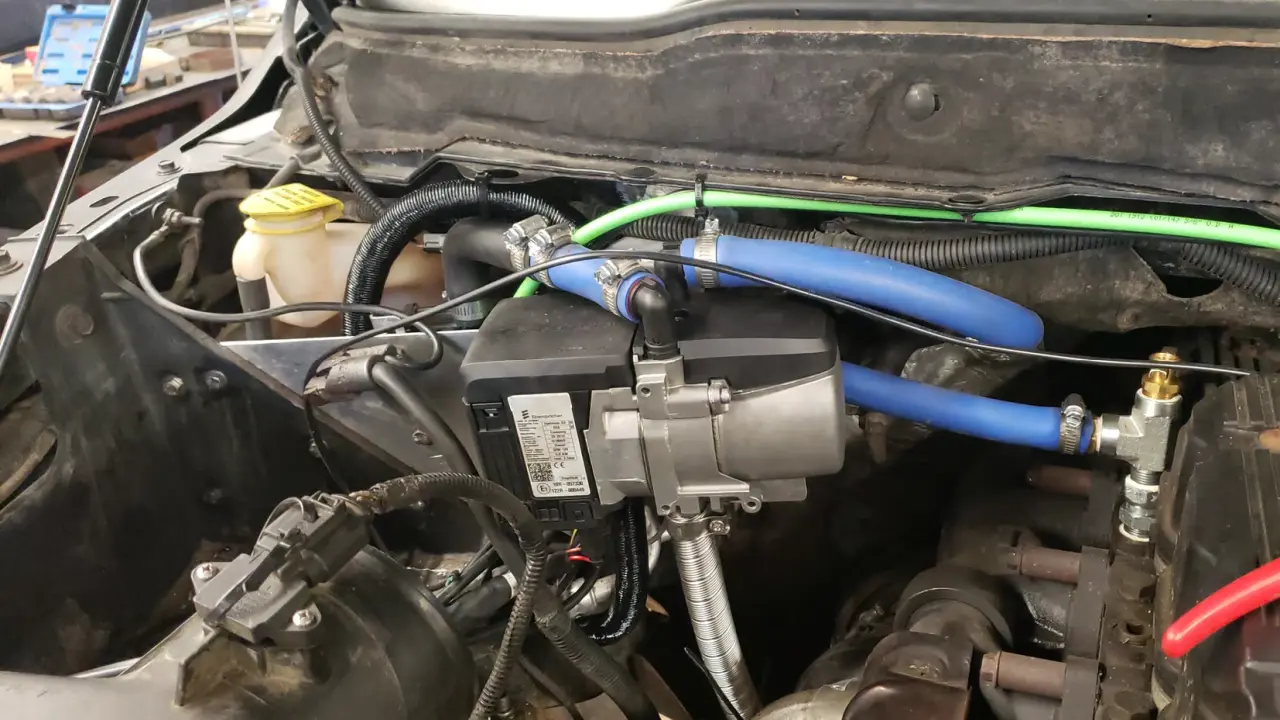
What Is Webasto? How Does Webasto Work?
Webasto is a brand known for its auxiliary heating and thermal management systems used in passenger cars, commercial vehicles, trucks, buses, motorhomes, and other specialized vehicles. In everyday automotive language, however, the word “Webasto” is often used to refer specifically to a parking heater.
The main purpose of a Webasto parking heater is to heat the vehicle's interior before the engine is started, helping remove ice and condensation from the windows and, depending on the system, preheat the engine as well.
Fuel-operated Webasto heaters generate their own heat instead of relying on the engine to warm up first. Depending on the design, the system can heat the engine coolant or directly heat the air inside the vehicle.
Not every Webasto system works in exactly the same way. Water-based heaters use the vehicle's coolant circuit, air heaters heat cabin air directly, and electric high-voltage heaters are used in many hybrid and electric vehicles.
What Is Webasto Used For?
A conventional vehicle heater normally depends on heat generated by the engine.
When the engine is running, the coolant gradually becomes hot. This heat is transferred through the heater core, and the cabin blower sends warm air into the interior.
Webasto changes this process by producing heat independently.
A fuel-operated parking heater can operate while the engine is switched off. In a water-based system, the coolant is heated and circulated through the vehicle's heating system. The cabin can then be warmed before the driver starts the engine.
Depending on the vehicle and installation, the benefits can include:
-
Preheating the cabin.
-
Defrosting or clearing the windshield.
-
Reducing condensation on the windows.
-
Preheating the engine.
-
Improving cold-start conditions.
-
Reducing the need to leave the engine idling just to warm the vehicle.
How Does Webasto Work?
A typical fuel-operated Webasto parking heater works somewhat like a small independent combustion heater.
The main components generally include a combustion chamber, fuel delivery system, combustion-air fan, ignition element, heat exchanger, temperature sensors, circulation pump, and electronic control unit.
The operating sequence is generally as follows.
1. The heater is switched on
Depending on the installation, the heater can be activated using an in-car control, timer, remote control, or smartphone-based system.
2. Fuel is supplied
A dedicated fuel pump takes fuel from the vehicle's fuel tank and delivers it to the heater.
3. Combustion begins
The fuel is mixed with combustion air and ignited inside the combustion chamber.
4. Heat is transferred
The heat produced by combustion is transferred through a heat exchanger rather than being sent directly into the cabin.
5. Coolant or air is heated
In a water-based heater, the vehicle's coolant is heated and circulated through the system.
In an air heater, the air is heated directly.
6. Heat reaches the cabin
With a water-based system, the heated coolant passes through the vehicle's heater circuit and warms the heater core. The vehicle's blower then distributes warm air throughout the cabin.
This allows the interior to become warm even though the engine itself is not running.
How Does Webasto Heat the Engine?
One of the major advantages of a water-based Webasto heater is its ability to preheat the engine in suitable applications.
The heater is connected to the vehicle's coolant circuit. When the Webasto unit operates, it heats the coolant and circulates it through the appropriate parts of the system.
As a result, the engine can reach a higher temperature before it is started.
This is particularly useful in very cold climates. Instead of starting an engine that has been sitting outside for hours in freezing temperatures, the vehicle can be preheated first.
How Can Webasto Heat the Cabin Without the Engine Running?
This is one of the most interesting features of a parking heater.
A conventional heater relies on engine heat. Webasto does not have to wait for the engine to generate that heat because the heater creates its own thermal energy.
A water-based system can essentially work like this:
Webasto → Heated coolant → Heater core → Blower → Cabin
The engine therefore does not need to be running for the cabin heating system to produce warm air.
This is why a vehicle equipped with an appropriate Webasto system can already have a warm interior when the engine is started.
Does Webasto Only Work With Diesel Engines?
No.
Webasto systems are available for different types of vehicles and applications, including systems designed for diesel and gasoline-powered vehicles.
The correct heater must be selected according to the vehicle's engine type, electrical system, cooling system, heating requirements, and intended application.
Therefore, it is incorrect to think of Webasto as a heating system designed exclusively for diesel vehicles.
What Is a Water-Based Webasto Heater?
A water-based Webasto heater heats the vehicle's coolant rather than heating the cabin air directly.
The heater is integrated into the vehicle's coolant circuit. When the unit operates, it heats the coolant and circulates it through the appropriate heating circuit.
The heated coolant can then warm the vehicle's heater core, allowing the existing cabin blower to distribute warm air.
One of the major advantages of this design is that the same heat source can, in suitable applications, provide both cabin heating and engine preheating.
What Is an Air-Based Webasto Heater?
An air heater works differently.
Instead of heating the vehicle's coolant, it heats air directly and sends the warm air into the desired space.
This type of heater is particularly useful in applications such as:
-
Trucks.
-
Motorhomes.
-
Boats.
-
Commercial vehicles.
-
Cabins and specialized vehicles.
Air heaters can be useful when the main objective is to heat the occupied space rather than preheat the engine.
The basic difference is simple:
Water heater → heats coolant → can heat the cabin and, depending on the system, the engine.
Air heater → heats air directly → primarily heats the interior or occupied space.
Is Webasto the Same as the Vehicle's Air Conditioning System?
No.
A conventional Webasto parking heater is primarily a heating system, not an air-conditioning system.
The vehicle's air-conditioning system is designed primarily for cooling and temperature control, while a fuel-operated Webasto heater independently generates heat.
However, Webasto's product range extends beyond traditional parking heaters and includes various heating, cooling, and thermal management technologies.
Does Webasto Use Fuel While the Engine Is Off?
Yes, if it is a fuel-operated system.
A fuel-operated Webasto burns a small amount of fuel to generate heat, even when the engine is switched off.
However, this should be viewed in the context of what the system is replacing.
For example, using a parking heater before driving is different from leaving the engine idling for a long period simply to warm the cabin.
Webasto also uses electrical energy from the vehicle's battery to operate components such as:
-
The fuel pump.
-
Combustion-air fan.
-
Coolant circulation pump.
-
Control electronics.
-
Vehicle blower, depending on the system.
Therefore, both fuel and electrical consumption should be considered.
Can Webasto Drain the Battery?
It can, particularly if the vehicle has a weak or aging battery or the heater is operated for long periods without sufficient driving afterward.
A Webasto system consumes electrical power even though the engine is switched off.
The battery may have to supply the heater's electronics, fuel pump, fans, circulation pump, and other components.
Modern systems can include low-voltage protection that shuts the heater down when battery voltage falls too low. This helps prevent the heater from completely draining the battery and leaving the vehicle unable to start.
This is also why heating time should generally be balanced with subsequent driving time. If the vehicle is only driven for very short distances, repeated long heating cycles can put additional strain on the battery.
How Long Should Webasto Run?
There is no single operating time that applies to every vehicle.
The appropriate duration depends on:
-
Outside temperature.
-
Vehicle size.
-
Heater output.
-
Cabin insulation.
-
Battery condition.
-
Whether the engine is also being preheated.
-
The desired cabin temperature.
The purpose of a parking heater is normally to prepare the vehicle before driving rather than to keep it warm for several hours.
Running it longer than necessary increases fuel and electrical consumption without necessarily providing a useful additional benefit.
Can Webasto Defrost the Windshield?
Yes.
When a water-based Webasto system heats the vehicle's coolant and activates the cabin heating system, warm air can be directed toward the windshield.
This can help remove:
-
Condensation.
-
Frost.
-
Light ice.
-
Moisture.
The result is better visibility before driving.
This is one of the practical advantages of a parking heater, especially during winter.
Does Webasto Help the Engine?
A water-based Webasto system that is designed to preheat the engine can improve cold-start conditions.
When an engine is extremely cold, the engine oil becomes more viscous and the engine does not immediately operate under its normal thermal conditions.
Preheating the coolant can help bring the engine closer to its operating temperature before startup.
This can potentially reduce some of the disadvantages associated with repeated cold starts, particularly in very cold climates.
However, Webasto should not be viewed as a device that makes an engine immune to cold-start wear. Proper oil selection, maintenance, and correct starting procedures remain important.
How Does Webasto Burn Fuel Without Running the Engine?
The key is that the Webasto heater is essentially an independent combustion system.
It does not need the vehicle's engine to be running.
The heater has its own:
-
Fuel supply.
-
Combustion air supply.
-
Ignition system.
-
Combustion chamber.
-
Heat exchanger.
-
Exhaust system.
-
Electronic control system.
Fuel is burned inside the heater, producing heat.
That heat is then transferred to coolant or air depending on the heater design.
The combustion air comes from outside, and the exhaust gases are routed outside the vehicle through the heater's exhaust system.
The combustion process therefore remains separate from the air inside the passenger compartment.
Is It Normal for Webasto to Make Noise?
A fuel-operated Webasto heater is not completely silent.
It contains moving components and performs a combustion process, so some operating sounds are normal.
Depending on the system, you may hear:
-
A small fuel pump ticking sound.
-
Fan noise.
-
Coolant pump noise.
-
Changes in combustion sound during startup and shutdown.
However, heavy smoke, strong fuel odors, unusual combustion noises, repeated failed starts, or constant shutdowns should not be considered normal.
Such symptoms can indicate a problem with the heater, fuel supply, combustion system, electrical system, or exhaust system and should be inspected.
Can the Vehicle Be Driven While Webasto Is Running?
It depends on the type of Webasto system and how it is installed.
A parking heater is primarily designed to operate while the vehicle is parked and the engine is off.
However, some Webasto systems can also function as auxiliary heaters while the engine is running. In this configuration, the heater assists the vehicle's normal heating system.
Therefore, it is not correct to assume that every Webasto heater can only operate while the vehicle is parked.
The operating mode depends on the specific heater and vehicle installation.
How Does Webasto Work in Electric Vehicles?
Electric vehicles require different thermal management strategies because they do not produce the same amount of waste engine heat as internal-combustion vehicles.
Webasto offers high-voltage electric heating solutions designed for electric and hybrid vehicles.
Instead of burning fuel, these heaters use electrical energy to generate heat.
The heat can be used for:
-
Cabin heating.
-
Battery thermal management.
-
Coolant heating.
-
General vehicle thermal management.
This is particularly important in electric vehicles because cabin heating can have a noticeable effect on energy consumption and driving range.
Does Webasto Increase Fuel Consumption?
A fuel-operated Webasto naturally consumes some fuel while it is running.
However, the effect on overall vehicle fuel consumption depends on how the system is used.
For example, preheating the vehicle and then driving normally is different from operating the heater for a long time before every short trip.
There is therefore no universal fuel-consumption figure that applies to every Webasto installation.
The heater's output, operating time, outside temperature, vehicle size, and type of use all affect consumption.
What Are the Advantages of Webasto?
Webasto systems can provide several practical benefits, particularly in cold weather.
Improved comfort
You can enter a warm cabin instead of starting your journey in a freezing interior.
Better visibility
The system can help clear frost and condensation from the windows before driving.
Engine preheating
Suitable water-based systems can preheat the engine before startup.
Improved cold-start conditions
A warmer engine can start and reach normal operating conditions more easily in very cold weather.
Less engine idling
The engine does not need to be left running simply to heat the cabin.
Remote operation
Depending on the system, Webasto can be controlled through a timer, remote control, or smartphone-based system.
Are There Any Disadvantages to Webasto?
Yes.
Like any additional vehicle system, Webasto has its own maintenance requirements and potential failure points.
Fuel-operated systems:
-
Consume fuel.
-
Consume electrical power.
-
Depend on a healthy battery.
-
Have pumps, fans, sensors, and electronic components.
-
Contain a combustion system.
-
Require proper installation and maintenance.
-
Can require specialized diagnostic equipment when a fault occurs.
Incorrect installation can also create electrical, fuel, cooling-system, or exhaust-related problems.
For this reason, installation should be carried out by a technician familiar with the specific Webasto system and vehicle.
What Is the Difference Between Webasto and a Normal Car Heater?
A normal car heater uses heat generated by the engine.
The basic process is:
Engine → Coolant → Heater core → Blower → Cabin
A water-based Webasto system can instead provide:
Webasto → Heated coolant → Heater core → Blower → Cabin
This is the fundamental difference.
The conventional heater normally needs the engine to be running and warm.
A suitable Webasto parking heater can generate the necessary heat independently while the engine is switched off.
Is Webasto Worth Having?
Whether Webasto is worth installing depends heavily on the climate and how the vehicle is used.
It can be particularly useful for people who:
-
Live in very cold climates.
-
Park their vehicle outdoors overnight.
-
Regularly deal with frost and snow.
-
Want a warm cabin immediately after entering the vehicle.
-
Want to reduce long engine warm-up periods.
-
Need engine preheating in extremely cold conditions.
-
Operate trucks, motorhomes, or other vehicles where independent heating is particularly useful.
In a mild climate, the benefits may be less significant, especially if the vehicle is normally parked in a garage.
What Is Webasto in Simple Terms?
Webasto is best understood as an independent vehicle heating and thermal management system.
In a fuel-operated water heater, the system takes fuel from the vehicle, burns it inside a separate combustion unit, transfers the resulting heat to the coolant, and uses that heated coolant to warm the cabin and, in suitable applications, the engine.
An air heater works by heating air directly, while modern electric Webasto systems can use high-voltage electrical energy to provide heat for electric and hybrid vehicles.
The basic idea is simple:
Webasto produces heat before the vehicle's engine has to produce it.
That means the vehicle can be warmer, the windows can be clearer, and in suitable systems the engine can be preheated before the journey even begins.