TR
TR EN
EN

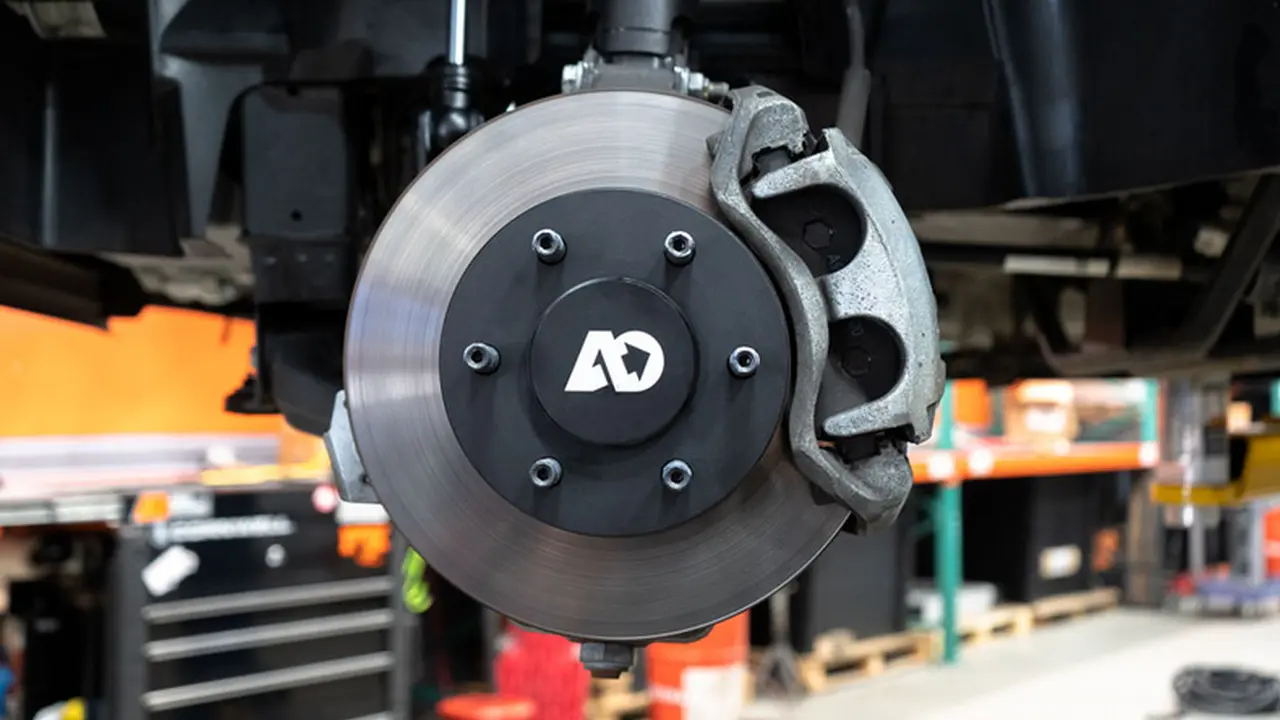
What Is a Spacer? Why Is a Spacer Installed?
In automotive applications, the term “spacer” generally refers to an intermediate component used to create a specific amount of distance between two parts or to increase an existing clearance. However, when people talk about spacers in the automotive world, one of the most common types is the wheel spacer.
A wheel spacer is installed between the wheel hub and the wheel, moving the wheel outward from the vehicle. This changes the position of the wheel relative to the fender and can make the wheels sit farther outward.
Spacers are not used only for appearance. When properly selected and installed, they can also provide additional clearance for brake calipers, help certain wheel and tire combinations fit properly, or prevent contact between the tire and suspension components.
How Does a Wheel Spacer Work?
Normally, a wheel is mounted directly onto the vehicle's hub. When a spacer is installed, an additional component is placed between the wheel and the hub.
For example, a 10 mm spacer moves the wheel approximately 10 mm outward.
This can:
-
Make the wheel sit farther outward relative to the fender.
-
Increase the clearance between the wheel and brake caliper.
-
Prevent the tire or wheel from contacting suspension components.
-
Increase the vehicle's track width.
The thicker the spacer, the farther outward the wheel moves. However, this is not simply an appearance-related change. Suspension geometry and the loads placed on wheel bearings can also be affected.
Why Are Wheel Spacers Installed?
There are several reasons for installing wheel spacers, and the purpose is not necessarily the same on every vehicle.
To move the wheels outward
One of the most common reasons is to give the vehicle a wider and more aggressive appearance. If the wheels sit too far inside the fenders, a spacer can move them outward and create a more flush appearance.
Even a relatively small change can noticeably alter the stance of a vehicle.
To create additional brake caliper clearance
Some large brake kits can place the caliper very close to the inside of the wheel. A spacer can move the wheel outward and create additional clearance between the wheel and caliper.
However, the actual clearance must always be checked rather than assuming that a particular spacer thickness will be sufficient.
To solve suspension clearance problems
Certain wheel and tire combinations may come very close to the strut, spring, control arm, or another suspension component.
A spacer can move the wheel outward and increase the clearance on the inner side.
To compensate for a different wheel offset
Wheel offset, usually expressed as ET, determines how far inward or outward a wheel sits in relation to its mounting surface.
A spacer can sometimes be used to adjust the position of a wheel with an unsuitable offset.
For example, a wheel with a higher ET value may sit farther inward than desired. Adding an appropriate spacer moves it outward.
The Relationship Between Wheel Spacers and Wheel Offset
Installing a spacer effectively changes the wheel's offset.
A simple way to calculate it is:
Effective ET = Original Wheel ET − Spacer Thickness
For example:
-
Wheel: ET45
-
Spacer: 10 mm
The effective position becomes approximately ET35.
As spacer thickness increases, the wheel moves farther outward.
For this reason, spacer selection should not be based only on how many millimeters you want the wheel to move outward. Wheel offset, wheel width, tire size, suspension design, and available fender clearance all need to be considered together.
Do Wheel Spacers Change Handling?
Yes, they can.
Moving the wheels outward changes the vehicle's track width, meaning the distance between the left and right wheels on an axle.
Increasing track width can influence the vehicle's cornering behavior. However, a small change of a few millimeters and the use of a very thick spacer do not have the same effect.
Using different spacer thicknesses on the front and rear axles can also change the vehicle's handling balance.
Therefore, spacers should not be considered purely as an appearance modification. Their effect on suspension geometry also matters.
Do Spacers Change Steering Feel?
Spacers installed on the front axle can affect steering geometry.
When the wheel's contact patch is moved outward relative to the steering axis, values such as the scrub radius can change.
Depending on the vehicle and spacer thickness, this may result in:
-
Heavier steering.
-
More road imperfections being transmitted through the steering wheel.
-
Increased sensitivity to road grooves.
-
Changes in steering behavior under acceleration or braking.
-
A greater tendency for the steering to react to uneven road surfaces.
The extent of these effects varies between vehicles. Wheel offset, spacer thickness, suspension geometry, and steering design all play a role.
Can Wheel Spacers Damage Wheel Bearings?
Using excessively thick or poorly selected spacers can increase the load on wheel bearings.
The reason is that moving the wheel outward changes the leverage acting on the bearing. The farther the wheel's contact patch moves away from the bearing, the greater the potential mechanical load.
However, it would be incorrect to say that installing a spacer automatically causes wheel bearing failure.
The combination of factors matters. A thick spacer, heavy wheel, heavy vehicle, and aggressive driving can place greater loads on wheel bearings and other suspension components.
Not All Wheel Spacers Are the Same
Spacer selection is not simply about thickness.
Several other characteristics are important.
Hub centering
The spacer must fit correctly onto the vehicle's hub. Proper centering is important for avoiding vibration, particularly at higher speeds.
Wheel centering
The wheel must also be properly centered on the spacer. Hub-centric spacers are generally preferred when correct centering is required.
Wheel bolt or stud engagement
On vehicles that use wheel bolts, installing a spacer can reduce the amount of thread engagement available from the original bolts.
Therefore, thicker spacers may require longer wheel bolts or appropriate wheel studs.
Material and manufacturing quality
A wheel spacer becomes part of the wheel mounting system. Its material strength, dimensional accuracy, machining quality, and overall construction are therefore important.
A poorly manufactured spacer can contribute to vibration or wheel mounting problems, particularly at high speeds.
Is There a Difference Between Thin and Thick Spacers?
Yes.
A 3–5 mm spacer does not have the same mechanical effect as a 20–30 mm spacer.
As spacer thickness increases:
-
The wheel moves farther outward.
-
Bearing leverage can increase.
-
Steering geometry can change more significantly.
-
The possibility of the wheel or tire extending beyond the fender increases.
-
Correct wheel bolt or stud engagement becomes more critical.
-
Proper installation becomes increasingly important.
For this reason, choosing the thickest spacer simply because it produces a more aggressive appearance is not necessarily a technically sound approach.
Do Wheel Spacers Make the Tires Look Wider?
Yes. This is one of the most common reasons people install them.
If the wheels appear too deeply recessed inside the fenders, a spacer can bring them outward and create a more flush appearance.
However, the tire must still have sufficient clearance when the suspension moves through its full range of travel.
It is not enough to check the vehicle while it is parked on level ground. Clearance should also be considered when the suspension is compressed and when the steering is turned fully left or right.
Can a Spacer Solve Tire Rubbing?
In some situations, yes.
If a tire is rubbing against a suspension component on the inside, moving the wheel outward can increase the inner clearance.
However, this does not automatically solve every rubbing problem.
When the wheel is moved outward, the tire becomes closer to the fender on the outside.
Therefore, both sides need to be checked:
-
Inner clearance around suspension components.
-
Outer clearance around the fender and wheel arch.
A spacer can solve one clearance problem while creating another if the overall wheel and tire combination is not suitable.
Do Wheel Spacers Increase Fuel Consumption?
A small spacer by itself is not normally expected to cause a noticeable increase in fuel consumption.
However, spacer installations are sometimes combined with other modifications, such as:
-
Wider wheels.
-
Wider tires.
-
Heavier wheels.
-
Different wheel offsets.
-
Wheels that extend farther outward.
These changes can affect aerodynamic drag, rolling resistance, and overall vehicle behavior.
Therefore, it is not always correct to attribute a change in fuel consumption directly to the spacer itself.
Are Wheel Spacers Safe?
A properly designed spacer that is correctly matched to the vehicle and installed correctly can be used safely.
However, spacers are directly related to the wheel mounting system, so installation quality is extremely important.
When installing a spacer, the following should be checked:
-
Hub diameter.
-
Wheel center bore.
-
Wheel bolt or stud dimensions.
-
Thread type and pitch.
-
Available bolt or stud engagement.
-
Spacer thickness.
-
Wheel ET value.
-
Brake caliper clearance.
-
Suspension clearance.
-
Fender clearance.
-
Correct wheel fastening torque.
After installation, it is also good practice to recheck the wheel fasteners after a period of driving.
What Is a Hub-Centric Spacer?
A hub-centric spacer is designed to center itself using the vehicle's hub.
The spacer is manufactured to match the vehicle's hub diameter, while the wheel is then properly centered on the spacer.
This is important because proper centering helps prevent vibration. At higher speeds, accurate wheel centering becomes especially important.
A spacer that relies on poor or inaccurate centering can cause problems even if its thickness and bolt pattern are otherwise correct.
Is a Wheel Alignment Necessary After Installing Spacers?
A wheel alignment is not automatically required after every spacer installation.
However, because the wheel position changes, especially on the front axle, it is worth checking the vehicle's steering behavior and tire wear.
If the vehicle already has:
-
Uneven tire wear,
-
Steering pull,
-
A steering wheel that is not centered,
-
Unstable steering,
then the alignment should be checked as part of the installation process.
The condition of the suspension should also be considered rather than assuming that the spacer itself is the only factor.
When Should You Avoid Using Spacers?
A spacer is not a universal solution for every wheel fitment problem.
If the wheel's ET value is significantly wrong, using a very thick spacer to compensate may be less appropriate than selecting a wheel with a more suitable offset in the first place.
Likewise, using an excessively thick spacer purely to push the wheels outside the fenders can create unnecessary mechanical and clearance problems.
For performance vehicles, heavy vehicles, and vehicles used aggressively, the additional loads created by changing wheel position should be taken seriously.
Are Wheel Spacers and Wheel Adapters the Same Thing?
Not exactly.
A wheel spacer is primarily designed to move the existing wheel outward from the vehicle.
A wheel adapter is generally used when a wheel has a different bolt pattern or mounting specification and needs to be adapted to the vehicle.
Some adapters also function as spacers because they move the wheel outward at the same time.
Therefore, although the terms are sometimes used interchangeably, their purposes are different.
What Should You Check Before Installing a Spacer?
Before choosing a spacer, you should know the exact specifications of the existing wheel and tire setup.
Important measurements include:
Wheel width: The width of the wheel in inches.
ET value: Determines the wheel's position relative to its mounting surface.
Center bore: Determines whether the wheel and spacer can be properly centered on the hub.
Bolt or stud specifications: Includes thread diameter, pitch, and the type of wheel fastener used.
Available clearance: The distance between the wheel/tire and the brake, suspension, and fender components.
Without these measurements, it is not technically correct to say that a specific spacer thickness, such as 10 mm, will automatically be suitable.
Why Are Wheel Spacers Installed?
The basic purpose of a wheel spacer is to change the distance between the wheel and the vehicle's hub.
The most common reasons for using one include:
-
Moving the wheels outward.
-
Improving the vehicle's stance.
-
Creating additional brake caliper clearance.
-
Preventing wheel or tire contact with suspension components.
-
Adjusting the effective position of a wheel with a different ET value.
-
Changing the vehicle's track width.
However, a spacer is not a case of “the thicker, the better.” Wheel offset, tire size, wheel width, hub diameter, wheel bolt engagement, suspension geometry, and fender clearance all need to be considered together.
A properly selected and correctly installed spacer can be a useful solution for certain wheel and tire combinations. A poorly selected spacer, on the other hand, can lead to vibration, uneven tire wear, increased component loads, clearance problems, and potentially more serious wheel mounting issues.