TR
TR EN
EN

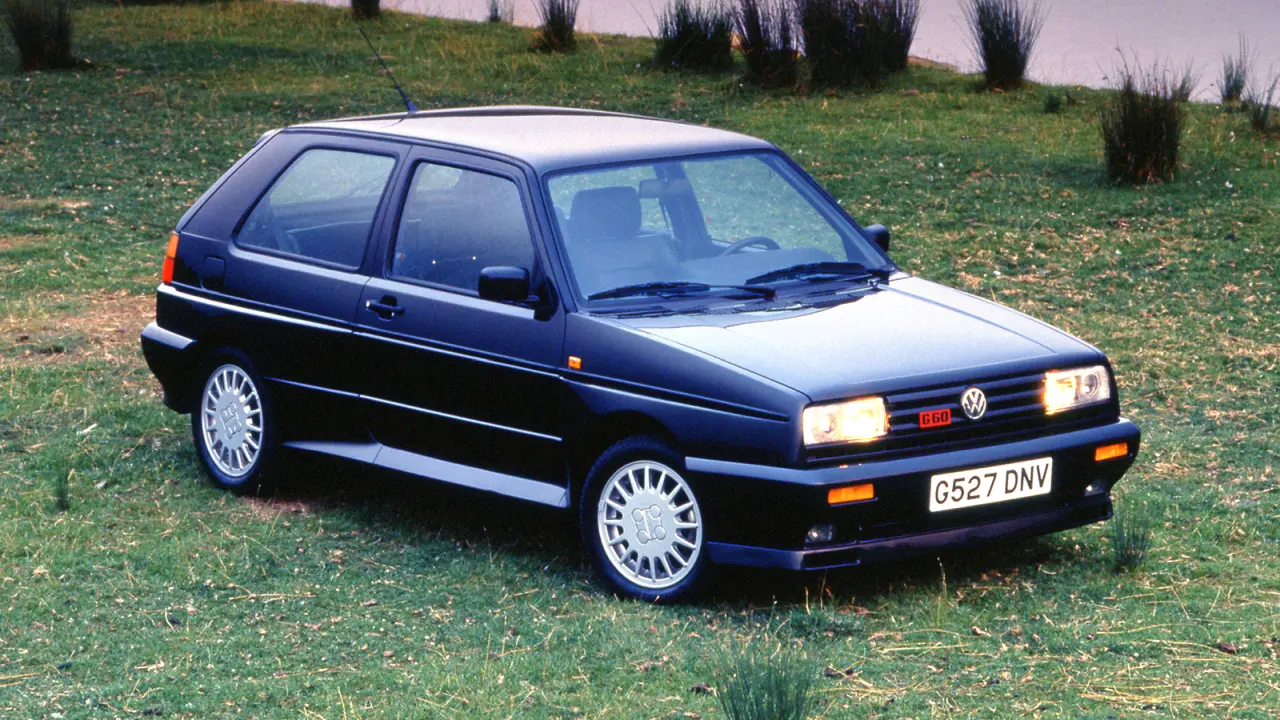
What Is a Hot Hatch?
A hot hatch is a compact hatchback that combines the practicality and everyday usability of a normal small family car with the performance of a sports car.
The basic idea is simple: take an ordinary hatchback, give it a more powerful engine, upgrade the suspension and brakes, improve the drivetrain, and create a car that can be both practical and genuinely exciting to drive.
Hot hatches have become one of the most popular performance-car categories because they offer something many sports cars cannot: performance without sacrificing everyday practicality.
What Makes a Car a Hot Hatch?
There is no single technical specification that officially defines a hot hatch.
Instead, the term generally describes a hatchback that has been significantly upgraded for performance.
A typical hot hatch may have:
-
A more powerful engine
-
Sportier suspension
-
Larger or stronger brakes
-
Faster steering
-
Performance tires
-
A more aggressive exhaust system
-
A close-ratio or performance-oriented gearbox
-
A limited-slip differential or performance electronic differential
-
More supportive seats
-
Sportier exterior styling
The most important characteristic is that the car remains relatively compact and practical while offering considerably more performance than the standard version on which it is based.
Why Are Hot Hatches So Popular?
The biggest advantage of a hot hatch is versatility.
You can use one as a normal daily driver during the week and still enjoy its performance on a winding road or track at the weekend.
Unlike a traditional two-seat sports car, a hot hatch normally provides:
-
Rear seats
-
A useful luggage compartment
-
Reasonable fuel economy
-
Compact dimensions
-
Good visibility
-
Easy parking
-
Practical everyday usability
This combination makes the category particularly attractive to drivers who want performance without owning a dedicated sports car.
How Did the Hot Hatch Concept Begin?
The modern hot hatch concept is generally associated with the Volkswagen Golf GTI, introduced in 1976.
The original Golf GTI demonstrated that a relatively ordinary compact hatchback could be transformed into a genuinely fast and entertaining car without becoming impractical.
It combined a lightweight body with a more powerful engine, front-wheel drive and a sportier chassis.
The idea proved extremely successful and influenced almost every major European manufacturer.
Soon, manufacturers began developing their own performance hatchbacks.
The Evolution of the Hot Hatch
Early hot hatches were relatively simple.
They generally followed a straightforward formula:
Small body + powerful engine + low weight + sportier suspension
As technology improved, hot hatches became considerably more sophisticated.
Modern examples can feature:
-
Turbocharged engines
-
Advanced electronic differentials
-
Adaptive suspension
-
Launch control
-
Multiple driving modes
-
Rev-matching
-
Dual-clutch transmissions
-
All-wheel drive
-
Sophisticated stability-control systems
-
Variable exhaust systems
Despite all this technology, the basic philosophy has remained largely unchanged.
The objective is still to make a small hatchback exceptionally entertaining to drive.
Are Hot Hatches Always Front-Wheel Drive?
No.
Many traditional hot hatches are front-wheel drive because this configuration is relatively lightweight, compact and inexpensive.
However, more powerful modern hot hatches increasingly use all-wheel drive.
All-wheel drive can help transfer high engine torque to the road and reduce wheelspin, particularly during hard acceleration.
This allows manufacturers to produce hot hatches with significantly more power than would traditionally have been practical with front-wheel drive alone.
Why Is Front-Wheel Drive So Common?
Front-wheel drive is particularly well suited to compact hatchbacks.
The engine, transmission and differential can be packaged together at the front of the vehicle, leaving more space for passengers and luggage.
For a performance hatchback, however, high torque can create a challenge.
If the engine produces a lot of power, the front tires have to handle both steering and acceleration.
This can lead to torque steer, wheelspin and traction problems.
Modern hot hatches use sophisticated suspension geometry, limited-slip differentials, electronic torque management and performance tires to control these effects.
What Is Torque Steer?
Torque steer is a phenomenon in which engine torque causes the steering to pull or react during hard acceleration.
It is particularly associated with powerful front-wheel-drive cars.
When the driver accelerates aggressively, differences in traction and drivetrain forces can cause the steering wheel to pull toward one side.
Older performance hatchbacks could be particularly prone to this behavior.
Modern hot hatches have become much better at controlling it through improved suspension design, electronic differentials and better drivetrain engineering.
Interestingly, some enthusiasts actually consider a small amount of torque steer part of the character of older hot hatches.
Do Hot Hatches Have Turbocharged Engines?
Many modern hot hatches do.
Turbocharging allows manufacturers to produce substantial power and torque from relatively small engines.
For example, a compact hatchback can use a four-cylinder turbocharged engine to produce power that would have required a much larger naturally aspirated engine in the past.
Turbocharging also provides strong low- and mid-range torque, which makes a hot hatch feel quick during everyday driving.
However, turbocharging is not a requirement.
Older hot hatches often used naturally aspirated engines, and some of them became famous for their high-revving character and sharp throttle response.
How Fast Is a Hot Hatch?
Performance varies enormously between models.
Some entry-level hot hatches may produce around 150–200 horsepower, while more extreme modern versions can exceed 300 horsepower and, in some cases, go considerably beyond that.
Acceleration can also vary significantly.
A relatively modest hot hatch may take around 7 seconds to reach 100 km/h, while a high-performance all-wheel-drive model can achieve the same acceleration in well under 5 seconds.
But straight-line speed is not necessarily what makes a hot hatch special.
A good hot hatch is usually designed to deliver:
-
Strong acceleration
-
Precise steering
-
Good cornering ability
-
Strong braking
-
Excellent traction
-
Responsive throttle control
-
Driver involvement
What Is a Hot Hatch Compared With a Normal Hatchback?
The difference is primarily in performance and chassis tuning.
A normal hatchback is designed mainly for practicality, comfort, fuel economy and everyday transportation.
A hot hatch retains those characteristics but adds a significant performance focus.
Compared with a standard version, a hot hatch may have:
Engine: More power and torque
Suspension: Firmer and more controlled
Brakes: Larger and more resistant to fade
Steering: Sharper and more responsive
Tires: Wider and more performance-oriented
Seats: More supportive
Exhaust: Sportier sound
Transmission: Faster or more performance-oriented shifting
The result is a car that feels fundamentally different even though it may share its basic body structure with a regular hatchback.
What Is the Difference Between a Hot Hatch and a Sports Car?
A sports car is generally designed primarily around driving performance.
A hot hatch has to balance performance with practicality.
A sports car may have:
-
Two seats
-
A low driving position
-
Limited luggage space
-
Rear-wheel drive or all-wheel drive
-
A dedicated performance-oriented chassis
A hot hatch normally has:
-
Four or five seats
-
A practical hatchback body
-
A larger luggage area
-
Compact dimensions
-
Easier everyday usability
This makes the hot hatch a compromise—but often a very good one.
What Is the Difference Between a Hot Hatch and a Warm Hatch?
The term warm hatch is sometimes used for cars that sit between a normal hatchback and a true hot hatch.
A warm hatch may have more power and sportier handling than the standard model but does not receive the full performance treatment of a hot hatch.
For example, a manufacturer may offer:
Standard version → Warm version → Hot version
The warm version might have a more powerful engine and sportier appearance, while the hot version receives substantial upgrades to the engine, suspension, brakes and drivetrain.
The terminology is not officially standardized, so the distinction can vary between manufacturers and enthusiasts.
What Is a Hot Hatchback's Suspension Like?
Suspension is one of the most important parts of a hot hatch.
Simply increasing engine power does not create a good performance car.
A hot hatch needs to control body movement during:
-
Acceleration
-
Braking
-
Cornering
-
Direction changes
The suspension is therefore usually firmer than that of the standard hatchback.
Depending on the model, it may include:
-
Lower ride height
-
Stiffer springs
-
Performance dampers
-
Larger anti-roll bars
-
Adaptive dampers
-
Revised suspension geometry
-
Special bushings
The goal is not simply to make the car uncomfortable. A well-engineered hot hatch should remain usable on normal roads while providing better control when driven aggressively.
Why Are Hot Hatch Brakes Upgraded?
More performance requires more braking capability.
A hot hatch is generally heavier and faster than its standard counterpart, so the braking system needs to handle greater energy.
Performance versions may use:
-
Larger brake discs
-
Larger calipers
-
Higher-performance brake pads
-
Improved cooling
-
High-temperature brake fluid
Brake performance becomes particularly important on a track or during repeated hard braking.
Do Hot Hatches Have Limited-Slip Differentials?
Many performance-oriented hot hatches use some form of limited-slip differential or electronically controlled differential system.
The differential helps manage the difference in wheel speed between the driven wheels while cornering.
A limited-slip system can also help transfer torque to the wheel with more available grip.
This is especially useful in powerful front-wheel-drive hot hatches.
Without adequate torque management, a powerful front-wheel-drive car can easily overwhelm its inside front tire during hard cornering and acceleration.
Are Hot Hatches Good for Track Driving?
Yes, many are.
Their compact dimensions, relatively low weight and powerful engines make hot hatches well suited to track use.
They can also be easier to control than extremely powerful sports cars.
However, a standard hot hatch may still need upgrades for serious track use.
Common modifications include:
-
Performance brake pads
-
High-temperature brake fluid
-
Track-oriented tires
-
Improved cooling
-
Suspension upgrades
-
Limited-slip differential upgrades
-
Lightweight wheels
The exact requirements depend on how aggressively the car is used.
Are Hot Hatches Good Daily Drivers?
This is one of their greatest strengths.
A well-designed hot hatch can be comfortable enough for commuting while still providing an exciting driving experience.
Many modern models offer different driving modes.
In a comfort-oriented setting, the engine, transmission and suspension can behave relatively calmly.
Switching to a sportier mode may change:
-
Throttle response
-
Gearshift behavior
-
Steering weight
-
Suspension damping
-
Exhaust sound
-
Stability-control settings
This gives the driver a degree of flexibility that is difficult to achieve with a dedicated sports car.
Are Hot Hatches Expensive to Maintain?
They can cost more to maintain than their standard versions.
The reason is simple: performance components are often more expensive and can wear faster.
For example:
-
Performance tires cost more
-
Large brake components cost more
-
Sport suspension components may be more expensive
-
Turbocharged engines can require careful maintenance
-
High-performance transmissions may require specialized servicing
Driving style also matters.
A hot hatch driven calmly on public roads can have reasonable running costs. A car regularly driven hard on a track will naturally consume tires, brakes and other components much faster.
Are Hot Hatches Fuel Efficient?
Some can be surprisingly efficient.
Because many modern hot hatches use relatively small turbocharged engines, they can deliver good fuel economy during gentle driving.
However, performance comes with a trade-off.
If the driver frequently uses full throttle, high RPM and aggressive acceleration, fuel consumption can increase significantly.
A hot hatch can therefore provide two very different driving experiences:
Normal driving → Reasonable efficiency
Aggressive driving → High fuel consumption
This dual personality is another part of the appeal.
What Are Some Famous Hot Hatches?
The hot hatch category includes many legendary models.
Some of the best-known examples include:
-
Volkswagen Golf GTI
-
Renault 5 GT Turbo
-
Renault Clio Williams
-
Renault Clio R.S.
-
Ford Fiesta ST
-
Ford Focus ST
-
Honda Civic Type R
-
Peugeot 205 GTI
-
Peugeot 306 GTI-6
-
MINI Cooper S
-
Hyundai i20 N
-
Hyundai i30 N
-
Mercedes-AMG A 35/A 45
-
Audi S3
-
BMW M135i
These cars do not all follow exactly the same formula. Some focus heavily on lightweight handling, while others rely on high power and all-wheel drive.
Why Do Enthusiasts Love Hot Hatches?
A hot hatch can provide an unusual combination of accessibility and performance.
You do not necessarily need a large engine, rear-wheel drive or a two-seat sports car to have an entertaining vehicle.
A compact hatchback can be:
-
Fast
-
Practical
-
Relatively affordable
-
Easy to drive
-
Fun on a winding road
-
Useful for everyday transportation
That combination has helped hot hatches maintain their popularity for decades.
The Modern Hot Hatch Philosophy
Today's hot hatch is much more sophisticated than the cars that established the category.
Electronic differentials, turbocharged engines, adaptive dampers, advanced stability systems, dual-clutch transmissions and all-wheel drive have pushed performance to levels that would have been difficult to imagine in the 1970s or 1980s.
Yet the fundamental idea remains the same.
A hot hatch takes a small, practical hatchback and gives it the performance characteristics of a much more serious performance car.
That is ultimately what defines the category.
A hot hatch does not have to be the fastest car on the road. Its appeal comes from being able to combine performance, practicality, compact dimensions and everyday usability in one package.