TR
TR EN
EN

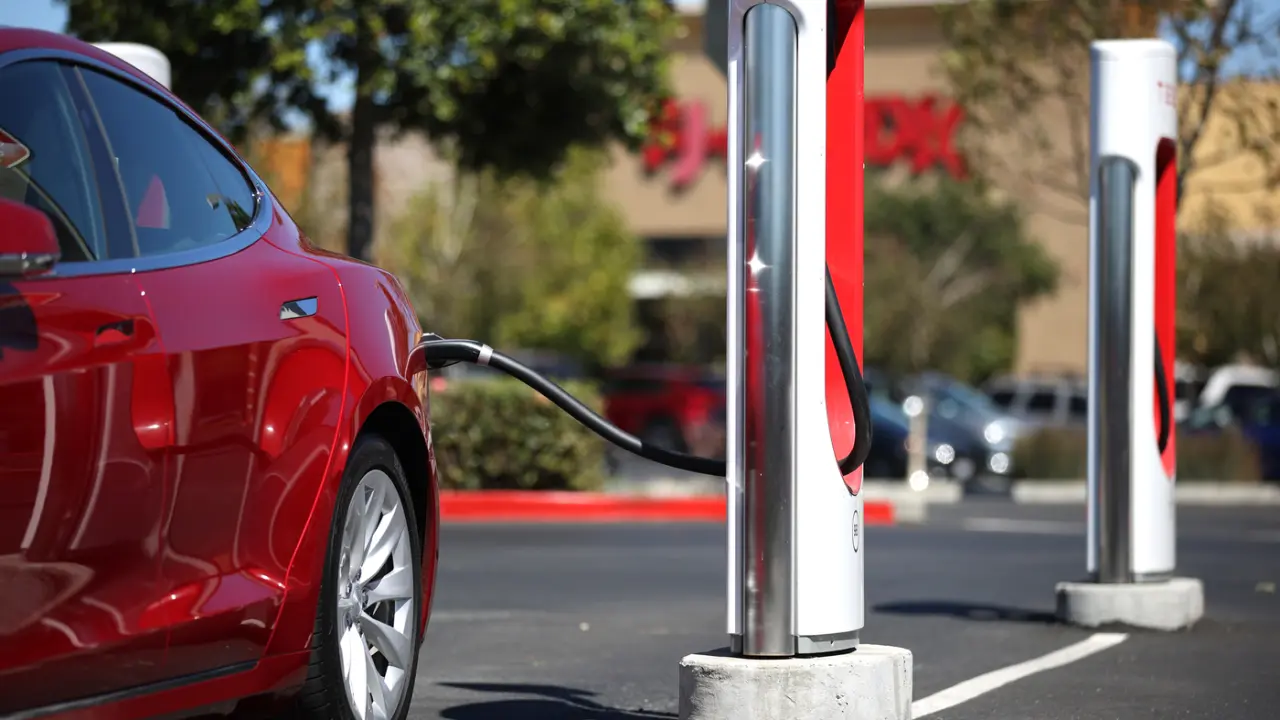
How Much Should Electric Vehicles Be Charged?
For an electric vehicle, the question is not simply whether the battery should be charged to 100%. The ideal charging level depends on the battery chemistry, the vehicle manufacturer's recommendations, how often the car is driven, and how long the vehicle will remain parked.
For everyday use, many EV owners do not need to charge the battery completely. In fact, keeping a lithium-ion battery at a moderate state of charge for most of its life can help reduce long-term battery degradation.
What Is the Ideal Charging Level for Daily Use?
For many modern electric vehicles, keeping the battery roughly between 20% and 80% during normal daily use is a practical approach.
This does not mean the battery must never go below 20% or above 80%. It simply means that regularly keeping the battery at the extreme ends of its operating range is generally unnecessary when you do not need the additional range.
For example, if your daily driving requires only 30% of the battery capacity, charging to 80% may provide plenty of usable range without needing to charge to 100%.
The exact recommendation can vary by vehicle and battery chemistry, so the manufacturer's instructions should always take priority.
Should You Charge an Electric Car to 100%?
Charging to 100% is not inherently bad for an EV.
There are situations where charging to 100% makes perfect sense.
If you are planning a long trip and need maximum range, charging to 100% before departure is completely reasonable.
The important point is not to leave the battery sitting at 100% for unnecessarily long periods.
For a vehicle that is going to remain parked for several days, a lower state of charge is generally preferable to leaving it fully charged.
A useful strategy is therefore:
Daily driving → moderate charge level
Long trip → charge higher, potentially to 100%
Long-term parking → follow the manufacturer's recommended storage level
Why Can Staying at 100% Be Harder on the Battery?
Lithium-ion batteries experience more chemical stress when they remain at very high states of charge for extended periods.
Battery degradation is influenced by several factors, including:
-
State of charge
-
Temperature
-
Charging speed
-
Charging frequency
-
Battery chemistry
-
Number of charge/discharge cycles
-
How long the battery remains at a high or very low charge level
Therefore, charging to 100% and immediately driving the vehicle is very different from charging to 100% and leaving the car parked for several days.
The first situation may be necessary and perfectly normal. The second can create unnecessary battery stress over time.
Is Charging Below 20% Bad?
Occasionally reaching 10%, 15%, or even a very low percentage does not automatically damage the battery.
However, repeatedly allowing the battery to become extremely low is not a good everyday habit.
The vehicle's battery management system normally prevents the battery from reaching a truly damaging state of discharge. The percentage shown on the dashboard also does not necessarily represent the battery's absolute physical limits.
There are usually protective reserves built into the system.
Nevertheless, regularly driving until the vehicle is almost empty can increase stress and can also leave you with little margin if you encounter unexpected traffic, cold weather, or a charging problem.
What Happens If the Battery Reaches 0%?
When an EV displays 0%, the battery is not necessarily physically at zero energy.
The battery management system maintains a safety buffer to protect the battery.
However, this does not mean that driving at 0% is safe or recommended.
Once the displayed range reaches zero, the vehicle may enter reduced-power operation and eventually stop. If the battery becomes excessively discharged, recovery can also become more complicated.
For this reason, it is better to treat 0% as an emergency situation rather than a normal operating point.
Is It Better to Charge a Little Every Day?
For most modern EVs, frequent partial charging is perfectly normal.
You do not need to wait until the battery drops to a very low level before plugging the car in.
For example, you might use the vehicle during the day and return home with 55% battery remaining. If you need 80% the next morning, there is nothing wrong with charging from 55% to 80%.
Lithium-ion batteries do not generally require the old-fashioned "full discharge before charging" routine associated with some older battery technologies.
In fact, partial charging can be a very practical way to use an EV.
Does Charging to 80% Increase Battery Life?
It can help, particularly when compared with keeping the battery at 100% for long periods.
However, it would be misleading to say that setting the charging limit to exactly 80% guarantees a certain battery lifespan.
Battery degradation is affected by many variables.
Two identical EVs can experience different battery aging depending on:
-
Climate
-
Driving style
-
Annual mileage
-
Fast-charging frequency
-
Battery temperature
-
Charging habits
-
Parking habits
-
Battery chemistry
Therefore, an 80% limit should be viewed as a useful battery-management strategy, not a universal rule that applies identically to every EV.
What About LFP Batteries?
This is an important exception.
Some electric vehicles use lithium iron phosphate (LFP) batteries rather than nickel-based lithium-ion chemistries such as NMC or NCA.
LFP batteries have different charging characteristics, and some manufacturers recommend periodically charging them to 100%.
This can help the vehicle's battery management system maintain an accurate estimate of the battery's state of charge.
Therefore, you should not automatically apply the "never charge above 80%" rule to every electric vehicle.
If your vehicle manufacturer recommends regular 100% charging for its LFP battery, follow that recommendation.
Should You Charge to 100% Before a Long Trip?
Yes.
If you need the maximum available driving range, charging to 100% before starting the trip is sensible.
The key is timing.
If possible, finish charging relatively close to the time you plan to leave rather than charging to 100% several days in advance.
For example:
Not ideal: Charge to 100% on Monday and leave the vehicle parked until Friday.
Better: Charge to the required level shortly before starting the journey.
This reduces the amount of time the battery spends at a very high state of charge.
What About DC Fast Charging?
DC fast charging is extremely useful, particularly during long-distance travel.
However, frequent high-power charging can contribute to increased battery stress, especially when combined with high battery temperatures and very high states of charge.
For everyday charging, AC charging at home or at work is often a gentler and more convenient option.
DC fast charging is best viewed as a tool for situations where you need to replenish a large amount of energy quickly.
This does not mean fast charging should be avoided. Modern EVs are specifically engineered to support it.
Should You Stop DC Fast Charging at 80%?
Often, yes, especially when you are traveling.
The reason is not simply battery protection.
The charging rate of an EV generally decreases as the battery approaches a high state of charge. Charging from 10% to 60% or 70% can therefore add range much faster than waiting for the battery to reach 100%.
During a road trip, it can be more efficient to:
Charge → drive → charge again
rather than spending a long time waiting for the last portion of the battery to reach 100%.
The ideal stopping point depends on the vehicle, charger, route, weather, and distance to the next charging station.
Does Charging at Home Help Battery Life?
For normal overnight charging, AC charging at home is generally a very practical solution.
Home charging is usually slower than DC fast charging, which means the battery can be replenished over several hours instead of receiving a very high charging power for a short period.
For daily use, you can simply plug the vehicle in when you return home and set the charging limit according to your needs.
For example, if you arrive home with 40% and need approximately 60% the following day, there is little reason to charge to 100%.
What Is the Best Charging Routine?
There is no single charging percentage that is perfect for every EV.
A sensible general approach for a vehicle with a conventional nickel-based lithium-ion battery is:
Normal daily use: Keep the charge in a moderate range, often around 20–80%.
Long journey: Charge higher when the extra range is required.
100% charge: Use it when necessary rather than leaving the vehicle fully charged for extended periods.
Very low charge: Avoid repeatedly driving the battery down to extremely low levels.
DC fast charging: Use it when speed is important, particularly during long trips.
Long-term parking: Follow the manufacturer's recommended storage state of charge.
LFP battery: Follow the manufacturer's specific charging recommendations, which may include regular 100% charging.
Does the Car's Battery Management System Protect the Battery?
Yes.
Modern EVs use sophisticated Battery Management Systems (BMS) to monitor and control the battery.
The BMS can monitor parameters such as:
-
Cell voltage
-
Battery temperature
-
Charging current
-
Discharging current
-
State of charge
-
Battery conditions
-
Charging power
The system can reduce charging power or stop charging when necessary to protect the battery.
This is one reason why drivers should not be overly concerned about accidentally charging an EV to 100%.
The more important issue is establishing a sensible long-term charging routine.
What About Leaving an EV Plugged In Overnight?
Leaving an EV connected to a properly installed charger overnight is generally normal.
The vehicle does not continuously charge at maximum power after reaching the selected charging limit.
Once the battery reaches the configured level, charging is controlled by the vehicle and charging equipment.
For daily use, many owners simply plug the vehicle in at night and allow it to reach their preferred charging limit before the next trip.
Does Cold Weather Change the Ideal Charging Level?
Cold temperatures can significantly affect EV battery performance.
A cold battery may have reduced charging and regenerative-braking capability until it reaches a suitable temperature.
This is particularly important during DC fast charging.
Some EVs use battery preconditioning before fast charging. If navigation is set to a compatible charging station, the vehicle may warm or cool the battery to prepare it for faster charging.
In cold weather, maintaining enough battery charge is also useful because heating the cabin and battery can consume additional energy.
What Is the Best Percentage for an EV That Is Rarely Used?
If an electric vehicle is going to remain parked for a long period, keeping it at 100% is generally not the preferred approach unless the manufacturer specifically recommends it.
Likewise, leaving it nearly empty for a long period is undesirable.
The correct storage level depends on the vehicle and battery chemistry, so the manufacturer's storage recommendation should take priority.
The important principle is to avoid unnecessarily keeping the battery at an extreme state of charge for extended periods.
Does Charging Habits Have a Big Effect on Battery Life?
Charging habits matter, but they are only one part of battery aging.
Temperature can be equally important, and in some circumstances even more significant.
An EV battery exposed regularly to very high temperatures, especially while sitting at a very high state of charge, can experience accelerated degradation.
This is why modern EVs use thermal management systems to control battery temperature.
Good charging habits should therefore be considered together with good temperature management.
The Simple Rule to Remember
For many electric vehicles, you can think of charging this way:
Use 20–80% as a practical everyday range when the manufacturer allows it.
Charge to 100% when you genuinely need the additional range.
Do not worry about occasionally reaching 100% or going below 20%.
Avoid leaving the battery at 100% or extremely low levels for unnecessarily long periods.
Follow the manufacturer's instructions if your EV uses LFP or has a specific charging recommendation.
The goal is not to keep an electric vehicle's battery at one exact percentage all the time. The goal is to use the battery within a sensible operating range while avoiding unnecessary time at extreme charge levels.