TR
TR EN
EN

What Is a Sequential Transmission?
A sequential transmission, also known as a sequential gearbox, is a type of transmission in which the gears are selected in a specific order. Unlike a conventional manual transmission, the driver cannot normally select any gear directly.
For example, with a traditional H-pattern manual transmission, the driver can shift from 5th gear directly to 2nd gear if the vehicle's speed and engine RPM are appropriate.
With a sequential transmission, the gears are selected one step at a time:
1 → 2 → 3 → 4 → 5
and when downshifting:
5 → 4 → 3 → 2 → 1
This characteristic makes sequential transmissions particularly popular in motorcycles, racing cars, rally cars, and other performance-oriented vehicles where fast and precise gear changes are important.
How Does a Sequential Transmission Work?
The main difference between a sequential transmission and a conventional manual gearbox is the way the gears are selected.
A traditional manual transmission normally uses an H-pattern gear lever. Moving the lever into different positions allows the driver to select different gears directly.
A sequential transmission generally uses a mechanism that moves the gear selector through a predetermined sequence.
The driver may push or pull a lever, or use another control mechanism, to select the next or previous gear.
For example:
Push or pull once → Next gear
Move in the opposite direction → Previous gear
The exact mechanism varies depending on the transmission design.
Why Is It Called a Sequential Transmission?
The word sequential refers to the order in which the gears are selected.
If the vehicle is in 3rd gear, the normal commands are:
Up one gear → 4th
Down one gear → 2nd
The driver cannot normally jump directly from 3rd to 5th with a single gear-selection movement.
This is fundamentally different from an H-pattern manual gearbox.
Sequential vs. Manual Transmission
A sequential transmission can still be a mechanically operated manual transmission, but its gear-selection mechanism is different.
In a conventional manual transmission, the driver can select gears individually.
For example:
5th → 3rd
is possible if the transmission and vehicle speed allow it.
In a sequential gearbox, the driver must move through the sequence:
5th → 4th → 3rd
The sequential arrangement makes gear selection faster and more intuitive, particularly when the driver needs to concentrate on steering, braking, and acceleration.
Does a Sequential Transmission Have a Clutch?
It can.
A conventional mechanical sequential gearbox may use a clutch, particularly for starting from a standstill and depending on the transmission design.
However, many racing sequential transmissions are designed to allow extremely fast gear changes with little or no clutch use during normal upshifts.
In some systems, the engine management and transmission mechanisms work together to momentarily reduce engine torque during an upshift. This allows the next gear to engage very quickly.
Downshifts can also be assisted by automatic throttle blipping, which raises engine RPM to match the lower gear.
Therefore, whether the clutch is required depends on the specific sequential transmission and how it is designed.
Is a Sequential Transmission Automatic?
Not necessarily.
This is one of the most common misconceptions about sequential gearboxes.
A sequential transmission describes how the gears are selected, not necessarily whether the driver or an electronic system performs the shift.
A sequential gearbox can be:
-
Manually operated
-
Mechanically assisted
-
Electronically actuated
-
Fully or partially automated
For example, a racing car may use a sequential gearbox controlled by a lever or steering-wheel paddles while the driver remains responsible for deciding when to shift.
Another vehicle may use an electronically controlled sequential transmission that changes gears automatically.
How Are Sequential Transmissions Shifted?
There are several possible control methods.
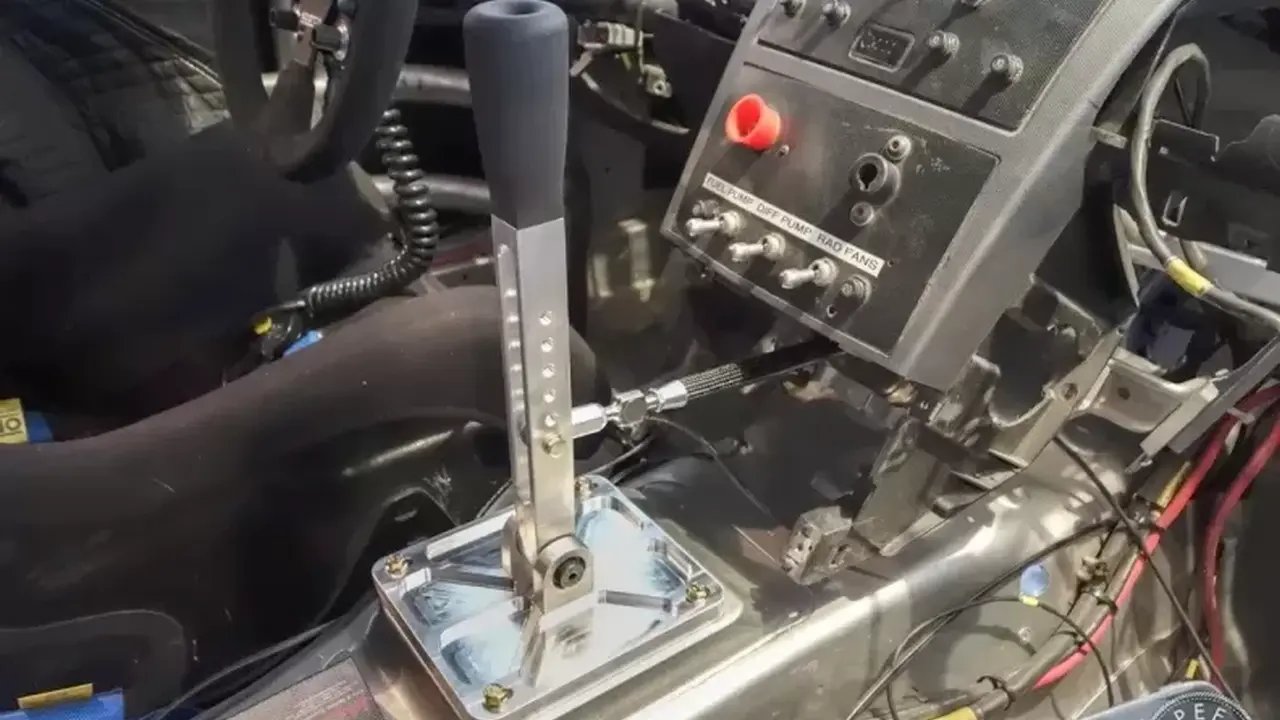
Sequential gear lever
The driver moves a lever forward or backward to select the next or previous gear.
Steering-wheel paddles
Many modern performance cars use paddles behind the steering wheel.
One paddle commands an upshift, while the other commands a downshift.
Electronic controls
Some advanced transmissions use electronic actuators to perform the actual gear selection.
The important feature is that the system maintains the sequential order of the gears.
Why Are Sequential Transmissions Popular in Racing?
Speed is one of the biggest reasons.
In racing, a driver may need to change gears dozens or hundreds of times during a race. The driver needs to make these changes quickly while simultaneously managing:
-
Steering
-
Braking
-
Throttle
-
Vehicle balance
-
Traction
-
Racing line
An H-pattern gearbox requires the driver to move the lever through different gates to reach a specific gear.
A sequential gearbox simplifies this process.
If the driver needs the next gear, the control is moved in one direction. If a lower gear is required, it is moved in the opposite direction.
This makes the shifting process quick and repeatable.
What Are the Advantages of a Sequential Transmission?
Sequential transmissions offer several advantages, particularly in performance applications.
Fast gear changes
The gear-selection movement is simple and direct, allowing very rapid shifts.
Easy gear selection
The driver does not need to search for a particular gear position within an H-pattern.
Reduced risk of selecting the wrong gear
Because gears are selected sequentially, accidentally selecting a completely different gear is much less likely.
Excellent driver control
The driver can decide exactly when to shift up or down.
Good suitability for motorsport
The system is particularly effective when rapid and consistent gear changes are essential.
What Are the Disadvantages?
Sequential transmissions are not perfect for every application.
Especially in racing applications, they can have several disadvantages.
Higher cost
Performance sequential gearboxes can be considerably more expensive than conventional manual transmissions.
More mechanical noise
Some racing sequential transmissions use straight-cut gears or other performance-oriented components that produce significant mechanical noise.
Less refinement
A racing gearbox is designed for performance rather than maximum comfort.
Higher maintenance requirements
Competition use places considerable stress on gears, bearings, selector mechanisms, and other components.
Less convenient in everyday traffic
Constant stop-and-go driving is not necessarily where a race-oriented sequential gearbox performs at its best.
Why Are Sequential Gearboxes Common in Motorcycles?
Motorcycles are one of the most familiar applications of sequential transmissions.
A typical motorcycle gear pattern may look like:
1 → Neutral → 2 → 3 → 4 → 5 → 6
The rider operates the gear lever with their foot, moving it up or down to select the next gear.
This arrangement works particularly well on motorcycles because of their compact drivetrain layout.
It also allows the rider to change gears without having to operate a traditional H-pattern gear lever.
Is a Sequential Transmission the Same as a Semi-Automatic Transmission?
No.
The terms describe different aspects of a transmission.
Sequential transmission refers primarily to the order in which gears are selected.
Semi-automatic transmission refers to the degree to which the clutch and gear-changing process are automated.
A vehicle can have a sequential gearbox with an automated clutch and electronic gear actuator.
For example, a driver may use steering-wheel paddles:
+ → Upshift
− → Downshift
while the vehicle's electronics control the clutch and the actual gear engagement.
Is a Sequential Transmission the Same as a Dual-Clutch Transmission?
No.
A dual-clutch transmission (DCT) uses two separate clutches to manage different gear sets and allow rapid gear changes.
A sequential transmission, on the other hand, describes the sequential method of gear selection.
These are different concepts.
A DCT can provide sequential-style manual control through steering-wheel paddles, but that does not automatically make it a traditional sequential gearbox.
In simple terms:
Sequential = How the gears are selected
DCT = How the gears and clutches are arranged and operated
Can You Skip Gears in a Sequential Transmission?
Normally, not with a single gear-selection movement.
If the vehicle is in 6th gear and the driver wants 2nd, the gearbox must move through:
6 → 5 → 4 → 3 → 2
However, racing transmissions can perform multiple rapid shifts in succession.
To the driver, this may feel like one continuous downshifting action, but the gearbox is still selecting the gears in sequence.
What Is a Dog-Engagement Sequential Gearbox?
Many high-performance sequential racing transmissions use dog engagement rather than the traditional synchronizers found in road-car manual gearboxes.
A conventional synchronized gearbox uses synchronizers to match the rotational speeds of components before the gear is engaged. This helps make gear changes smooth and quiet.
A dog-engagement gearbox uses mechanical engagement components that allow gears to lock together very quickly.
The advantage is extremely fast shifting.
The disadvantage is that dog-engagement systems can be noisier and less forgiving during normal road driving.
This is one reason why a racing sequential gearbox can feel very different from a normal manual transmission.
Is a Sequential Gearbox Suitable for Daily Driving?
It depends on the type of sequential transmission.
Modern road cars with electronically controlled sequential-style gear changes can be very comfortable and easy to drive.
A pure racing sequential gearbox is a different story.
A competition gearbox may have:
-
Very short shift times
-
Hard gear engagement
-
Significant mechanical noise
-
Aggressive clutch behavior
-
Frequent maintenance requirements
These characteristics are useful on a racetrack but can become tiring during everyday driving.
Therefore, the term "sequential" alone does not determine whether a transmission is comfortable. Its design and intended application are much more important.
Does a Sequential Transmission Need Maintenance?
Yes.
Like any mechanical transmission, a sequential gearbox contains components that can wear.
Depending on the design, these can include:
-
Gears
-
Bearings
-
Selector forks
-
Selector mechanisms
-
Dog rings
-
Shafts
-
Clutch components
-
Seals
Racing applications are particularly demanding because the transmission experiences high torque, high temperatures, and extremely frequent gear changes.
Regular inspection and correct lubricant selection are therefore important.
Sequential Transmission vs. H-Pattern Manual
The easiest way to understand the difference is to look at how the driver selects gears.
H-pattern manual:
The driver moves the gear lever through different gates to select individual gears.
Sequential:
The driver moves the selector in a simple sequence to move one gear up or one gear down.
An H-pattern gearbox gives the driver more direct freedom over gear selection.
A sequential gearbox gives the driver faster and more intuitive sequential control.
Why Are Sequential Gearboxes So Effective on a Race Track?
A race driver needs to keep the engine in the most useful operating range while maintaining maximum concentration on the track.
During acceleration, the driver can quickly move through the gears:
2 → 3 → 4 → 5 → 6
When approaching a corner, the driver can rapidly downshift:
6 → 5 → 4 → 3 → 2
The simplicity of the control allows the driver to perform these changes without searching for individual gear positions.
Combined with a fast shift mechanism, this can reduce the amount of time spent changing gears.
Does a Sequential Transmission Improve Performance?
It can.
A sequential gearbox does not automatically make an engine more powerful, but it can help a vehicle use its available power more effectively.
Fast gear changes can reduce interruptions in power delivery.
Keeping the engine within an appropriate RPM range can also improve acceleration.
In racing, even small reductions in shift time can matter.
However, the overall performance depends on the engine, gear ratios, final-drive ratio, vehicle weight, traction, aerodynamics, and the transmission itself.
What Is the Main Purpose of a Sequential Transmission?
The primary purpose is to make gear selection fast, precise, and repeatable.
This is particularly valuable when the driver needs to change gears while simultaneously controlling the vehicle at high speed.
A sequential transmission is therefore less about increasing engine power and more about improving how effectively that power can be delivered to the wheels.
Where Are Sequential Transmissions Used?
Sequential transmissions are commonly associated with:
-
Racing cars
-
Rally cars
-
Track cars
-
Motorcycles
-
Some high-performance road cars
-
Specialized performance vehicles
They are especially common in motorsport because fast and predictable gear changes are extremely valuable in competition.
Final Answer
A sequential transmission is a gearbox in which the gears are selected in a fixed sequence rather than through an H-pattern.
Unlike a conventional manual transmission, the driver cannot normally jump directly from 5th gear to 2nd gear with a single selection. The gearbox must move through the sequence:
5 → 4 → 3 → 2
Its biggest advantages are fast gear changes, precise control, and suitability for high-performance driving. This is why sequential gearboxes are widely used in racing cars, rally cars, and motorcycles.
It is also important to remember that sequential does not automatically mean automatic. A sequential gearbox can be manually controlled, electronically actuated, or combined with an automated clutch system.
In short, the defining feature of a sequential transmission is not the type of clutch or whether the transmission is automated. It is the fact that the gears are selected one step at a time in sequence.