TR
TR EN
EN

Do Electric Cars Have Gears and a Transmission?
Electric cars may look mechanically similar to gasoline and diesel cars from the outside, but their drivetrains are fundamentally different. One of the biggest differences is the way electric vehicles deliver power to the wheels.
A conventional internal combustion engine needs a transmission with multiple gears because the engine operates efficiently only within a certain range of engine speeds. An electric motor, however, can produce useful torque across a much wider range of speeds.
So, do electric cars have gears? Do they have transmissions? And perhaps most importantly, do electric cars have a tachometer?
The answer is more interesting than simply saying "no."
Do Electric Cars Have a Transmission?
Yes, but most electric cars do not use a conventional multi-speed transmission like a gasoline or diesel vehicle.
Most battery-electric vehicles use a single-speed reduction gearbox between the electric motor and the wheels.
This unit is technically part of the vehicle's transmission system, but it is much simpler than a traditional automatic or manual transmission.
A typical EV drivetrain can be thought of as:
Battery → Inverter → Electric Motor → Reduction Gear → Differential → Wheels
There is usually no need for a traditional clutch, torque converter, or a set of multiple forward gears.
Why Do Electric Cars Usually Need Only One Gear?
The main reason is the operating characteristics of the electric motor.
An internal combustion engine produces useful power over a relatively limited range of engine speeds. At low engine speeds, it may not produce enough torque or power, while at very high speeds it can become inefficient or reach its mechanical limits.
A transmission solves this problem by changing the gear ratio.
For example, a low gear provides strong wheel torque for starting and acceleration. Higher gears allow the engine to operate at lower speeds while the vehicle travels faster.
An electric motor behaves differently.
It can produce very high torque from extremely low rotational speeds and can continue operating efficiently across a wide speed range.
Because of this, an EV usually does not need to constantly change gear ratios to keep the motor in its ideal operating range.
Does an Electric Car Have First Gear, Second Gear, and Third Gear?
Most electric cars do not.
When you select "D" in a typical EV, the vehicle normally does not shift through first, second, third, fourth, and fifth gears.
Instead, the motor drives the wheels through a fixed reduction ratio.
The electronic control system determines how much torque the motor should produce and adjusts motor speed electronically.
This is one of the reasons EV acceleration can feel so smooth.
There is no conventional gearshift interruption between multiple forward gears.
What Is the Reduction Gearbox in an EV?
Although an EV may not have a conventional multi-speed transmission, it still needs gearing.
The electric motor can rotate much faster than the wheels should rotate.
The reduction gearbox reduces the motor's high rotational speed and increases the torque delivered to the wheels.
For example, the motor may operate at several thousand or even more than ten thousand revolutions per minute, while the wheels rotate much more slowly.
The reduction gear provides the appropriate fixed ratio between the motor and the wheels.
This is why calling an electric car "gearless" can be slightly misleading.
A better description is that most EVs do not need multiple forward gears.
Do Electric Cars Have a Differential?
Yes.
An EV still needs to distribute power between the driven wheels, and most conventional EVs use a differential.
The differential allows the left and right wheels to rotate at different speeds when the vehicle turns.
In a typical front-wheel-drive or rear-wheel-drive EV, the electric motor, reduction gearing, and differential can be packaged together into a compact drive unit.
Some electric vehicles with two motors can have separate drive units for the front and rear axles.
Do Electric Cars Have Reverse Gear?
Most electric cars do not need a separate mechanical reverse gear.
The electric motor can simply rotate in the opposite direction.
When the driver selects reverse, the vehicle's electronic control system commands the motor to rotate in the opposite direction.
This eliminates the need for a conventional reverse gear in most EV drivetrains.
It is another example of how an electric motor simplifies the drivetrain.
Do Electric Cars Have Automatic Transmission?
This depends on what is meant by "automatic transmission."
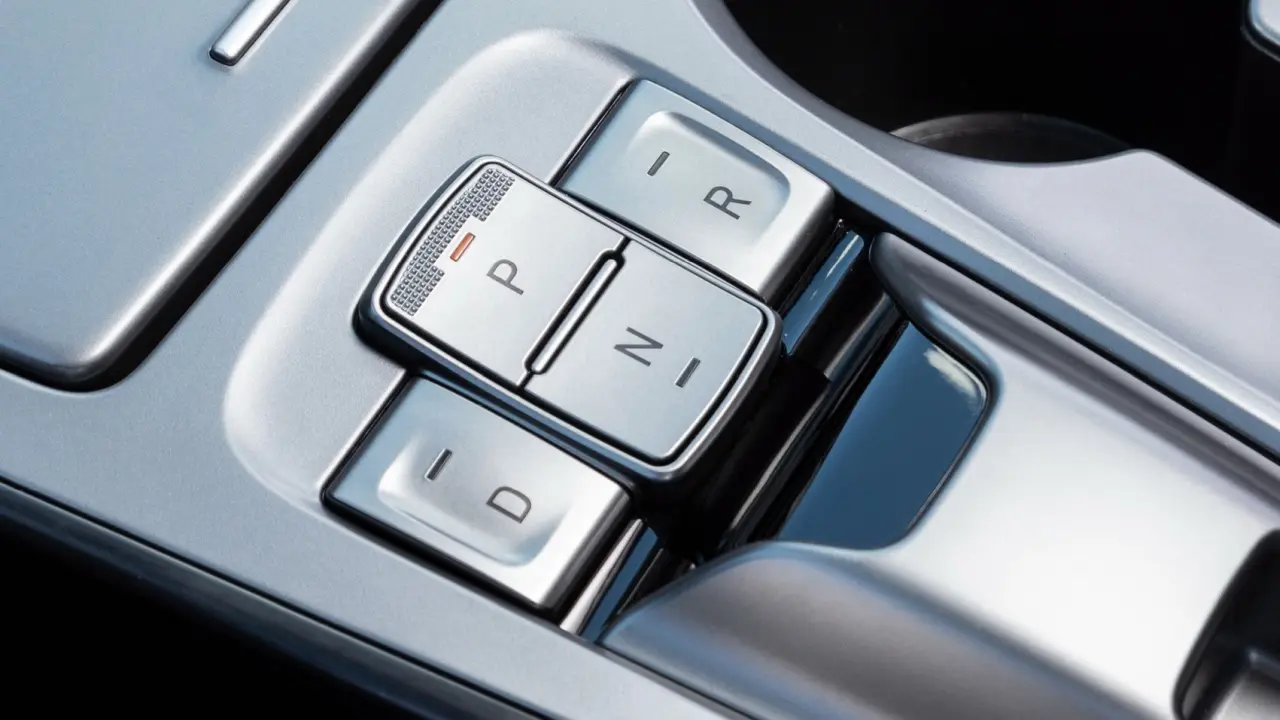
From the driver's perspective, an EV is usually operated with a selector such as:
-
P — Park
-
R — Reverse
-
N — Neutral
-
D — Drive
This feels very similar to driving an automatic car.
However, there is generally no traditional automatic transmission shifting between several forward gears.
The selector is controlling the vehicle's electronic drivetrain system rather than commanding a conventional multi-speed gearbox.
Do Electric Cars Have a Clutch?
Most single-speed electric cars do not use a conventional clutch.
A gasoline or diesel vehicle with a manual transmission needs a clutch to disconnect the engine from the gearbox during gear changes and when starting from a stop.
An EV does not normally need this because the electric motor can begin rotating from a stationary position and produce substantial torque immediately.
This eliminates one of the major reasons for having a clutch.
Are There Electric Cars With Multiple Gears?
Yes.
Although a single-speed transmission is the most common arrangement, some electric vehicles use more than one forward gear.
The reason is usually performance, efficiency, or both.
A two-speed transmission can allow the motor to operate more efficiently across a wider range of vehicle speeds.
At lower speeds, one ratio can provide stronger acceleration.
At higher speeds, another ratio can allow the motor to operate more efficiently.
This approach is particularly useful for certain high-performance electric vehicles.
Why Don't All Electric Cars Use Multiple Gears?
Because adding gears also adds complexity.
A multi-speed transmission can introduce:
-
Additional mechanical components
-
More weight
-
More friction
-
Higher manufacturing costs
-
More control complexity
-
Additional maintenance considerations
For many EVs, the benefits of additional gears simply do not justify these disadvantages.
A single-speed reduction system is compact, efficient, reliable, and sufficient for normal driving.
Does an EV's Single-Speed Transmission Need Maintenance?
It still contains mechanical components, so it is not completely maintenance-free.
The reduction gearbox contains gears, bearings, seals, and lubricant.
Depending on the vehicle manufacturer and model, the reduction unit may have a specified inspection or fluid replacement interval, or it may be designed as a relatively low-maintenance component.
This varies significantly between vehicles.
EV owners should therefore follow the manufacturer's maintenance recommendations rather than assuming that an electric drivetrain never needs mechanical maintenance.
Why Does an Electric Car Accelerate So Smoothly?
One major reason is the absence of conventional gear changes.
In a gasoline-powered car, acceleration can involve:
Engine → Clutch/Torque Converter → Gearbox → Gear Change → Wheels
The vehicle may experience a slight interruption or change in acceleration as the transmission shifts.
In a single-speed EV, the power delivery can be much more direct:
Battery → Inverter → Motor → Reduction Gear → Wheels
The motor's torque can be controlled electronically within milliseconds.
This produces the smooth and continuous acceleration that many drivers associate with electric vehicles.
Do Electric Cars Have a Tachometer?
This is where things get interesting.
Most electric cars do not have a conventional tachometer showing the motor's RPM on the dashboard.
A tachometer in a traditional gasoline or diesel vehicle displays the rotational speed of the internal combustion engine, usually expressed in revolutions per minute (RPM).
The driver uses this information because engine RPM is closely related to gear selection, engine load, power delivery, and the need to shift gears.
In most EVs, the driver does not need to monitor motor RPM in the same way.
The vehicle's electronic control system continuously monitors motor speed and controls it automatically.
Why Don't Most Electric Cars Need a Tachometer?
There are several reasons.
First, the driver generally does not need to select a gear based on motor RPM.
Second, the electric motor can operate over a much wider speed range than a conventional engine.
Third, the motor speed is managed electronically.
Fourth, the driver's main concern is usually how much torque and power the vehicle is delivering, rather than maintaining a particular RPM range.
As a result, many EV dashboards prioritize other information such as:
-
Battery percentage
-
Remaining range
-
Energy consumption
-
Regenerative braking
-
Power usage
-
Charging status
-
Driving mode
instead of displaying motor RPM.
Does an Electric Motor Still Have RPM?
Absolutely.
The absence of a tachometer does not mean the electric motor does not rotate.
Electric motors have a rotational speed just like other rotating machines.
The difference is that the motor's RPM is usually not important to the driver in everyday operation.
The vehicle's electronic control system knows the motor speed and uses that information to control torque, power, efficiency, traction, and regenerative braking.
In some performance-oriented EVs, the driver may be able to see motor RPM through specialized displays or diagnostic information.
Can an Electric Motor Rev Very High?
Yes.
Electric motors can operate at very high rotational speeds.
Depending on the motor design and vehicle, maximum motor speed can be significantly higher than the RPM range normally seen on a conventional passenger-car engine.
This high rotational speed is one of the reasons EVs use reduction gearing.
The reduction gear converts the motor's high rotational speed into a suitable wheel speed while multiplying torque.
Does Motor RPM Affect an Electric Car's Performance?
Yes.
Although the driver may not see RPM on the dashboard, motor speed is an important part of the vehicle's control strategy.
As motor speed increases, the motor's torque and power characteristics change.
At lower speeds, an electric motor can deliver very strong torque.
At higher speeds, the vehicle may enter a different operating region in which maintaining high power becomes more important than producing maximum torque.
The inverter and motor control system continuously manage these conditions.
Do Electric Cars Make Gear-Shifting Sounds?
Usually not in the traditional sense.
Since most EVs have a single-speed drivetrain, there are no conventional gear changes to produce the familiar upshift and downshift sounds.
The sounds that drivers hear from an EV are more likely to come from:
-
Electric motor operation
-
Reduction gears
-
Tires
-
Wind
-
Cooling systems
-
Artificial sound systems
Some manufacturers deliberately add simulated acceleration sounds to provide a more familiar driving experience.
Performance EVs may also use electronically generated sounds to make acceleration feel more dramatic.
Can an Electric Car Have a Manual Transmission?
It is technically possible, but it is not necessary for most EVs.
A manual transmission is designed around the operating characteristics of an internal combustion engine.
Since an electric motor can provide substantial torque from very low speed and can be electronically controlled, the advantages of a manual gearbox are greatly reduced.
Some experimental and specialized electric vehicles have used multi-speed or manual-style transmissions, but this is not the normal arrangement for mass-market EVs.
What Happens When an EV Slows Down?
When the driver releases the accelerator or applies the brakes, the electric motor can enter regenerative mode.
Instead of consuming electricity, it begins generating electricity.
The wheels turn the motor, and part of the vehicle's kinetic energy is converted back into electrical energy.
That electricity can then be sent to the battery.
This is another reason why the traditional drivetrain concept is different in an EV. The same motor that accelerates the car can also help slow it down and recover energy.
Are Electric Cars Completely Gearless?
Not exactly.
This is a common misconception.
Most EVs do not have a conventional multi-speed gearbox, but they usually still have gears.
The fixed reduction gearbox contains gears that transfer power from the electric motor to the wheels.
Therefore, it is more accurate to say:
Most electric cars have a single-speed transmission rather than a multi-speed transmission.
Why Is the EV Drivetrain So Much Simpler?
A conventional internal combustion drivetrain has to deal with the limitations of the engine's operating range.
This creates the need for:
-
Multiple gears
-
Clutch or torque converter
-
Gear-shifting mechanisms
-
Complex transmission control
-
More moving components
An electric drivetrain can eliminate many of these components because the electric motor can provide useful torque across a much wider speed range.
This simplicity is one of the fundamental engineering advantages of electric propulsion.
Do Electric Cars Have a Transmission and Tachometer?
The short answer is:
Transmission: Yes, most EVs have a simple single-speed reduction transmission.
Multiple gears: Usually no, although some electric vehicles use two or more speeds.
Reverse gear: Usually no separate mechanical reverse gear is required.
Clutch: Most EVs do not use a conventional clutch.
Differential: Yes, most EVs use a differential or an equivalent electronic/mechanical arrangement.
Tachometer: Most EVs do not have a conventional dashboard tachometer, although the electric motor itself obviously has an RPM value.
Final Answer
Electric cars are not completely without gears or transmissions. Most use a single-speed reduction gearbox that connects the electric motor to the wheels. Unlike gasoline and diesel vehicles, they generally do not need a conventional multi-speed gearbox because an electric motor can produce useful torque over a much wider operating range.
This simpler drivetrain also eliminates the need for many traditional components such as a conventional clutch and mechanical reverse gear.
As for the second question, electric cars generally do not need a traditional tachometer. The electric motor still has RPM, but the driver usually does not need to monitor it because the vehicle's electronic control system manages motor speed automatically.
In other words, an EV still has a rotating motor, gears, and a drivetrain, but it does not need to operate them in the same way as an internal combustion vehicle. This is what allows electric cars to deliver smooth acceleration, instant torque, regenerative braking, and a much simpler transmission system.