TR
TR EN
EN

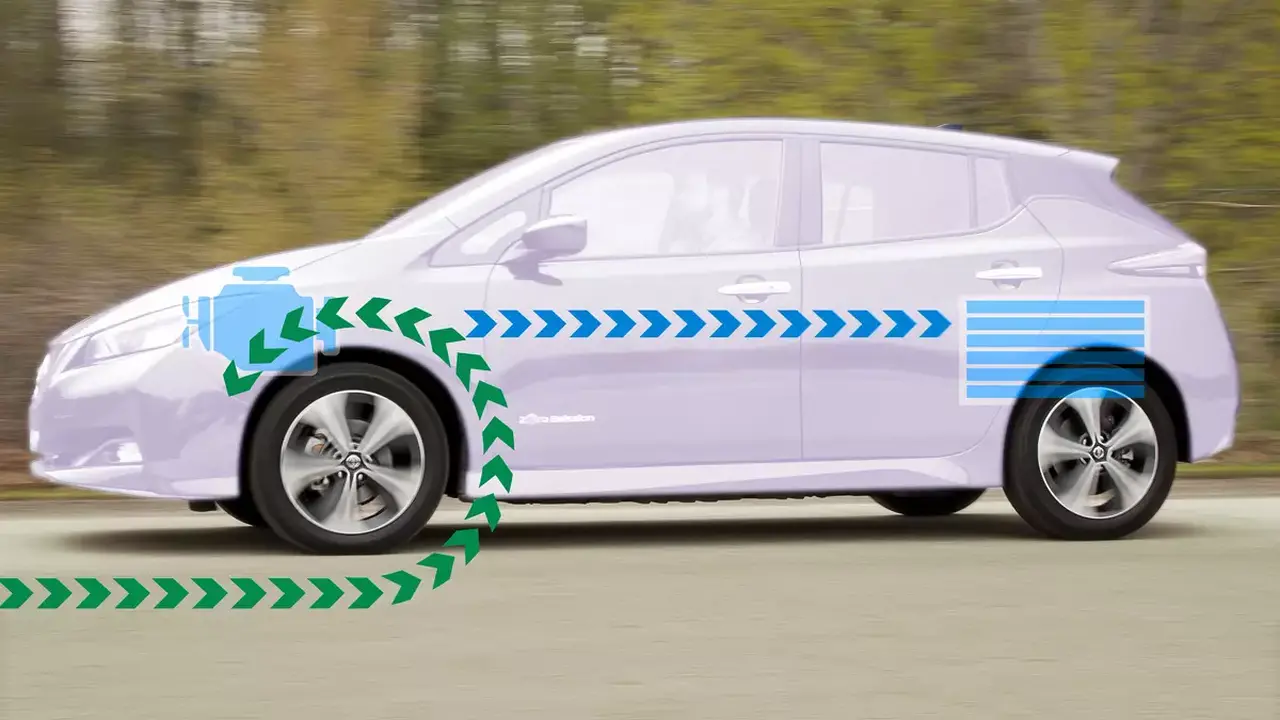
What Is Regenerative Braking? How Does It Work?
Regenerative braking is one of the key technologies that distinguishes electric and hybrid vehicles from conventional gasoline and diesel cars. Instead of converting most of the vehicle's braking energy into heat and losing it through the brake discs and pads, a regenerative braking system can recover part of that energy and send it back to the battery.
This process improves energy efficiency, can increase driving range, and reduces the amount of work performed by the conventional friction brakes. It is used extensively in battery-electric vehicles (EVs), plug-in hybrids, and conventional hybrid vehicles.
What Is Regenerative Braking?
Regenerative braking is a system that uses the vehicle's electric motor to slow the vehicle while converting some of its kinetic energy into electrical energy.
In a conventional car, pressing the brake pedal causes the brake pads to press against the brake discs. The friction slows the wheels, but the vehicle's kinetic energy is mainly converted into heat and released into the surrounding air.
An electric motor can work in the opposite direction.
During acceleration, electrical energy from the battery is converted into mechanical energy by the motor, which turns the wheels. During regenerative braking, the rotating wheels drive the motor, causing it to operate as a generator.
The generator produces electricity, which can then be sent back to the high-voltage battery.
In simple terms:
Acceleration: Battery → Motor → Wheels
Regenerative braking: Wheels → Motor/Generator → Battery
How Does Regenerative Braking Work?
The process begins as soon as the driver reduces the accelerator input or presses the brake pedal, depending on how the vehicle is configured.
Instead of allowing the wheels to rotate the motor freely, the vehicle's control system changes the operating mode of the electric motor.
The motor begins producing electrical energy rather than consuming it.
As the wheels turn the motor, electromagnetic resistance is created inside the motor. This resistance opposes the rotation of the wheels and slows the vehicle.
At the same time, electrical energy generated by the motor is transferred through the vehicle's power electronics and directed toward the battery.
The result is a combination of deceleration and energy recovery.
Why Does an Electric Motor Become a Generator?
An electric motor and an electric generator are essentially two operating modes of the same basic electromagnetic machine.
When electricity is supplied to an electric motor, electromagnetic forces cause the motor shaft to rotate.
When the shaft is mechanically driven instead, the electromagnetic process can generate electrical energy.
This is why an EV's traction motor can perform both functions.
During acceleration, it acts primarily as a motor.
During regenerative braking, it operates as a generator.
What Happens When You Release the Accelerator?
In many electric vehicles, regenerative braking begins when the driver lifts their foot from the accelerator.
The strength of this deceleration varies from one vehicle to another.
Some EVs provide relatively mild regeneration, while others can provide strong deceleration that allows the driver to perform much of normal driving without pressing the brake pedal.
This is commonly known as one-pedal driving.
When the accelerator is released, the vehicle automatically increases regenerative braking. When the accelerator is pressed again, the motor returns to driving the wheels.
The exact behavior depends on the vehicle's software, driving mode, battery condition, and regeneration settings.
What Is One-Pedal Driving?
One-pedal driving is a driving mode in which the accelerator pedal can be used for both acceleration and significant deceleration.
The driver accelerates by pressing the pedal and causes the vehicle to slow down by reducing pressure on it.
In some vehicles, regenerative braking can be strong enough to bring the car almost completely to a stop.
However, one-pedal driving does not mean that the conventional brakes have disappeared. The friction brakes remain available and are still necessary when stronger braking is required or when regenerative braking is limited.
Does Regenerative Braking Recharge the Battery?
Yes, regenerative braking can recharge the battery.
However, it does not recover all of the energy that was previously used to accelerate the vehicle.
There are energy losses throughout the process. Electricity passes through the motor, inverter, wiring, battery, and other components, and some energy is lost as heat.
There are also aerodynamic and rolling-resistance losses that have already occurred before the driver begins braking.
Therefore, regenerative braking should not be thought of as a system that creates free energy.
Instead, it recovers a portion of energy that would otherwise be wasted as heat in conventional braking.
How Much Energy Can Regenerative Braking Recover?
The amount of recovered energy varies considerably.
It depends on factors such as:
-
Vehicle speed
-
Vehicle mass
-
Battery state of charge
-
Battery temperature
-
Motor and inverter efficiency
-
Regenerative braking strength
-
Road conditions
-
Driving style
-
Downhill driving
-
Vehicle software
A vehicle traveling at higher speed contains more kinetic energy than the same vehicle traveling slowly. Consequently, there can be more energy available for recovery during braking from higher speeds.
However, the system cannot recover unlimited amounts of energy. The battery, motor, inverter, and electrical system all have maximum operating limits.
Why Does Regenerative Braking Feel Different From Normal Braking?
Regenerative braking can feel different because the vehicle may initially slow down through the electric motor rather than through the brake pads and discs.
Depending on the vehicle, the transition can feel very smooth or slightly different from the braking sensation of a conventional car.
Some vehicles allow the driver to select different regeneration levels.
For example, a low regeneration setting may allow the car to coast more freely when the accelerator is released, while a high regeneration setting can produce much stronger deceleration.
What Happens When You Press the Brake Pedal?
Modern electric vehicles typically use a system called blended braking.
The vehicle determines how much braking force can be provided by regenerative braking and how much additional braking force is required from the conventional friction brakes.
If the driver requests light braking, the electric motor may provide most or all of the braking force.
If stronger braking is required, the vehicle can combine regenerative braking with friction braking.
During an emergency stop, the conventional brakes can provide the strong braking force necessary to slow the vehicle as quickly as possible.
The driver does not normally need to manually decide which system should operate. The vehicle's electronic control systems manage the transition.
Why Can Regenerative Braking Be Limited?
Regenerative braking cannot operate at maximum strength under every condition.
One of the most important limitations is the battery's state of charge.
If the battery is already close to full, there is little room available to accept additional electrical energy. The vehicle may therefore reduce regenerative braking.
Battery temperature is another important factor.
When the battery is extremely cold or extremely hot, the battery management system may limit charging power to protect the battery.
This means that an EV may feel different during the first few minutes of driving on a cold day compared with normal operating conditions.
Does Regenerative Braking Work When the Battery Is Full?
It can still provide some deceleration, but the amount of energy that can be sent back to the battery may be limited.
When the battery reaches a high state of charge, the vehicle's control system may reduce regenerative braking and rely more heavily on the friction brakes.
This is one reason why drivers may notice a difference in regenerative braking behavior after charging the vehicle to a very high state of charge.
Does Regenerative Braking Work Downhill?
Yes, and downhill driving is one of the situations where regenerative braking can be particularly useful.
When an EV travels downhill, gravity causes the vehicle to accelerate.
Instead of allowing the vehicle to gain speed and then using the friction brakes to dissipate the energy as heat, the electric motor can be used as a generator.
The wheels turn the motor, the motor generates electricity, and some of that energy is returned to the battery.
This allows the vehicle to control its speed while recovering energy.
However, regenerative braking alone may not always be sufficient on a long or steep descent. The friction brakes remain available when additional braking is required.
Does Regenerative Braking Reduce Brake Wear?
Yes, generally.
Because regenerative braking can handle a significant portion of everyday deceleration, the conventional brake pads and discs may be used less frequently.
This can reduce brake wear and extend the service life of friction-brake components.
However, reduced brake use does not mean the brakes can be ignored.
Brake discs can still develop corrosion or surface issues when they are not used frequently, particularly in wet environments or vehicles that rely heavily on regenerative braking.
For this reason, conventional braking systems still require periodic inspection.
Is Regenerative Braking Better Than Conventional Braking?
The two systems perform different but complementary functions.
Conventional friction braking is extremely effective when rapid and powerful deceleration is required. It can convert large amounts of kinetic energy into heat almost immediately.
Regenerative braking, on the other hand, offers an efficiency advantage because some of the vehicle's kinetic energy can be recovered rather than completely lost as heat.
Modern EVs therefore use both systems.
The objective is not to eliminate conventional braking, but to use regenerative braking whenever conditions allow it and use friction braking when additional braking force is required.
Does Regenerative Braking Increase Electric Car Range?
Yes, it can contribute to increased range.
The effect is particularly noticeable in situations involving frequent acceleration and deceleration, such as urban driving.
Every time the vehicle slows down through regenerative braking, some of the energy that would otherwise be lost through the brake system can be recovered.
However, regenerative braking should not be interpreted as a system that dramatically increases range on its own.
Driving efficiently in the first place is usually more important. Aggressive acceleration followed by heavy braking is still inefficient, even if some of the braking energy can later be recovered.
Is Regenerative Braking More Useful in City Driving?
Generally, yes.
Urban driving involves frequent changes in speed, traffic lights, intersections, and stop-and-go traffic. This creates many opportunities for regenerative braking.
On a highway at a constant speed, there are fewer braking events, so there are fewer opportunities to recover energy.
This is one reason electric and hybrid vehicles can be particularly efficient in urban environments.
Can Regenerative Braking Recover Energy From Every Brake Application?
No.
Not every braking event results in the same amount of energy recovery.
If the battery is full, the battery is outside its ideal temperature range, the vehicle is traveling at very low speed, or the driver requests more braking force than the motor can provide, friction brakes may become more important.
The vehicle's control system constantly evaluates these conditions and determines how much regenerative braking is appropriate.
Does Regenerative Braking Make an EV More Efficient?
It is one of the factors that makes an electric vehicle highly efficient.
Electric motors are already capable of converting electrical energy into mechanical energy with high efficiency. Regenerative braking adds another advantage by allowing the motor to recover some energy during deceleration.
Instead of the energy flow being one-way, the vehicle can operate in both directions:
Battery → Motor → Wheels
and
Wheels → Motor → Battery
This bidirectional energy flow is a fundamental part of modern electric vehicle efficiency.
What Is the Difference Between Regenerative Braking and Engine Braking?
Regenerative braking and engine braking can produce a similar sensation because both slow the vehicle without relying entirely on the friction brakes.
However, the mechanisms are different.
In a conventional internal-combustion vehicle, engine braking occurs when the drivetrain causes the engine to resist the rotation of the wheels, particularly when the accelerator is released.
The energy is ultimately dissipated rather than recovered for later use.
In an electric vehicle, regenerative braking uses the traction motor as a generator. Instead of simply dissipating the vehicle's kinetic energy, it can convert part of that energy into electricity and store it in the battery.
Does Regenerative Braking Work in Hybrid Cars?
Yes.
Hybrid vehicles also use regenerative braking.
When a hybrid car slows down, one or more electric motors can recover some of the vehicle's kinetic energy and send it to the hybrid battery.
This recovered energy can later be used to assist acceleration or power the vehicle's electrical systems.
Regenerative braking is therefore an important part of the efficiency strategy used by both hybrids and fully electric vehicles.
Can Regenerative Braking Be Adjusted?
Many modern electric vehicles allow the driver to adjust regeneration.
Depending on the model, settings may include:
-
Low regeneration
-
Medium regeneration
-
High regeneration
-
Automatic regeneration
-
One-pedal driving
-
Coasting
Some vehicles automatically adjust regeneration based on traffic, road conditions, navigation data, or the vehicle ahead.
The available options vary significantly between manufacturers and models.
Does Regenerative Braking Work in Reverse?
The basic regenerative braking process is associated with forward or reverse vehicle motion, and the electric motor can operate in generator mode whenever the vehicle's control system commands it.
However, the amount of energy recovered while maneuvering at very low speeds is generally much smaller than during normal high-speed deceleration.
At parking speeds, the vehicle may rely more heavily on its electric drive controls and friction brakes.
Is Regenerative Braking the Same as Charging at a Charging Station?
No.
Both processes ultimately put electrical energy into the battery, but the source of the energy is different.
When charging at a charging station, electrical energy comes from an external power source.
During regenerative braking, the vehicle itself generates electricity by converting some of its kinetic energy back into electrical energy.
This distinction is important because regenerative braking is an energy recovery process, not an independent energy source.
Why Is Regenerative Braking Important?
Regenerative braking is important because it changes what happens to the energy normally lost during deceleration.
In a conventional braking system, kinetic energy is primarily converted into heat.
In an electric vehicle, some of that energy can be converted into electricity and stored again in the battery.
This provides several benefits:
-
Improved energy efficiency
-
Potentially greater driving range
-
Reduced brake-pad wear
-
Better energy recovery during downhill driving
-
Efficient stop-and-go operation
-
Reduced dependence on friction braking during normal driving
Final Takeaway
Regenerative braking is essentially an energy-recovery system built around the electric motor. When an electric or hybrid vehicle slows down, the motor can operate as a generator, converting part of the vehicle's kinetic energy into electrical energy and returning it to the battery.
It does not recover 100% of the energy used to move the vehicle, and it cannot replace conventional brakes in every situation. Battery temperature, state of charge, vehicle speed, and braking demand can all affect how much energy is recovered.
Nevertheless, regenerative braking is a major reason why electric and hybrid vehicles can use energy so efficiently. Instead of treating every braking event as a complete loss of energy, the vehicle has the opportunity to capture part of that energy and use it again.