TR
TR EN
EN

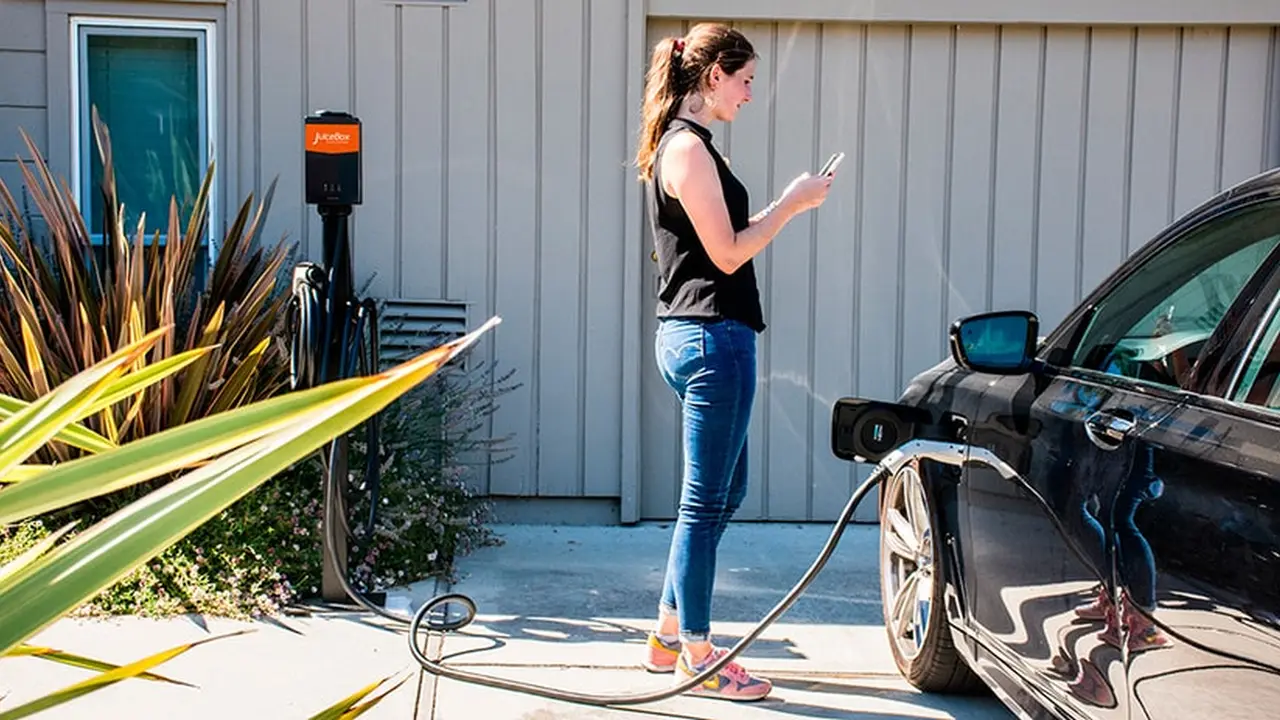
Can an Electric Car Be Charged at Home?
Yes, an electric car can be charged at home, and for many EV owners, home charging is the most convenient and practical way to recharge the vehicle. Instead of visiting a public charging station every time the battery gets low, you can plug the car in when you arrive home and let it charge while you sleep.
However, home charging is not simply a matter of plugging an electric car into any available socket. The charging speed, electrical installation, safety, battery size, and type of charger all affect how suitable a particular home setup will be.
How Does Home EV Charging Work?
An electric car stores energy in a high-voltage battery pack. When the vehicle is connected to a power source, electricity flows into the car through its charging system.
There are several ways to charge an EV at home:
-
A standard household electrical outlet
-
A dedicated AC charging point
-
A wall-mounted home charger, often called a wallbox
-
In some cases, a higher-power three-phase installation
The vehicle's onboard charger converts the incoming AC electricity into the DC electricity required by the battery.
The actual charging speed depends on both the home's electrical supply and the maximum AC charging capability of the vehicle.
Can You Charge an EV From a Normal Household Socket?
Yes, technically you can charge many electric cars from a standard household socket using the appropriate portable charging cable.
This is generally the slowest form of home charging.
A normal household socket may provide enough power to add a useful amount of range overnight, especially if the car is driven relatively short distances every day. However, charging from a standard socket for long periods places a continuous electrical load on the circuit.
For this reason, the condition and capacity of the electrical installation are extremely important.
A socket that is perfectly adequate for occasional household appliances is not necessarily ideal for supplying a high continuous load for many hours.
Is a Wallbox Better?
For regular EV use, a dedicated wallbox is usually a much better solution.
A wallbox is installed on a dedicated electrical circuit and is designed specifically for electric vehicle charging. Depending on the installation and vehicle, home AC charging can be considerably faster than charging from a standard outlet.
A wallbox can also provide features such as:
-
Higher charging power
-
Scheduled charging
-
Load management
-
Charging current adjustment
-
Smartphone monitoring
-
Energy consumption monitoring
-
Integration with solar power systems on compatible installations
For someone who drives an EV every day, a wallbox can make home charging significantly more convenient.
How Long Does It Take to Charge an Electric Car at Home?
Charging time depends on several factors.
The most important ones are:
-
Battery capacity
-
State of charge
-
Home charger power
-
Vehicle's maximum AC charging rate
-
Electrical supply
-
Charging losses
-
Battery temperature
For example, a small EV with a relatively small battery may be recharged overnight even with a modest charging setup.
A larger electric SUV with a large battery may require considerably more time if it is charged from a standard household socket.
With a dedicated higher-power AC charger, the same vehicle can recover much more energy during an overnight charging session.
The important point is that you do not necessarily need to charge the battery from 0% to 100% every night. In normal daily use, many drivers simply replace the energy they consumed during the day.
How Much Electricity Does an Electric Car Use at Home?
The amount of electricity required depends mainly on the vehicle's efficiency and the distance driven.
For example, suppose an electric car consumes around 18 kWh per 100 km. Driving 50 km would require approximately 9 kWh of energy under ideal conditions.
In reality, the amount drawn from the electrical grid will be somewhat higher because charging is not 100% efficient. Some energy is lost during AC-to-DC conversion, battery conditioning, cable losses, and other charging processes.
Therefore, the electricity measured by a home energy meter can be higher than the amount of energy actually stored in the battery.
Can You Charge an Electric Car Overnight?
Yes. Overnight charging is one of the main advantages of owning an EV.
You can connect the car after returning home, set a charging schedule if supported, and allow the vehicle to charge during the night.
This is particularly convenient because the car can be ready for the next morning without requiring a separate trip to a charging station.
Many modern EVs allow owners to set:
-
Charging start times
-
Charging limits
-
Target battery percentages
-
Off-peak charging schedules
-
Cabin preconditioning times
These functions can make home charging even more practical.
Does Home Charging Damage the Battery?
Normal home AC charging does not inherently damage an EV battery.
In fact, AC charging at relatively moderate power is often gentler on the battery than repeatedly relying on very high-power DC fast charging.
Battery longevity is affected by many factors, including:
-
Battery temperature
-
Charging power
-
Charging frequency
-
Very high or very low states of charge
-
Battery chemistry
-
Driving conditions
-
Thermal management
Modern electric vehicles have sophisticated battery management systems designed to control charging and protect the battery.
For everyday use, there is generally no reason to avoid home AC charging.
Should You Charge to 100% Every Night?
Not necessarily.
The ideal charging limit depends on the battery chemistry and the manufacturer's recommendations.
For many EVs, keeping the battery within a moderate state-of-charge range during everyday driving can help reduce long-term battery stress. Some manufacturers recommend a lower daily charging limit and reserving 100% charging for longer trips.
However, battery chemistry matters. Some vehicles using lithium iron phosphate (LFP) batteries may have different charging recommendations.
Therefore, the manufacturer's charging instructions should take priority over generic EV advice.
Is Home Charging Safe?
Home EV charging can be very safe when the electrical installation is properly designed and installed.
The charging circuit should be suitable for the required continuous load, and the installation should include the appropriate protection devices.
Important considerations include:
Dedicated circuit
A dedicated circuit for the EV charger helps prevent excessive loading of circuits shared with other household appliances.
Proper cable sizing
The electrical cables must be correctly sized for the charging current and installation conditions.
Grounding and protection
Proper grounding and suitable electrical protection are essential.
Quality charging equipment
The charger and charging cable should be designed for EV use and comply with the relevant safety standards.
Professional installation
A qualified electrician should inspect the electrical installation before installing a high-power EV charger.
Can an Apartment Owner Charge an Electric Car at Home?
This depends on the type of property and the available electrical infrastructure.
A homeowner with a private garage generally has more freedom to install a charging point. Apartment residents may have additional considerations, particularly when parking spaces and electrical connections are shared.
Possible solutions include:
-
Installing a charger in a private parking space
-
Connecting to the apartment's electrical system where permitted
-
Installing a dedicated electrical connection
-
Using a shared charging system
-
Using nearby public charging stations
The exact requirements depend on the building's electrical infrastructure, parking arrangement, and local regulations.
Can Solar Panels Charge an Electric Car?
Yes. An EV can be charged using electricity generated by solar panels.
This can be particularly attractive for homeowners who already have a photovoltaic solar system.
During daylight hours, solar electricity can be used directly by the house and, when sufficient power is available, by the EV charger.
Some smart charging systems can adjust charging power according to solar production. This allows more of the vehicle's energy to come directly from renewable electricity generated at home.
The effectiveness of this setup depends on factors such as:
-
Solar panel capacity
-
Household electricity consumption
-
Vehicle battery size
-
Charger power
-
Weather conditions
-
Whether the vehicle is home during daylight hours
What Happens if the Power Goes Out?
If the electricity supply to the house fails, a conventional home EV charger will normally stop charging.
Once power is restored, charging can resume depending on the vehicle and charger settings.
Some advanced systems can work with home battery storage or bidirectional charging technology. In compatible vehicles and installations, this can potentially allow an EV battery to supply electricity back to a house.
However, bidirectional charging is not available on every electric vehicle or charger and requires compatible hardware and software.
Can Every Electric Car Use Every Home Charger?
No.
Charging compatibility depends on the vehicle's charging port, charging standard, onboard charger, and the charger itself.
Different regions and manufacturers use different charging standards. There are also differences between AC and DC charging.
For home charging, the key question is usually whether the vehicle and the home charger support the same AC charging connection and electrical requirements.
The maximum charging power is also important. Installing a very powerful charger does not automatically mean the car will charge at that power. The vehicle's onboard charger determines how much AC power it can accept.
Is Home Charging Cheaper Than Public Charging?
It can be, although the exact difference depends on electricity prices and public charging tariffs.
Home charging generally benefits from the residential electricity rate. Public charging stations may have higher costs because they involve infrastructure, maintenance, land, network services, and commercial operation.
However, home charging also has installation costs.
A proper comparison should therefore consider both the electricity cost and the initial installation cost of the charging equipment.
For an EV owner who drives many kilometers every year, the convenience and lower energy cost of home charging can make a substantial difference over time.
Do You Need to Install a Wallbox Immediately?
Not necessarily.
If your daily driving distance is relatively low, a standard portable charger may provide enough energy overnight.
For example, someone who drives only a few dozen kilometers per day may not need a high-power charger because the car can simply recover the energy consumed during daily driving.
A wallbox becomes more attractive when:
-
Daily mileage is high
-
The vehicle has a large battery
-
Faster overnight charging is desired
-
Multiple EVs are used
-
A dedicated garage charging point is available
-
Solar charging is planned
-
Charging needs to be managed intelligently
What Should You Check Before Installing Home Charging?
Before installing a home EV charger, the electrical system should be evaluated rather than simply choosing the most powerful charger available.
The important questions include:
-
What is the home's available electrical capacity?
-
Is single-phase or three-phase power available?
-
Where will the charger be installed?
-
How far is the electrical panel from the parking location?
-
What charging power can the vehicle accept?
-
Is a dedicated circuit required?
-
Are additional protection devices needed?
-
Can the existing cables handle the intended load?
-
Is load balancing necessary?
-
Would solar integration be useful?
These checks can prevent unnecessary expense and electrical problems.
What Is the Best Home Charging Setup?
For most regular EV users with a suitable parking space, a properly installed AC wallbox is usually the most convenient home charging solution.
A practical setup generally consists of:
-
A dedicated electrical circuit
-
Appropriate electrical protection
-
A suitable EV wallbox
-
Correctly sized cabling
-
A compatible charging cable or connector
-
Professional installation
-
A charging schedule suited to the owner's driving routine
The best system is not necessarily the one with the highest charging power. It is the one that matches the vehicle, the electrical installation, and the owner's daily driving needs.
Can an Electric Car Be Charged at Home Every Day?
Yes. In fact, daily home charging is one of the biggest advantages of owning an electric car.
Instead of thinking about charging in the same way as refueling a gasoline car, EV owners can treat charging as part of the normal parking routine. The car is parked at home, connected to the charger, and gradually replenishes its battery while it is not being used.
For drivers with access to home charging, this can eliminate many visits to public charging stations.
Final Answer
Yes, an electric car can absolutely be charged at home. It can be charged from a standard household outlet, although this is relatively slow and requires careful consideration of the electrical circuit. For regular use, a dedicated AC wallbox is generally a more practical and safer long-term solution.
The ideal home charging system depends on the car's battery and onboard charger, the home's electrical capacity, the available parking arrangement, daily driving distance, and whether features such as solar charging or smart energy management are desired.
For many EV owners, the biggest advantage is simple: you arrive home with the car, plug it in, and start the next day with the battery already replenished.