TR
TR EN
EN

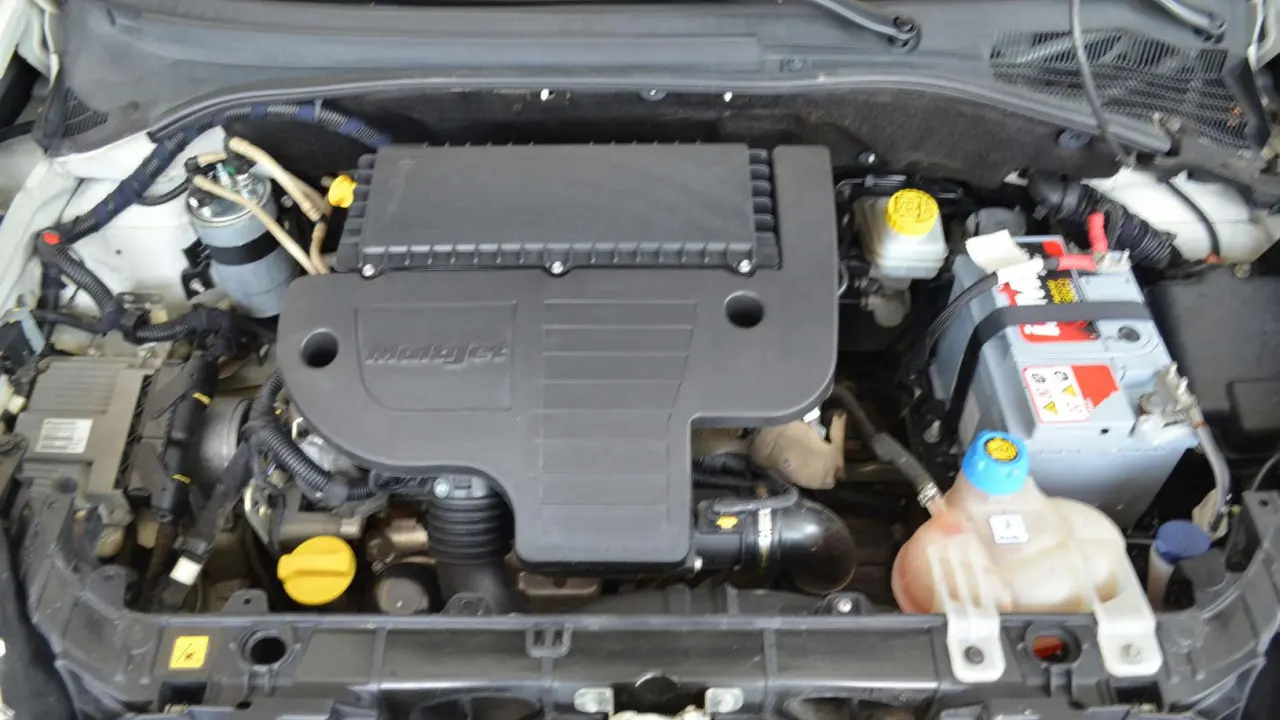
What Is a Multijet Engine?
A Multijet engine is a diesel engine technology developed by Fiat that uses multiple fuel injections during a single combustion cycle instead of relying on one large injection of diesel fuel.
The technology was developed to improve the characteristics of common-rail diesel engines, particularly in terms of fuel economy, combustion efficiency, noise, emissions, and engine response.
Multijet technology became closely associated with Fiat and was later used across a wide range of vehicles and brands within the Fiat Group and Stellantis ecosystem. Depending on the generation and engine family, Multijet engines have appeared in models from Fiat, Alfa Romeo, Lancia, Opel, Suzuki, Jeep, and other manufacturers.
Although the name is strongly associated with Fiat, Multijet should not be understood as one specific engine. It is a fuel-injection technology used across different diesel engines and generations.
What Does Multijet Mean?
The name Multijet refers to the engine's ability to perform multiple fuel injections during one combustion cycle.
Older diesel engines generally relied on a simpler injection strategy.
A large quantity of fuel could be injected into the cylinder in a relatively short period. This approach could produce high combustion pressure and a characteristic diesel knocking sound.
Common-rail technology made it possible to control fuel pressure and injection timing much more precisely.
Multijet technology took this concept further by dividing the required fuel quantity into several smaller injections.
Instead of thinking of combustion as one large fuel injection, the engine can use a sequence of carefully controlled injections.
These may include:
-
Pilot injection
-
Main injection
-
Additional or post injections
The exact number and timing depend on the engine generation, operating conditions, engine speed, temperature, load, emissions strategy, and ECU calibration.
How Does a Multijet Engine Work?
A Multijet engine uses a common-rail fuel system.
A high-pressure pump sends diesel fuel into a common rail, where the fuel is stored at high pressure.
The injectors are electronically controlled by the engine control unit.
When injection is required, the ECU determines precisely when the injector should open and how much fuel should be delivered.
In a conventional injection strategy, much of the required fuel may be delivered in one primary injection.
In a Multijet system, the ECU can divide the fuel delivery into several smaller events.
For example, a simplified combustion sequence could involve:
Pilot injection → main injection → post injection
The actual strategy is considerably more sophisticated in modern engines.
The important point is that the fuel quantity and timing can be controlled much more precisely.
Why Does a Multijet Engine Use Multiple Injections?
Multiple injections provide several advantages.
A small pilot injection can begin the combustion process before the main quantity of fuel is injected.
This can help control the rate at which combustion pressure rises.
The result can be smoother and quieter combustion.
The main injection then provides most of the energy required to produce engine power.
Additional injections can be used for purposes such as emissions management and exhaust after-treatment, depending on the engine design.
This means the injection system is not simply responsible for producing power.
It also plays an important role in controlling combustion noise and emissions.
Multijet and Common Rail Are Not the Same Thing
These two terms are often confused.
Common rail describes the architecture of the diesel fuel system.
Multijet describes a specific approach to controlling fuel injection within a common-rail system.
In other words, Multijet engines use common-rail technology, but the terms do not mean exactly the same thing.
A common-rail diesel engine can use different injection strategies depending on its manufacturer and generation.
Multijet is Fiat's name for its advanced multi-injection technology.
What Is the Difference Between JTD and Multijet?
This is another common question.
Fiat's earlier common-rail diesel engines were widely known as JTD engines.
JTD stands for Jet Turbo Diesel.
Multijet technology represented an evolution of the common-rail injection system used in these diesel engines.
The transition from earlier JTD systems to Multijet allowed engineers to use multiple injection events within the same combustion cycle.
As the technology evolved, later generations gained increasingly sophisticated injection control, higher fuel pressure, improved injectors, better emissions systems, and more advanced engine management.
Therefore, Multijet can be viewed as an important development in the evolution of Fiat's common-rail diesel technology.
What Are the Advantages of a Multijet Engine?
One of the biggest advantages is the ability to control combustion more precisely.
This can provide several benefits.
Better fuel efficiency
More precise fuel delivery can help the engine use diesel more efficiently under different operating conditions.
Lower combustion noise
Pilot injections can help reduce the sudden pressure rise associated with diesel combustion.
This can make the engine sound smoother and more refined.
Better torque delivery
Turbocharged Multijet engines can provide strong low- and mid-range torque, making them well suited to everyday driving.
Lower emissions
Multiple injection strategies can help optimize combustion and support emissions-control systems.
Improved engine response
Precise control of fuel delivery allows the ECU to adapt the engine's behavior according to load, speed, temperature, and other parameters.
Good long-distance efficiency
Diesel engines equipped with Multijet technology can be particularly efficient during longer journeys and steady-speed driving.
Why Do Multijet Engines Have Strong Torque?
Many Multijet engines are turbocharged diesel engines.
Diesel combustion naturally provides strong low-speed torque characteristics, while the turbocharger increases the amount of air entering the engine.
The ECU can then precisely control the amount and timing of injected fuel.
The combination of:
Turbocharging + high-pressure common rail + precise multiple injection
allows many Multijet engines to produce substantial torque at relatively low engine speeds.
This is one reason these engines have been popular in compact cars, family vehicles, vans, and light commercial vehicles.
Multijet Engine Generations
There is no single Multijet engine.
The technology has been used in numerous engine families and generations.
Engine sizes have included different versions of approximately:
-
1.3 liters
-
1.6 liters
-
1.9 liters
-
2.0 liters
-
2.2 liters
-
Larger diesel applications
The exact specifications vary significantly between engines.
Power output, turbocharger design, injector technology, emissions equipment, compression ratio, fuel pressure, and engine management can all differ.
Therefore, it is not correct to assume that every Multijet engine has the same reliability characteristics or the same maintenance requirements.
The engine code and model year are important when diagnosing a specific Multijet engine.
What Is the 1.3 Multijet Engine?
The 1.3 Multijet became one of the most widely recognized small diesel engines associated with Fiat.
It was developed for compact vehicles where low fuel consumption and compact dimensions were important.
The engine was used in various Fiat models and was also adopted by other manufacturers under different applications and brand names.
Its small displacement combined with turbocharging allowed it to produce useful torque while maintaining relatively low fuel consumption.
The 1.3 Multijet was particularly popular in small hatchbacks, compact cars, and light commercial vehicles.
However, its compact design also means that maintenance condition is extremely important, especially on high-mileage examples.
What Is the 1.6 Multijet Engine?
The 1.6 Multijet is a larger diesel engine designed to provide a stronger balance between fuel economy and performance.
It has been used in several Fiat and related vehicles and has appeared in different versions with different power outputs.
Compared with smaller Multijet engines, the 1.6-liter versions can provide stronger performance while retaining the efficiency advantages associated with diesel technology.
As with other modern diesels, however, actual reliability depends heavily on maintenance history, driving conditions, fuel quality, oil quality, and emissions-system condition.
What Is the 1.9 Multijet Engine?
The 1.9-liter diesel family is particularly important in Fiat's diesel history.
Different versions of the 1.9-liter engine were used in Fiat, Alfa Romeo, Lancia, and other vehicles.
Some versions became particularly well known among enthusiasts for their strong torque and tuning potential.
The 1.9 Multijet family also demonstrates why the term Multijet should not be treated as if it identifies one exact engine.
Different versions can have different turbochargers, injectors, power outputs, engine management systems, and emissions equipment.
What Problems Can a Multijet Engine Have?
Multijet engines can be durable when properly maintained, but they use sophisticated diesel technology.
As mileage increases, several components may require attention.
Common areas include:
-
Injectors
-
EGR valve
-
DPF
-
Turbocharger
-
Intake system
-
Common-rail components
-
High-pressure fuel pump
-
Glow plugs
-
Sensors
-
Dual-mass flywheel
-
Swirl-flap systems on applicable engines
-
Cooling system
Not every Multijet engine will experience all of these problems.
The exact weak points depend on the engine generation and vehicle.
Injector Problems
The injectors are among the most important components in a modern Multijet engine.
Because the system operates at extremely high fuel pressures and requires precise injection timing, injector condition is critical.
A faulty injector can cause:
-
Rough idle
-
Difficult starting
-
Excessive smoke
-
Increased fuel consumption
-
Poor acceleration
-
Engine vibration
-
Abnormal combustion noise
-
Incorrect injection corrections
On some engines, injector correction values can be monitored with suitable diagnostic equipment.
However, software readings should not automatically be interpreted as proof that an injector is defective. Mechanical testing may be necessary.
EGR Problems
The Exhaust Gas Recirculation (EGR) system sends a controlled amount of exhaust gas back into the intake under certain operating conditions.
Its purpose is primarily to reduce combustion temperatures and help control nitrogen oxide emissions.
Over time, soot and carbon deposits can accumulate around the EGR valve and intake system.
This can lead to symptoms such as:
-
Poor low-speed response
-
Hesitation
-
Rough running
-
Increased smoke
-
Reduced performance
-
Check-engine light
Short-trip, low-speed driving can contribute to deposit accumulation in diesel engines.
DPF and Multijet Engines
Many later Multijet diesel engines are equipped with a Diesel Particulate Filter (DPF).
The DPF captures soot from the exhaust gases.
Eventually, the filter needs to regenerate by burning accumulated soot at high temperatures.
This is easier when the vehicle regularly reaches operating temperature and is driven under conditions that allow regeneration to complete.
Repeated short trips can make this more difficult.
A vehicle that is used almost exclusively for very short urban journeys may therefore be less suitable for a modern DPF-equipped diesel than one regularly used for longer trips.
Turbocharger Problems
Turbochargers operate under high temperatures and speeds.
A Multijet diesel that has been poorly maintained can eventually develop turbocharger problems.
Possible symptoms include:
-
Loss of power
-
Excessive smoke
-
Whining noises
-
Oil consumption
-
Slow turbo response
-
Boost pressure faults
Oil quality and oil-change intervals are particularly important for turbocharged diesel engines.
Using the correct engine oil specification is not simply a matter of preference.
It can be important for both turbocharger lubrication and emissions-system compatibility.
Dual-Mass Flywheel Problems
Many diesel vehicles equipped with manual transmissions use a dual-mass flywheel (DMF) to reduce drivetrain vibration.
The strong low-rpm torque of diesel engines can place considerable stress on the drivetrain.
A worn DMF can cause:
-
Rattling noises
-
Vibrations
-
Shuddering during take-off
-
Clutch engagement problems
-
Noise when starting or shutting down the engine
The DMF should not automatically be blamed for every vibration.
A proper diagnosis should distinguish between clutch, flywheel, engine-mount, injector, and engine-running problems.
Are Multijet Engines Reliable?
A well-maintained Multijet engine can provide long service life.
However, reliability depends much more on the specific engine and its maintenance history than on the Multijet name itself.
Important factors include:
-
Regular oil changes
-
Correct engine oil specification
-
Quality diesel fuel
-
Proper cooling-system maintenance
-
Turbocharger care
-
DPF usage conditions
-
EGR condition
-
Injector condition
-
Timing-belt maintenance where applicable
-
Correct replacement parts
A neglected Multijet can become expensive, particularly when several diesel components reach the end of their service life at the same time.
Does a Multijet Engine Need Special Maintenance?
Modern diesel engines require more attention than older, simpler diesel designs.
Oil changes should be performed according to the manufacturer's specifications.
The correct oil is particularly important when the vehicle has a DPF.
The timing system also deserves attention.
Depending on the specific engine, the timing system may use a belt or another arrangement, and replacement intervals vary.
The water pump, tensioners, and related components should also be considered when the timing belt is replaced on engines that use one.
Fuel-system maintenance is equally important.
Poor-quality fuel can contribute to injector and high-pressure fuel-system problems.
Are Multijet Engines Good for City Driving?
This depends heavily on the engine generation and the vehicle's emissions equipment.
Older diesel engines without modern particulate filters can behave differently from newer DPF-equipped engines.
For a modern Multijet diesel with a DPF, constant short-distance driving can be less ideal.
If the engine rarely reaches normal operating temperature, the vehicle may not have enough suitable driving conditions for successful DPF regeneration.
A diesel Multijet is generally better suited to drivers who regularly make longer journeys.
For someone who drives only a few kilometers at a time in heavy urban traffic, a gasoline or suitable hybrid powertrain may be a better choice.
Multijet Fuel Economy
Fuel economy is one of the main reasons Multijet diesel engines became popular.
Diesel engines generally have high thermal efficiency, while turbocharging and advanced fuel injection allow engineers to extract useful performance from relatively small engine capacities.
Actual fuel consumption depends on many factors, including:
-
Vehicle weight
-
Engine size
-
Transmission
-
Driving style
-
Tire pressure
-
Traffic
-
Temperature
-
Air conditioning use
-
Road conditions
-
Vehicle maintenance
Therefore, a manufacturer's official consumption figure should not be treated as a guaranteed real-world number.
Can a Multijet Engine Be Tuned?
Yes, many Multijet engines can be modified through ECU calibration and hardware upgrades.
The potential depends heavily on the exact engine.
ECU tuning can change parameters such as:
-
Fuel quantity
-
Boost pressure
-
Injection timing
-
Torque limits
-
Throttle response
However, increasing power also increases mechanical and thermal loads.
A tune that exceeds the capabilities of the turbocharger, clutch, transmission, cooling system, or injectors can reduce reliability.
For this reason, tuning should be approached as a complete engineering problem rather than simply asking for the highest possible power figure.
Multijet vs. Gasoline Engine
The biggest difference is the combustion process and operating characteristics.
A Multijet diesel generally provides strong low-speed torque and good fuel economy.
A gasoline engine typically offers a smoother high-rpm character and may be better suited to drivers who make many short trips.
For long-distance driving, high annual mileage, and highway use, a diesel Multijet can be very attractive.
For short urban journeys, particularly with a modern DPF-equipped diesel, a gasoline or hybrid vehicle may be more practical.
Is a Multijet Engine Worth Buying Used?
A used Multijet can be an excellent choice if the vehicle has been properly maintained.
However, buying based solely on low purchase price can be risky.
Before purchasing a used Multijet, it is worth checking:
-
Complete service history
-
Cold-start behavior
-
Engine noise
-
Injector corrections
-
Turbocharger operation
-
DPF condition
-
EGR system
-
Clutch and dual-mass flywheel
-
Oil leaks
-
Cooling system
-
Diagnostic fault codes
-
Timing-belt history where applicable
A professional inspection can be particularly valuable when purchasing a high-mileage diesel.
Final Thoughts
A Multijet engine is not a single engine model but a family of diesel engines using Fiat's advanced multiple-injection common-rail technology.
The ability to divide fuel delivery into several injection events allows engineers to control combustion more precisely. This can contribute to better fuel efficiency, smoother operation, lower combustion noise, strong torque, and improved emissions performance.
From small 1.3-liter applications to larger and more powerful diesel engines, Multijet technology has been used across a wide range of vehicles.
Its strengths are particularly noticeable when the engine is used in the conditions for which it was designed: regular maintenance, good-quality fuel, appropriate engine oil, and sufficient longer-distance driving on modern DPF-equipped versions.
Like any modern diesel technology, however, a Multijet engine is only as reliable as its maintenance and operating conditions allow. The specific engine code, generation, emissions equipment, and service history should always be considered before judging a particular Multijet engine.