TR
TR EN
EN

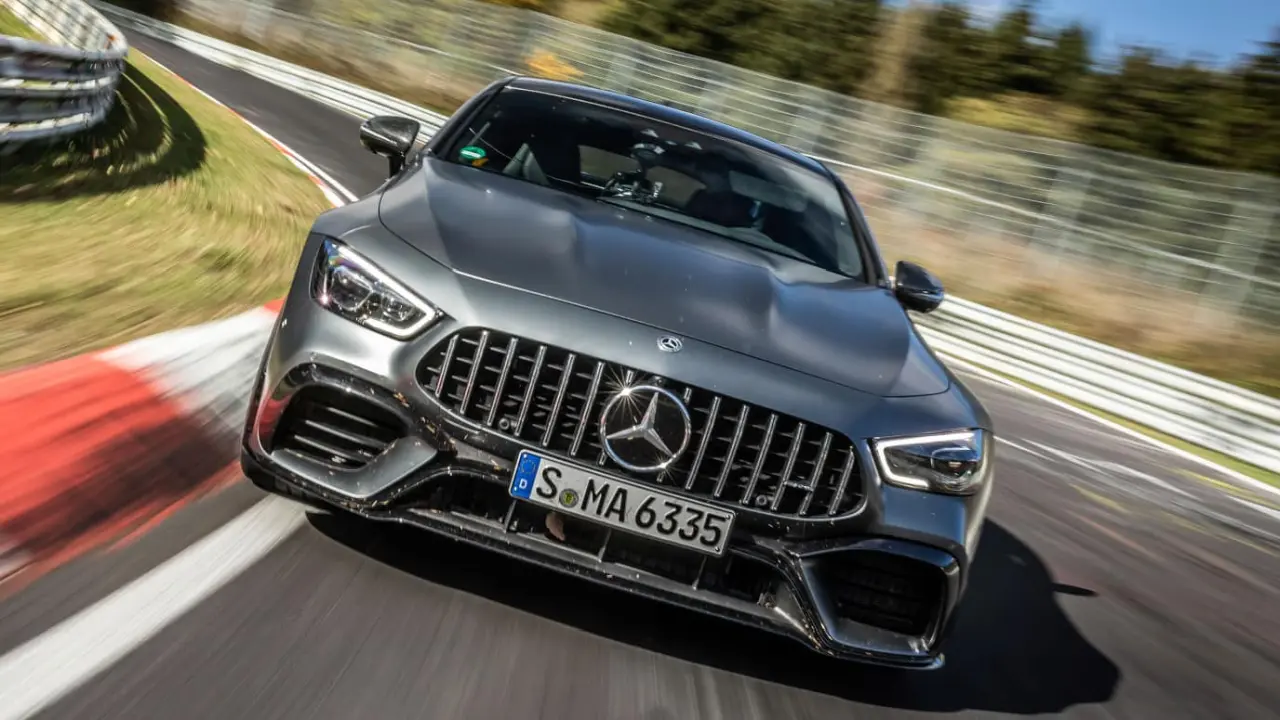
What Is AMG?
AMG is Mercedes-Benz's high-performance brand, known for developing powerful engines, sporty chassis systems, performance transmissions, high-performance braking systems, distinctive exhaust systems, and more aggressive driving characteristics.
However, AMG was not originally created as a Mercedes-Benz sub-brand.
Its story began in 1967, when two former Mercedes-Benz engineers, Hans Werner Aufrecht and Erhard Melcher, established their own engineering company in Germany. Their goal was to develop and improve Mercedes-Benz vehicles, particularly for motorsport and high-performance applications.
Over the years, AMG evolved from a small independent engineering company into one of the most recognizable performance brands in the automotive industry.
Today, seeing AMG on a Mercedes-Benz generally means much more than simply having a more powerful engine. A genuine Mercedes-AMG vehicle can feature extensive changes to the engine, transmission, suspension, brakes, steering, differential, exhaust, aerodynamics, and electronic control systems.
What Does AMG Stand For?
The AMG name comes from the names of the company's founders and a location associated with the company.
A comes from Aufrecht, the surname of Hans Werner Aufrecht.
M comes from Melcher, the surname of Erhard Melcher.
G comes from Großaspach, the German town where Aufrecht was born.
The original meaning of the company name was therefore:
Aufrecht, Melcher, Großaspach
AMG was officially established in 1967.
Initially, the company focused heavily on developing Mercedes-Benz engines and preparing vehicles for motorsport.
How Did AMG Begin?
Hans Werner Aufrecht and Erhard Melcher had previously worked as engineers at Mercedes-Benz and were particularly interested in engine development and motorsport.
After Mercedes-Benz changed its motorsport activities, the two engineers continued developing performance-oriented technology independently.
In 1967, they established their own company.
The early AMG business was very different from today's Mercedes-AMG operation.
AMG initially worked on Mercedes-Benz vehicles rather than producing complete AMG models in the modern sense.
The company modified engines, developed performance components, and prepared Mercedes-Benz cars for competition.
These engineering projects gradually established AMG's reputation for extracting considerably more performance from Mercedes-Benz vehicles.
AMG's Motorsport Success
Motorsport played a major role in making AMG famous.
One of the most important early moments came in 1971, when an AMG-prepared Mercedes-Benz 300 SEL 6.8 competed in the 24 Hours of Spa.
The large luxury sedan was an unusual choice for a racing car. Compared with smaller and lighter competitors, it was a very different kind of machine.
Nevertheless, the car achieved an impressive result, finishing second overall and winning its class.
The success attracted considerable attention and demonstrated that AMG was capable of much more than conventional engine tuning.
AMG was becoming a serious name in performance engineering.
Was AMG Originally Part of Mercedes-Benz?
No.
For many years, AMG operated as an independent company.
It specialized in modifying Mercedes-Benz vehicles and developing high-performance technology, but it was not initially owned by Mercedes-Benz.
The relationship between the two companies gradually became closer.
In 1990, Mercedes-Benz and AMG entered into an official cooperation agreement. AMG products subsequently became increasingly integrated into Mercedes-Benz's model range.
Mercedes-Benz acquired a majority stake in AMG in 1999 and eventually took full ownership in 2005.
From that point, AMG became an integral part of Mercedes-Benz's performance strategy.
Today, the official brand is known as Mercedes-AMG.
What Is Mercedes-AMG?
Mercedes-AMG represents the high-performance side of the Mercedes-Benz product range.
However, an AMG vehicle is not simply a standard Mercedes-Benz with a more powerful engine.
Depending on the model, AMG engineers may make extensive changes to:
-
Engine
-
Turbocharging system
-
Transmission
-
Differential
-
Suspension
-
Steering
-
Brakes
-
Exhaust
-
Cooling system
-
Aerodynamics
-
Wheels and tires
-
Electronic control systems
The objective is to create a vehicle in which all of these systems work together.
A high-output engine is only one part of a performance car.
Why Are AMG Engines Different?
Engine development has always been one of AMG's strongest areas.
A high-performance AMG engine is not simply calibrated to produce more horsepower.
Engineers may change or optimize:
-
Turbocharger characteristics
-
Cooling capacity
-
Lubrication
-
Air intake
-
Exhaust flow
-
Fuel delivery
-
ECU calibration
-
Throttle response
-
Torque delivery
The result is intended to provide not only higher peak power but also a different driving character.
Throttle response, mid-range torque, high-rpm performance, and the way power is delivered can be just as important as the final horsepower figure.
What Is "One Man, One Engine"?
One of AMG's most famous production philosophies is "One Man, One Engine."
Under this approach, certain high-performance AMG engines are assembled by a single specialist from beginning to end.
The engine is then associated with the technician responsible for its assembly, traditionally represented by a plaque carrying the technician's signature.
The philosophy emphasizes craftsmanship, responsibility, and the idea that every high-performance engine receives individual attention during assembly.
It also became an important part of AMG's identity.
What Is the Difference Between a Normal Mercedes-Benz and an AMG?
The differences can be substantial.
A standard Mercedes-Benz is generally designed around a balance of comfort, efficiency, refinement, practicality, and performance.
A Mercedes-AMG places considerably more emphasis on performance.
Engine
AMG engines can produce substantially more power and torque than comparable standard Mercedes-Benz engines.
Transmission
AMG-specific transmission software and hardware can provide faster and more aggressive gear changes.
Brakes
Larger brake discs, stronger calipers, and high-temperature braking components may be used.
Suspension
AMG models can feature firmer springs, electronically controlled dampers, adaptive suspension systems, and different chassis tuning.
Steering
Steering characteristics can be changed to provide a more direct and performance-oriented response.
Differential
Performance-oriented differentials can help control torque distribution during acceleration and cornering.
Exhaust
AMG exhaust systems are often developed to produce a more distinctive and aggressive sound while maintaining the required emissions and noise characteristics.
Aerodynamics
Bumpers, spoilers, diffusers, air intakes, and other components can be redesigned to support high-speed stability and cooling.
AMG Line Is Not the Same as a Real AMG
This is an important distinction for Mercedes-Benz buyers.
A Mercedes-Benz with an AMG Line package is not necessarily a genuine Mercedes-AMG model.
AMG Line is primarily a styling and equipment package that gives a standard Mercedes-Benz a more aggressive AMG-inspired appearance.
Depending on the model, an AMG Line vehicle may have:
-
AMG-style bumpers
-
Sportier wheels
-
AMG-inspired steering wheel
-
Sport seats
-
Different interior trim
-
AMG-style exterior details
But the vehicle may still have the same engine, transmission, suspension, and braking systems as a conventional Mercedes-Benz version.
A genuine Mercedes-AMG model is engineered as a performance vehicle.
Therefore:
AMG Line ≠ Mercedes-AMG
The distinction is important when comparing specifications, prices, performance, and used vehicles.
Why Do AMG Cars Sound Different?
Exhaust sound is one of the most recognizable characteristics of AMG vehicles.
The exhaust system is engineered together with the engine and its turbocharging system.
Depending on the model, AMG may use:
-
Special mufflers
-
Resonators
-
Larger exhaust components
-
Performance-oriented exhaust routing
-
Electronically controlled exhaust valves
-
Special exhaust tips
Exhaust valves can change the sound depending on engine speed, throttle position, driving mode, and engine load.
During relaxed driving, the system can remain relatively quiet.
When the driver selects a sportier mode or accelerates aggressively, the exhaust valves can open and produce a much more pronounced sound.
Does AMG Mean a Louder Exhaust?
Not necessarily.
A louder exhaust is not automatically a better exhaust.
AMG engineers have to balance sound with:
-
Performance
-
Emissions
-
Comfort
-
Cabin noise
-
Exhaust flow
-
Thermal management
-
Legal noise requirements
A properly designed AMG exhaust is intended to provide a distinctive sound without making the vehicle unpleasant to drive every day.
This is particularly important in high-performance luxury cars, which are expected to combine speed with refinement.
What Is 4MATIC+ in AMG Models?
Many modern Mercedes-AMG models use advanced versions of the company's all-wheel-drive system known as 4MATIC+.
Unlike a simple permanently fixed all-wheel-drive arrangement, 4MATIC+ can vary torque distribution according to driving conditions and the vehicle's control strategy.
The system can help manage the enormous amount of torque produced by powerful AMG engines.
It can also influence:
-
Acceleration
-
Corner exit behavior
-
Traction
-
Stability
-
Handling balance
-
Driving-mode characteristics
In some AMG models, the system can contribute to a more rear-biased driving character when conditions allow.
What Do AMG Driving Modes Do?
Modern Mercedes-AMG vehicles can offer several driving modes.
The exact names and functions vary by model, but they can change characteristics such as:
-
Throttle response
-
Gearshift behavior
-
Steering weight
-
Suspension stiffness
-
Exhaust sound
-
Differential behavior
-
All-wheel-drive characteristics
-
Stability-control intervention
A Comfort mode generally prioritizes smoothness and everyday usability.
Sport-oriented modes can make the throttle more responsive, hold gears longer, increase steering weight, stiffen the suspension, and allow more aggressive vehicle behavior.
Higher-performance AMG models may also offer dedicated track-oriented settings.
What Is the Mercedes-AMG GT?
The Mercedes-AMG GT is one of the most important models in AMG history.
It represents AMG's evolution from an independent Mercedes-Benz tuning company into a manufacturer capable of developing its own performance vehicles.
The first-generation AMG GT was developed around AMG's performance philosophy and became particularly well known for its high-performance V8 engine and rear-wheel-drive sports-car character.
Later generations expanded the AMG GT concept with different body styles, engines, and drivetrain technologies.
The AMG GT demonstrates that AMG is not simply about modifying an existing Mercedes-Benz.
It is also capable of developing an entire vehicle around performance.
What Is AMG Black Series?
Black Series represents some of the most extreme performance versions created by Mercedes-AMG.
A Black Series model generally goes considerably further than a standard AMG version.
Depending on the vehicle, this can involve:
-
Higher engine output
-
More aggressive aerodynamics
-
Larger brakes
-
Track-focused suspension
-
Weight reduction
-
Specialized cooling
-
More aggressive differential tuning
-
High-performance tires
-
Greater aerodynamic downforce
The goal is to push the vehicle much closer to a track-focused machine while retaining its road-car foundation.
Black Series models are therefore among the most extreme and collectible Mercedes-AMG vehicles.
AMG Is More Than Horsepower
One of the biggest misconceptions about AMG is that its only purpose is producing more horsepower.
In reality, horsepower is only one part of a high-performance vehicle.
Imagine an automobile producing enormous power but being unable to put that power onto the road effectively.
The result would not necessarily be a good performance car.
This is why AMG engineering considers the entire vehicle:
Engine + transmission + differential + suspension + brakes + tires + aerodynamics + electronics
All of these systems must work together.
A powerful engine is useful only when the chassis, drivetrain, tires, brakes, and electronic systems can manage that power.
AMG and Hybrid Technology
AMG's performance philosophy has also evolved with electrification.
Hybrid technology can provide advantages that are particularly useful for high-performance vehicles.
Electric motors can deliver torque almost instantly, helping supplement the internal-combustion engine.
Hybrid systems can also support:
-
Faster acceleration
-
Torque assistance
-
Energy recovery
-
Improved response
-
Advanced power management
-
Greater flexibility in power delivery
This means AMG's future is not necessarily about abandoning performance as electrification increases.
Instead, electric technology gives AMG new ways to control and deliver performance.
What Does AMG Mean for a Used Mercedes?
When buying a used Mercedes-AMG, the AMG badge should not be the only thing you inspect.
High-performance vehicles can experience greater mechanical stress than standard models, especially when driven aggressively.
A used AMG should therefore be inspected carefully.
Important areas include:
-
Engine condition
-
Turbocharger system
-
Transmission operation
-
Differential
-
Cooling system
-
Brake condition
-
Suspension
-
Tires
-
Exhaust system
-
Electronic systems
-
Service history
The maintenance history is particularly important.
A well-maintained AMG can be an excellent long-term performance vehicle, but neglecting maintenance on a high-output engine or complex drivetrain can become expensive.
Why Is AMG So Important in the Automotive World?
AMG has become one of the most recognizable performance brands in the automotive industry.
Its closest German rivals include BMW M and Audi Sport/RS.
Each company has developed its own philosophy of combining performance with luxury and everyday usability.
AMG's identity is strongly associated with:
-
High-performance engines
-
Strong torque
-
Aggressive exhaust sound
-
Luxury
-
Advanced technology
-
Motorsport heritage
-
Sophisticated chassis systems
The brand has therefore become much more than a tuning company.
The Future of AMG
The automotive industry is moving toward electrification, and AMG is evolving along with it.
Electric motors provide immediate torque, while advanced software allows engineers to control power delivery with extraordinary precision.
Future AMG vehicles will increasingly rely on technologies such as:
-
High-performance electric motors
-
Advanced battery systems
-
Torque vectoring
-
Regenerative braking
-
Sophisticated thermal management
-
Software-controlled performance
-
Advanced aerodynamics
The definition of a high-performance car is changing.
In the past, engine displacement and cylinder count were major indicators of performance.
In the future, software, electric motors, battery technology, torque distribution, and thermal management will become equally important.
Final Thoughts
AMG began in 1967 as an independent engineering company founded by Hans Werner Aufrecht and Erhard Melcher.
Its early work focused heavily on Mercedes-Benz performance and motorsport, but the company's reputation grew rapidly as its engineering achievements became more widely recognized.
Today, Mercedes-AMG represents much more than a more powerful Mercedes-Benz.
A genuine AMG can involve a completely different approach to the engine, transmission, brakes, suspension, differential, exhaust, aerodynamics, and electronic control systems.
And that is ultimately what makes AMG special.
The AMG badge is not supposed to represent horsepower alone. It represents an engineering philosophy in which the entire vehicle is developed around performance while still maintaining the luxury, technology, and everyday usability expected from Mercedes-Benz.