TR
TR EN
EN

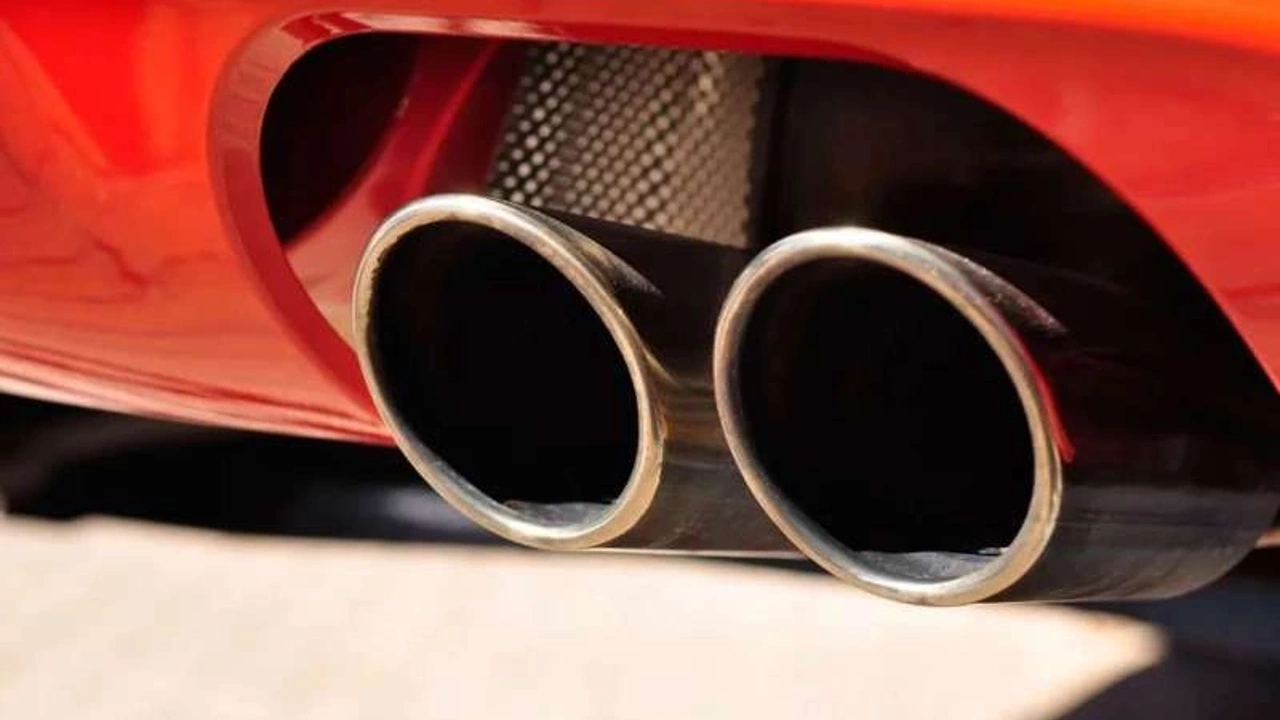
What Is an Abarth Exhaust?
An Abarth exhaust is an exhaust system designed for the performance-oriented Abarth versions of Fiat vehicles, with the aim of producing a deeper, more aggressive engine sound while also supporting the engine’s exhaust-flow requirements. Depending on the model and specification, an Abarth exhaust can range from a relatively conventional sports exhaust to a more sophisticated system with electronically controlled valves that change the exhaust sound according to engine speed, driving mode, and throttle position.
The term can also be used more broadly by enthusiasts to describe an exhaust system fitted to an Abarth-style or performance-oriented vehicle. However, an important distinction should be made between a genuine factory Abarth exhaust, an aftermarket performance exhaust designed specifically for an Abarth, and a generic modified exhaust.
The exhaust is not simply a device for making the car louder. It is part of the engine's gas-flow system and can influence sound, emissions, back pressure, turbocharger behavior, drivability, and overall driving character.
What Does an Abarth Exhaust Do?
The primary job of an exhaust system is to carry combustion gases away from the engine and release them safely outside the vehicle. At the same time, the system must control noise and emissions while maintaining an exhaust flow that is appropriate for the engine.
In an Abarth application, the exhaust is generally designed with performance and sound in mind.
A typical system may include:
-
Exhaust manifold or turbocharger outlet
-
Downpipe
-
Catalytic converter
-
Resonators
-
Center exhaust pipe
-
Rear muffler
-
Exhaust valves
-
Tailpipes
-
Exhaust sensors
The exact configuration varies considerably between Abarth models and engine generations.
A factory-developed system attempts to balance several objectives at the same time: performance, sound quality, emissions compliance, durability, comfort, and everyday usability.
Why Does an Abarth Sound Different?
One of the most recognizable characteristics of an Abarth is its exhaust note.
The sound comes from the pressure pulses produced during combustion. These pulses travel through the exhaust system, where mufflers, resonators, catalytic converters, pipes, and valves alter the frequency and intensity of the sound.
An Abarth exhaust can be tuned to emphasize certain frequencies while reducing others.
This is why two vehicles with similar engine sizes can sound completely different.
The exhaust diameter, pipe length, muffler construction, resonator design, turbocharger, engine firing characteristics, and valve configuration all contribute to the final sound.
What Is an Abarth Exhaust Valve?
Some Abarth performance exhaust systems use an exhaust valve to control how freely exhaust gases pass through different sections of the system.
When the valve is closed, exhaust gases are directed through a quieter path that passes through more sound-absorbing components.
When the valve opens, a less restrictive route can become available, producing a louder and more aggressive exhaust note.
Depending on the vehicle, the valve may be controlled according to:
-
Engine speed
-
Throttle position
-
Driving mode
-
Engine load
-
Vehicle speed
-
ECU commands
This allows the car to remain relatively civilized during normal driving while producing a much more pronounced sound under stronger acceleration.
Is an Abarth Exhaust the Same as a Performance Exhaust?
Not necessarily.
A performance exhaust is a general term describing an exhaust system designed to improve or alter the characteristics of a vehicle's original exhaust system.
An Abarth exhaust, on the other hand, can refer specifically to a system designed for an Abarth model.
A genuine factory Abarth exhaust is developed around the specific engine, turbocharger, transmission, chassis, emissions system, and noise requirements of the vehicle.
An aftermarket performance exhaust may be designed primarily to increase sound and reduce exhaust restriction.
These are not always the same thing.
A louder exhaust does not automatically mean a better-performing exhaust.
Does an Abarth Exhaust Increase Engine Power?
This is one of the most common misconceptions about performance exhaust systems.
Simply installing a louder rear muffler usually does not create a dramatic increase in engine power.
The potential performance benefit depends on the complete exhaust system and the engine's ability to take advantage of improved exhaust flow.
This becomes particularly relevant on turbocharged engines.
A turbocharger uses exhaust-gas energy to drive its turbine. Changes to the exhaust system can therefore affect the pressure conditions around the turbine and influence turbocharger operation.
However, the result depends on the specific engine and exhaust configuration.
A properly engineered performance exhaust can reduce unnecessary restriction while maintaining appropriate exhaust velocity and system behavior. An excessively large or poorly designed system may not provide the expected benefits and can sometimes negatively affect drivability.
Abarth Exhaust and Turbocharged Engines
Many Abarth models use turbocharged engines, making exhaust design especially important.
After combustion, exhaust gases drive the turbocharger turbine. The gases then continue through the downpipe, catalytic converter, resonators, mufflers, and tailpipes.
If the exhaust system creates excessive restriction after the turbocharger, it can increase exhaust back pressure.
Reducing unnecessary restriction can potentially help the turbocharger move exhaust gases more efficiently.
But there is no universal rule that says "bigger exhaust equals more power."
Pipe diameter, turbocharger size, engine displacement, exhaust-gas temperature, catalytic converter design, ECU calibration, and the rest of the intake and exhaust system all matter.
What Is the Difference Between a Factory and Aftermarket Abarth Exhaust?
A factory exhaust is designed as part of the complete vehicle.
This means the manufacturer considers:
-
Noise levels
-
Emissions
-
Engine calibration
-
Turbocharger characteristics
-
Fuel economy
-
Cold-start behavior
-
Passenger comfort
-
Long-term durability
-
Legal requirements
-
Thermal management
An aftermarket exhaust usually gives the owner more freedom to prioritize sound and performance.
For example, an aftermarket system may use larger-diameter pipes, lighter mufflers, different resonators, a sport catalytic converter, or electronically controlled valves.
The result can be more aggressive, but the trade-off may include additional cabin noise, exhaust drone, reduced comfort, or more complicated installation.
What Is Exhaust Drone?
Exhaust drone is a low-frequency booming sound that can become particularly noticeable inside the cabin at a specific engine speed.
It is different from a desirable sporty exhaust note.
An exhaust may sound excellent during acceleration but become annoying when cruising at a steady speed.
This can happen because of resonance between the exhaust system, engine speed, vehicle body, and cabin.
A poorly selected exhaust can therefore make a car louder without actually making it sound better.
This is one reason why exhaust design matters more than simply removing the muffler.
What Happens If the Muffler Is Removed?
Removing the rear muffler is one of the simplest ways to make an exhaust louder.
However, it does not necessarily create an Abarth-style exhaust sound.
The result can be:
-
Increased exhaust volume
-
More aggressive sound
-
More cabin noise
-
Increased drone
-
Harsh or metallic exhaust tones
-
Possible unwanted resonance
A properly designed performance exhaust attempts to control these characteristics rather than simply eliminating sound insulation.
The goal is usually a deeper and more controlled exhaust note rather than maximum noise.
Does an Abarth Exhaust Affect Fuel Consumption?
The exhaust itself does not automatically make a car consume more fuel.
However, the driver's behavior can change after installing a louder exhaust.
A more aggressive exhaust sound can encourage the driver to accelerate harder, use higher engine speeds, and spend more time in boost.
In that situation, fuel consumption can increase because of driving behavior rather than because the exhaust itself is inherently inefficient.
A properly engineered exhaust that maintains correct engine operation should not be assumed to cause a significant fuel-consumption increase simply because it produces more sound.
Can an Abarth Exhaust Cause a Check Engine Light?
It can, depending on what components are changed.
Replacing only a rear muffler is generally very different from modifying the catalytic converter, downpipe, oxygen sensors, or other emissions-related components.
Modern engines use sensors to monitor exhaust conditions and emissions.
Changes involving these components can affect:
-
Oxygen sensor readings
-
Exhaust temperature
-
Catalyst efficiency
-
Air-fuel control
-
Turbocharger pressure behavior
-
ECU calculations
If the ECU detects readings outside its expected range, a fault code and check-engine light may appear.
For this reason, major exhaust modifications should not be considered separately from the engine management system.
What About Removing the Catalytic Converter?
A catalytic converter is not simply a restriction placed in the exhaust.
It is an emissions-control component designed to reduce harmful pollutants in the exhaust gases.
Removing or bypassing it can change exhaust flow and sound, but it can also create emissions problems, trigger diagnostic faults, and make the vehicle unsuitable for road use in many jurisdictions.
It can also create a strong exhaust smell and alter the vehicle's emissions behavior.
For a road-going Abarth, replacing a damaged catalytic converter with a properly specified component is generally a much better approach than simply removing it.
Can an Abarth Exhaust Be Too Loud?
Absolutely.
More noise does not necessarily mean more performance.
An exhaust that is excessively loud can become tiring during everyday driving. It can also produce unpleasant resonance, attract unwanted attention, and make long-distance driving less comfortable.
A well-designed exhaust should ideally provide different sound characteristics depending on driving conditions.
This is where valve-controlled systems can be particularly useful.
The vehicle can remain relatively quiet during normal cruising while becoming significantly more aggressive when the driver demands higher performance.
Why Do Abarth Owners Change the Exhaust?
There are several reasons.
The most common is sound.
The factory exhaust may be relatively quiet under normal conditions, while an aftermarket system can provide a more noticeable exhaust note.
Other reasons include:
-
Sportier appearance
-
Larger exhaust tips
-
Lower exhaust weight
-
Improved exhaust flow
-
Stronger sound under acceleration
-
Valve-controlled sound
-
Personalization
-
Performance modifications
For many owners, however, the main reason is simply character.
Abarth vehicles are performance-oriented cars, and the exhaust sound is an important part of the driving experience.
Does Exhaust Sound Improve the Driving Experience?
For many enthusiasts, yes.
Sound provides feedback to the driver.
Engine speed, throttle input, gear changes, turbocharger response, and acceleration can all feel more dramatic when accompanied by an appropriate exhaust note.
This is particularly noticeable in small turbocharged performance cars.
However, sound is subjective.
One driver may prefer a loud and aggressive exhaust, while another may prefer a deeper but quieter system that remains comfortable during highway driving.
The best exhaust is therefore not necessarily the loudest one.
Abarth Exhaust Maintenance
Even a performance exhaust requires maintenance.
The system is exposed to extreme temperatures, water, road salt, vibration, and mechanical movement.
Over time, components can develop:
-
Cracks
-
Corrosion
-
Loose brackets
-
Broken exhaust hangers
-
Leaks
-
Damaged heat shields
-
Valve mechanism problems
-
Muffler damage
An exhaust leak before or near an oxygen sensor can also affect engine management.
A rattling noise may come from a heat shield or internal muffler component rather than from the engine itself.
Regular inspection is particularly important if the vehicle has an aftermarket exhaust.
Signs of an Exhaust Problem
A change in exhaust sound is often the first warning.
Other symptoms can include:
-
Sudden increase in exhaust volume
-
Rattling underneath the vehicle
-
Hissing sounds
-
Strong exhaust smell
-
Reduced performance
-
Excessive cabin noise
-
Visible soot around a joint
-
Check-engine light
-
Damaged or loose exhaust hangers
-
Exhaust valve not operating correctly
A small leak can eventually become a much larger problem.
Is an Abarth Exhaust Worth It?
That depends on what you expect from the modification.
If the main goal is a sportier sound, a quality exhaust can make a significant difference to the character of the vehicle.
If the goal is substantial power, the exhaust should be considered as part of a complete performance package rather than as an isolated modification.
The engine's intake, turbocharger, intercooling, exhaust, fuel system, ECU calibration, and transmission all influence the final result.
Installing an expensive exhaust on an otherwise standard engine should therefore not be expected to transform the vehicle's performance.
Choosing the Right Abarth Exhaust
Before purchasing an exhaust, it is worth considering how the car is actually used.
For a daily-driven vehicle, comfort should remain an important consideration.
A good system should provide an enjoyable sound under acceleration without producing excessive drone during highway cruising.
It is also important to consider whether the exhaust retains the necessary emissions-control components and whether the system is appropriate for road use in the country where the vehicle is registered.
For a performance-oriented build, the exhaust should also match the engine's power level and other modifications.
An exhaust designed for a highly modified turbocharged engine may not be the best choice for a completely standard engine.
Abarth Exhaust vs. Straight Pipe
A straight-pipe exhaust removes much of the sound-control hardware and provides a very direct path for exhaust gases.
It can produce a very loud and aggressive sound.
However, straight-pipe systems are often unsuitable for normal road use and can create excessive noise, unpleasant resonance, emissions issues, and poor overall refinement.
A properly engineered Abarth performance exhaust aims for a much more controlled result.
The objective is not simply to eliminate every restriction. It is to achieve an appropriate balance between flow, sound, emissions, and drivability.
The Importance of Exhaust Valve Technology
Valve-controlled exhaust systems have become increasingly popular because they allow the character of the vehicle to change according to driving conditions.
At low engine speeds, the system can prioritize quiet operation.
Under heavier acceleration, the valve can open and allow a more aggressive exhaust note.
This provides two different personalities in the same car.
For a performance vehicle that is also used as a daily driver, this can be more practical than having an extremely loud exhaust at all times.
Final Thoughts
An Abarth exhaust is much more than a component designed to make a car louder. It is an important part of the vehicle's engine, turbocharger, emissions, and acoustic system.
A well-designed exhaust can give an Abarth a deeper and more exciting character while maintaining reasonable drivability and comfort. Depending on the system, it may also improve exhaust flow and complement other performance modifications.
The important point is to distinguish between sound and performance. A louder exhaust does not automatically produce more horsepower, and removing mufflers or emissions equipment is not the same thing as installing a properly engineered performance exhaust.
For an Abarth used every day, the ideal exhaust is usually one that sounds aggressive when you want it to but remains comfortable when you simply want to drive.