TR
TR EN
EN

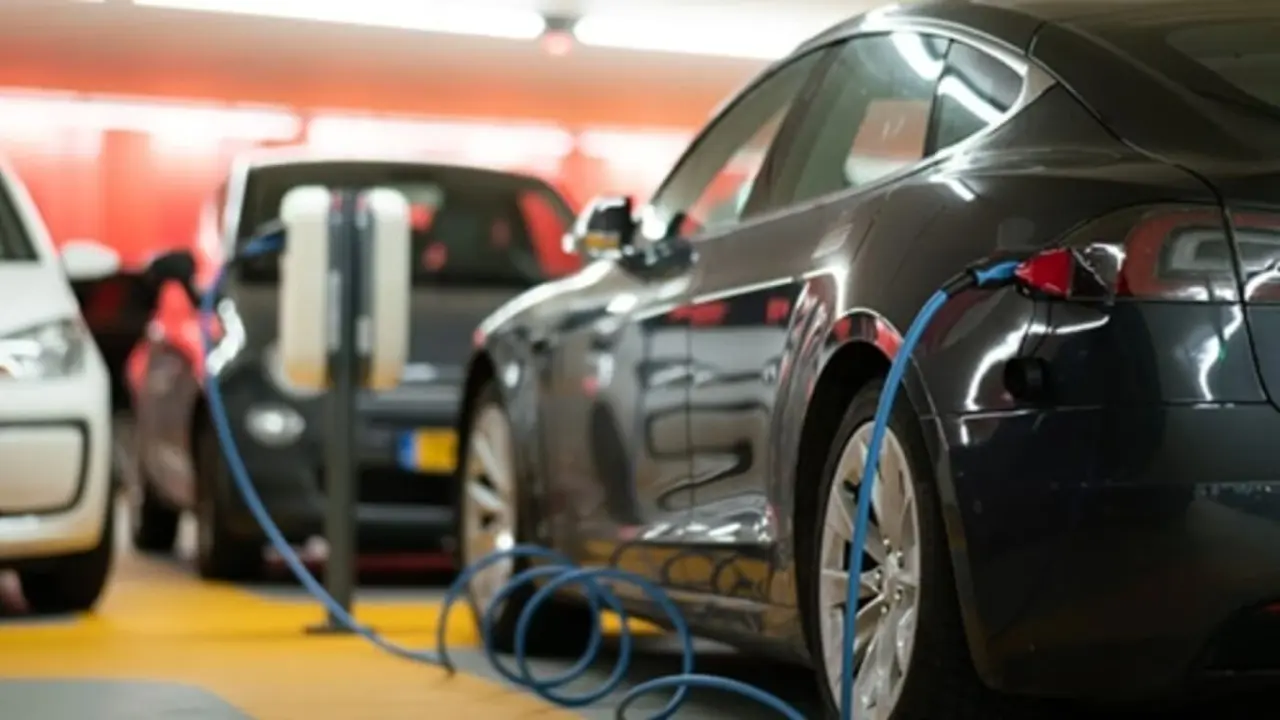
What Is an Electric Vehicle? What Should You Consider When Buying an Electric Vehicle?
Electric vehicles have become an increasingly important part of the automotive market. Instead of relying on gasoline or diesel to power an internal combustion engine, a fully electric vehicle uses electrical energy stored in a high-voltage battery to drive one or more electric motors.
However, buying an electric vehicle is not simply a matter of choosing a car with the longest advertised range. Charging speed, battery capacity, battery chemistry, charging infrastructure, winter performance, warranty coverage, efficiency, repair costs, software, resale value, and even the availability of home charging can make a major difference in the ownership experience.
So, what exactly is an electric vehicle, how does it work, and what should you check before buying one?
What Is an Electric Vehicle?
A fully electric vehicle, commonly called a BEV (Battery Electric Vehicle), is powered entirely by electricity.
Instead of a conventional internal combustion engine, an electric vehicle generally has:
-
A high-voltage traction battery
-
One or more electric motors
-
An inverter or power electronics system
-
An onboard charger
-
A charging port
-
A DC-DC converter
-
A conventional low-voltage auxiliary battery
-
Regenerative braking components
-
A thermal management system
-
Electronic control units
The traction battery stores electrical energy. When the driver presses the accelerator, the vehicle's power electronics regulate the electrical energy delivered to the motor. The motor then converts electrical energy into mechanical energy and turns the wheels.
Unlike a gasoline or diesel vehicle, a battery-electric vehicle does not have an internal combustion engine, fuel tank, fuel pump, fuel injectors, exhaust system, or conventional engine oil system.
How Does an Electric Vehicle Work?
The basic operating principle is relatively simple.
When the vehicle is plugged into a charging station or suitable electrical supply, electricity is transferred to the vehicle's battery through the charging system.
The stored energy remains in the high-voltage battery until the vehicle needs it.
When the driver accelerates, the battery supplies electricity to the electric motor through the power electronics. Depending on the vehicle, there may be one motor on the front axle, one on the rear axle, or separate motors for both axles.
This means an electric vehicle can have a very simple mechanical drivetrain compared with a conventional car.
There is no need to continuously change gears in the same way as a traditional manual or automatic transmission. Many EVs use a single-speed reduction gear.
What Is the Difference Between an EV, Hybrid, and Plug-In Hybrid?
The term "electric vehicle" is sometimes used broadly, but there are important differences between electrified vehicle types.
A Battery Electric Vehicle (BEV) operates entirely on electricity. It does not use a gasoline or diesel engine.
A Hybrid Electric Vehicle (HEV) combines an internal combustion engine with an electric motor and battery. It normally cannot be plugged in and uses fuel as its primary energy source.
A Plug-In Hybrid Electric Vehicle (PHEV) also has an internal combustion engine and electric motor, but its larger battery can be charged externally. It can drive on electric power for a certain distance before the combustion engine becomes necessary.
This distinction is extremely important when comparing vehicles because a PHEV still requires fuel, while a BEV does not.
What Are the Advantages of Electric Vehicles?
Electric vehicles offer several important advantages.
Instant torque
Electric motors can deliver strong torque from very low speeds. This gives many EVs quick acceleration without waiting for an engine to build revs.
Smooth driving
The power delivery of an electric motor is generally smooth and consistent. The absence of conventional gear changes also contributes to a different driving experience.
Lower routine maintenance
A BEV has fewer moving mechanical components and does not require traditional engine oil changes. Brake wear can also be reduced because regenerative braking allows the electric motor to assist with deceleration.
Quiet operation
Electric motors are significantly quieter than internal combustion engines, especially at low speeds.
No tailpipe emissions
A fully electric vehicle does not produce exhaust emissions while driving because it has no combustion engine or tailpipe exhaust system.
Energy efficiency
Electric drivetrains can convert a high proportion of the supplied electrical energy into movement, making them highly efficient compared with conventional combustion drivetrains.
What Are the Disadvantages of Electric Vehicles?
Electric vehicles are not perfect for every driver.
One of the most important considerations is charging.
A gasoline car can usually be refueled in a few minutes, while charging an EV can take considerably longer depending on the charger, battery size, battery temperature, state of charge, and the vehicle's charging capability.
Other potential disadvantages include:
-
Higher purchase price for some models
-
Dependence on charging infrastructure
-
Reduced range in certain conditions
-
Longer travel times on some long-distance journeys
-
High replacement cost for major battery components
-
Rapid changes in EV technology
-
Potentially greater depreciation for some models
-
Limited charging capability on certain older EVs
For this reason, buying an EV should be based on your actual usage rather than simply on the popularity of electric cars.
How Important Is Battery Capacity?
Battery capacity is one of the most important specifications of an electric vehicle.
It is generally expressed in kilowatt-hours, or kWh.
For example, a vehicle with a 60 kWh battery stores less electrical energy than one with an 80 kWh battery.
However, a larger battery does not automatically mean a better vehicle.
A larger battery can increase:
-
Driving range
-
Vehicle weight
-
Purchase price
-
Charging requirements
Two vehicles with similarly sized batteries can also have very different real-world ranges because efficiency depends on factors such as vehicle weight, aerodynamics, motor efficiency, tire choice, temperature, driving speed, and climate-control use.
Therefore, do not judge an EV solely by battery capacity.
How Much Range Does an Electric Vehicle Need?
There is no single correct range for everyone.
If your daily driving distance is relatively short and you can charge at home, you may not need an extremely large battery.
For example, someone who drives 40–60 km per day and charges overnight may have very different requirements from someone who regularly travels hundreds of kilometers between cities.
Modern battery-electric vehicles cover a wide range of driving distances per charge, but actual range varies significantly with driving conditions, driving style, temperature, vehicle efficiency, and climate-control use.
When comparing range figures, think about your own driving pattern rather than choosing the vehicle with the largest number.
Do Not Look Only at the Official Range Figure
The advertised range is useful for comparing vehicles, but it should not be treated as a guarantee of real-world driving distance.
Range can decrease because of:
-
High highway speeds
-
Cold weather
-
Heavy rain
-
Strong headwinds
-
Aggressive acceleration
-
Heavy loads
-
Uphill driving
-
Excessive heating or air-conditioning use
-
Low tire pressure
-
Winter tires
-
Battery temperature
Extreme temperatures can have a particularly noticeable effect because additional energy may be required to heat or cool the cabin and battery.
If you frequently drive on highways at high speeds, consider your expected highway range rather than relying entirely on the maximum laboratory or official figure.
Charging Is One of the Most Important Things to Check
Before buying an electric vehicle, ask yourself a simple question:
Where will I charge it?
For many EV owners, home charging is the most convenient option.
If you have access to a suitable electrical installation at home, overnight charging can make daily EV use extremely convenient.
Public charging is still important for long-distance journeys, but relying exclusively on public chargers can make ownership less convenient depending on where you live and travel.
Charging equipment can vary significantly in power. AC charging is generally slower and is well suited to longer parking periods, while DC fast charging can replenish the battery much more quickly. Charging speed also depends on the vehicle's maximum charging capability.
Check the Maximum DC Fast-Charging Power
This is particularly important if you regularly travel long distances.
Two EVs may have similar battery capacities but very different fast-charging performance.
For example, one vehicle might accept significantly higher DC charging power than another.
However, maximum charging power alone is not enough.
You should also consider:
-
How long the vehicle can maintain high charging power
-
Charging performance at different battery percentages
-
Battery temperature
-
Charging curve
-
Preconditioning capability
-
Charging network compatibility
-
Distance between suitable charging stations
A car advertised as having a high peak charging power may not continuously charge at that rate.
What Is the Charging Curve?
The charging curve describes how charging power changes as the battery fills.
In many EVs, charging power is highest when the battery is at a relatively low state of charge. As the battery approaches a high state of charge, the vehicle gradually reduces charging power.
This is why charging from 10% to 80% can be much faster than charging from 80% to 100%.
For long-distance travel, the ability to quickly recover useful range during a short charging stop can be more important than simply having a large battery.
Should You Buy a Home Charger?
If you own a BEV and have a suitable parking location, home charging can be one of the biggest advantages of electric ownership.
A dedicated AC charging installation can provide considerably more charging power than a standard household outlet.
However, the electrical installation should be assessed properly.
Do not assume that any existing socket is automatically suitable for continuous high-power EV charging.
The electrical system, cable capacity, circuit protection, grounding, charger specification, and installation conditions should all be considered.
What About Public Charging?
Before purchasing an EV, examine the charging infrastructure around the places you regularly visit.
Do not only look at the number of charging stations.
Check:
-
Charger locations
-
AC and DC charging options
-
Charging power
-
Connector compatibility
-
Reliability
-
Payment methods
-
Mobile applications
-
Availability during busy periods
-
Charging prices
A vehicle with excellent range can still become inconvenient if your regular routes have poor charging coverage.
Battery Warranty Is Extremely Important
The traction battery is one of the most expensive components of an electric vehicle.
Therefore, battery warranty terms should be carefully examined before purchasing.
Do not look only at the number of warranty years.
Check:
-
Warranty duration
-
Mileage limit
-
Battery capacity retention threshold
-
Which components are covered
-
Conditions that can invalidate coverage
-
Whether the warranty transfers to a second owner
-
What happens if the battery requires repair rather than complete replacement
Battery warranties vary by manufacturer and model. Many manufacturers have historically offered coverage around eight years or 100,000 miles, but the exact conditions can differ considerably.
How Important Is Battery Health on a Used EV?
Battery health becomes especially important when buying a used electric vehicle.
A used EV should not be evaluated only by its exterior condition and mileage.
Ask for information about the battery's condition.
Depending on the manufacturer and diagnostic system, battery health may be assessed through:
-
State-of-health data
-
Diagnostic scans
-
Battery management system information
-
Remaining usable capacity
-
Charging behavior
-
Range compared with expected performance
A vehicle with relatively high mileage can still have a healthy battery, while a lower-mileage vehicle can have issues.
Therefore, battery condition should be checked independently rather than assuming that mileage tells the entire story.
Battery Chemistry Matters
Different EVs can use different battery chemistries.
Two major families that buyers may encounter include lithium-ion batteries using nickel-based chemistries and lithium iron phosphate, commonly known as LFP.
They can have different characteristics relating to:
-
Energy density
-
Weight
-
Charging behavior
-
Temperature performance
-
Cost
-
Long-term durability
-
Recommended charging practices
The correct charging routine can therefore depend on the specific battery chemistry and the manufacturer's recommendations.
Instead of following generic internet advice, always check the manufacturer's instructions for the exact vehicle.
Does Fast Charging Damage the Battery?
Fast charging is an important feature of modern EVs, but charging behavior is more complicated than simply saying that DC fast charging is "bad" for batteries.
Modern battery management systems control charging power according to battery temperature, state of charge, and other conditions.
Nevertheless, if you regularly use high-power DC charging, it is sensible to understand the manufacturer's recommendations and the vehicle's thermal-management strategy.
For daily use, many owners may find slower AC charging at home more convenient, while DC fast charging is particularly valuable during long journeys.
How Does Cold Weather Affect an EV?
Cold temperatures can reduce electric-vehicle range and charging performance.
The battery works less efficiently when cold, and additional energy may be required to heat the cabin.
Fast charging can also be slower when the battery is too cold. Some EVs solve part of this problem through battery preconditioning before arriving at a fast charger.
If you live in an area with cold winters, check whether the vehicle has:
-
Battery preconditioning
-
Heat pump
-
Battery thermal management
-
Heated seats
-
Heated steering wheel
-
Efficient cabin heating
-
Remote preconditioning
A heat pump can be particularly useful because it can heat the cabin more efficiently than a conventional resistive heater under many conditions.
Is a Heat Pump Worth Having?
For drivers in cold climates, a heat pump can be a valuable feature.
Heating the cabin in an EV can consume a significant amount of energy. A heat pump can transfer heat more efficiently under many operating conditions.
This does not mean an EV without a heat pump is unsuitable for winter, but it is a feature worth considering if cold-weather efficiency and range are important to you.
Check the Vehicle's Efficiency
Range is only part of the story.
Two EVs may have similar battery sizes and ranges, but one may consume substantially less electricity per kilometer.
A more efficient vehicle can provide:
-
Lower charging costs
-
Better highway range
-
Less energy consumption
-
Greater usable range from the same battery capacity
Therefore, compare energy consumption as well as battery size and range.
What About Motor Configuration?
Electric vehicles can use different drivetrain layouts.
A single-motor vehicle may use:
-
Front-wheel drive
-
Rear-wheel drive
Some models use two electric motors and provide all-wheel drive.
Dual-motor EVs can offer stronger acceleration and improved traction, but they can also consume more energy because there are additional drivetrain components and greater performance capability.
If you live in an area with frequent snow or difficult road conditions, traction can be an important reason to consider all-wheel drive.
However, all-wheel drive should not automatically be considered necessary for every driver.
Pay Attention to Tire Size
Large wheels may improve appearance and handling, but they can have consequences for EV efficiency.
Larger wheels can increase:
-
Rolling resistance
-
Tire cost
-
Replacement cost
-
Road noise
-
Risk of wheel damage
Tire choice can also affect range.
When buying an EV, look at the tire size and replacement prices rather than focusing only on the vehicle itself.
Regenerative Braking Is Another Important Feature
Electric vehicles can recover some of the vehicle's kinetic energy during deceleration.
Instead of relying exclusively on friction brakes, the electric motor can operate as a generator and convert part of the vehicle's movement into electrical energy that is sent back to the battery.
This is known as regenerative braking.
The level of regeneration varies by vehicle and driving mode.
Some EVs offer strong one-pedal driving, while others provide a more traditional braking feel.
If possible, test-drive the vehicle before purchasing because regenerative braking behavior can feel very different from one model to another.
What Should You Check During a Test Drive?
An EV should be test-driven just like a conventional vehicle.
Pay attention to:
-
Accelerator response
-
Regenerative braking
-
Brake pedal feel
-
Steering
-
Suspension
-
Road noise
-
Seat comfort
-
Driving position
-
Visibility
-
Infotainment system
-
Navigation
-
Charging information
-
Driver-assistance systems
Also try different driving modes if available.
Some vehicles have noticeable differences between Eco, Normal, Sport, and other modes.
Software Is More Important in an EV
Electric vehicles depend heavily on software.
The software can control:
-
Battery management
-
Charging
-
Energy consumption
-
Thermal management
-
Regenerative braking
-
Motor control
-
Driver-assistance systems
-
Navigation
-
Infotainment
For this reason, software support should be considered when buying an EV.
Find out how the manufacturer handles software updates and whether important updates can be installed remotely or require a service visit.
Check the Navigation and Charging Integration
A good EV navigation system can be more important than it first appears.
Some systems can estimate remaining battery percentage at the destination and can recommend charging stops during long trips.
Some vehicles can also precondition the battery when navigating to a compatible fast-charging station.
This can improve long-distance charging performance.
If you frequently travel between cities, test the navigation and charging-planning functions before buying.
What About Maintenance?
One of the advantages of a BEV is its relatively simple mechanical drivetrain.
There is no conventional engine oil to replace, no spark plugs in the traction system, no fuel injectors, and no conventional exhaust system.
However, an EV is not maintenance-free.
It still has:
-
Tires
-
Brake components
-
Suspension components
-
Steering components
-
Cabin filters
-
Cooling systems
-
Air-conditioning components
-
12-volt or auxiliary battery
-
High-voltage electrical components
-
Software and electronic systems
Battery and motor thermal-management systems can also require inspection and maintenance.
Do Not Forget the 12-Volt Battery
Electric vehicles have a high-voltage traction battery, but they also generally have a separate low-voltage auxiliary battery.
This smaller battery powers various electronic systems and helps bring the vehicle's electrical systems online.
A problem with the low-voltage battery can sometimes prevent an EV from starting or operating normally even when the high-voltage traction battery has plenty of charge.
Therefore, do not assume that the large traction battery is the only battery that matters.
What Should You Check When Buying a Used EV?
Buying a used EV requires a slightly different inspection process from buying a used gasoline vehicle.
In addition to the usual checks, examine:
-
Battery health
-
Charging behavior
-
AC charging
-
DC fast charging
-
Charging port condition
-
Charging cable condition
-
Battery warranty
-
Remaining warranty period
-
Accident history
-
Underbody condition
-
Cooling system
-
12-volt battery
-
Software version
-
Service history
-
Tire condition
-
Suspension
-
Brake condition
The underside of an EV deserves particular attention because the large traction battery is usually positioned low in the vehicle.
A significant impact to the battery enclosure or underbody should not be ignored.
What About Accident-Damaged Electric Vehicles?
Extra caution is required when buying an EV that has suffered serious structural or underbody damage.
The high-voltage battery is a critical component, and damage to the battery enclosure, electrical connections, cooling system, or high-voltage components can have serious consequences.
If a used EV has a history of major accident damage, it should be inspected by a technician who understands high-voltage electric vehicles.
A cheap purchase price does not necessarily mean a cheap repair.
Should You Buy a New or Used Electric Vehicle?
There is no universal answer.
A new EV offers:
-
Full warranty coverage
-
Latest battery technology
-
Newer software
-
Newer charging technology
-
Better access to manufacturer support
A used EV can offer:
-
Lower purchase price
-
Reduced initial depreciation
-
Access to an older model at a more affordable price
However, battery condition and warranty status become much more important with a used vehicle.
A professional inspection can be particularly valuable before purchasing a used EV.
What Is the Most Important Thing to Check Before Buying an EV?
For many buyers, the most important question is not:
“How many kilometers can it travel?”
It is:
“Can this vehicle fit naturally into my daily routine?”
If you can charge at home and your daily driving distance is predictable, even a moderately sized battery may be sufficient.
If you frequently travel long distances and cannot charge at home, fast-charging capability and public charging availability may be more important than battery size alone.
A Practical EV Buying Checklist
Before purchasing an electric vehicle, check these points:
Battery
-
Battery capacity
-
Battery chemistry
-
Battery warranty
-
Battery health
-
Thermal management
Range
-
Official range
-
Real-world range
-
Highway efficiency
-
Winter performance
Charging
-
AC charging power
-
DC fast-charging power
-
Charging curve
-
Charging connector
-
Home charging options
-
Public charging availability
Vehicle
-
Motor configuration
-
Performance
-
Tire size
-
Suspension
-
Ride comfort
-
Interior space
-
Cargo capacity
Technology
-
Navigation
-
Software updates
-
Driver assistance
-
Battery preconditioning
-
Heat pump
-
Smartphone integration
Ownership
-
Insurance
-
Tire costs
-
Service availability
-
Warranty
-
Resale value
-
Electricity costs
-
Expected maintenance expenses
Is an Electric Vehicle Right for You?
An electric vehicle can be an excellent choice if your driving habits match its strengths.
It is particularly attractive for drivers who can charge at home or at work, have predictable daily mileage, want quiet and smooth driving, and can take advantage of the lower routine maintenance requirements of an electric drivetrain.
On the other hand, an EV may require more planning if you frequently make long-distance trips through areas with limited charging infrastructure or if you cannot install convenient charging at home.
The best electric vehicle is therefore not necessarily the one with the biggest battery, the highest horsepower, or the longest advertised range.
It is the vehicle that matches your charging possibilities, daily mileage, climate, travel habits, budget, and long-term ownership expectations.
Final Thoughts
Electric vehicles represent a major change in how cars are powered and maintained. Their drivetrains are mechanically simpler than conventional combustion vehicles, but buying one requires attention to areas that are less important when purchasing a gasoline or diesel car.
Battery health, charging capability, real-world range, thermal management, software support, warranty coverage, and charging infrastructure should all be evaluated before making a decision.
If you can charge conveniently and the vehicle fits your driving habits, an EV can provide a very different and highly efficient ownership experience. But the right purchase should always be based on how you actually use your car, rather than simply choosing the model with the largest battery or the longest advertised range.