TR
TR EN
EN

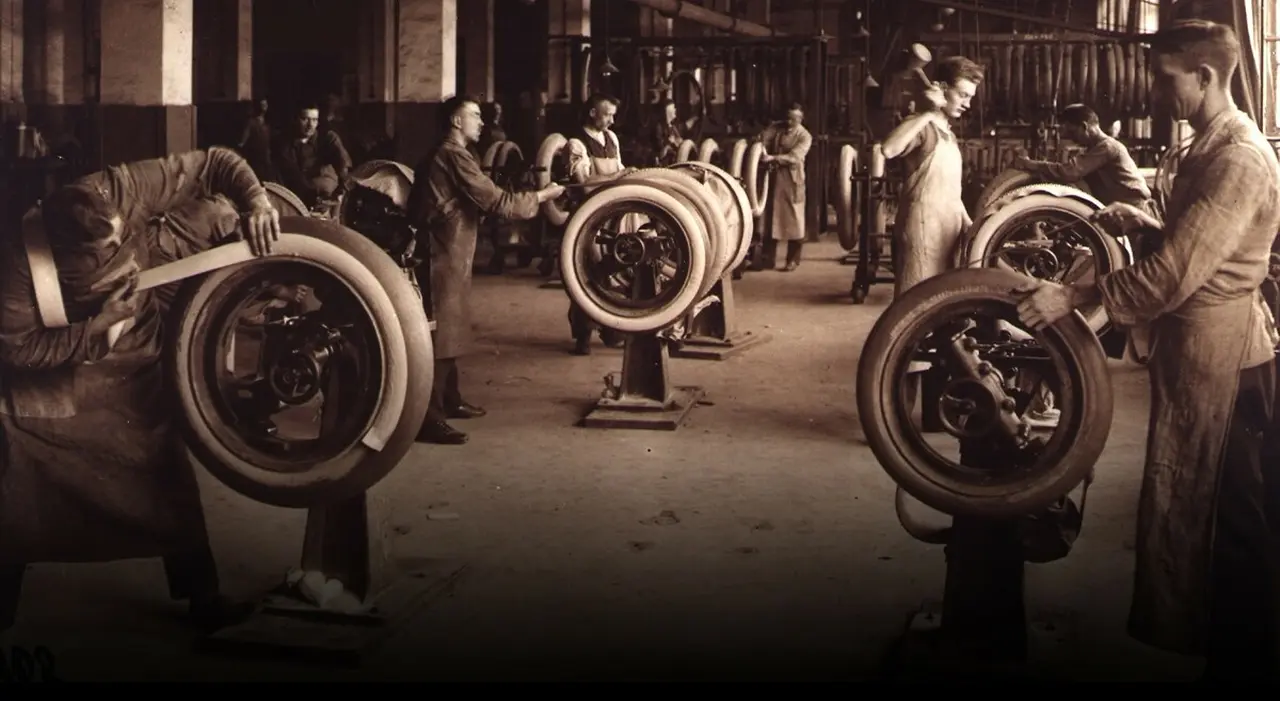
The History of the Tire: From Its Invention to Its Evolution Today
Tires are among the fundamental components of modern vehicles, providing both mobility and improved safety. However, the history of this important invention goes back much further than many people realize and has undergone a fascinating process of evolution. The development of the tire has been closely connected to advances in technology and industry. Here is a detailed look at the history of tires.
The First Steps of the Tire: Natural Rubber and Early Uses
The story of the tire begins with natural rubber. Around 1600 BC, the Maya and Aztec civilizations of Central and South America were already using rubber. These civilizations collected latex from rubber trees and processed it to make waterproof coatings and balls.
However, this was not a tire in the modern sense. It was simply an early use of raw rubber and demonstrated the material's potential for practical applications.
The 18th and 19th Centuries: The Industrial Use of Rubber
In 1736, French explorer Charles Marie de La Condamine introduced rubber to Europe. For a period, rubber was primarily used for coatings and waterproofing applications. However, rubber became sticky in hot weather and tended to crack in cold conditions. These characteristics created a major obstacle to its industrial use.
In 1839, Charles Goodyear discovered the process of vulcanization, a chemical treatment that made rubber more durable and resistant to temperature changes. This breakthrough played a major role in the development of the modern rubber industry and eventually made practical tire production possible.
The First Wheels and the Birth of the Modern Tire
In 1845, British inventor Robert William Thomson invented and patented the first pneumatic tire. His design used air to provide cushioning and improve the performance of wheels. However, the invention did not become widely adopted because of the technological and economic conditions of the time.
In 1888, Scottish veterinarian John Boyd Dunlop developed the first practical pneumatic tire for his son's bicycle. The tire made bicycle riding considerably more comfortable and quickly became a successful innovation. Dunlop's development laid an important foundation for the modern pneumatic tire.
Pneumatic tires were soon adapted for motor vehicles as automobiles became more common. The Michelin brothers, Édouard and André Michelin, introduced removable pneumatic tires in 1891. This innovation made tire replacement and repair considerably easier and represented another major step in tire technology.
The 20th Century: The Golden Age of the Tire Industry
-
1900s: As motor vehicles became increasingly widespread, demand for tires grew rapidly. The rubber industry expanded, and major tire manufacturers such as Goodyear, Michelin, Continental, and Bridgestone became important players in the developing industry.
-
1903: Tires became standard equipment on mass-produced automobiles, including vehicles produced by Henry Ford.
-
1908: Harvey Firestone developed new technologies aimed at making automobile tires more durable and longer-lasting.
-
1940s: Synthetic rubber technology advanced significantly. Because natural rubber became scarce during World War II, the production and use of synthetic rubber tires accelerated considerably.
-
1950s: Michelin developed radial tire technology. Radial tires offered longer service life, improved handling, and better fuel efficiency compared with earlier tire designs.
The 21st Century: Smart Tires and Sustainability
Today, tires do much more than simply enable a vehicle to move. Modern tires incorporate technologies designed to improve vehicle performance, safety, efficiency, and environmental performance.
Some of the technologies found in modern tires include:
-
Run-Flat Technology: Allows a vehicle to continue traveling for a limited distance even after a tire has lost significant air pressure.
-
Smart Tires: Tires equipped with sensors can provide information about tire pressure, temperature, wear, and other operating conditions.
-
Environmentally Friendly Tires: Tires manufactured using recycled or renewable materials and designed to reduce rolling resistance can contribute to sustainability and lower fuel consumption.
How Do Tires Work?
Modern tires are complex structures made from rubber compounds, steel cords, textile layers, and other reinforcing materials. Their main functions include:
-
Providing Traction: The tire maintains contact with the road, allowing the vehicle to accelerate, brake, and change direction.
-
Absorbing Impacts: The tire helps absorb bumps and irregularities in the road, contributing to ride comfort.
-
Carrying the Vehicle's Weight: Tires transfer the vehicle's weight to the road while maintaining a stable and controlled contact patch.
-
Supporting Handling and Stability: Tire construction, tread design, pressure, and rubber compounds all influence steering response, cornering stability, and braking performance.
From a Simple Rubber Wheel to a High-Tech Component
The evolution of the tire is a remarkable example of how a relatively simple material can become a highly engineered automotive component.
Early rubber applications demonstrated the usefulness of natural rubber, while vulcanization made the material practical for demanding applications. Pneumatic tires then introduced air cushioning, dramatically improving comfort and performance. The development of radial construction, synthetic rubber, advanced tread compounds, and modern reinforcement materials further transformed the tire.
Today, tire manufacturers use sophisticated materials, computer modeling, sensor technology, and advanced manufacturing processes to create tires optimized for different vehicles and driving conditions.
Conclusion
Tires have evolved from simple applications of natural rubber into highly advanced components that play a critical role in modern transportation. The journey that began with the early use of rubber eventually produced pneumatic tires, radial construction, run-flat technology, smart tire systems, and increasingly sustainable materials.
Modern tires are therefore much more than simple components that allow a vehicle to move. They are essential to safety, handling, braking, comfort, efficiency, and sustainability, and their development continues alongside the rapid evolution of automotive technology.