TR
TR EN
EN

The History of the Wheel Rim: From Its Invention to Modern Designs
The wheel rim is a fundamental component of a vehicle's wheel system. It is the metal or alloy structure that supports and holds the tire. The history of the wheel rim covers a major evolutionary process that began with humanity's adoption of the wheel. This development progressed alongside advances in vehicles, both technically and aesthetically. Here is a detailed look at the history of wheel rims.
Early Periods: Wooden Wheels and Simple Rims
The origins of the wheel rim can be traced back to the invention of the wheel. The wheel was first used in Mesopotamia around 3500 BC. The wheels used during this period were made of solid wood and did not have a separate rim system as we know it today.
-
Around 2000 BC: Ancient Egyptians covered the outer edges of wooden wheels with leather, creating a basic form of rim protection. This was an early attempt to improve the durability of wheels.
-
Around 1500 BC: The Hittites and Assyrians developed early forms of metal wheel rims by using bronze strips around the wheels of their chariots.
The Middle Ages: Development of Metal Wheel Rims
During the Middle Ages, wheel rims became more durable. Iron strips were nailed around the outer edges of wooden wheels, particularly those used on horse-drawn carriages.
These metal bands helped wheels withstand heavy loads and reduced wear on the wooden structure.
-
13th century: Metal-rimmed wheels became common on war wagons and heavy-duty carts used in Europe.
-
16th century: Metal wheel rims began to receive decorative treatments, making them more aesthetically appealing in addition to their functional purpose.
The Industrial Revolution and the Transformation of Rim Technology
The Industrial Revolution brought major advances in wheel and rim technology. Developments in metalworking, forging, and casting made it possible to produce stronger and more sophisticated wheel components.
-
Early 1800s: Cast-iron wheels and rims became increasingly common on industrial vehicles and equipment powered by steam engines.
-
1860s: As bicycles became increasingly popular, lightweight wheels supported by steel spokes were developed. This approach greatly improved the balance between low weight and structural strength.
-
1885: With the emergence of the first automobiles, wheel design began to evolve for motor vehicles as well. Early automobiles used relatively thin steel wheels influenced by bicycle wheel designs.
The 20th Century: The Automotive Industry and the Birth of Modern Rims
The rapid growth of the automobile industry in the 1900s had a direct impact on wheel and rim design. During this period, major innovations were introduced in both functionality and appearance.
-
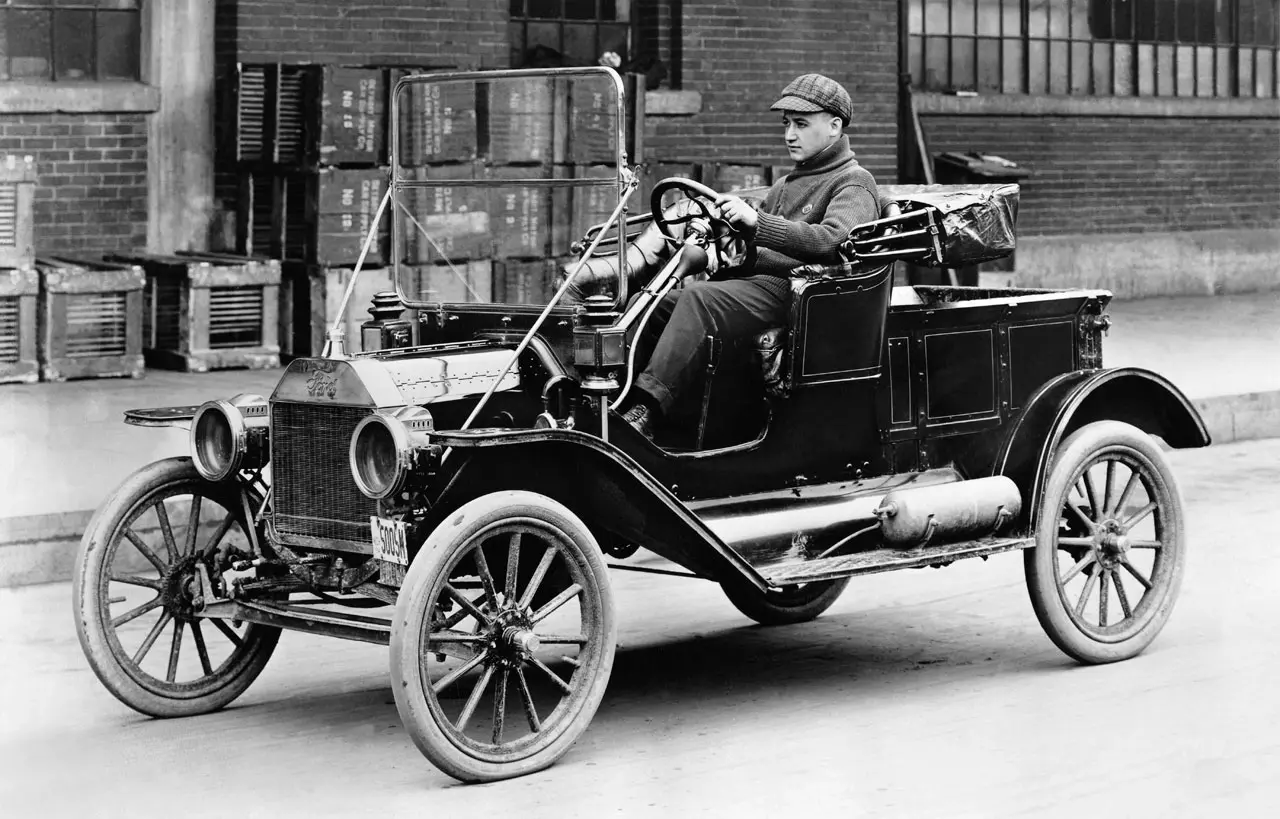
1903: Henry Ford helped popularize steel wheels in mass-produced automobiles.
-
1920s: Wire-spoke wheels became particularly popular on luxury automobiles.
-
1930s: Early cast-aluminum wheels were produced. Their low weight made them especially attractive for racing applications.
-
1940s: During World War II, reinforced steel wheels were widely used on military vehicles where durability and reliability were critical.
-
1950s: Modern alloy wheels began to enter the market. These wheels combined materials such as steel and aluminum alloys to achieve a balance between strength and reduced weight.
The 21st Century: Smart and High-Performance Wheel Rims
Today, wheel rims have evolved beyond being simple structural components. Modern designs focus on performance, weight reduction, efficiency, durability, and aesthetics.
-
Carbon Fiber Wheels: Their extremely lightweight and rigid construction makes them suitable for high-performance and luxury vehicles.
-
Smart Wheel Technology: Wheels equipped with sensors can work with vehicle systems to provide information such as tire pressure and temperature.
-
3D-Printed Wheels: Additive manufacturing technologies offer greater design freedom and the potential to reduce weight while allowing complex structures to be produced.
Modern wheel designs can also be optimized using advanced computer simulations. Engineers can analyze stress, heat, weight distribution, and airflow before a wheel enters production.
How Do Wheel Rims Work?
A wheel rim is responsible for supporting the tire and transferring forces between the tire and the vehicle. Its functions are based on several important principles:
-
Strength and Load Bearing: The rim supports the vehicle's weight and must withstand forces generated during acceleration, braking, cornering, and impacts.
-
Heat Dissipation: Wheel designs can help dissipate heat generated by the brakes, contributing to brake-system performance and thermal management.
-
Tire Support: The rim provides the mounting surface that keeps the tire securely seated and maintains the correct relationship between the tire and the vehicle.
-
Aesthetics: As a highly visible component, the wheel has become an important part of a vehicle's overall design and visual identity.
From Wooden Wheels to Advanced Alloy and Carbon Fiber Designs
The evolution of the wheel rim reflects thousands of years of technological development. Early wheels focused primarily on basic durability and load-bearing capacity. As transportation systems became more sophisticated, engineers began searching for better combinations of strength, weight, durability, and appearance.
The automobile accelerated this development considerably. Steel wheels became widespread because of their durability and relatively low production cost, while aluminum and other alloy wheels later provided opportunities for weight reduction and more advanced designs.
Today, wheel technology continues to evolve with lightweight materials, advanced manufacturing methods, embedded sensors, and increasingly sophisticated engineering techniques.
Conclusion
The wheel rim has undergone a remarkable evolution spanning thousands of years. From the simple wooden wheels of ancient civilizations to modern aluminum alloys, carbon fiber wheels, and sensor-equipped designs, wheel technology has continuously developed around the goals of strength, low weight, durability, efficiency, and aesthetics.
In the modern automotive industry, the wheel rim is far more than a component that holds the tire. It contributes to vehicle performance, braking, handling, efficiency, and design. As vehicles become increasingly connected and technologically advanced, wheel technology is expected to become even more integrated with smart sensors, lightweight materials, and advanced manufacturing systems.