TR
TR EN
EN

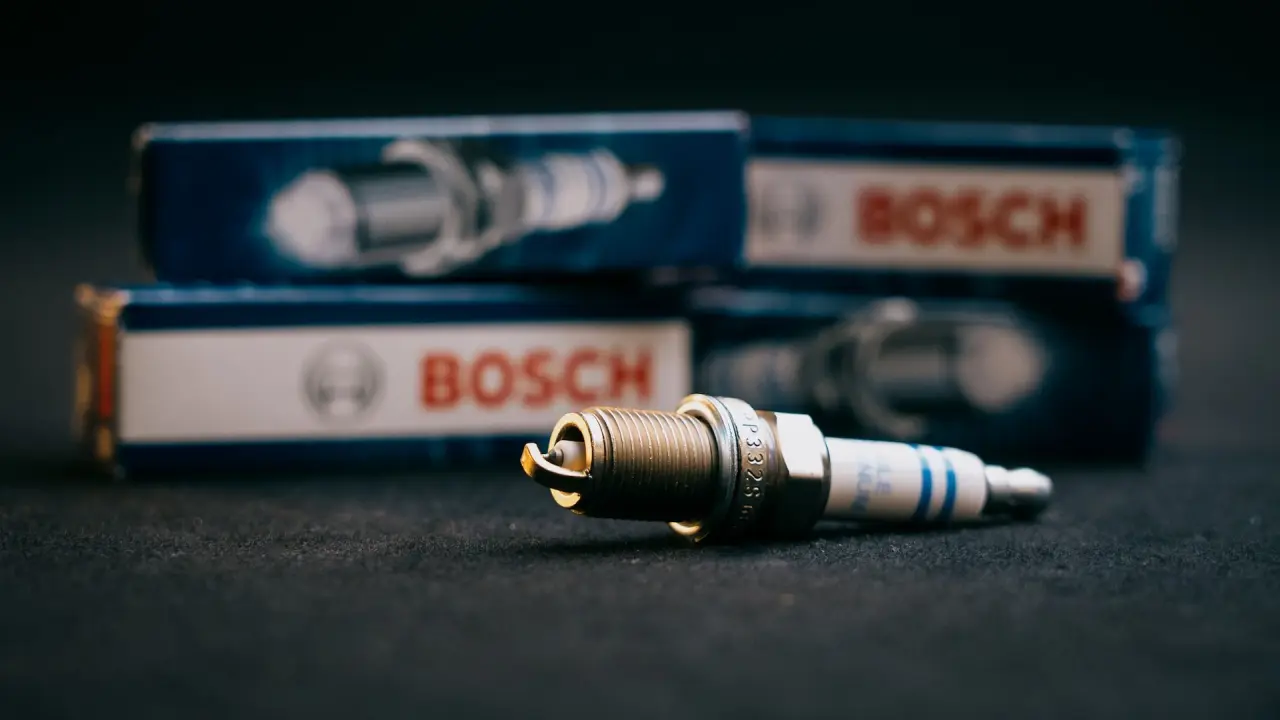
Who Invented the Spark Plug? The Invention and Evolution of the Spark Plug
The spark plug is one of the smallest but most important components of a gasoline engine. Its job is simple in principle: create an electrical spark at precisely the right moment to ignite the compressed air-fuel mixture inside the combustion chamber.
Although the modern spark plug is strongly associated with automotive technology, its origins go back to the earliest internal combustion engines. The development of the spark plug took place over several decades and involved many engineers and inventors.
So, who actually invented the spark plug? The answer depends on whether we are talking about the earliest working spark plug concept or the commercially viable high-voltage spark plug used in automobiles.
Étienne Lenoir and the Early Spark Plug
The history of the spark plug is closely connected with the development of the internal combustion engine.
In 1860, Belgian-French inventor and engineer Étienne Lenoir used an electrically ignited spark plug in his gas engine. Lenoir's engine is widely recognized as one of the first practical internal combustion piston engines, and the Musée des Arts et Métiers states that the ignition spark plug used in his engine was also his invention.
Lenoir's engine used a mixture of illuminating gas and air. The mixture was introduced directly into the cylinder and ignited by an electrical spark. This was a major step because it demonstrated that electricity could be used to ignite a combustible mixture inside an engine.
Lenoir's work therefore represents one of the earliest important milestones in the history of the spark plug.
Why Lenoir's Spark Plug Was Not Yet a Modern Automotive Spark Plug
The basic principle was already there: two electrodes separated by a gap could produce an electrical spark and ignite the fuel mixture.
However, the technology was still primitive compared with today's spark plugs.
Early ignition systems had significant limitations in terms of voltage generation, reliability, insulation, durability, and precise ignition timing. These problems became increasingly important as internal combustion engines became faster and more powerful.
The development of reliable electrical ignition therefore became just as important as the spark plug itself.
The Development of High-Voltage Ignition
By the late 19th century, several inventors were working on ignition systems and spark-generating devices.
Early spark plug-related patents were filed by inventors including Nikola Tesla, Frederick Richard Simms, and Robert Bosch in the late 1890s. These developments show that the spark plug was evolving through contributions from multiple engineers rather than being the result of a single invention.
The major breakthrough came in the early 20th century.
Gottlob Honold and the Bosch Breakthrough
In 1901, Robert Bosch commissioned engineer Gottlob Honold to develop a better ignition system. Honold developed a high-voltage magneto ignition system that could generate the electrical energy necessary to produce a reliable spark at the spark plug.
In 1902, Bosch introduced this high-voltage magneto ignition system with a spark plug. Bosch describes Honold's development as a major milestone that helped make reliable automotive ignition possible.
This distinction is important.
Étienne Lenoir can be credited with one of the earliest practical spark plugs, while Gottlob Honold's work at Bosch helped create the commercially viable high-voltage spark plug and ignition system that made spark-ignition engines much more practical.
This is why the question "Who invented the spark plug?" does not have a single universally complete answer.
The Role of Robert Bosch
Robert Bosch himself was not the sole inventor of the modern spark plug. His company, however, played a crucial role in turning ignition technology into a reliable automotive product.
Bosch had already been developing magneto ignition systems during the 1890s. According to Bosch's own historical timeline, the company produced its first magneto ignition device in 1897, and in 1902 it received a patent for its spark plug technology.
The combination of a reliable high-voltage ignition system and a durable spark plug was particularly important because early automobiles required ignition equipment that could operate consistently under vibration, heat, and varying engine speeds.
Albert Champion and Spark Plug Manufacturing
Another important figure in the development of the spark plug was Albert Champion.
Champion was a French-born electrical engineer and inventor who later became an important figure in the American automotive industry. His work contributed significantly to the manufacturing and improvement of spark plugs.
The Albert Champion Company was founded in Boston in 1905, and by 1907 it was manufacturing porcelain spark plugs under the Champion name.
Champion's contribution was particularly important because the success of the spark plug depended not only on its basic design but also on the ability to manufacture large quantities of reliable plugs.
As automobile production expanded, spark plugs had to become durable, affordable, and consistent from one unit to another.
The Lodge Brothers and Other Developments
The development of the spark plug also continued in Britain.
Sir Oliver Lodge, a prominent British physicist and pioneer in electromagnetism, conducted research related to electrical ignition. His sons, Francis and Alexander Lodge, later developed and manufactured spark plugs commercially.
The Lodge Brothers business was established in Birmingham in the early 20th century and eventually became Lodge Plugs Ltd.
Other engineers and manufacturers also contributed to improvements in spark plug construction, ignition reliability, electrode design, insulation, and heat resistance.
How the Spark Plug Works
Although its construction has become much more sophisticated, the basic operating principle of a spark plug remains relatively simple.
The ignition system generates a high electrical voltage. This voltage is delivered to the spark plug and creates a potential difference between its electrodes.
When the voltage becomes high enough, an electrical arc jumps across the gap between the electrodes.
That spark ignites the compressed air-fuel mixture inside the combustion chamber.
The combustion creates rapidly expanding gases, which push the piston downward and produce mechanical power.
The Importance of the Insulator
One of the most important parts of a spark plug is not the electrode but the insulating material surrounding the central electrode.
The insulator must prevent the high voltage from escaping through the body of the plug while also surviving extreme temperatures and pressure inside the engine.
Porcelain became an important material in spark plug manufacturing because of its electrical insulation and heat-resistant properties. Later developments in ceramic materials further improved the reliability and durability of spark plugs.
Spark Plug Development During the 20th Century
As automobiles became more advanced, spark plugs also evolved.
Manufacturers developed different spark plug designs to match different engine characteristics. Factors such as combustion chamber design, compression ratio, operating temperature, ignition voltage, fuel type, and engine speed influenced spark plug design.
The electrode materials and shapes also changed over time.
Traditional spark plugs commonly used nickel-based electrodes, while later designs introduced materials such as platinum and iridium. These materials offered greater durability and allowed manufacturers to produce longer-life spark plugs with improved resistance to erosion.
From One Ignition Coil to Coil-on-Plug Systems
Early gasoline engines often used a single ignition coil, distributor, and high-voltage cables to deliver the spark to each cylinder.
Modern engines increasingly use Coil-on-Plug (COP) ignition systems.
With COP technology, an individual ignition coil is installed directly above or near each spark plug. This eliminates much of the high-voltage wiring used in older ignition systems.
The result is more precise ignition control, fewer high-voltage transmission losses, and improved reliability.
Modern engine control units can also adjust ignition timing according to engine speed, load, temperature, knock detection, and other operating parameters.
Spark Plugs in Modern Engines
Today's spark plugs are highly engineered components rather than simple pieces of metal and ceramic.
A modern spark plug may incorporate:
-
A center electrode
-
One or more ground electrodes
-
A ceramic insulator
-
A metal shell
-
A terminal connection
-
A precisely engineered electrode gap
-
Specialized electrode materials
The correct spark plug must be matched to the engine. Heat range, thread dimensions, reach, electrode configuration, and material are all important.
Using the wrong spark plug can cause poor combustion, misfires, difficult starting, increased fuel consumption, or even engine damage in extreme cases.
Why Spark Plug Technology Still Matters
Despite the rapid development of electronic engine management, the fundamental role of the spark plug has remained unchanged.
The engine may have sophisticated sensors, electronic throttle control, variable valve timing, turbocharging, direct fuel injection, and advanced engine management software, but a gasoline engine still ultimately needs a controlled ignition event to burn its air-fuel mixture.
This makes the spark plug a direct link between the electrical and mechanical sides of the engine.
From Lenoir to Modern Iridium Spark Plugs
The evolution of the spark plug can be viewed as a progression rather than the work of a single inventor.
Étienne Lenoir demonstrated the early practical use of an electrically ignited spark plug in his 1860 gas engine. Later inventors and engineers developed ignition systems, electrical components, insulation, electrodes, and manufacturing techniques that made spark plugs increasingly reliable.
The work of Gottlob Honold and Bosch around 1902 was particularly important because the high-voltage magneto ignition system made reliable spark ignition practical for automobiles.
Engineers such as Albert Champion and the Lodge brothers then contributed to manufacturing and further development.
Over more than a century, the spark plug evolved from a relatively simple ignition device into a highly engineered component capable of operating under extreme temperatures, pressures, and electrical voltages.
The Legacy of the Spark Plug
The spark plug may look like a relatively small component, but its importance in automotive history is enormous.
Without a reliable way to ignite the air-fuel mixture, the development of practical gasoline engines and mass-produced automobiles would have been much more difficult.
From Lenoir's early experiments in the 19th century to Bosch's high-voltage ignition breakthrough and today's platinum and iridium spark plugs, the technology has continuously evolved alongside the internal combustion engine.
The spark plug is therefore not the invention of a single person alone. Étienne Lenoir is generally credited with the early invention and use of the spark plug, while Gottlob Honold and Bosch played a crucial role in transforming it into a commercially viable high-voltage automotive ignition technology. This long chain of developments is what ultimately produced the spark plugs used in modern gasoline engines.