TR
TR EN
EN

Ferrari History: The Symbol of Italian Excellence and Passion
Ferrari is one of the world's most prestigious luxury sports car manufacturers and a true icon of Italian engineering. Since its founding in 1939, the company has become synonymous with speed, innovation, craftsmanship, and motorsport success. More than simply producing high-performance automobiles, Ferrari has built a global legacy based on racing heritage, technological excellence, and timeless design.
Every Ferrari represents decades of engineering expertise, relentless pursuit of performance, and a passion for competition. From its earliest racing machines to today's hybrid supercars, Ferrari has consistently pushed the limits of what a road car can achieve.
Enzo Ferrari and the Birth of Ferrari
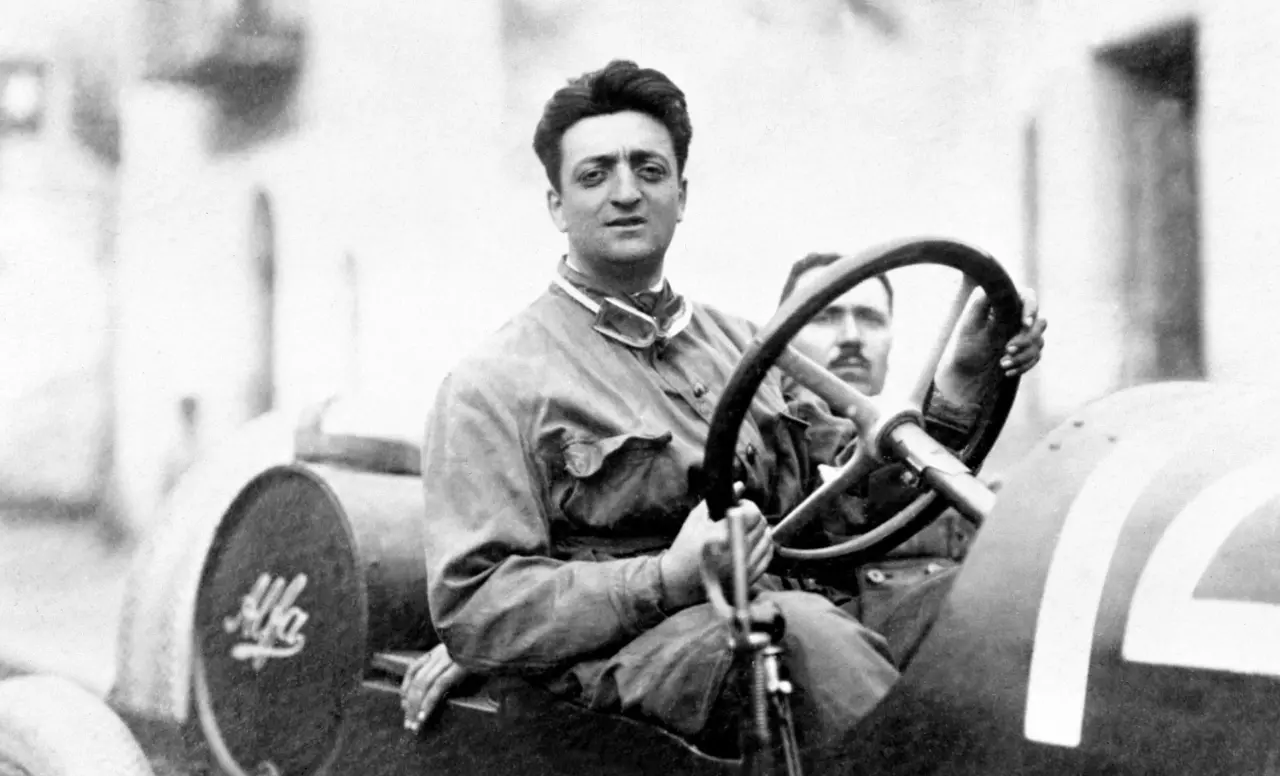
The Ferrari story begins with Enzo Anselmo Ferrari, who was born on February 20, 1898, in Modena, Italy. Fascinated by automobiles from an early age, Enzo dreamed of becoming a racing driver and eventually entered the world of motorsport during the 1920s.
He joined Alfa Romeo as both a racing driver and later a team manager, gaining valuable experience in competition, engineering, and race management. During these years, Enzo developed a deep understanding of what made a successful racing car and began dreaming of building his own automobiles.
In 1939, he founded Auto Avio Costruzioni, the company that would later evolve into Ferrari. Initially, the business focused on manufacturing racing components and developing competition cars. Because of contractual restrictions with Alfa Romeo, Enzo was unable to use the Ferrari name immediately.
After World War II, the company relocated to Maranello, a town that remains Ferrari's headquarters today. In 1947, Ferrari officially introduced its first automobile bearing the famous Prancing Horse badge: the Ferrari 125 S.
This remarkable car marked the beginning of one of the most successful automotive brands in history.
Ferrari 125 S: The Beginning of the Legendary V12
Introduced in 1947, the Ferrari 125 S was the company's very first road-going automobile and the first Ferrari ever equipped with the V12 engine that would become one of the brand's defining characteristics.
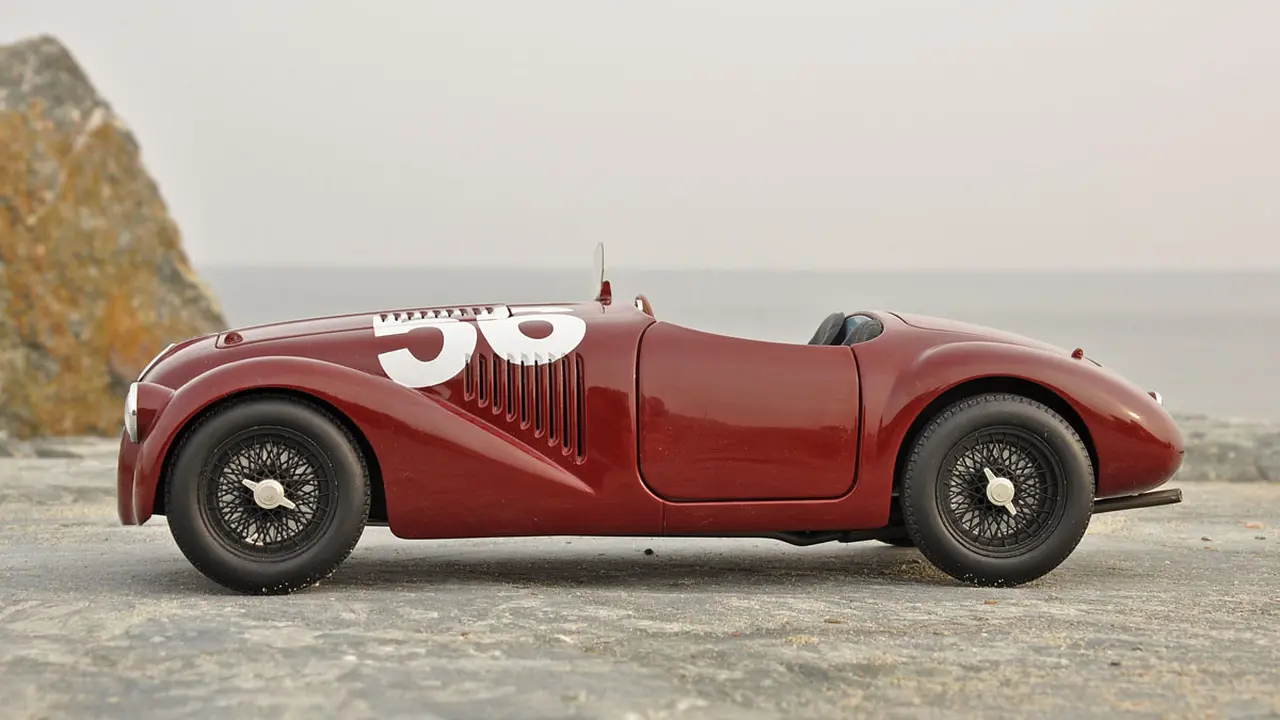
Designed under Enzo Ferrari's direct supervision, the 125 S demonstrated that Ferrari intended to compete not only in motorsport but also in the world of high-performance sports cars.
Although only two examples were built, the 125 S laid the engineering foundation for every Ferrari that followed.
Exterior Design
The Ferrari 125 S featured a lightweight aluminum body with elegant proportions and clean Italian styling. Compared with many sports cars of its era, it was compact, low, and highly aerodynamic.
Its simple yet purposeful design reflected Ferrari's philosophy that performance should always come before unnecessary luxury.
Interior
The cabin was minimalistic and completely driver-focused. Every control was positioned for maximum functionality during spirited driving or racing.
Unlike modern grand touring cars, comfort was secondary to performance, allowing drivers to experience a direct connection with the car.
Engine
The heart of the 125 S was a naturally aspirated 1.5-liter V12 engine designed by Gioachino Colombo.
Despite its relatively small displacement, the engine produced approximately 118 horsepower in its final specification, making it exceptionally powerful for the late 1940s.
The compact V12 became the blueprint for Ferrari's future high-performance engines and established the company's reputation for advanced engine design.
Performance
For its time, the Ferrari 125 S delivered remarkable performance.
Its top speed approached 170–180 km/h (106–112 mph), placing it among the fastest sports cars of its generation.
The car quickly proved its capabilities in motorsport, winning six of the fourteen races it entered during 1947. These early victories immediately demonstrated Ferrari's engineering potential and helped establish the company's reputation among racing enthusiasts.
Engineering Innovation
The Ferrari 125 S was far more than simply the company's first production car.
It introduced several engineering principles that would define Ferrari for decades, including lightweight construction, balanced chassis design, high-revving naturally aspirated engines, and race-inspired mechanical development.
Its sophisticated V12 engine was admired not only for its performance but also for its smooth power delivery, refinement, and reliability—qualities that would become hallmarks of Ferrari engineering.
Production
Only two Ferrari 125 S examples were ever produced, making it one of the rarest automobiles in Ferrari's history.
Today, the 125 S is regarded as one of the most historically significant sports cars ever built, representing the beginning of Ferrari's remarkable journey toward becoming one of the world's most respected performance car manufacturers.
Ferrari's Motorsport Legacy: Formula 1 and Le Mans
Ferrari's reputation extends far beyond the production of luxury sports cars. From its earliest days, racing has been the heart of the company. Enzo Ferrari firmly believed that success on the racetrack would inspire innovation and improve the performance of road cars. This philosophy continues to define Ferrari today.
When the Formula 1 World Championship was established in 1950, Ferrari became one of its founding competitors. Unlike many manufacturers that have entered and left the championship over the decades, Ferrari remains the only team to have competed continuously in Formula 1 since the inaugural season.
Ferrari secured its first Formula 1 Grand Prix victory at the 1951 British Grand Prix, proving that the young Italian manufacturer could compete with—and defeat—the world's best racing teams. Throughout the 1950s and 1960s, Ferrari collected multiple Drivers' and Constructors' Championships, establishing itself as one of the dominant forces in international motorsport.
The company's racing success also extended to endurance events. Ferrari achieved legendary victories at the 24 Hours of Le Mans, the Mille Miglia, the Targa Florio, and numerous GT championships. These achievements helped build Ferrari's worldwide reputation for engineering excellence, durability, and speed.
Even today, Ferrari's motorsport heritage remains an essential part of the brand's identity, with technologies developed on the racetrack continuing to influence its road cars.
Ferrari 250 GTO (1962–1964)
Few automobiles in history have achieved the legendary status of the Ferrari 250 GTO. Produced between 1962 and 1964, it is widely regarded as one of the greatest sports cars ever built and remains one of the most valuable collector cars in the world.
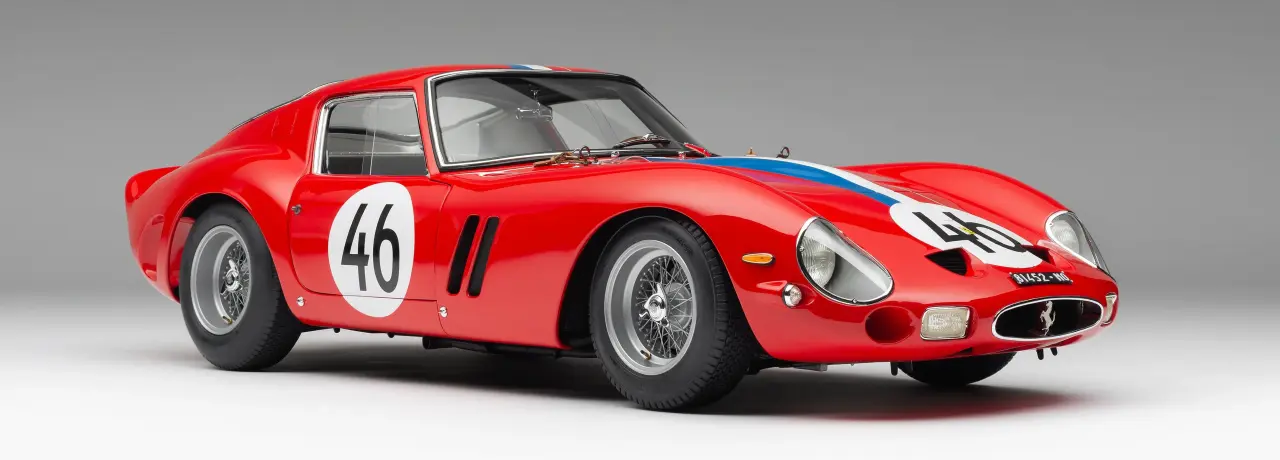
Originally developed to compete in FIA GT racing, the 250 GTO combined breathtaking performance with timeless Italian styling. Only 36 examples were produced, making it exceptionally rare and highly desirable among collectors.
Today, the Ferrari 250 GTO is considered the ultimate expression of Ferrari's racing heritage during the golden age of motorsport.
Design
The body of the 250 GTO was designed in collaboration with Pininfarina and refined by Scaglietti, resulting in one of the most beautiful automotive designs ever created.
Every curve served an aerodynamic purpose. The long sculpted hood, flowing roofline, muscular rear fenders, and carefully shaped air intakes were developed to maximize stability and cooling during endurance racing.
Despite its elegant appearance, the 250 GTO was built with competition in mind, emphasizing lightweight construction and functional aerodynamics over luxury.
Engine
Power came from Ferrari's legendary naturally aspirated 3.0-liter Colombo V12 engine.
Equipped with six Weber carburetors, the engine produced approximately 300 horsepower and delivered smooth, linear power throughout the rev range.
Its distinctive exhaust note became one of the defining sounds of classic Ferrari engineering.
Performance
The Ferrari 250 GTO was capable of reaching a top speed of approximately 280 km/h (174 mph), making it one of the fastest production-based racing cars of its era.
Its lightweight chassis, near-perfect balance, and responsive steering allowed exceptional handling on both racing circuits and public roads.
Combined with its powerful V12 engine, these characteristics made the 250 GTO a dominant competitor in GT racing.
Racing Success
The 250 GTO quickly proved itself on the international racing stage.
It achieved victories in prestigious endurance events, including the Tour de France Automobile, the Targa Florio, and numerous FIA GT races.
Ferrari also secured the FIA International Championship for GT Manufacturers with the 250 GTO, reinforcing the company's position as one of the world's leading racing car manufacturers.
Its consistent success helped cement Ferrari's dominance during the early 1960s and further elevated the brand's global prestige.
Ferrari Dino (1968–1976)
The Ferrari Dino occupies a unique place in Ferrari history. Unlike the company's traditional V12-powered grand touring cars, the Dino introduced a lighter, more compact sports car powered by a V6 engine.
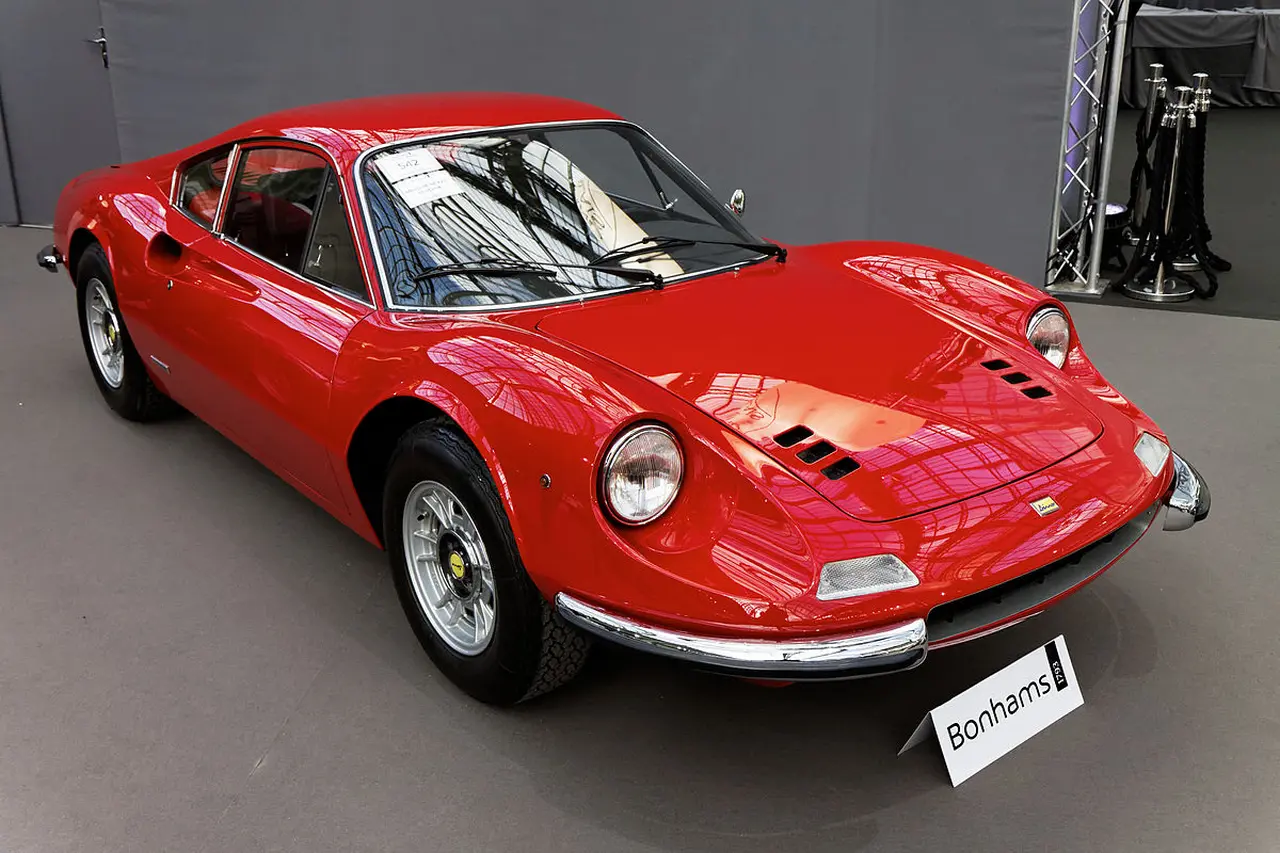
The model was named in honor of Enzo Ferrari's son, Alfredo "Dino" Ferrari, who played an important role in developing Ferrari's V6 engine concept before his untimely death at the age of 24.
Introduced in 1968, the Dino demonstrated that Ferrari could deliver exceptional driving dynamics without relying exclusively on twelve-cylinder engines.
Design
Styled by Pininfarina, the Dino featured smooth flowing bodywork, elegant proportions, and a compact mid-engine layout.
Its low stance, rounded fenders, and curved roofline distinguished it from Ferrari's larger front-engine grand tourers while creating one of the most beautiful automotive designs of the late 1960s.
The Dino's timeless styling continues to influence Ferrari's mid-engine sports cars today.
Engine
The first Dino 206 GT was equipped with a naturally aspirated 2.0-liter V6 producing approximately 180 horsepower.
It was later replaced by the Dino 246 GT, featuring a larger 2.4-liter V6 that increased output to around 195 horsepower while delivering greater torque and improved drivability.
Although smaller than Ferrari's famous V12 engines, the Dino's V6 offered exceptional responsiveness and a distinctive exhaust note.
Performance
The Dino's lightweight construction and mid-engine configuration delivered outstanding balance and agility.
The 246 GT accelerated from 0 to 100 km/h (62 mph) in approximately 6 seconds and reached a top speed of around 235 km/h (146 mph), impressive figures for its era.
Its precise steering, balanced chassis, and engaging handling made it one of the finest driver's cars of the 1970s.
Model Variants
The Dino family evolved through several important versions.
The Dino 206 GT, produced between 1968 and 1969, was the original model and remains highly collectible due to its limited production.
The Dino 246 GT, introduced in 1969, offered improved performance, a larger engine, and a slightly redesigned body, becoming the most popular version.
The Dino 246 GTS, launched in 1972, added a removable targa roof, allowing drivers to enjoy open-air motoring without sacrificing the car's distinctive styling.
Although originally marketed under the Dino name rather than Ferrari, these models are now recognized as an essential part of Ferrari's history. Their combination of elegant styling, lightweight engineering, and exceptional driving dynamics has earned them legendary status among enthusiasts and collectors worldwide.
Ferrari F40 (1987–1992)
The Ferrari F40 is regarded as one of the most iconic and exhilarating supercars ever produced. Introduced in 1987 to celebrate Enzo Ferrari's 90th birthday, the F40 represented the pinnacle of Ferrari's engineering philosophy and uncompromising commitment to performance. It also holds a special place in Ferrari's history as the last road car personally approved by Enzo Ferrari before his death in 1988.
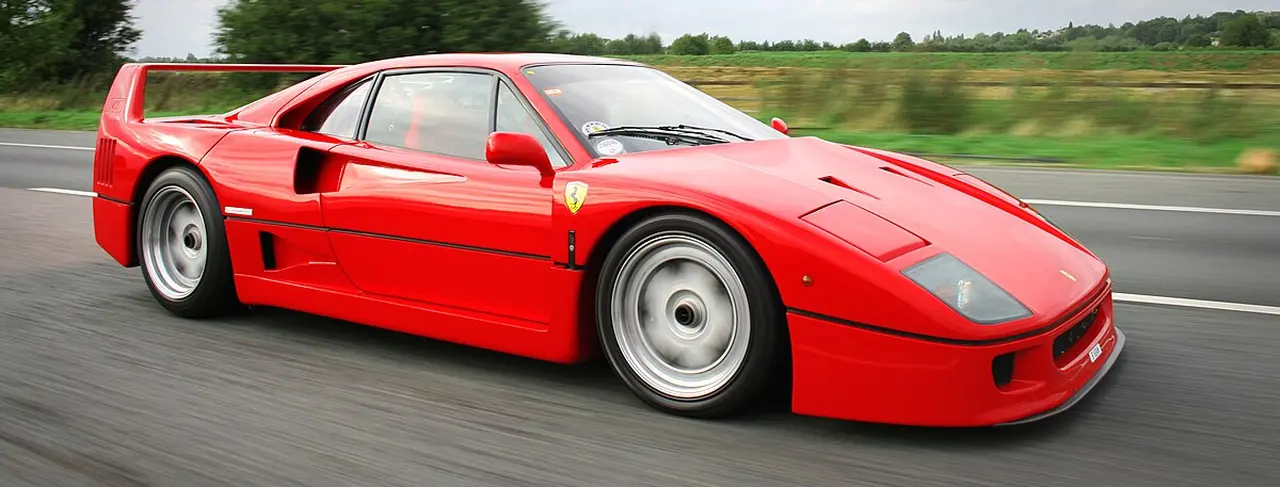
The F40 featured an aggressively aerodynamic design created by Pininfarina. Unlike many luxury sports cars of its era, the F40 was engineered with one objective above all else: maximum performance. Comfort and luxury took a back seat to speed, lightweight construction, and race-inspired engineering.
Its sharp body lines, large rear wing, wide air intakes, and low-slung stance made it instantly recognizable and helped define the appearance of modern supercars.
Lightweight Construction
One of the F40's greatest engineering achievements was its remarkably low weight.
-
Weight: Approximately 1,100 kg (2,425 lbs)
-
Constructed using carbon fiber, Kevlar, aluminum, and composite materials
-
Minimal interior insulation and racing-inspired cabin
-
Lightweight design significantly improved acceleration, braking, and handling
At the time, using carbon fiber extensively in a production road car was revolutionary.
Aerodynamics
Every panel of the Ferrari F40 was shaped with performance in mind.
Its body was extensively tested in wind tunnels to maximize aerodynamic efficiency.
Key aerodynamic features included:
-
Large fixed rear wing for increased downforce
-
Flat underbody
-
Integrated front splitter
-
Functional air ducts for engine and brake cooling
These elements allowed the F40 to remain stable even at extremely high speeds.
Engine and Performance
Power came from a 2.9-liter twin-turbocharged V8 engine (often rounded to 3.0 liters).
Engine Specifications
-
Engine: 2.9-liter Twin-Turbo V8
-
Power Output: 478 hp (478 PS / 352 kW)
-
Torque: 577 Nm (426 lb-ft)
-
Transmission: 5-speed manual
-
Drivetrain: Rear-wheel drive (RWD)
Performance Figures
The Ferrari F40 delivered breathtaking performance for its era.
-
0–100 km/h: approximately 3.8 seconds
-
Top Speed: 324 km/h (201 mph)
When launched, it became the first production car capable of exceeding 320 km/h (200 mph), earning worldwide recognition as one of the fastest road cars ever built.
Pure Driving Experience
Unlike modern supercars filled with electronic driver aids, the F40 remained remarkably mechanical.
It featured:
-
No power steering
-
No ABS brakes
-
No traction control
-
No electronic stability systems
Everything depended on the driver's skill, making the F40 one of the purest driving machines Ferrari has ever produced.
Race-Inspired Engineering
Although the F40 was designed as a road car, its engineering was heavily influenced by Ferrari's racing experience.
Its lightweight chassis, turbocharged engine, aggressive aerodynamics, and minimalist cockpit created an experience remarkably similar to driving a race car.
The F40 later inspired competition variants such as the F40 LM, F40 Competizione, and F40 GTE, which successfully competed in international GT racing during the late 1980s and early 1990s.
Production Numbers
Ferrari originally planned to build only around 400 units, but overwhelming global demand led to increased production.
Between 1987 and 1992, Ferrari produced:
-
1,315 examples
Today, the F40 remains one of the world's most desirable collector cars and frequently sells for several million dollars at prestigious auctions.
Enzo Ferrari's Passing and the Future of the Company
Enzo Ferrari passed away on August 14, 1988, at the age of 90. Although his death marked the end of an extraordinary era, Ferrari continued to follow the vision he had established decades earlier.
Even after Enzo's passing, Ferrari preserved its core philosophy of combining motorsport-derived engineering, advanced technology, and unmistakable Italian design.
During this period, Fiat increased its ownership stake in Ferrari, providing greater financial stability while allowing the company to maintain its unique identity and engineering independence.
Ferrari continued producing some of the world's most celebrated performance cars while remaining one of the few manufacturers whose road cars were directly influenced by Formula One technology.
Ferrari's Global Expansion: The Modern Era
The 1990s and early 2000s marked a period of remarkable growth for Ferrari.
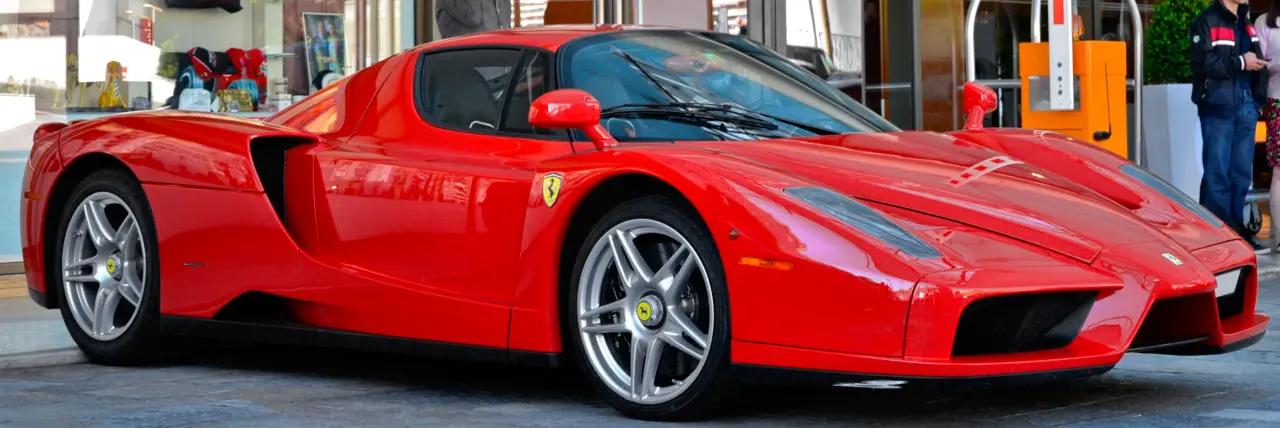
While production volumes gradually increased, Ferrari carefully preserved its reputation for craftsmanship, exclusivity, and performance.
During this era, Ferrari introduced several landmark models, including:
-
Ferrari Enzo
-
Ferrari F430
-
Ferrari 458 Italia
-
Ferrari 488 GTB
Each generation showcased major advancements in aerodynamics, lightweight construction, electronic systems, and engine technology while staying true to Ferrari's racing DNA.
The company also expanded its global presence, becoming not only an automotive manufacturer but also one of the world's most recognizable luxury brands, representing performance, prestige, and Italian excellence.
Ferrari and the Electrified Future
In recent years, Ferrari has entered a new era by embracing hybrid and electric technologies without compromising the performance and driving experience that define the brand.
The company's first series-production plug-in hybrid supercar, the SF90 Stradale, was introduced in 2019. Combining a 4.0-liter twin-turbocharged V8 engine with three electric motors, the SF90 delivers a combined output of 1,000 horsepower (986 hp / 735 kW), making it one of the most powerful road cars Ferrari has ever built.
Rather than replacing the traditional Ferrari character, hybrid technology has been used to enhance acceleration, improve efficiency, and deliver even greater performance.
Ferrari has also announced its commitment to an all-electric future. The company is investing heavily in advanced battery technology, electric powertrains, and sustainable manufacturing while continuing to develop its legendary V8 and V12 engines for enthusiasts around the world.
This balanced approach allows Ferrari to embrace innovation while preserving the emotional driving experience that has defined the brand for more than seven decades.
Ferrari Today
Today, Ferrari is recognized as one of the world's most prestigious luxury performance car manufacturers.
Its current lineup includes legendary models such as the 296 GTB, SF90 Stradale, 12Cilindri, Roma, Purosangue, and the F80 hypercar. Each vehicle combines cutting-edge engineering, Italian craftsmanship, and technologies developed through decades of Formula One competition.
Ferrari also continues to dominate the motorsport world. As the only team to have competed in every Formula One World Championship since the series began in 1950, Scuderia Ferrari remains one of the most successful and iconic teams in racing history.
Beyond automobiles, Ferrari has become a global symbol of luxury, exclusivity, and engineering excellence. The famous Prancing Horse badge represents far more than speed—it embodies passion, innovation, precision, and a relentless pursuit of perfection.
Conclusion: The Legacy of Ferrari
Ferrari's history is a remarkable story of passion, determination, innovation, and racing success. From Enzo Ferrari's dream of building the ultimate racing machines to today's technologically advanced supercars, every chapter of Ferrari's journey has helped shape the modern automotive industry.
Legendary models such as the 125 S, 250 GTO, Dino, F40, Enzo, LaFerrari, and today's hybrid supercars demonstrate Ferrari's unwavering commitment to engineering excellence.
More than eighty years after its founding, Ferrari continues to inspire millions of enthusiasts around the world. Every Ferrari represents a perfect balance of performance, beauty, craftsmanship, and motorsport heritage.
As the automotive industry moves toward electrification, Ferrari remains committed to preserving its legendary spirit while embracing the technologies of tomorrow.
Ferrari is more than an automobile manufacturer—it is a symbol of Italian excellence, motorsport heritage, timeless design, and the relentless pursuit of perfection.